


Leather industry needs to move up the value chain
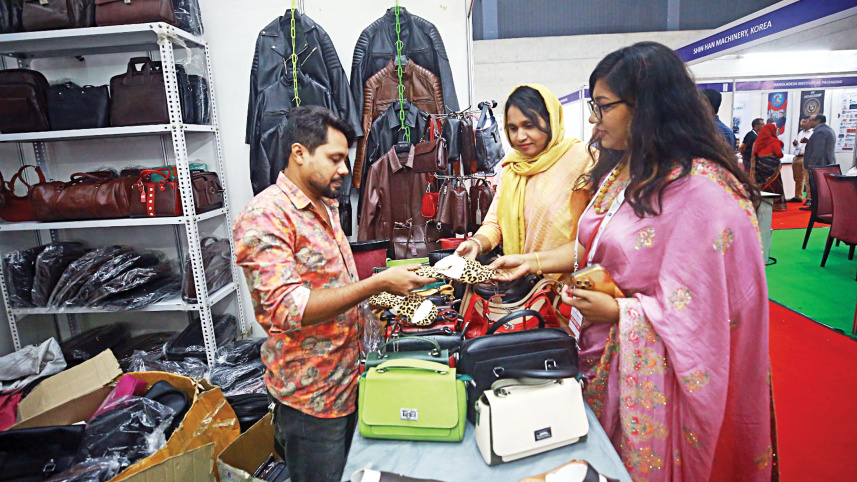
Bangladesh needs to move further up the leather value chain to unlock its export potential, Commerce Secretary Md Ataur Rahman Khan said yesterday, as the government prepares an action-oriented roadmap to address the sector’s longstanding problems.
He made the remarks at the opening of the 10th Bangladesh Leather and Footwear Expo 2026 at the International Convention City Bashundhara in Dhaka.

Bangladesh produces around 27 crore square feet of leather a year, but much of its export potential remains untapped as the country continues to depend heavily on exports of raw and processed leather rather than higher-value finished products.
The government is preparing a roadmap to address the sector’s longstanding problems and help businesses move further up the value chain, Ataur said.
The roadmap will focus on both the domestic market and export growth and will be published in draft form on the commerce ministry’s website to seek feedback from industry stakeholders.
“Following the prime minister’s directives, the commerce ministry is working on an action-oriented roadmap for the sector,” Ataur said.
A high-level committee headed by the commerce minister has already been formed to oversee the development of the leather industry, he added.
The challenge is not simply producing leather, according to the commerce secretary, but turning more of it into products that command higher prices in global markets. Bangladesh already exports footwear, travel bags, belts, wallets and other leather goods. But industry stakeholders say there is considerable scope to expand these exports and enter new markets, he said.
The country has the raw materials and a growing pool of technical expertise. The government wants to use these advantages to encourage greater consumption of locally made leather products while expanding exports.
Meeting the requirements of international buyers, however, will require improvements in environmental and social compliance, technology and traceability, Ataur said.
The commerce ministry is therefore working on a framework for responsible business conduct and a national traceability framework. Separate traceability systems are also planned for priority sectors.
Better links between factories and institutions that teach and research leather technology could also help address the industry’s technology gap.
“Students and researchers in leather technology need to be connected more effectively with tannery owners and entrepreneurs,” he added.
The industry has a sizeable production base to build on. Bangladesh has around 5,500 small footwear factories and is the world’s eighth-largest footwear producer and ninth-largest footwear consumer market, according to expo organisers.
Yet a large share of the country’s leather still leaves the country as processed material rather than as finished consumer products.
Bangladeshi leather is mainly exported to Italy, South Korea, Japan, China, Hong Kong and Taiwan.
At the same time, local footwear manufacturers are receiving orders from international brands, while domestic demand is rising, encouraging several companies to expand production.
The three-day expo, organised by the Bangladesh Tanners Association, Leather Engineers and Technologists Society of Bangladesh and Limra Trade Fairs and Exhibitions Pvt Ltd, began yesterday and will run until September 26. More than 250 local and international companies are taking part in the event.
 For all latest news, follow The Daily Star's Google News channel.
Comments