


RCEP approves working group to advance Bangladesh’s bid
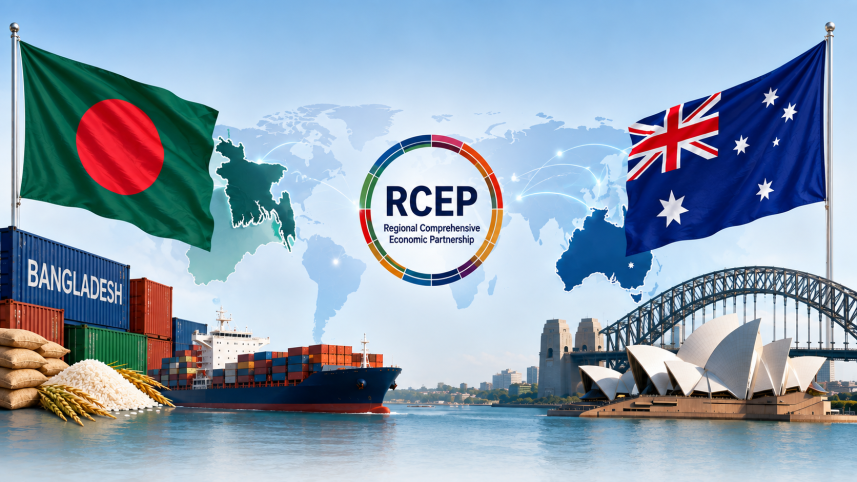
Bangladesh’s accession process to the Regional Comprehensive Economic Partnership (RCEP) has moved a step forward, with the trade bloc approving the establishment of an Ad Hoc Accession Working Group to advance the process.
The decision was taken at the fifth RCEP Ministers’ Meeting in Manila, Philippines, on September 21. The meeting approved a recommendation from the RCEP Joint Committee to establish the working group for Bangladesh, Chile, Hong Kong, China and Sri Lanka, in line with the “Next Steps for RCEP Accession Process” adopted by the committee.

In a joint statement, the ministers reaffirmed that the RCEP Agreement remains open and inclusive and welcomed progress on the accession agenda.
RCEP comprises the 10 Asean countries -- Brunei, Cambodia, Indonesia, Laos, Malaysia, Myanmar, the Philippines, Singapore, Thailand and Vietnam -- along with China, Japan, South Korea, Australia and New Zealand.
The commerce ministry, in a statement, said the latest move had taken Bangladesh’s process of joining the world’s largest free trade agreement one step forward.
RCEP comprises the 10 Asean countries -- Brunei, Cambodia, Indonesia, Laos, Malaysia, Myanmar, the Philippines, Singapore, Thailand and Vietnam -- along with China, Japan, South Korea, Australia and New Zealand. The 15-member bloc accounts for about 30 percent of global GDP and one-fourth of global trade, according to a previous assessment by the commerce ministry.
Bangladesh’s accession could help address some of the challenges the country will face after graduating from the least developed country (LDC) category, including maintaining preferential market access, strengthening integration with global supply chains and attracting foreign direct investment (FDI), the commerce ministry said.
Bangladesh earlier took the initiative to join RCEP mainly because it will lose some preferential trade benefits in Asean markets after graduating from the LDC category in 2026.
The RCEP was signed in November 2020 and entered into force in January 2022. It became open for accession by other states or separate customs territories from July 1, 2023.
The commerce ministry has already completed an assessment of Bangladesh’s potential accession to RCEP, according to a ministry document. It found that Bangladesh’s exports could increase by $3.26 billion and FDI by 3.36 percent if the country joins the bloc.
 For all latest news, follow The Daily Star's Google News channel.
Comments