


Used EVs: affordable option or battery waste risk?

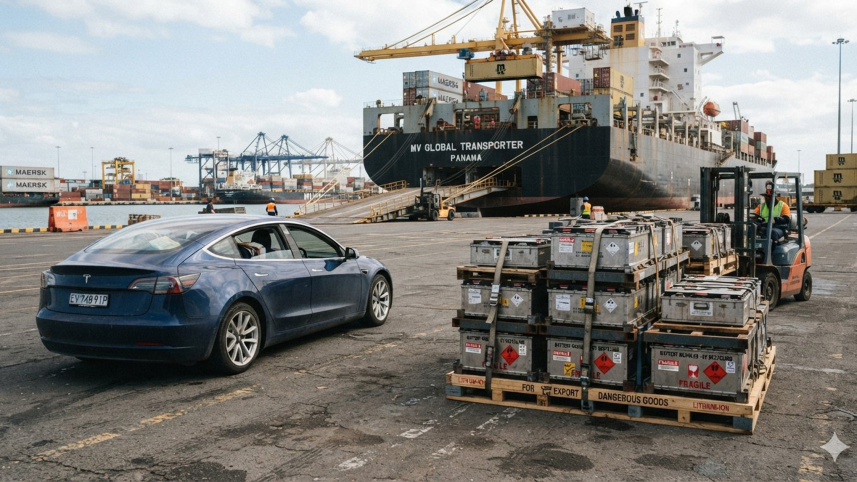
Bangladesh’s ban on used and reconditioned electric vehicles (EVs) has sparked debate over whether the country has the infrastructure and regulatory framework needed to manage the batteries that power them.
The Import Policy Order 2026-2029, issued on August 24, prohibits the import of used and reconditioned EVs, citing environmental and infrastructure concerns.

While reconditioned vehicle importers say regulated imports could make EVs more affordable, experts and industry stakeholders caution that Bangladesh lacks adequate facilities and a clear policy framework for testing, collecting, recycling and disposing of used EV batteries.
Against this backdrop, Ziaur Rahman Khan Zia, a professor in the Department of Electrical and Electronic Engineering (EEE) at Bangladesh University of Engineering and Technology (BUET), said the biggest concern over importing reconditioned EVs is how their batteries would be managed at the end of their useful lives.
“When you import a used EV, you are also importing a used battery,” he said. The concern becomes more serious when those batteries reach the end of their useful lives. Bangladesh currently lacks adequate infrastructure and a comprehensive policy framework for the collection, recycling and disposal of used EV batteries, Zia said.
“If we continue importing used EVs without the necessary policy and infrastructure, there is a risk that Bangladesh could become a dumping ground for old batteries,” he said.
He suggested that if BARVIDA wants reconditioned EVs to be allowed, importers could be required to take responsibility for the batteries throughout their lifecycle, including collection and proper end-of-life management.
“Simply importing old EVs and leaving the responsibility for their old batteries to consumers or the government could become dangerous,” he said.
The government, however, says the restriction followed consultations with stakeholders and was driven largely by concerns over the country’s preparedness.
Shibir Bichitra Barua, additional secretary at the Ministry of Commerce, said several meetings with stakeholders were held before finalising the import policy. The discussions found that importing reconditioned EVs is not yet feasible for Bangladesh, particularly because of environmental concerns.
He said the country still lacks the infrastructure needed to support the wider use of EVs, including an adequate network of charging stations and facilities for repairing and maintaining EV batteries.
As there is no specific policy governing the disposal of EV batteries, Bangladesh also faces the risk of accumulating battery waste as EV use expands, he said.
“Considering these limitations, the higher authorities decided to include restrictions on the import of reconditioned EVs in the policy,” Barua said.
At the same time, the government has set a target of having EVs account for at least 30 percent of the country’s automobile fleet by 2030, he said.
Bichitra stressed that the Ministry of Commerce has formulated the import policy but does not have the final say on whether reconditioned EVs will ultimately be allowed into the country.
“The final decision on allowing the import of reconditioned EVs will be taken by the Road Transport and Highways Division,” he said.
Importers, meanwhile, are pushing for the government to review the restriction.
At a human chain demonstration on Saturday, BARVIDA called for the ban on used and reconditioned EVs to be withdrawn, arguing that such vehicles could be imported under a regulated framework that meets international safety and environmental standards.
BARVIDA proposed allowing EVs up to five years old, subject to a minimum battery State of Health of 70 percent and mandatory battery-life certification.
However, Mir Masud Kabir, managing director of Bangladesh Auto Industries Ltd (BAIL), raised concerns over the reliability and traceability of batteries in reconditioned EVs.
 For all latest news, follow The Daily Star's Google News channel.
 “EV batteries are not all the same,” he said, noting that different battery chemistries, including nickel-manganese-cobalt (NCM), lithium iron phosphate (LFP) and nickel-cobalt-aluminium (NCA), have different characteristics and cycle lives.
Kabir said NCM and NCA batteries generally have shorter cycle lives, while LFP batteries can support around 3,000 charging cycles.
Manufacturers may offer warranties of up to eight years for higher-grade batteries, while lower-grade batteries may have shorter lifespans, he said.
Bangladesh currently lacks a system to independently determine the age, condition and remaining useful life of batteries in used EVs, Kabir said.
“If a three-year-old vehicle comes with a battery that has already reached the end of its life, it could stop working shortly after arriving in Bangladesh,” he said.
He warned that without adequate testing, monitoring and end-of-life management systems, Bangladesh could face a growing volume of imported EV e-waste.
He also said the entry of substandard used EVs could put local manufacturers and importers of new EVs at a disadvantage and undermine consumer confidence in electric vehicles.
Abdul Haque, president of BARVIDA, said Bangladesh was not yet ready for a large-scale influx of EVs, but this should not be a reason to restrict reconditioned EV imports.
“Even countries like the UK and environmentally conscious New Zealand allow reconditioned vehicles, subject to conditions such as battery health checks,” he said.
Haque said the government should focus on setting safety and battery-health standards rather than banning imports.
He also dismissed concerns over battery disposal as a reason to restrict reconditioned EVs, saying battery technology was improving rapidly.
“If we import quality reconditioned EVs from Japan, consumers can get affordable vehicles while the country can save foreign exchange. The middle class cannot afford new EVs at current prices,” he said.
Comments