



Opinion / El Niño and its effects on Bangladesh’s agriculture
23 August 2026
•
Business


A quiet warning from the Barind
22 January 2026

The Singapore story
21 January 2026

The future of retail banking
1 November 2025
•
Opinion

Simpler regulations needed to ignite startups
21 October 2025
•
Opinion

Analysis / Are we doing enough for the urban poor?
5 October 2025
•
Business

Opinion / Why is gold hitting record highs in Bangladesh?
22 September 2025
•
Business

Be bold or be boring
7 August 2025
•
Opinion

BB should be transparent about its consumer credit rating licence
22 May 2025
•
Business

Asia’s easing economic headwinds make way for stronger recovery
The economic headwinds that faced Asia and the Pacific last year have started to fade. Global financial conditions have eased, food and oil prices are down, and China’s economy is rebounding.
25 February 2023

One year after Ukraine invasion, food export curbs have subsided, but concerns remain
One year after Russia’s invasion of Ukraine, the surge in global food prices that the war triggered has subsided. But there are still reasons for worry: Prices remain elevated, and new shocks could send them soaring again.
23 February 2023

The costs of misreading inflation
It bears remembering that, as recently as the second half of 2021, the Federal Reserve considered that the surge in consumer price inflation would dissipate, with price increases returning to the Fed’s 2 per cent target in 2022. In testimony before Congress, Fed Chair Jerome Powell affixed the now infamous “transitory” moniker to the ongoing price increases, which he ascribed to temporary supply bottlenecks and price declines in the early stages of the pandemic.
26 January 2023

Bridging data gaps can help tackle climate crisis
A famous physicist once said: “When you can measure what you are speaking about, and express it in numbers, you know something about it.”
29 November 2022

Grameenphone’s SIM sales ban sends wrong message to the world
Grameenphone recently celebrated its 25 years in Bangladesh. It is a story to be proud of, a story of how telecom technology was made available to people from all walks of life.
29 November 2022

How fiscal restraint can help fight inflation
Government support was vital to help people and firms survive pandemic lockdowns and support the economic recovery. But where inflation is high and persistent, across-the-board fiscal support is not warranted. Most governments have already dialed back pandemic support.
24 November 2022

Workers are heading back overseas: here’s how govts should respond
Deployment of migrant workers from Asia is slowly getting back on track after plummeting due to the Covid-19 pandemic during the first quarter of 2020. Some countries are recording departures of migrant workers exceeding pre-pandemic levels.
16 November 2022

Fiscal policy can help people rebound from cost of living crisis
Governments confront difficult trade-offs amid sharp increases in food and energy prices. Policymakers must protect low-income families from large real income losses and ensure their access to food and energy.
19 October 2022
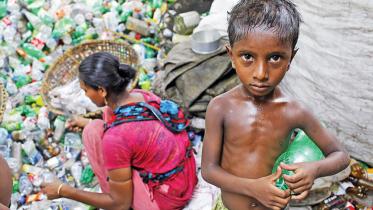
Correcting course to accelerate poverty reduction
On End Poverty Day this year, it’s hard to find cause for celebration. The Covid-19 pandemic triggered a historic setback, pushing 70 million people into extreme poverty in 2020 – the largest one-year increase in three decades.
18 October 2022
Asia sails into headwinds from rate hikes, war, and China slowdown
Asia’s strong economic rebound early this year is losing momentum, with a weaker-than-expected second quarter. We have cut growth forecasts for Asia and the Pacific to 4 per cent this year and 4.3 per cent next year, which are well below the 5.5 per cent average over the last two decades. Despite this, Asia remains a relative bright spot in an increasingly dimming global economy.
15 October 2022

How countries should respond to the strong dollar
The dollar is at its highest level since 2000, having appreciated 22 per cent against the yen, 13 per cent against the euro and 6 per cent against emerging market currencies since the start of this year. Such a sharp strengthening of the dollar in a matter of months has sizable macroeconomic implications for almost all countries, given the dominance of the dollar in international trade and finance.
15 October 2022

Interest rate increases, volatile markets signal rising financial stability risks
Financial conditions have tightened as central banks continue to hike interest rates. Amid the highly uncertain global environment risks to financial stability have increased substantially.
13 October 2022

Helping families cope with price shocks—without subsidies
Amid ongoing food and fuel crises worldwide, general subsidies are making a big comeback as a way of delivering social protection to the population. In fact, according to a World Bank tracker, the number of social protection measures introduced in response to rising inflation almost tripled globally between April and September 2022. More than a third of these were subsidies, including for fuel, food, fertilizers, and fees (such as for electricity, water and heating services).
8 October 2022

Averting fiscal crises in a deteriorating global economic environment
The war in Ukraine and aftershocks from the Covid-19 pandemic present Emerging Market and Developing Economies (EMDEs) with an extremely challenging external environment shaped by higher food, fertilizer, and energy prices, rising inflation and interest rates, and stagflation risks in advanced economies.
8 October 2022

Further delaying climate policies will hurt economic growth
The world must cut greenhouse gas emissions by at least a quarter before the end of this decade to achieve carbon neutrality by 2050. Progress needed toward such a major shift will inevitably impose short-term economic costs, though these are dwarfed by the innumerable long-term benefits of slowing climate change.
6 October 2022
Wage-price spiral risks appear contained despite high inflation
Inflation in some economies is rising at the fastest pace in four decades, while tight labour markets have boosted pay gains. That has raised concerns that these conditions could become self-reinforcing and lead to a wage-price spiral—a prolonged loop in which inflation leads to higher wage growth, fueling even higher inflation.
6 October 2022

Creating virtuous circles between urban planning and urban transit
Cities are not just places where people live. They are massive labour markets and engines of economic growth, facilitating structural transformation of economies towards manufacturing and service activities. New urban transport infrastructure changes how people access jobs and matches employees to firms.
5 October 2022

How do rising incomes impact carbon emissions?
The transport sector currently accounts for a quarter of energy-related carbon emissions globally. It also ranks among the fastest-growing sources of such emissions.
5 October 2022

How providing sustainable finance to more women helps fight climate change
Women´s contributions to climate action are severely limited by systems that downplay women´s roles, capacity, and potential. Greater access to sustainable and gender-equitable green finance will help women be frontrunners in global efforts to address climate change.
3 October 2022

Energy shocks amid rapid inflation could fuel faster wage gains
Billions of consumers around the world are seeing higher oil prices seep into the cost of living and wages. Filling the gas tank soon starts to cost more when crude prices climb, as does airfare, but higher energy costs also boost prices for all the products on store shelves. Workers seek higher wages to compensate for a loss in their purchasing power.
3 October 2022