


402 garment factories closed in Bangladesh in 3 years: Commerce minister

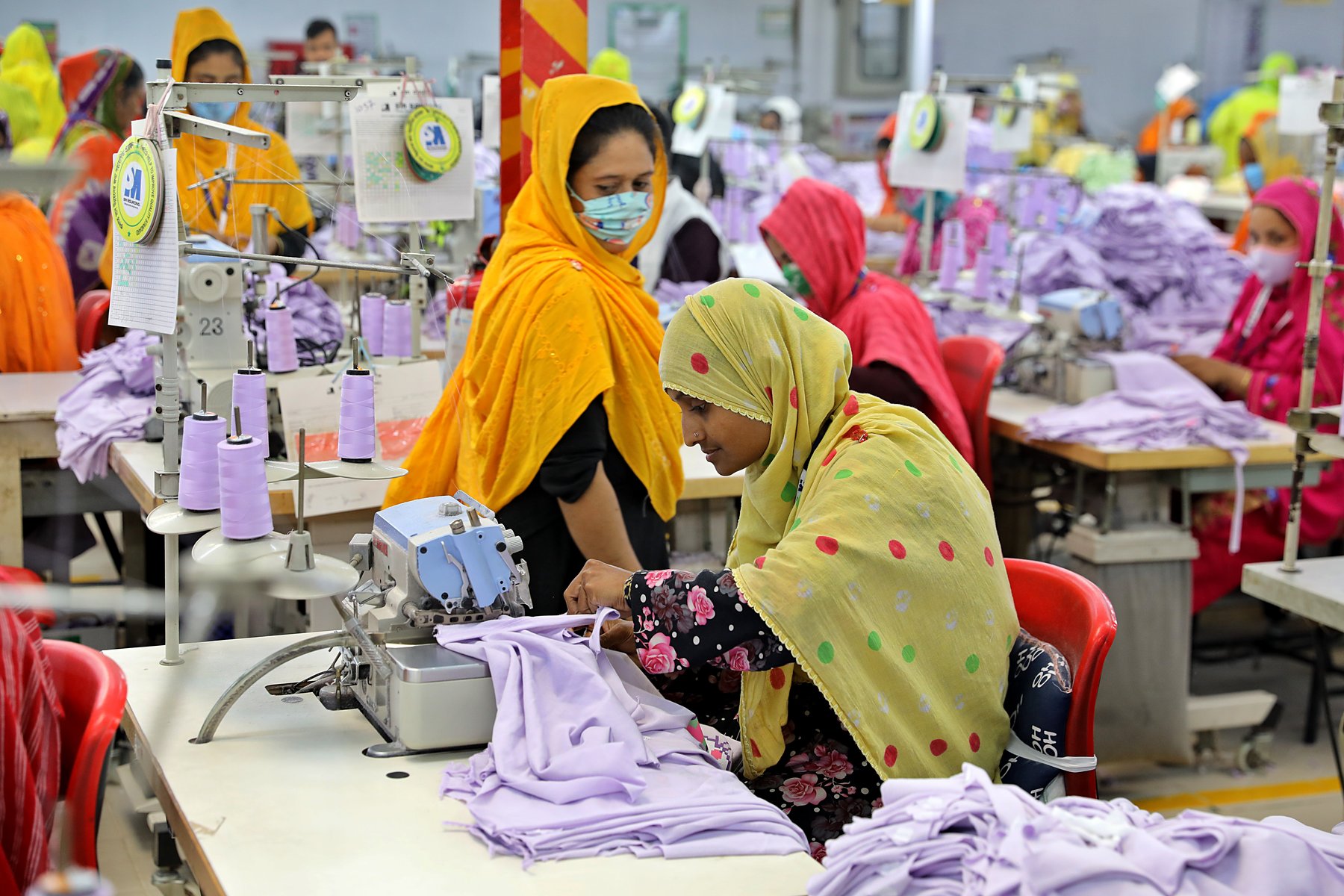
At least 402 ready-made garment (RMG) factories were closed between July 2023 and June 2026, Commerce Minister Khandakar Abdul Muktadir told the parliament today.
Of the factories, 282 were members of the Bangladesh Garment Manufacturers and Exporters Association (BGMEA), while 120 were members of the Bangladesh Knitwear Manufacturers and Exporters Association (BKMEA).

The minister disclosed the figures while responding to a question from Ruhul Amin MP during the question-and-answer session at the Jatiya Sangsad. He cited a June 22 report by the BGMEA.
He said the closures were caused by a combination of global and domestic factors, including the COVID-19 pandemic, the Russia-Ukraine war, Israel's attack on Palestine and the related conflict in the Middle East, the war between the United States and Iran, the global recession, political instability in Bangladesh, and a liquidity crisis in the banking sector caused by money laundering.
Other factors included India and Vietnam's free trade agreements with Europe and the reluctance of foreign buyers to place export orders with small and medium-sized factories in order to facilitate their own monitoring.
The minister said the government has taken various measures to support and develop the RMG sector.
These include alternative cash assistance of 1.50 percent instead of customs bonds and duty drawbacks for export-oriented domestic textile industries, as well as an additional 0.50 percent special support for textile exporters in the Eurozone, on top of the existing 1.50 percent.
An additional 3 percent benefit has also been provided to all small and medium-sized industries in the export-oriented RMG sector, including knitwear, woven garments and sweaters. The government has also provided 0.30 percent special cash assistance to the RMG sector.
Muktadir said Bangladesh would soon graduate from the least developed country (LDC) category to become a developing country. As a result, the country would lose preferential market access under various trading schemes of developed countries, potentially affecting exports worth $17.5 billion.
To address the challenge, Bangladesh has already concluded an Economic Partnership Agreement (EPA) with Japan, while discussions on reaching a Comprehensive Economic Partnership Agreement (CEPA) with South Korea are under way, the minister said.
Initiatives have also been taken to conclude EPA, CEPA and free trade agreements with other export-potential markets, including the European Union, the Regional Comprehensive Economic Partnership (RCEP), the UAE, Singapore, Indonesia and China.
The minister said the government had also taken various steps to diversify export markets.
Measures are being taken to remove tariff and non-tariff barriers through bilateral trade agreements. A 2 percent special cash assistance or cash incentive has been continued for exports of new products and expansion into new markets in the textile sector, excluding the United States, Europe and Canada.
Bangladesh's missions have also been activated to explore new markets in Asia, including Japan, India, South Korea and China, as well as in Africa and South America.
To expand the country's export trade, the Export Promotion Bureau is enriching the export product basket and diversifying markets by organising a sourcing fair, "Global Sourcing Expo", in fiscal 2025-26, along with single-product sourcing fairs, Muktadir added.
The government has also placed emphasis on strengthening and modernising economic diplomacy through Bangladesh's missions abroad. In particular, the commercial wings are undertaking activities to increase exports, expand markets and promote Bangladeshi products.
 For all latest news, follow The Daily Star's Google News channel.
Comments