


What to avoid when teaching yourself a musical instrument
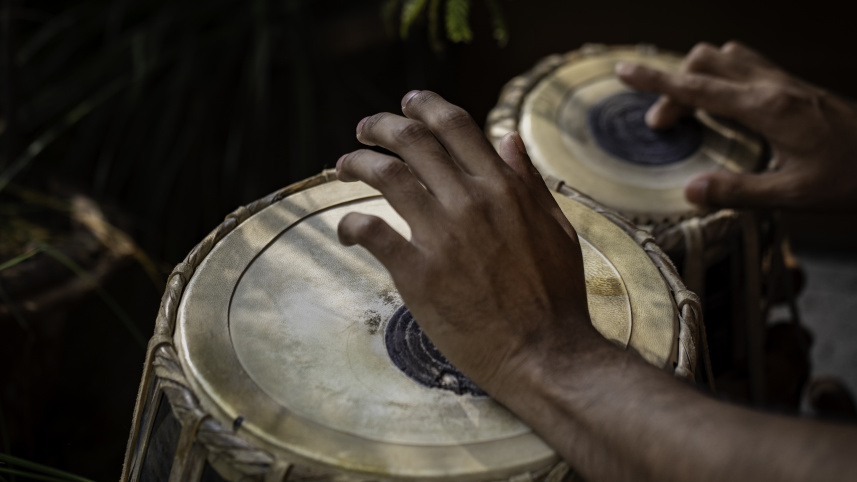
Musical instruments are perhaps one of the only inanimate objects in the world capable of speaking to us, only if we learn their language. Being able to play an instrument is a skill built on dedication and practice. Many are often hesitant and intimidated by the concept of picking up an instrument later in life, but I like to believe that “too late” doesn’t exist when it comes to learning anything.
With that being said, it’s essential to be practical and avoid assuming that you might be gifted by the musical gods like the child prodigies you may see on America's Got Talent. There’s no golden buzzer to validate your musical endeavours, so it’s important to have a few pointers to stay on track.

Romanticising songs instead of the instrument
For many, fixations with instruments begin with certain songs, but it’s naive to assume that you’ll be able to play your favourite music in the early stages of your learning. At the start, you need to learn the names of the keys or strings, understand the anatomy of the instrument, and correct your posture and hand movements before playing even nursery rhymes like Twinkle, Twinkle, Little Star. Brian May didn’t immediately start shredding “Bohemian Rhapsody” on the electric guitar; he, too, had to learn and persevere.
If your initial excitement wears off when you realise you are not able to play what you want, you were never really in it for the long run.
Skipping the basics
Can you imagine learning a language without knowing the alphabet first? It applies to music as well.
While the internet makes it very straightforward to learn any instrument nowadays, there are downsides to being your own teacher. I went the longest time without learning any music theory on the piano—such as chords, arpeggios, and scales—and although I was able to physically play complex songs due to muscle memory, I lacked the technical skills.
Music theory and its fundamental principles are the same for any instrument, almost like a universal language composed of scales, chords, rhythm, and harmony. Eventually, upon getting a grasp of these fundamentals, you’ll be able to recognise notes and chords just by ear.
Being shy to play for an audience
The piano in my childhood home had a loud presence in our living room, so the arrival of any guest fond of music would prompt a request for a performance. My shyness often had to take a backseat due to my very strict musical father, whose one stern look would have my hands move on their own. The practice of playing in front of a crowd dissolved my stage fright over time, and that helped immensely during actual competitions.
Even if playing in front of people makes the blood rush to your cheeks and your heart race, it helps break performance anxiety and builds confidence. You become less conscious of making mistakes and more eager to deliver a memorable performance.
Ignoring books
I learnt more about playing a guitar from a 36-page book written by David Taub than I did from a teacher who spent two months talking to me about the guitar before letting me even touch it. Reading text takes a bit more patience than visual tutorials, but the right resources are worth looking into. For sheet music, there are many sites that provide free documents which you can print without even having to buy the books.
Limiting yourself to one way of learning can sometimes put you in a box, so it’s helpful to diversify your materials.
Giving up before progress shows
The journey to learn a musical instrument has moments where you feel like nothing is changing, as if the practice sessions are going nowhere. But then one day, your fingers move without thinking, or a song that once felt impossible suddenly becomes natural. That specific moment makes the entire process worth it, and many quit before realising that they were closer than they thought.
Hours of practice might boil down to merely two minutes of a song, but they represent every mistake, every repetition, and every moment you almost gave up.
Music has a way of connecting everyone – a living room full of guests, a crowd of strangers, or even someone who doesn’t speak your language. It begins as something personal and often frustrating, but over time it becomes something shared, something understood without words. It takes time to learn an instrument, but in return, it teaches you patience, persistence, and a deep sense of reward.
Zara Zubayer is a half-pianist, an occasional grandma (she knits), and a collector of instruments she never learns. Suggest a new hobby she won’t commit to at @zarazubayer1@gmail.com
 For all latest news, follow The Daily Star's Google News channel.
Comments