


Harmony Festival celebrates Bangladesh’s ethnic heritage

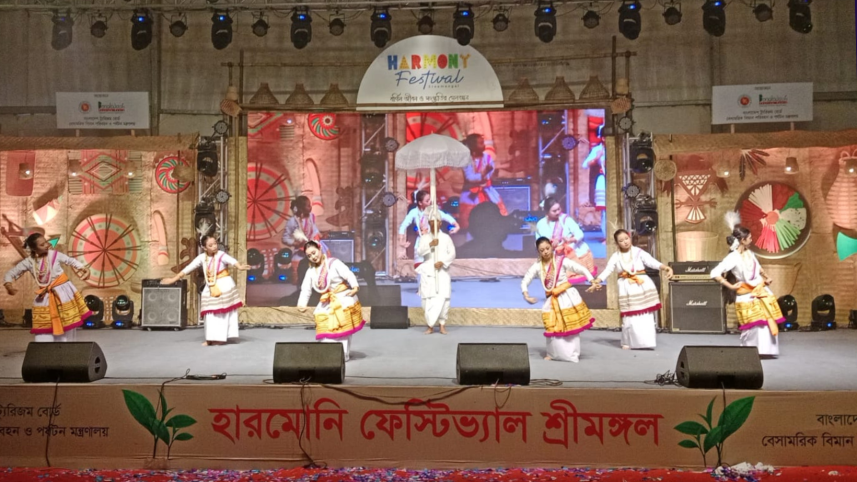
The three-day Harmony Festival Season 2, organised to preserve the endangered cultures of Bangladesh’s small ethnic communities, concluded in Srimangal yesterday (June 21). The festival is organised by the Bangladesh Tourism Board under the Ministry of Civil Aviation and Tourism. It brought together participants from 27 ethnic groups, who staged 84 cultural performances over three days, showcasing traditional dances, crafts, attire and cuisine from communities indigenous to the Moulvibazar region.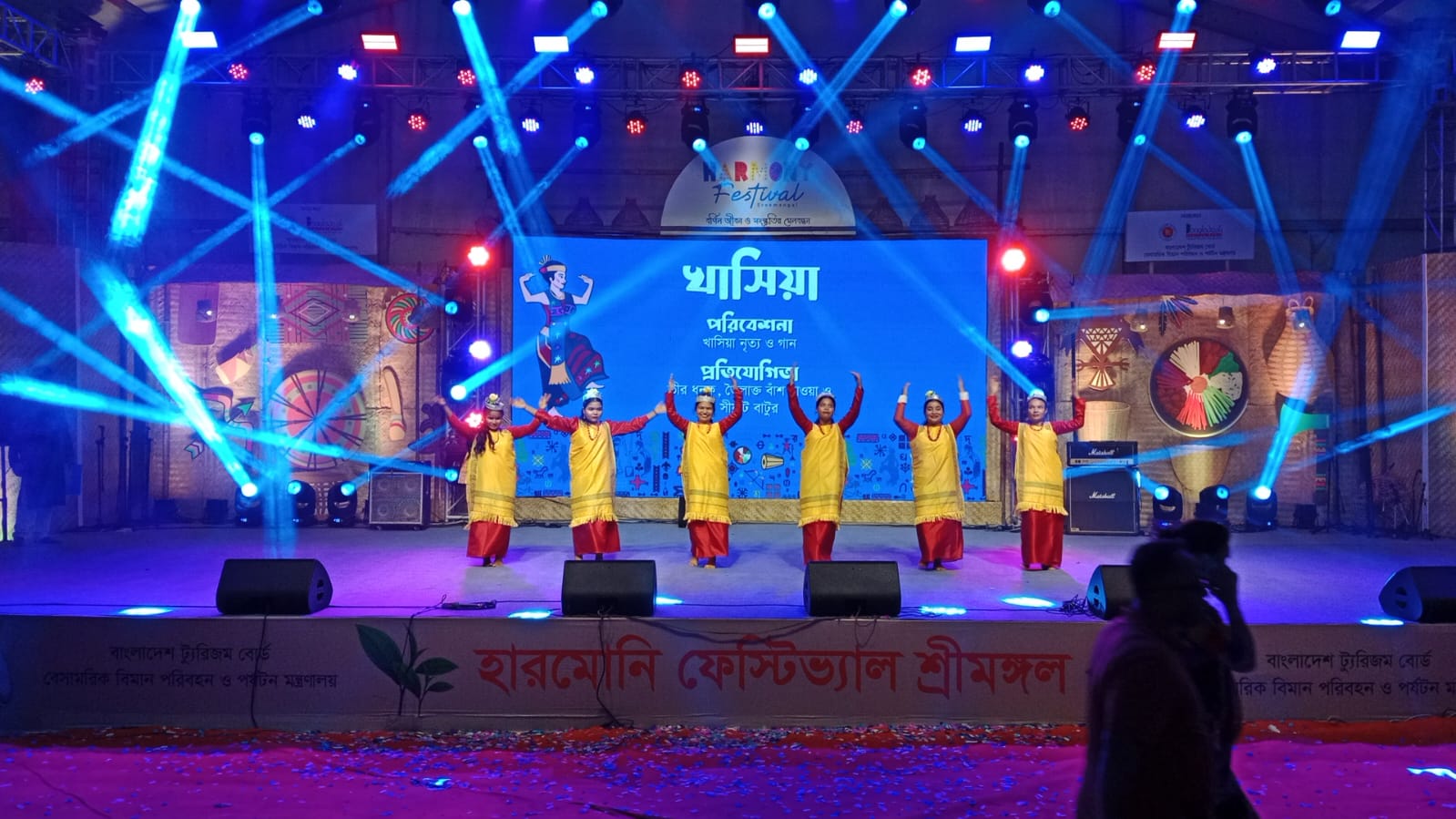
Civil Aviation and Tourism Minister Afroza Khanam inaugurated the festival on Friday (June 19) afternoon. State Minister M Rashiduzzaman Millat, Foreign Affairs Ministry Adviser Humayun Kabir, and MPs from Moulvibazar constituencies M Nasser Rahman and Mujibur Rahman Chowdhury attended the opening ceremony as special guests.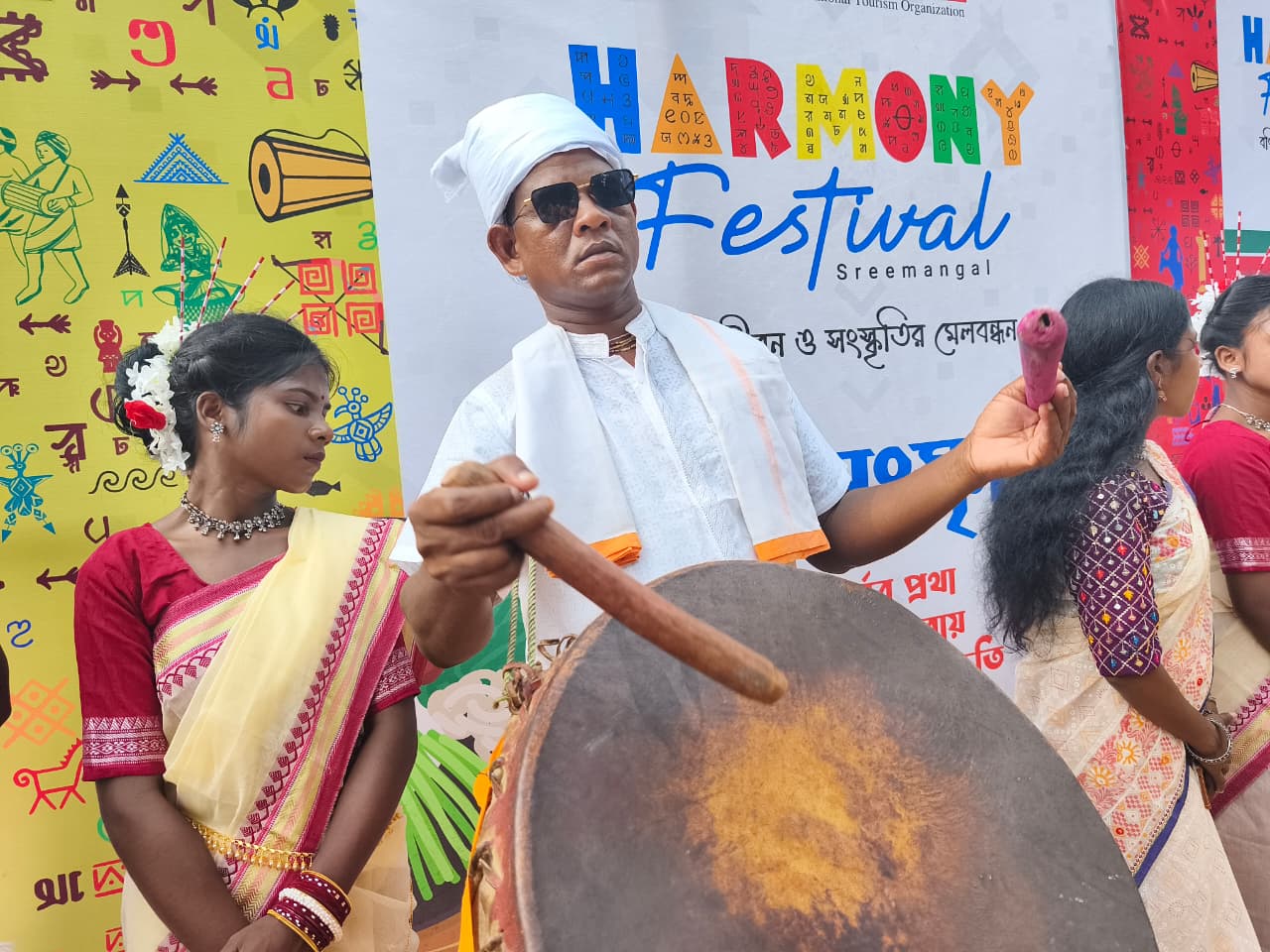
Saju Marchiang, publication secretary of the Khasi Social Council, said the performances included the Khasi community’s traditional dances and garland ceremonies, the Tripura community’s cultural dances, the Manipuri Raslila, Pung Chalom (drum dance) and Radhakrishna dance, as well as Sylhet’s traditional Dhamail.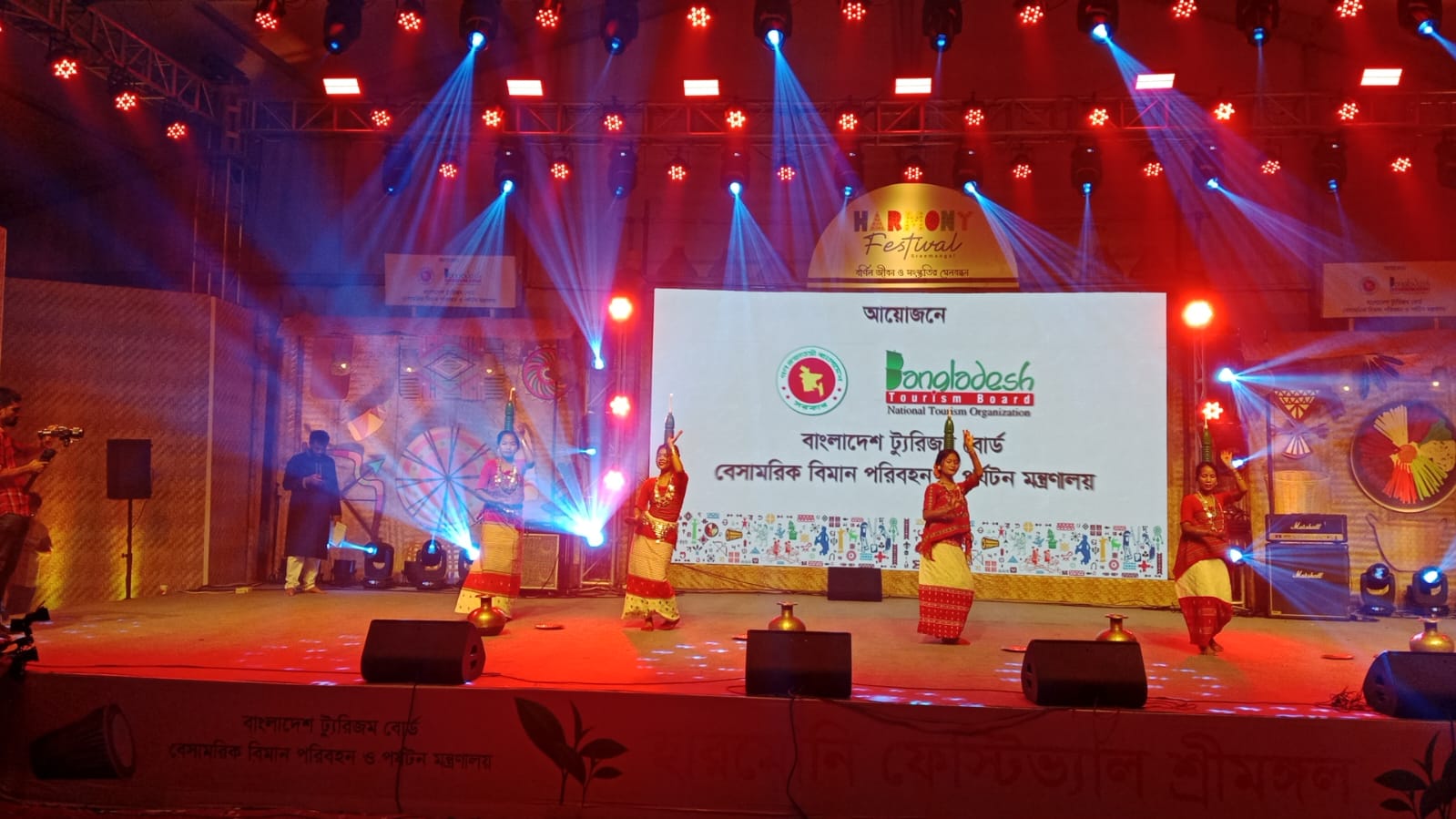
The Sabar community presented its Patra Sawra and Chariya dances, while communities including the Santal, Orao, Munda, Kurmi, Bhumij, Lohar and Kora, among others, performed their own distinct cultural dances.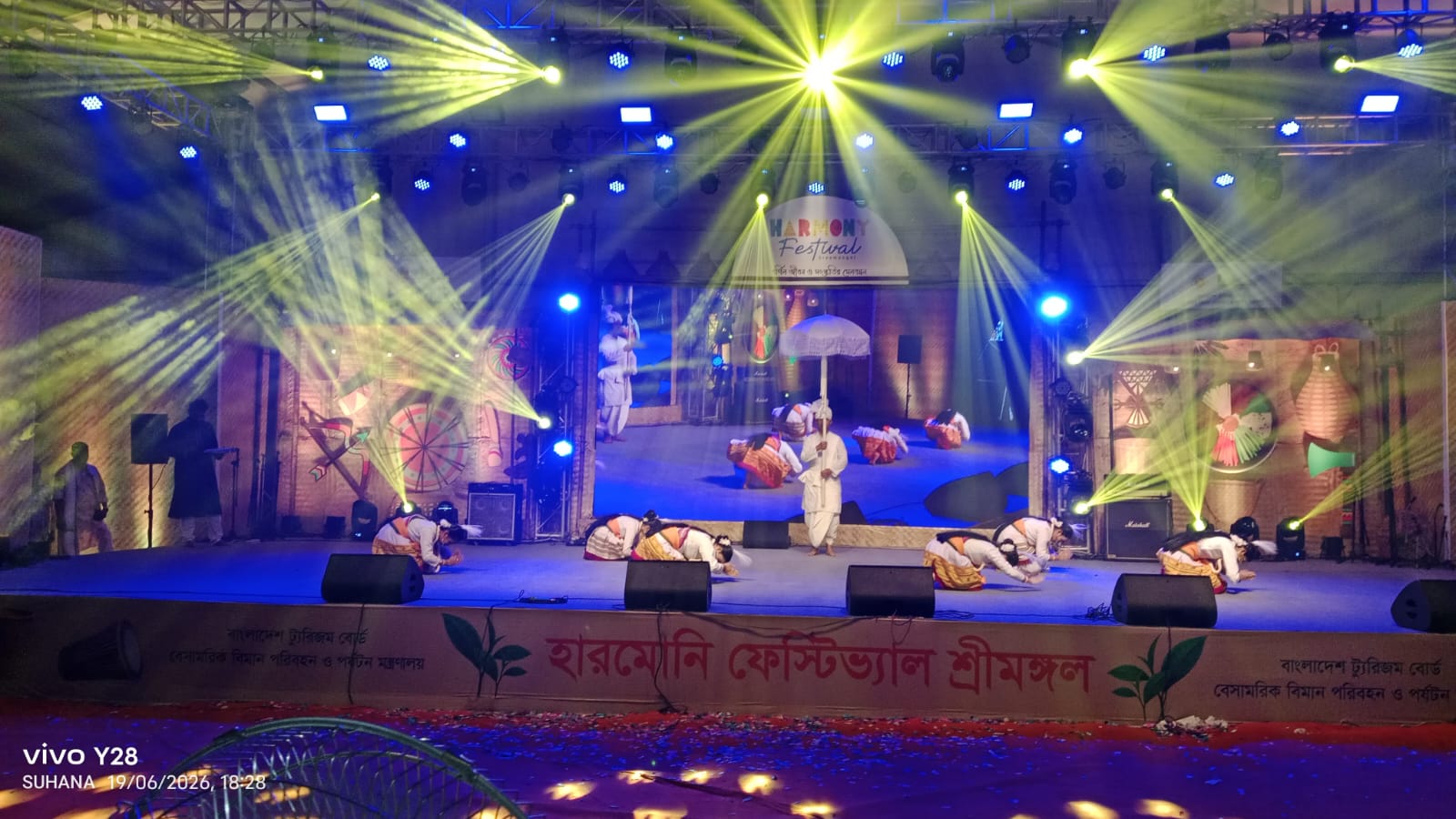
Live demonstrations, including the Khasi community’s paan (betel leaf) cultivation, Tripura waist-loom weaving, Manipuri handloom work and traditional clay pottery, were also featured. Manipuri saris and ethnic handicrafts were on display and available for purchase.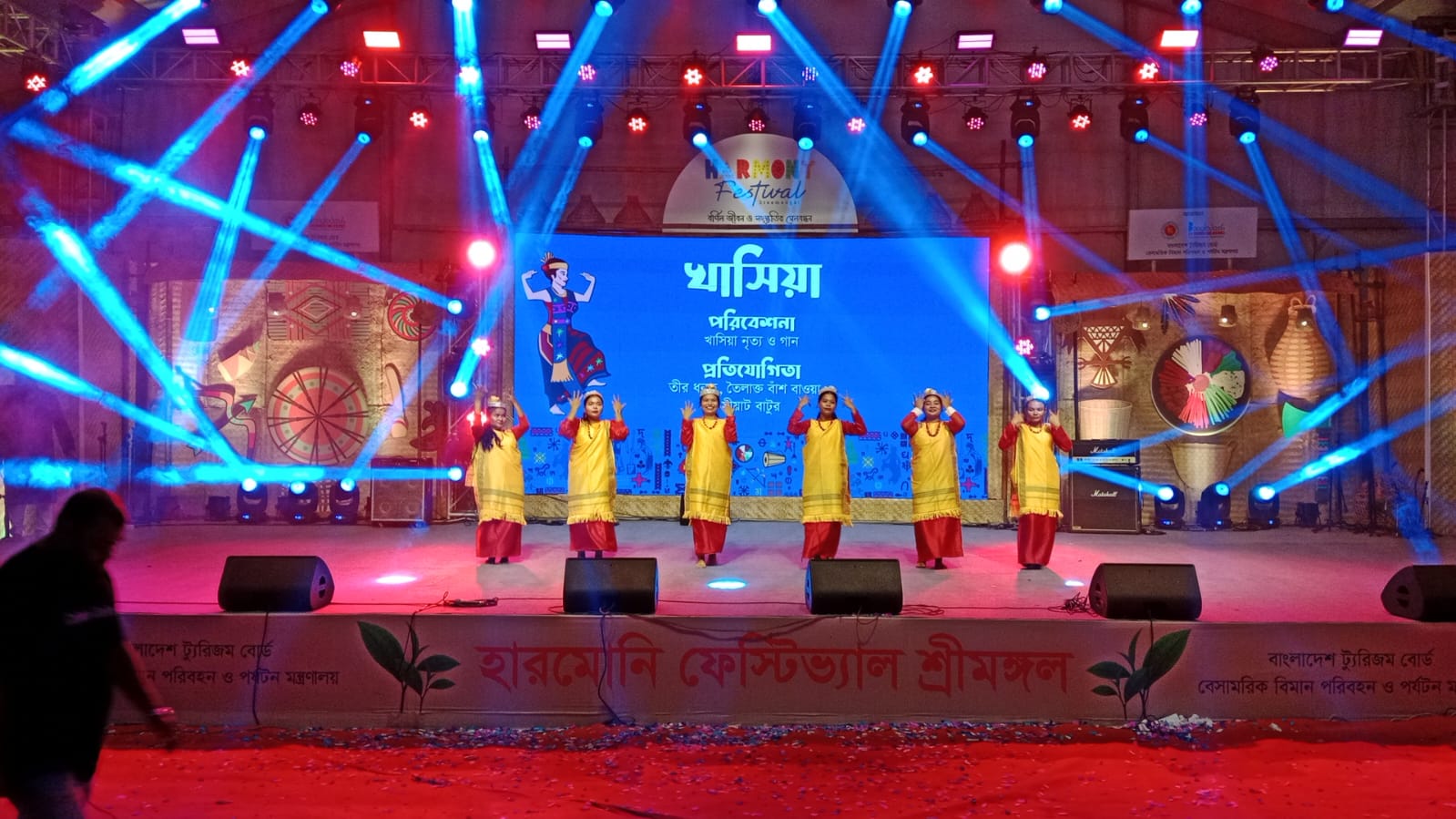
Speaking at the inauguration, Minister Afroza Khanam said the government intended to transform the cultures of small ethnic groups into viable tourism assets.
“The culture of ethnic groups is also the culture of Bangladesh. Harmony Festival is not just a cultural event; it is a unique gathering of harmony, coexistence and mutual respect,” she said.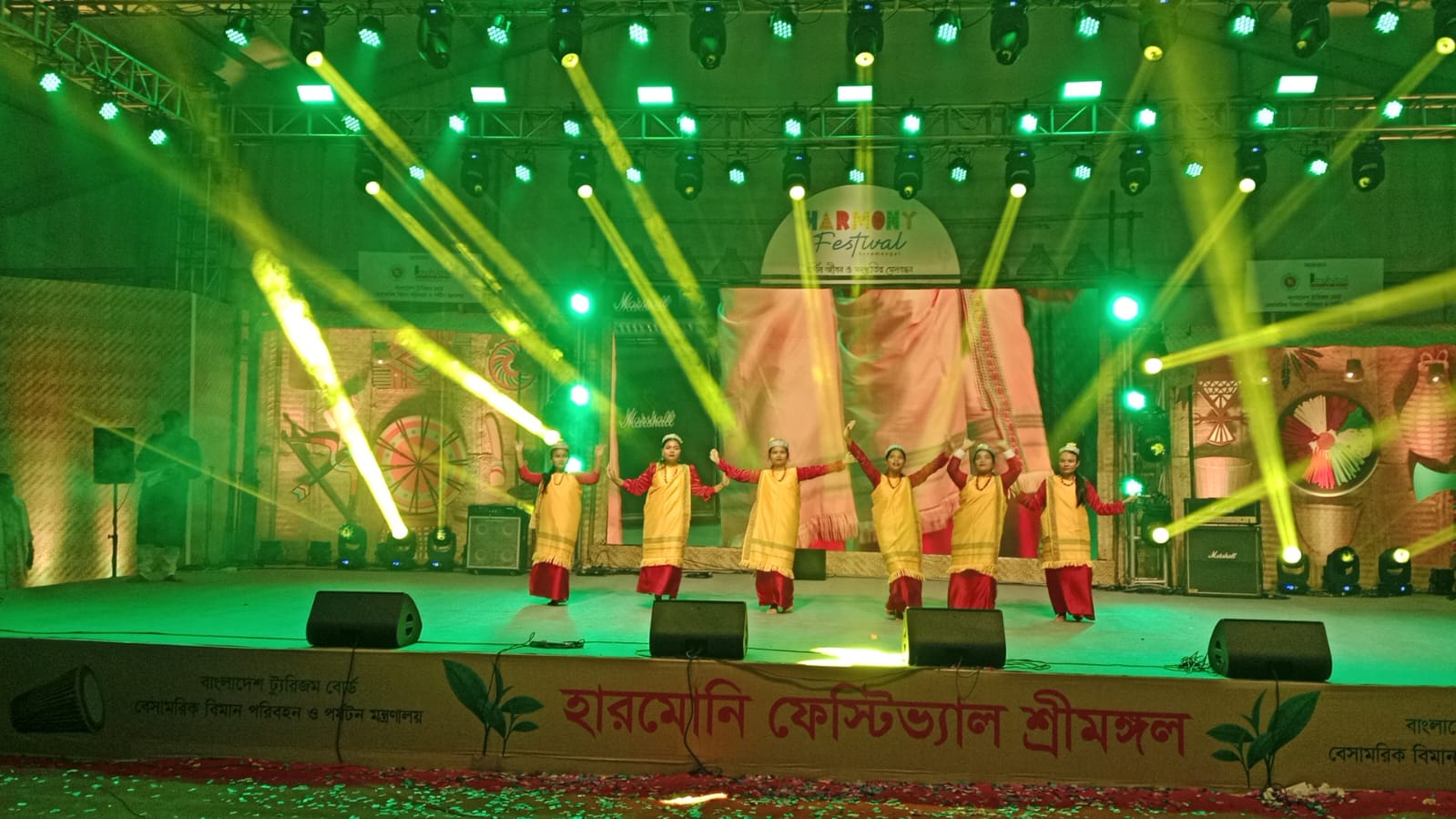
State Minister Rashiduzzaman Millat said the government was prioritising community, ethnic and water tourism to achieve balanced regional development and generate employment in the sector. Ziaul Husain, Upazila Nirbahi Officer of Srimangal, said the festival aimed to develop sustainable cultural tourism and attract international visitors.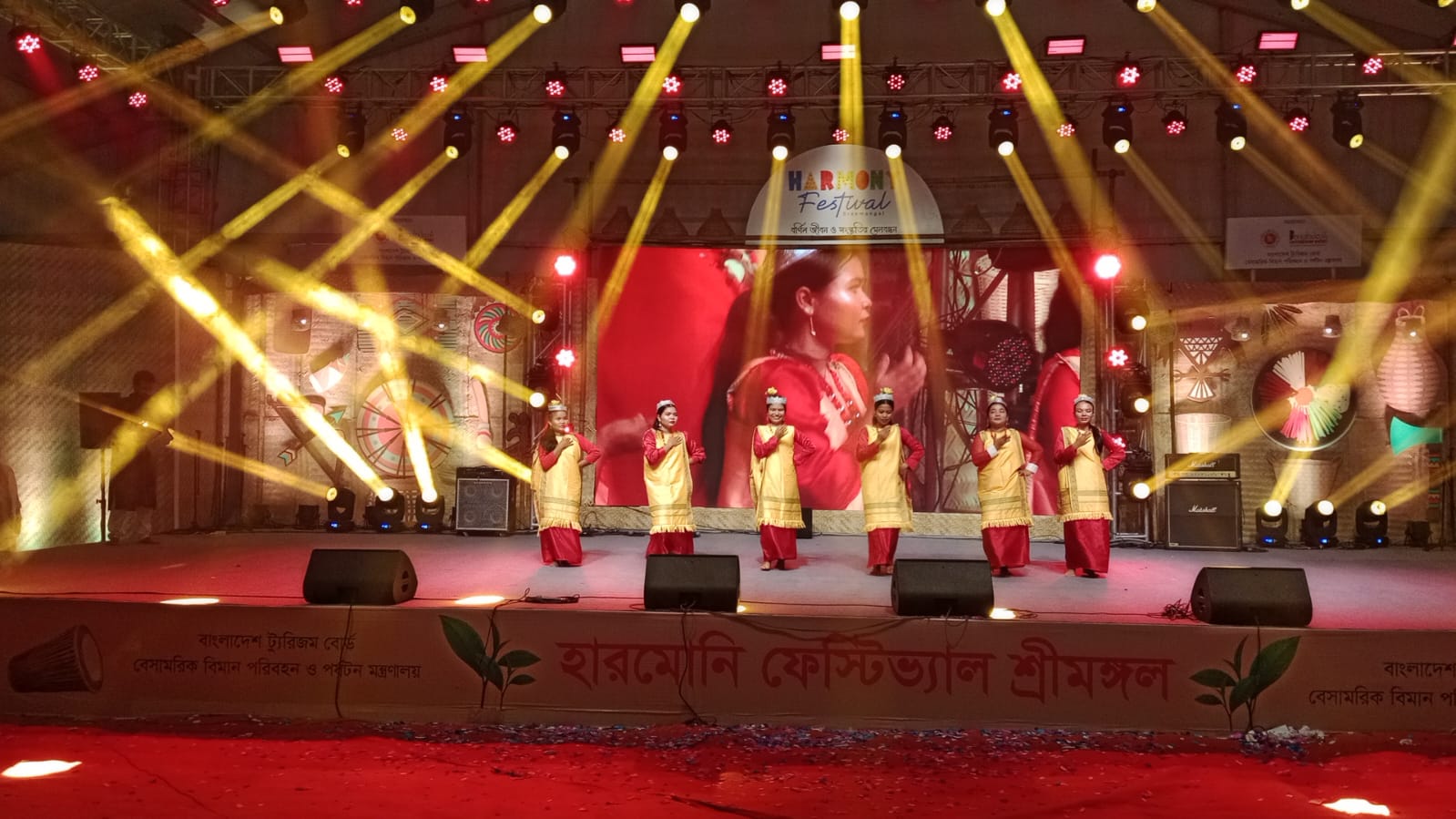
Monika Khonglah, headman of the Khasi community in Moulvibazar, watched her relatives perform on stage for the first time at the festival.
“For decades, our young people have been drifting away from their roots — learning our dances only from elders at home, never on a public stage,” said Khonglah, who has led her community for more than two decades. “When I saw my relatives perform the Khasi dance in front of hundreds of people, I felt something shift. Our dances tell stories no textbook can. If this festival can give our children a reason to be proud of who they are, then it is not just an event — it is a lifeline for our survival.”
Organisers confirmed that Harmony Festival Season 3 is planned for the second week of January 2027. The festival is part of a broader government effort to transform ethnic cultures into sustainable tourism assets while ensuring the survival of Bangladesh’s rich indigenous heritage.

 For all latest news, follow The Daily Star's Google News channel.
Comments