


How ‘Drishyam’ blurs the line between truth and illusion


There are film franchises people follow for spectacle, some for characters, some for nostalgia. Then there is “Drishyam”, a franchise built around the peculiar pleasure of watching an ordinary man think faster than everyone in the room. Since the first film arrived in 2015, Vijay Salgaonkar has become one of the most recognisable underdogs in contemporary Hindi cinema. Eleven years, three films and one increasingly elaborate web of lies later, the affection for this story says something larger about the way we consume cinema. We do not simply watch Vijay construct stories. We participate in them. And that may be the greatest trick “Drishyam” has pulled.
The first film establishes the premise with almost disarming simplicity. Vijay, a fourth-standard dropout who runs a cable business and lives an ordinary middle-class life in Goa, has one great education: movies. He watches them obsessively, particularly thrillers, and absorbs their mechanics. When his daughter Anju and wife Nandini find themselves in a terrifying confrontation with Sameer Deshmukh, the son of senior police officer Meera Deshmukh, the situation spirals into an accidental killing. Vijay steps in to protect his family. What follows becomes the central conceit of the franchise. He constructs an alibi so detailed that his family, along with the people whose memories matter to the investigation, effectively inhabit the same fictional timeline.
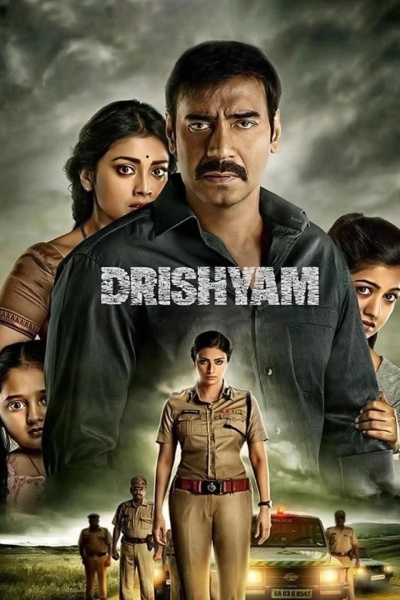
The police are investigating a crime. Vijay is creating a story. That distinction is the foundation of everything that follows. The first film asks whether an ordinary man can outthink a powerful institution. “Drishyam 2” expands the question by showing what happens when a carefully buried past develops new ways of returning. By then, Vijay had changed too. His video library has become a theatre, his ambitions have moved towards filmmaking, and his relationship with cinema has acquired another dimension. He understands movies as entertainment, yet he also understands them as machines for arranging time, memory and perception.
“Drishyam: The Conclusion” takes that idea to its logical destination. The case resurfaces years later, with new evidence and a new officer, Rajveer Singh Tomar, determined to dismantle the Salgaonkars’ carefully constructed defence. Vijay once again finds himself playing against the system, with Rajveer bringing a different energy to the pursuit. Meera remains driven by the grief of losing her son, while Indrajith Shetty enters the battle as another formidable force. The family has grown older, the case has acquired a mythology of its own, and Vijay has become something larger than the family man we met in 2015.

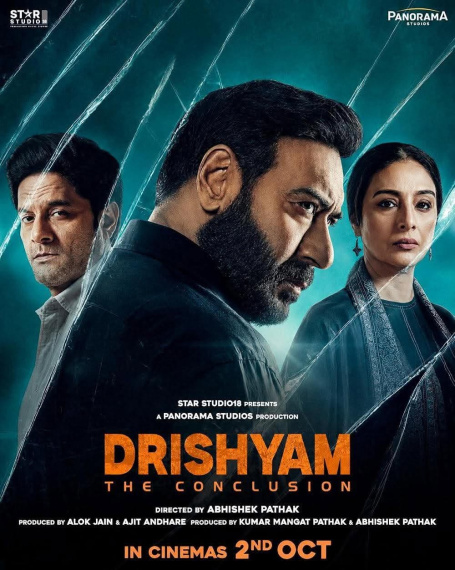
By the third film, the audience already knows his habits. We know he watches people. We know he studies situations. We know seemingly insignificant details will return at precisely the right moment. We know that when Vijay sits quietly, his mind is probably several moves ahead. And yet the pleasure survives because “Drishyam” has gradually turned the audience into accomplices. We want Vijay to win. And this is where the franchise becomes much more interesting than a conventional police thriller. The audience knows about the crime from the beginning. The mystery revolves around the method, the evidence and the escape. We watch the police search for answers while already knowing the answer. The suspense comes from another question: how much closer can the truth come before Vijay has to reveal another layer of his story?
That structure creates a peculiar relationship between the viewer and the protagonist. We become invested in the construction of the lie. Every new detail becomes something to remember. Every apparently casual conversation feels like a potential piece of evidence. Every date, location, movie ticket and public sighting acquires significance. Vijay teaches the audience how to watch “Drishyam”, and then rewards them for remembering. The October 2 joke became part of pop culture precisely because of this. Gandhi Jayanti becomes Vijay’s famous alibi, and eventually the date itself begins to evoke the franchise. It is a remarkable example of cinema escaping the theatre and becoming a shared cultural reference. People joke about where Vijay was on October 2. They talk about “Drishyam” when someone produces an unusually elaborate excuse. Vijay Salgaonkar becomes shorthand for preparation.
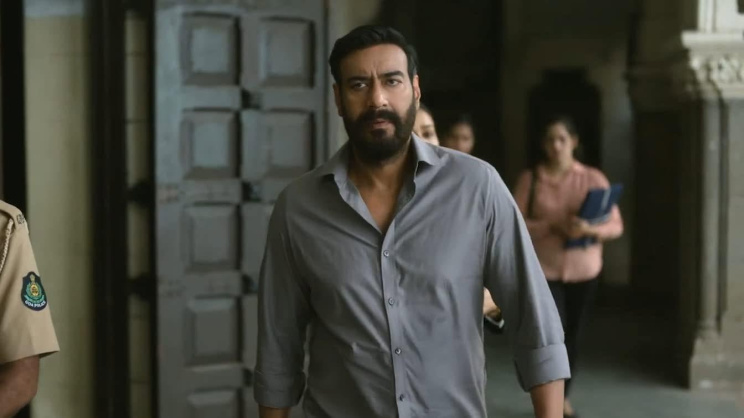
That makes his relationship with the police particularly compelling. Meera, Rajveer, Gaitonde and the other investigators possess formal education, professional authority and institutional power. Vijay possesses memory, patience and an understanding of how people construct meaning. The franchise repeatedly places these two forms of intelligence against each other. The educated system believes in evidence. Vijay understands evidence as something that exists within a story. The system asks what happened. Vijay understands that people also ask what seems to have happened.
This is where the franchise becomes unexpectedly contemporary. Vijay’s famous philosophy that a story needs to feel true captures an uncomfortable reality of modern life. People respond to narratives constantly. Perception shapes belief. Repetition creates familiarity. Familiarity creates credibility. “Drishyam” turns those ideas into a thriller, then places them in the hands of a middle-class father trying to protect his family. His morality makes the entire experience even more fascinating. He commits himself to protecting his family at an extraordinary cost. The audience understands his motivation immediately because the films establish the Salgaonkars as a recognisable family before placing them inside the crime. Their fear feels domestic. Their panic feels intimate. Their dependence on Vijay feels believable. As the films progress, the family also becomes increasingly involved in his way of thinking. They learn to live inside the story he has created.
That is why Vijay remains emotionally accessible even as his actions become increasingly elaborate. He is operating in moral grey areas, yet the emotional core remains familiar: a father believes his family needs him, and he decides that he will carry the burden himself. There is also a beautiful irony in the fact that his greatest weapon comes from the very thing that defines him as an ordinary man. He loves movies. He learns from thrillers, absorbs their structures and eventually starts applying their logic to reality. His life becomes increasingly cinematic until the boundary between watching a story and creating one disappears. By the third film, that idea reaches its fullest expression. He has moved from watching movies to running a theatre, aspiring to produce films and understanding the power of narrative from inside the industry. The man who once consumed stories has become a storyteller himself. The most elaborate story of his life is the one we have been watching.
And this is exactly why “Drishyam” has endured. Its real subject is larger than murder, evidence or police investigation. It is storytelling itself. It asks how people remember, how institutions construct truth, how families protect one another and how easily reality can become dependent on the story attached to it. Most thrillers ask the audience to discover the truth. This trilogy gives us the truth early and then asks us to protect it. That makes us unusually active viewers. We remember the details. We anticipate the traps. We wait for the police to catch up. We experience the strange satisfaction of seeing Vijay turn another impossible situation into a carefully arranged sequence of events. Even when we sense the shape of the solution, we want to see how he gets there.
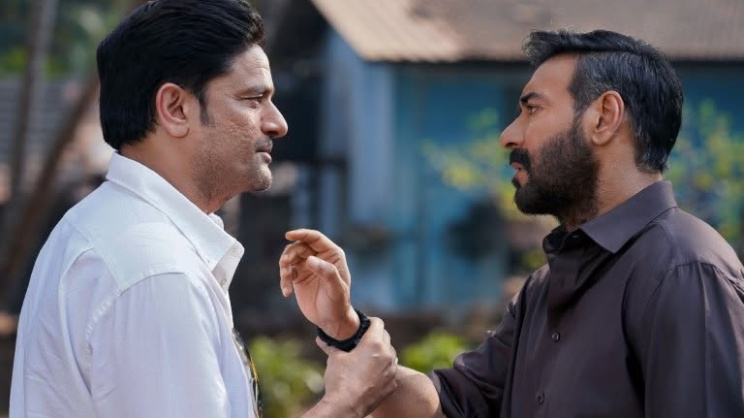
The franchise works because it respects the audience’s appetite for a puzzle while giving that puzzle a deeply emotional centre. It takes the familiar cinematic figure of the protective patriarch and gives him the mind of a screenwriter. It takes an ordinary family and places it inside an extraordinary moral dilemma. It takes the machinery of the state and pits it against a man whose greatest qualification is his ability to pay attention. For eleven years, Vijay Salgaonkar has lived in the space between truth and belief, family and law, cinema and reality. His greatest achievement is making millions of viewers believe in him.

Perhaps that is the final “Drishyam” trick. We came to watch a man construct a story convincing enough to fool the police. Somewhere along the way, we became part of the audience inside that story. We know Vijay has secrets. We know his hands are hardly clean. We know the world he has built rests on an extraordinary act of deception. And still, we find ourselves waiting for Vijay to win.
 For all latest news, follow The Daily Star's Google News channel.
Comments