Gandhi’s return to Noakhali
Above the Bay of Bengal, in a lowly village within the Gangetic Delta, an elderly man of 77 had made an extraordinary effort to bridge the political rift between Hindus and Muslims. What began as Mahatma Gandhi’s peace mission to Noakhali to mend divisions in the riot-ridden region in 1946 evolved into an incredible political effort to hold India together as the nation rocketed towards partition. To halt the rift, he said, “I will return to Noakhali; if necessary, I will die there.”
Noakhali stands as a monument to Gandhi’s search for the lost dream of nonviolence. British authorities had cast an ever-growing shadow over the movement’s effectiveness with their claims that nonviolence had ended in violence across the subcontinent. In response, Gandhi, a Hindu man, travelled to Noakhali to live among the Muslim population and put his nonviolent approach to the test.
Now let us turn to Noakhali.
Why Noakhali, not Delhi?
Setting out from distant Delhi, Gandhi journeyed to the low marshlands and found far more hope than he had been seeking. His retreat was therefore a conscious refusal and a deliberate choice of the local over the national, and perhaps of a particular community-engaged practice over abstract political wrangling in Delhi. His interactions with the people of Noakhali embodied an idea of mutual brotherhood between Hindus and Muslims for India and beyond, which he found achievable only through reciprocal care, with Muslims aiding Hindus and vice versa. For him, true freedom meant enabling a harmonious relationship between Hindus and Muslims and constituted a form of resistance to the division that had torn the community apart.
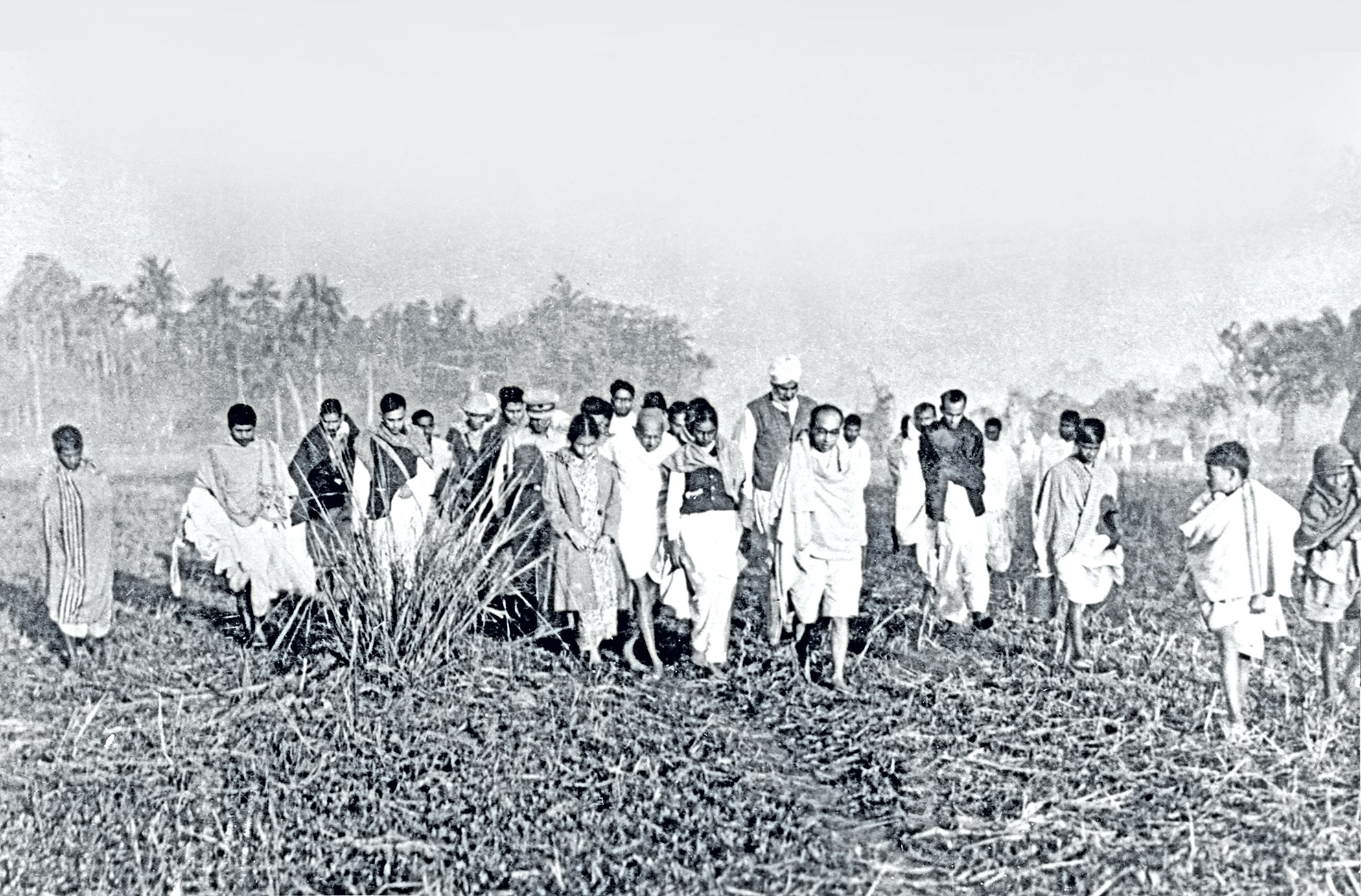
For him, any force of destruction in the name of religion was a means of upending the fabric of the community, whether in Noakhali, Bihar, or anywhere else in India. Violence was only a tiny and isolated fraction of a larger canvas of usual everyday interactions between Hindus and Muslims. Retreating to the countryside, Gandhi, with four followers, embarked on a pilgrimage of penance, visiting the inhabitants of India’s villages to find the answers to her problems. And he let the Indian National Congress and the Muslim League continue their seemingly endless debates over India’s future in Delhi. This, for him, would be his last and greatest experiment with nonviolence. To rekindle hope, he reflected on Indian history as he walked across the harvested paddy fields, singing Tagore’s words, “If they answer not your call, walk along, walk along.”
Standing for Hindu-Muslim unity, he believed that the stories of both groups were inextricably interwoven like an oriental rug and that it was impossible to suddenly rewrite the entire span of history. He, moreover, wanted to make clear that the Hindu-Muslim community had not simply formed in India overnight and would not be broken by violence, as their coexistence pervaded the historical time in which they lived. Amid the retaliatory violence in Noakhali following the Great Calcutta Killings, Bengal needed a proper community-based approach at the local level of human relationships rather than political negotiation. He was up to the task.
While acknowledging the brutality of the violence, Gandhi, a man of ambiguity, focused on restoring trust, coexistence, and a shared sense of community in a Muslim-majority area. He helped us pay heed to the fact that the nuances and complexities of Hindu-Muslim relationships shaped societal ties far more profoundly than the usual narrative of religious hatred suggested. Gandhi wanted to spend the rest of his life in Noakhali, if India was to be partitioned, to demonstrate his vision of a borderless country.
What did Noakhali give Gandhi?
Gandhi felt almost hopeless over the series of riots unfolding across Bengal. He came up with an alternative: undertaking a walking tour throughout Noakhali. That was a physical challenge for him, but the impulse to go to Noakhali was irresistible. The question of saving Hindus rather than Muslims seemed potentially controversial. And yet, he reiterated more than once that if the erring Biharis did not turn over a new leaf, he would fast unto death. The idea of saving India from sectarian violence, which had fermented beneath the surface of daily interactions under British colonial rule, appeared bigger than leaning towards protecting either community in the name of a peace mission. He suggested that Nehru should remain in Bihar until the dust from the riots had settled. The success of Noakhali, if Muslims and Hindus were to learn to live together, would come through a new life of nonviolence, which was then in its moribund stage.
While visiting a local area, Gandhi first encountered the challenges of working in Noakhali. As he approached a group of teenagers, someone from the Muslim community said, “কতা কইছ না, কতা কইছনা (Don’t talk, don’t talk).” If you’re from Bangladesh, you might get a giggle out of this expression in Noakhali’s local dialect. This perhaps presented an initial barrier, but the resistance lasted only a short while. Within a short span of time, community members, mostly Muslims, flocked to his prayer meetings in increasing numbers. Almost all these people had never seen a prominent Indian leader in their lifetime, but knowing Gandhi was around made attending his talks an appealing prospect.
Gandhi had lost hope in the Indian people, lamenting that no one listened to him and that peace and amity remained distant prospects. But Noakhali, a local region, gave Gandhi a once-in-a-lifetime chance to prove himself, to address the question of riots once and for all.
Around this time, Gandhi had lost hope in the Indian people, lamenting that no one listened to him and that peace and amity remained distant prospects. But Noakhali, a local region, gave Gandhi a once-in-a-lifetime chance to prove himself, to address the question of riots once and for all.
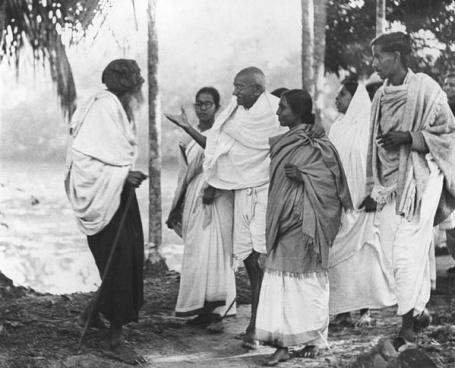
People who came to his prayer meetings often posed difficult questions to Gandhi. One of them inquired, “Gandhi, why did you not come to an understanding with Mr Jinnah?” As always, Gandhi’s answer was as intriguing as it was puzzling: the people must make peace among themselves, and this spirit of neighbourliness would be reflected by their leaders. To expand mutual trust, Gandhi joined a number of intercommunity dinners where caste Hindus, Muslims, Untouchables, and Christians sat side by side.
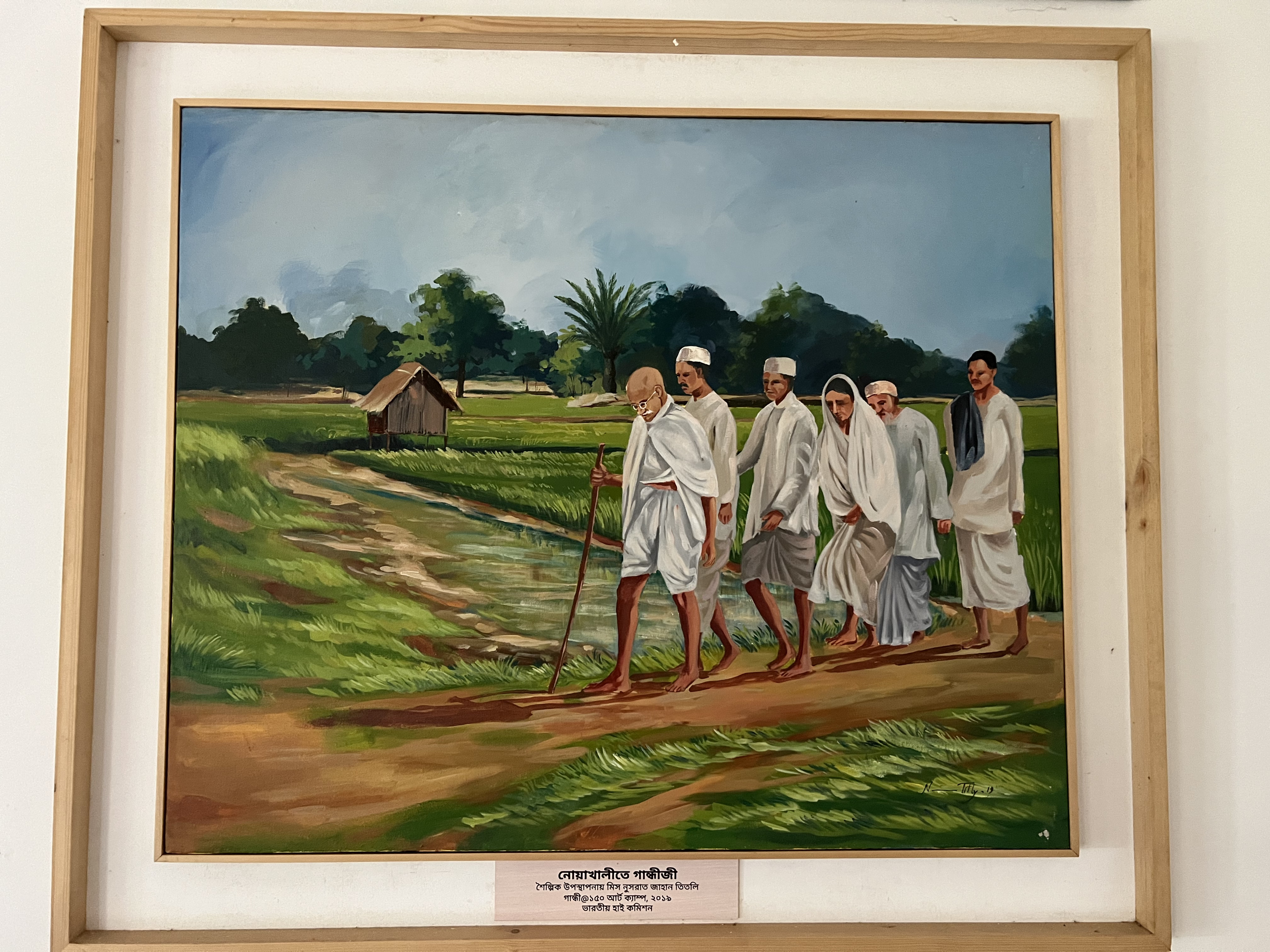
Beyond other issues, Gandhi studied the entire community from within, including its religion, culture, and, most importantly, economy. He found that many landlords were Hindus and that the riots had occurred partly because of resentment over high rents.
Gandhi’s work transcended conventional perspectives on riots, in which the blame game dictates the public sphere. His physical presence profoundly helped restore and rekindle the lamp of neighbourliness, conjuring away the spectre of communal animosity.
Remembering Gandhi
Following his visit, Gandhi became a household name in Noakhali. Abdul Khalleq recounted how his father occasionally shared stories about Gandhi: “You were born in the year Mahatma Gandhi came to Noakhali, and he visited and camped in Dewanji Bari, Duttapara.” This recollection shows how local communities have woven Gandhi’s sojourn into their collective memory. As in many other places in India where people showed him exuberant affection, Gandhi became a prominent figure in Noakhali’s popular imagination.
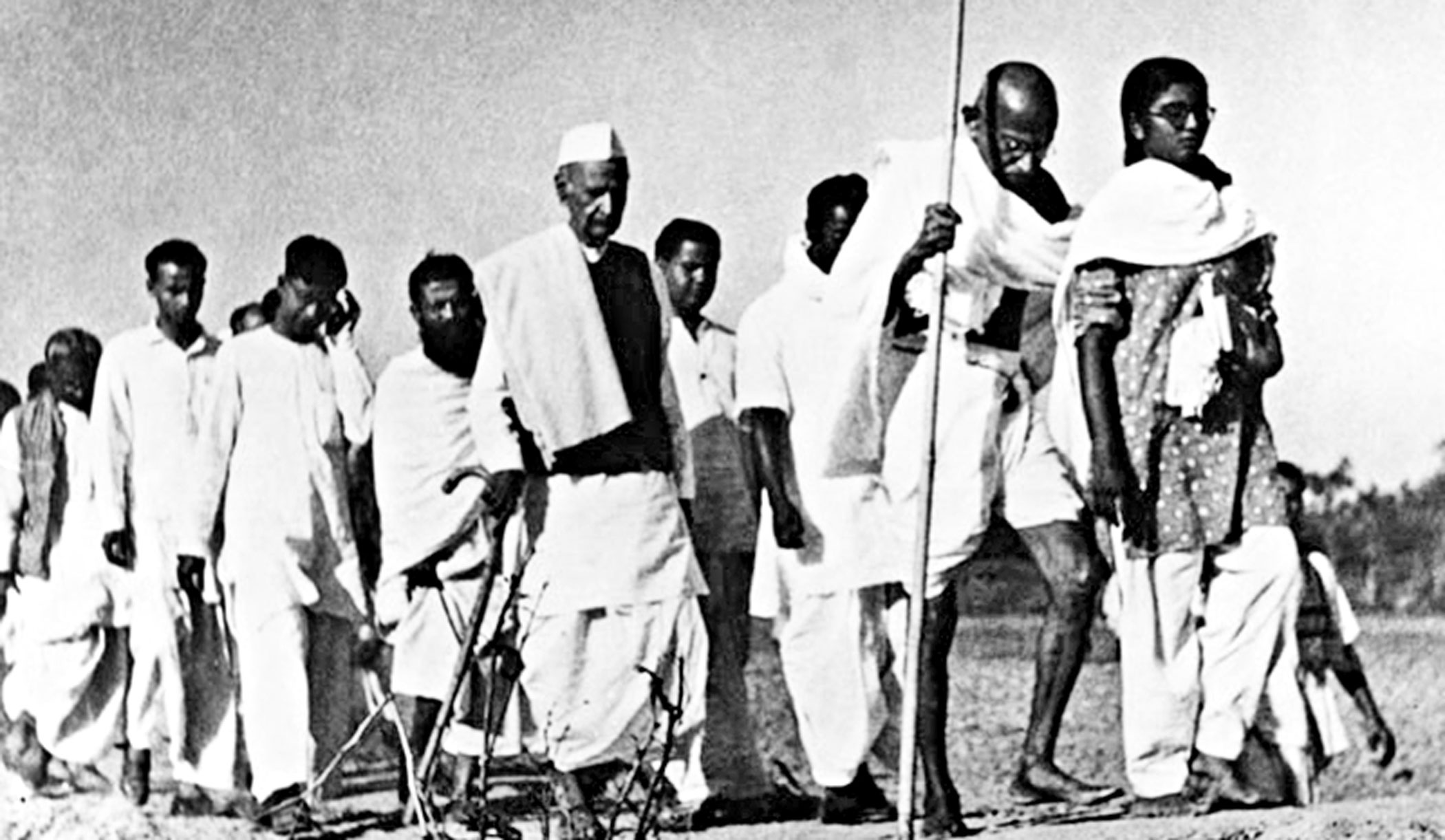
Importantly, not only did those who had seen him remember him, but people who had not had the opportunity to witness him also kept him alive in conversation. For example, a Muslim inhabitant named Latiful Bari shared that he did not have the good fortune to meet Gandhi, but he had seen Rabindranath Tagore in 1940, just a year before Tagore passed away. Bari also stressed the importance of collecting documents related to Gandhi’s visit. He further suggested that such efforts would contribute to new intellectual dialogue and stimulate renewed interest in Gandhi’s work and legacy.
In addition, Bari drew a comparison between Gandhi and Rabindranath, suggesting metaphorically that Mahatma, like Tagore, was an ocean, thereby affirming the breadth and enduring significance of their intellectual influence.
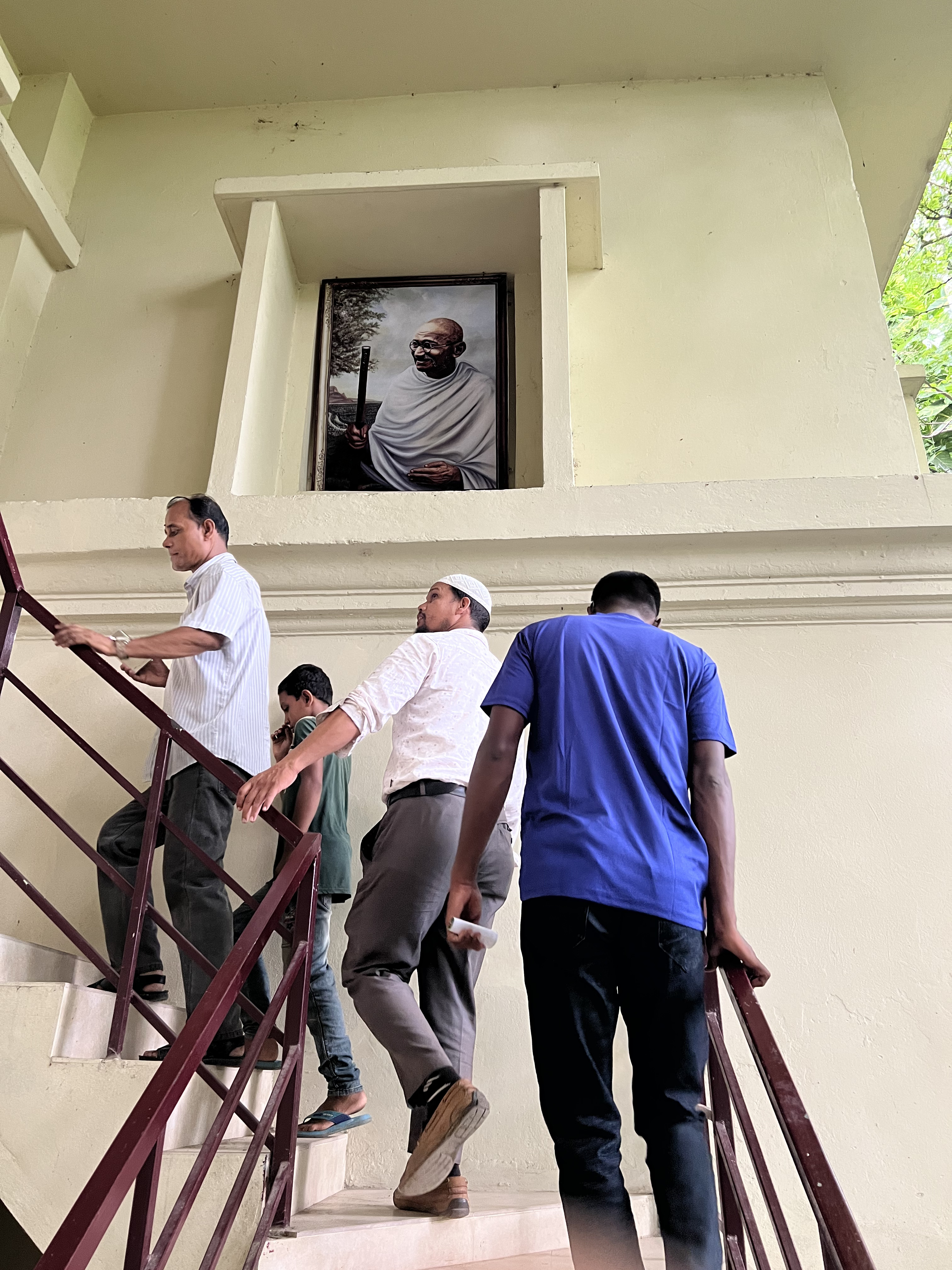
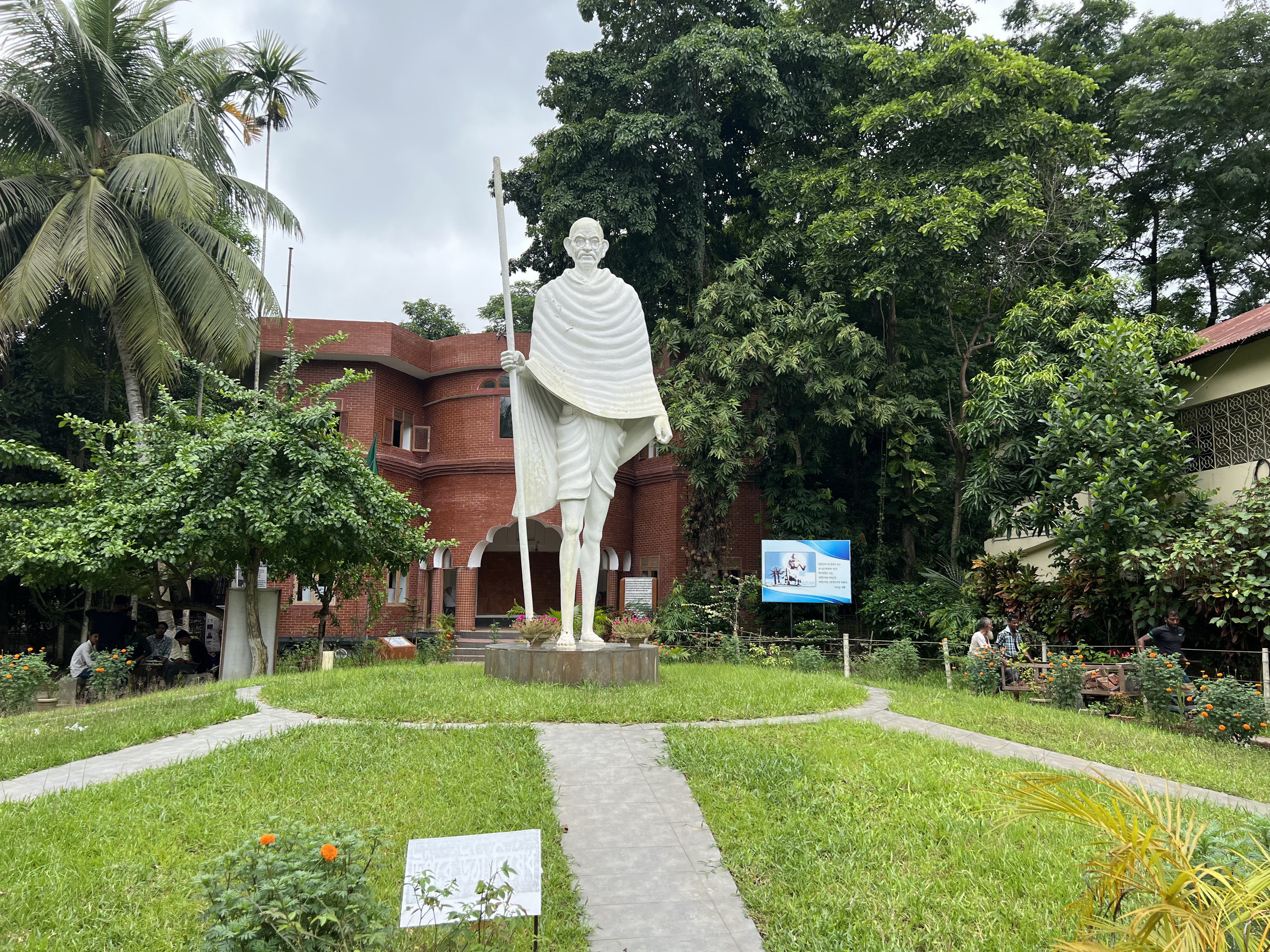
After Gandhi’s assassination, Nehru remarked in a melancholic tone that the light had gone out of our lives. But that light still shines through the minds and memories of Noakhali’s inhabitants. The Gandhi Ashram Trust, a philanthropic organisation in Noakhali, erected a giant monument to Mahatma Gandhi to honour his contribution to the community. People still remember him fondly through this monument. When asked about Gandhi, visitors to the Gandhi Trust Museum often share and reproduce memories passed down from predecessors, parents, or distant relatives.
Conclusion
Gandhi remains one of the most consequential political figures in the history of the subcontinent. While many of his contemporaries pursued solutions to India’s problems in metropolitan cities in the twilight of the British Empire, Gandhi withdrew to Noakhali, a rural area, to address the political divide in a secluded setting. What he found in that choice has recently begun to receive proper historical attention.
Gandhi had studied in England, travelled to South Africa, and, crucially, spent time in many parts of India. However, while working in deliberate remoteness, he fashioned a vision of Hindu-Muslim unity rooted in the Bengal countryside yet reverberating far beyond it. His visit holds a critically important place in the subcontinent’s history and offers not merely a historical reference but continuing instruction.
Gandhi placed his faith in the power of the local, and therefore the universal, which remains a model of what coexistence can accomplish in Bangladesh, India, Pakistan, and beyond.
Parvez Rahaman is an Assistant Professor and Chair of the Department of History and Philosophy at North South University, Dhaka, Bangladesh. He can be reached at pervejur.rahaman@northsouth.edu.
Send your articles for Slow Reads to slowreads@thedailystar.net. Check out our submission guidelines for details.
Why does Tagore still trouble Bangladesh’s idea of ‘us’?

Can Bangladesh make better use of its zakat money?
Three revolutions that reshaped the world
Paradise lost and found: Rediscovering early modern Bengal
Unbound Mother: The making and remaking of Kaali in Bengal
Do great leaders make history, or does history make them?
Poison and cremation: A forensic history of colonial Bengal
Partition, Bor Porong and the Chakmas’ unfinished struggle for belonging
The young radicals who challenged 19th-century Bengal