


‘Matir Maya’: Exhibition explores memory, identity and heritage through clay
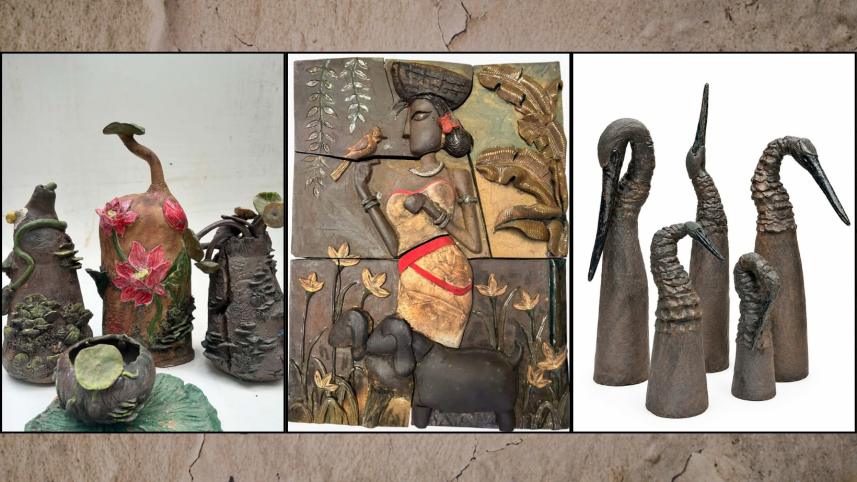
Clay is never merely clay. Within it lie the traces of human settlement, civilisation, memory, agriculture, culture and generations of lived experience. When clay passes through the hands of an artist, it ceases to be simply an element of the earth; it becomes memory, body, history and identity transformed into a visual language.
It is from this intimate relationship with the earth that “Matir Maya” emerges — a ceramic exhibition featuring students Hiran Roy, Tahsin Tabasum Oishi, Aysha Siddika Usha, Bishal Saha, Marjia Akhter Moumita, Mahbub Alam Hridoy, Rezwana Mallick Barsha, Samura Alam and Hrishik Majumder of the 2019–20 academic session of the Department of Ceramics, Faculty of Fine Arts, University of Dhaka.
The exhibition opened on October 1 at the Zainul Gallery, Faculty of Fine Arts, University of Dhaka. It was curated by Professor Dr Md Azharul Islam Sheikh, and has been organised by the 72nd Batch of the Department of Ceramics.
The title itself — “Matir Maya”, or “The Enchantment of Clay” — captures the central philosophy of the exhibition. Here, clay is not merely a medium. It becomes a subject, a vessel of memory and a symbolic bridge between human beings and their roots.
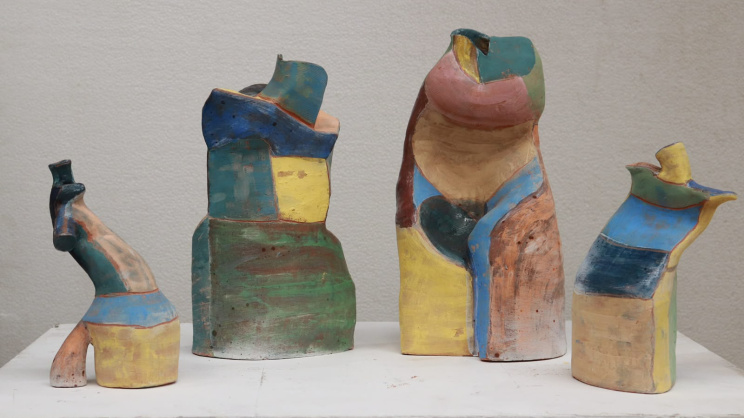
The beauty of ceramic art lies partly in the nature of its materials. Clay, water and fire undergo physical and chemical transformations, while the artist adds imagination, experience and touch to the process. When a raw lump of earth survives the intensity of the kiln and emerges as a lasting work of art, a unique collaboration between nature and human creativity takes place.
This philosophy resonates strongly in the curator’s statement. Ceramic art, he suggests, is not simply the creation of forms from clay; it is a synthesis of nature, imagination, emotion and technical skill. Clay, water, fire and the artist’s touch come together to create a dialogue between tradition and modernity.
It is this dialogue that makes the works in “Matir Maya” simultaneously personal and collective.

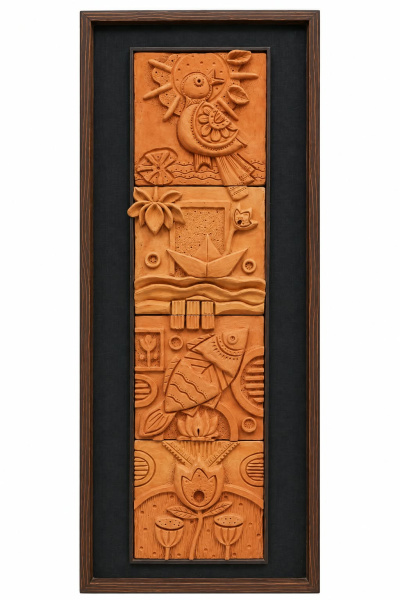
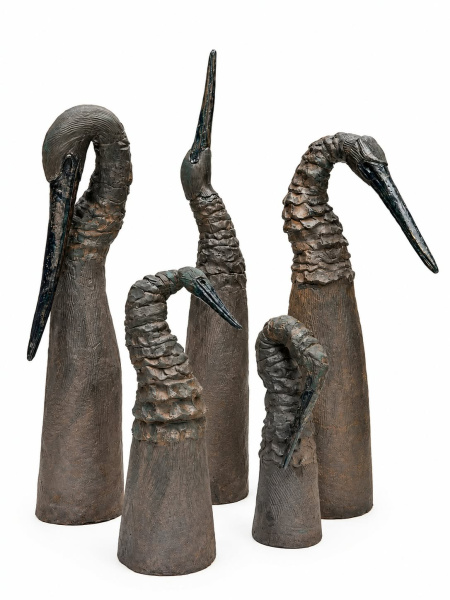
The catalogue reveals a diverse range of artistic approaches. Some works explore the fragmentation and deformation of the human body; others engage with questions of existence and civilisation. Elsewhere, artists turn towards nature, animals, folk memory and cultural heritage.
The stoneware work “Divided Civilization—Mother of Vividness and Children”, for instance, appears to offer a symbolic reflection on civilisation and its inheritance. “The Chaos of Existence” turns towards the instability and disorder embedded in human existence.
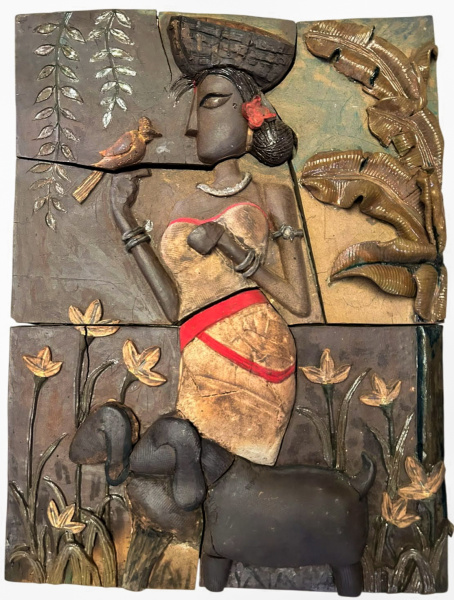
Meanwhile, “Santalai Meye” brings together the figure of a woman, folk cultural references and the tactile body of clay.
What is particularly compelling about these works is that clay is not used merely to imitate familiar forms. Its own texture, density, fragility, colour and surface become integral elements of the artistic language.
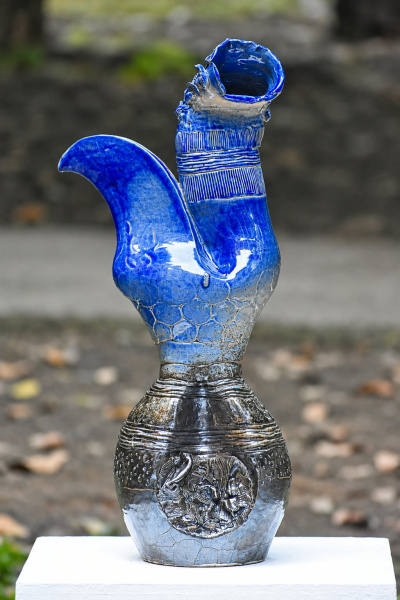
Some surfaces are rough, others smooth; some retain the marks and colours created naturally by the firing process. The kiln, in a sense, becomes a collaborator — an unpredictable co-creator alongside the artist.
The human body occupies a significant place in several works in the exhibition. Here, the body is not simply a physical form; it becomes a metaphor for human existence.
Elongated limbs, distorted bodies, suggested facial features and unconventional proportions invite viewers to reconsider the familiar human form. Moving beyond conventional ideas of beauty and ugliness, these works raise questions about the nature of the body and the emotions, fears, desires and memories that inhabit it.
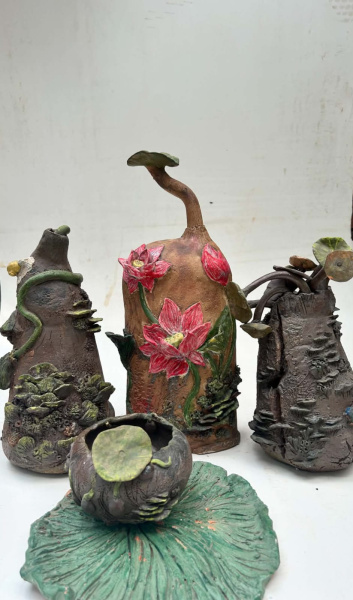
Elsewhere, nature becomes a source of inspiration. Organic forms evoke moss, seeds, fruit, animals and vegetation. Works such as “A Cluster of Pottery” and “Parrot”, along with several organically shaped stoneware pieces, establish an intimate relationship between clay and the natural world.
The artists do not simply imitate nature. Rather, they appear to translate its rhythms into the language of clay.
One of the stoneware works in the catalogue is titled “Touch”. The title itself could be read as a key to the exhibition.
Humanity’s relationship with clay began with touch. Farmers touch the earth; potters knead it; children play with it; builders transform it into shelter; and artists give it new bodies through imagination.
Clay is therefore one of humanity’s oldest forms of contact with the world.
“Matir Maya” brings that ancient tactile relationship into the realm of contemporary art.
Bangladesh possesses a rich and enduring tradition of pottery and terracotta. From rural household vessels, pitchers, lamps and clay toys to terracotta architecture, clay has been deeply embedded in the country’s everyday life and visual culture for centuries.
Yet contemporary ceramic art does not simply reproduce that heritage. It questions, deconstructs, reinterprets and gives it new meanings.
The young artists participating in “Matir Maya” similarly negotiate between two worlds. On one hand, they inherit Bangladesh’s long tradition of clay and pottery; on the other, they engage with contemporary artistic languages — abstraction, sculpture, experimentation, texture and conceptual thinking.
Here, therefore, clay becomes both heritage and experimentation.
The significance of “Matir Maya” extends beyond the technical achievements of a group of art students. The exhibition also offers a glimpse into how a new generation of artists perceives its time.
For these young artists, clay can become a body, a landscape, a memory of civilisation, a fragment of folk heritage or a metaphor for the uncertainty of existence.
This multiplicity of interpretations allows the exhibition to move beyond the conventional boundaries of a student exhibition.
In his curatorial statement, Professor Dr Md Azharul Islam Sheikh expresses a hope that beautifully captures the spirit of the exhibition: that through the touch of art, clay will speak, and through the enchantment of clay, our roots and the eternal stories of creation will awaken.
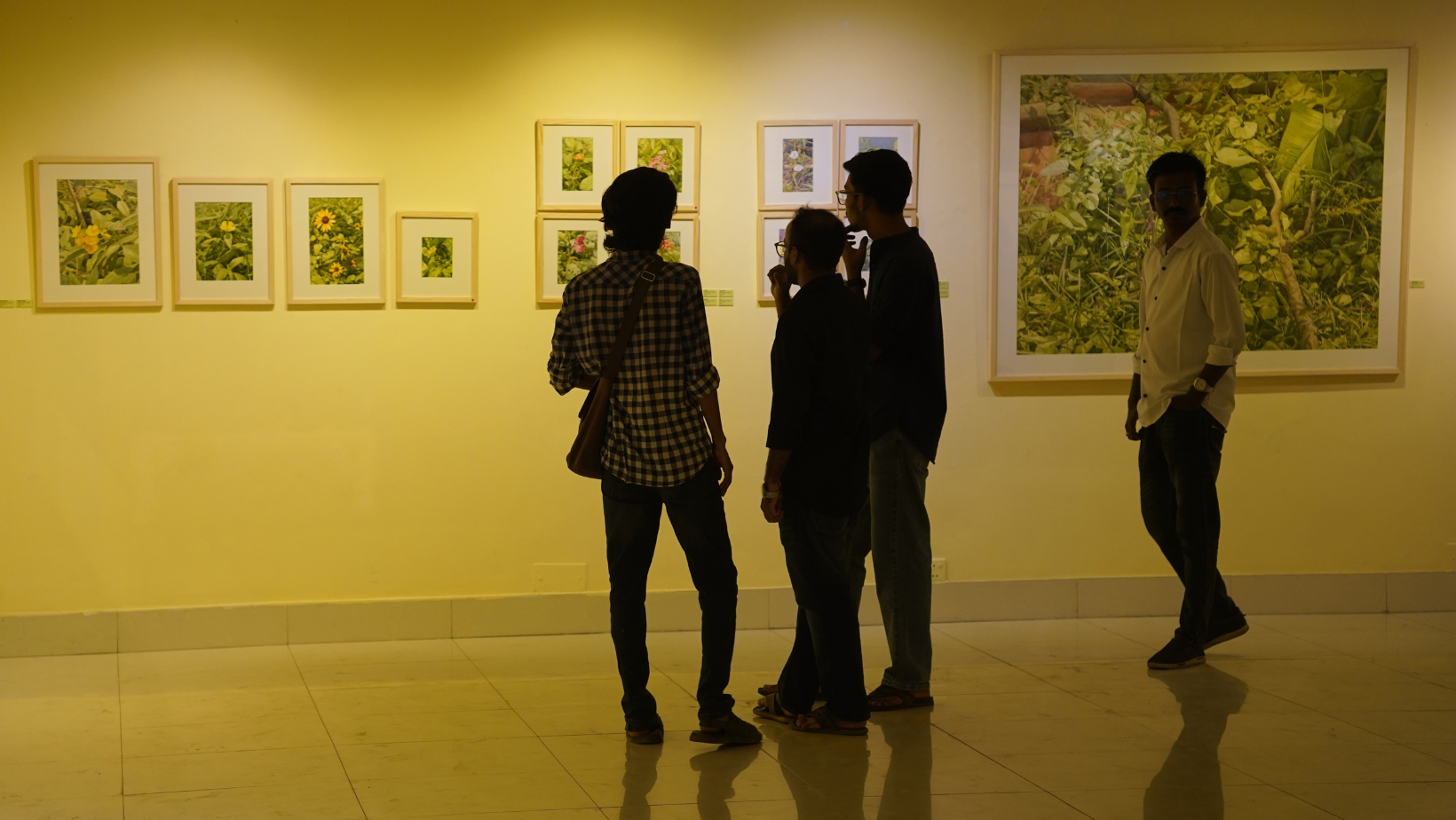
Inside the white walls of the Zainul Gallery, these clay bodies therefore refuse to remain confined to the gallery. They take us deeper — to riverbanks and fields, to the potter’s wheel, to the smell of fired earth, to folk memories and, ultimately, to that primordial human identity in which life itself began with the soil.
“Matir Maya” is thus a young artistic journey back to the roots — a journey in which clay becomes not merely an element of the earth, but a lasting language of human memory, identity and soul. The exhibition will run until tomorrow (October 7), from 11:00am to 7:00pm.
 For all latest news, follow The Daily Star's Google News channel.
Comments