


‘The Struggle for Rights’ traces Bangladesh’s democratic journey through art
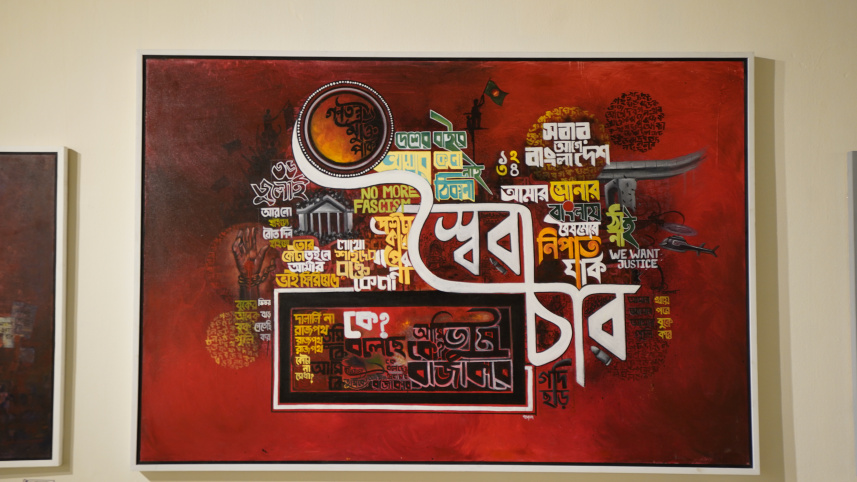
A seven-day art exhibition titled “Odhikarer Shongram”, translated as “The Struggle for Rights”, opened at the National Art Gallery of Bangladesh Shilpakala Academy in Dhaka on June 19, presenting a visual account of Bangladesh’s long political and democratic struggles, from the 1952 Language Movement to the 2024 July Mass Uprising.
Organised by Lobelia, a voluntary organisation dedicated to art and culture, the exhibition uses painting, historical portraiture, political symbolism, and figurative composition to document the country’s collective memory of resistance, sacrifice, and civic aspiration. The exhibition is being held on the second floor of the National Art Gallery in Segunbagicha and will continue until June 26, remaining open daily from 11:00am to 8:00pm. On Fridays, visiting hours are from 3:00pm to 8:00pm.

The inaugural ceremony was held at 6:00pm and brought together political figures, state representatives, artists, cultural activists, and members of the public. Advocate Ruhul Kabir Rizvi Ahmed, senior joint secretary general of BNP, attended the programme as chief guest. Fakir Mahbub Anam Swapan, minister of the Ministry of Posts, Telecommunications and Information Technology and the Ministry of Science and Technology, formally inaugurated the exhibition. Eminent artist and Ekushey Padak recipient Professor Dr Abdus Sattar presented the keynote paper. The exhibition was curated and supervised by artist Zia Biplob.
The exhibition was conceived and organised by Benazir Ahmed Tito of Lobelia. In the invitation note, he stated that the exhibition was designed to bring the language of rights, memory, and democratic struggle into the public sphere through art. The curatorial concept places historical events within a visual sequence, allowing viewers to move through different phases of political mobilisation, social resistance, and public sacrifice.
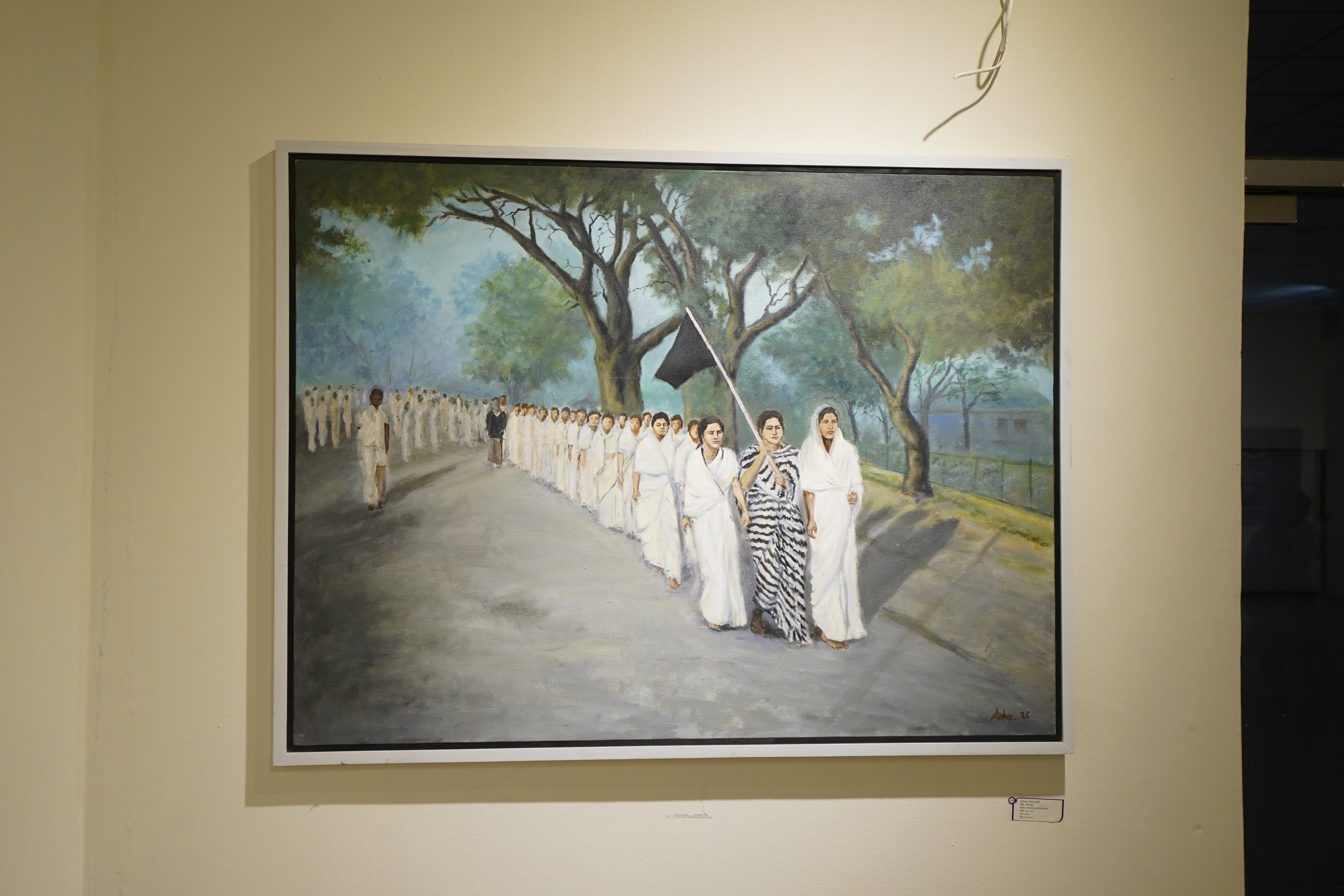
A central feature of the exhibition is its chronological theme, “Fight for Democratic Rights, 1952–2024”. This framework connects major moments in national history, including the Language Movement, mass uprisings, struggles against authoritarian rule, and recent movements for democratic accountability. The exhibition treats art as a medium of historical narration, documentation, and public testimony.
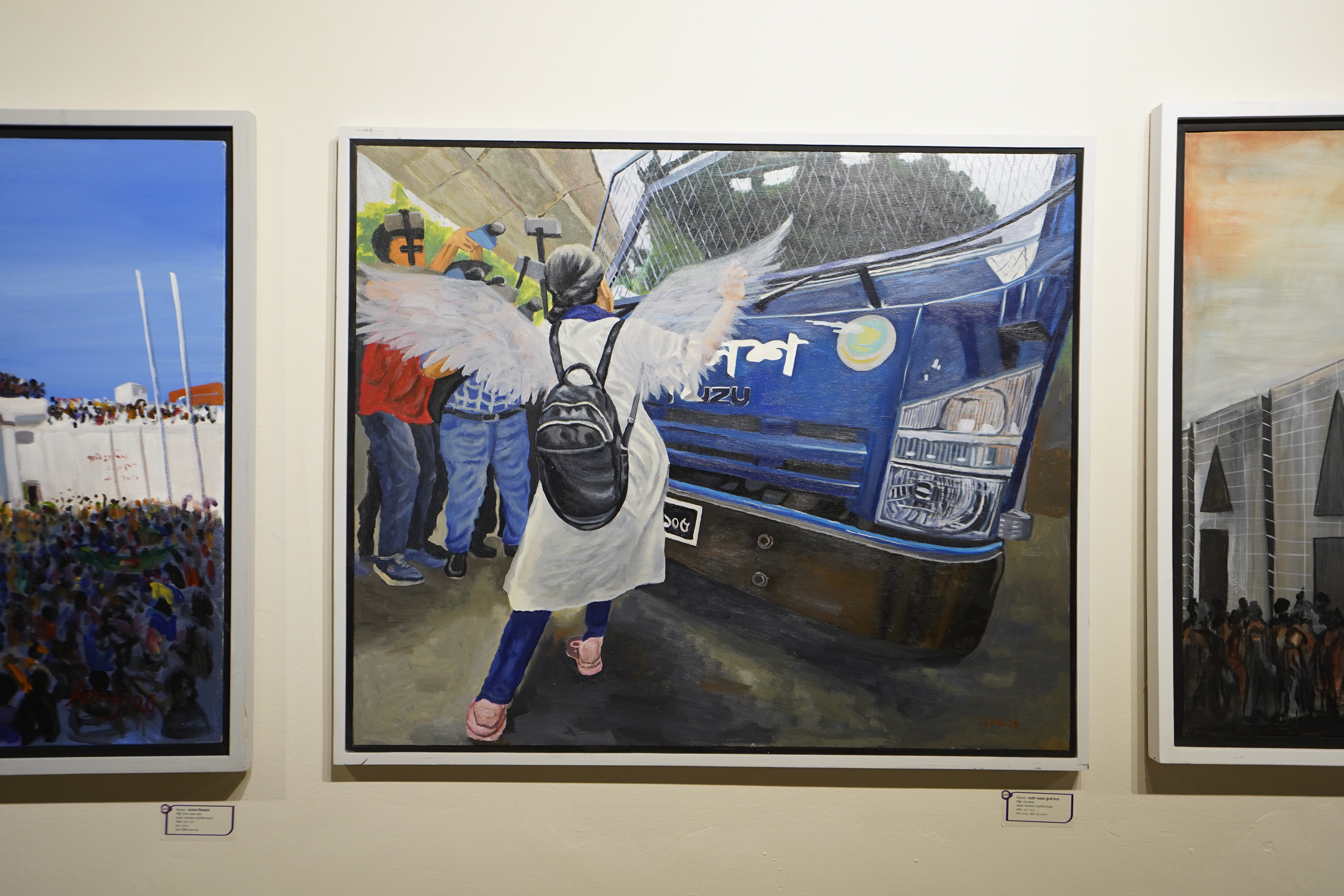
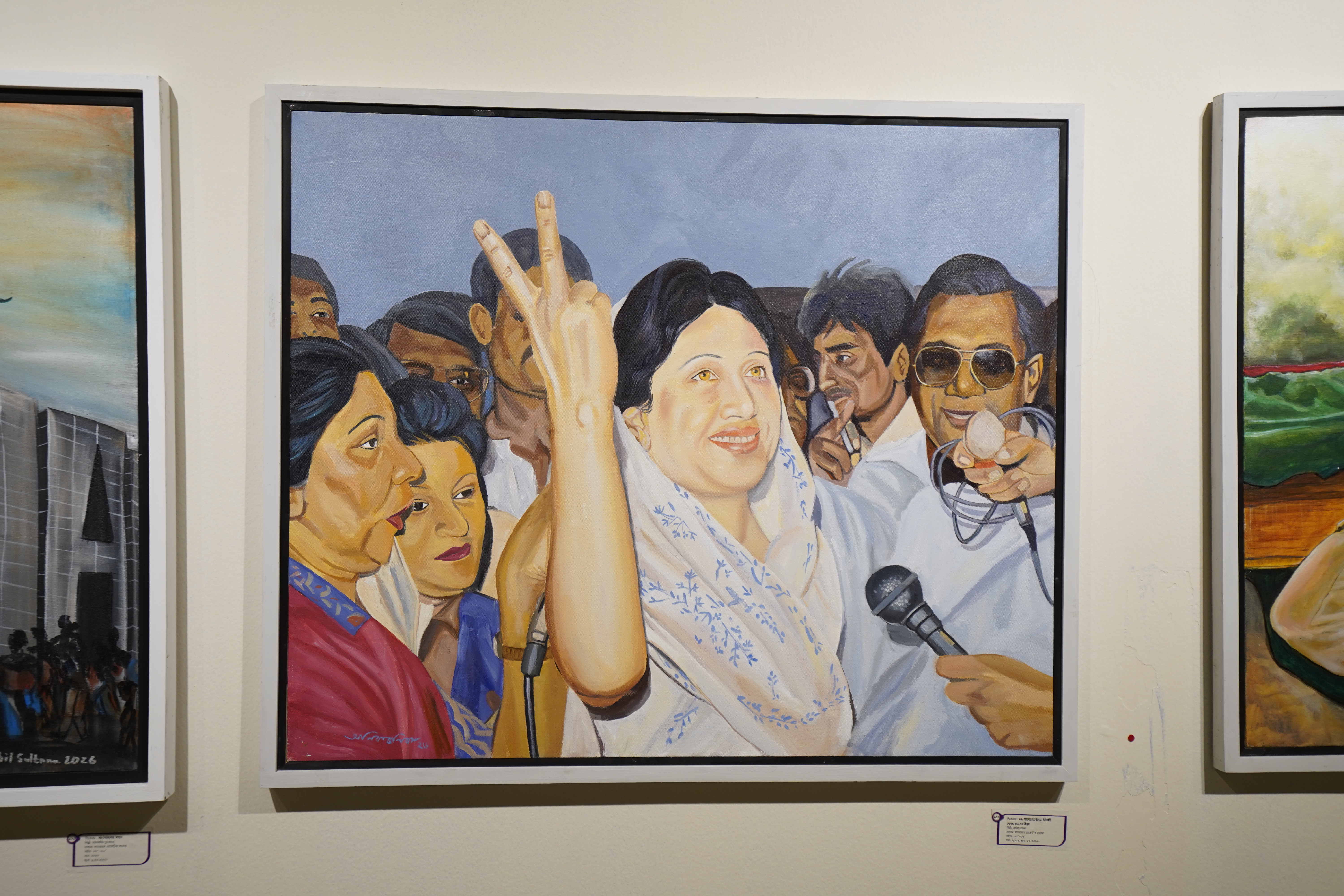
Several works in the exhibition use representational painting to depict wounded bodies, protest scenes, political leaders, and moments of confrontation. BNP leader GM Faruk Khokon’s contribution during the July uprising and the shooting of Fatulla thana BNP president Shahidul Islam Titu during a political programme are among the subjects portrayed. Many of the works employ recognisable faces, public scenes, and dramatic gestures to create an immediate emotional connection with viewers, giving the exhibition a documentary quality while maintaining the expressive function of art.
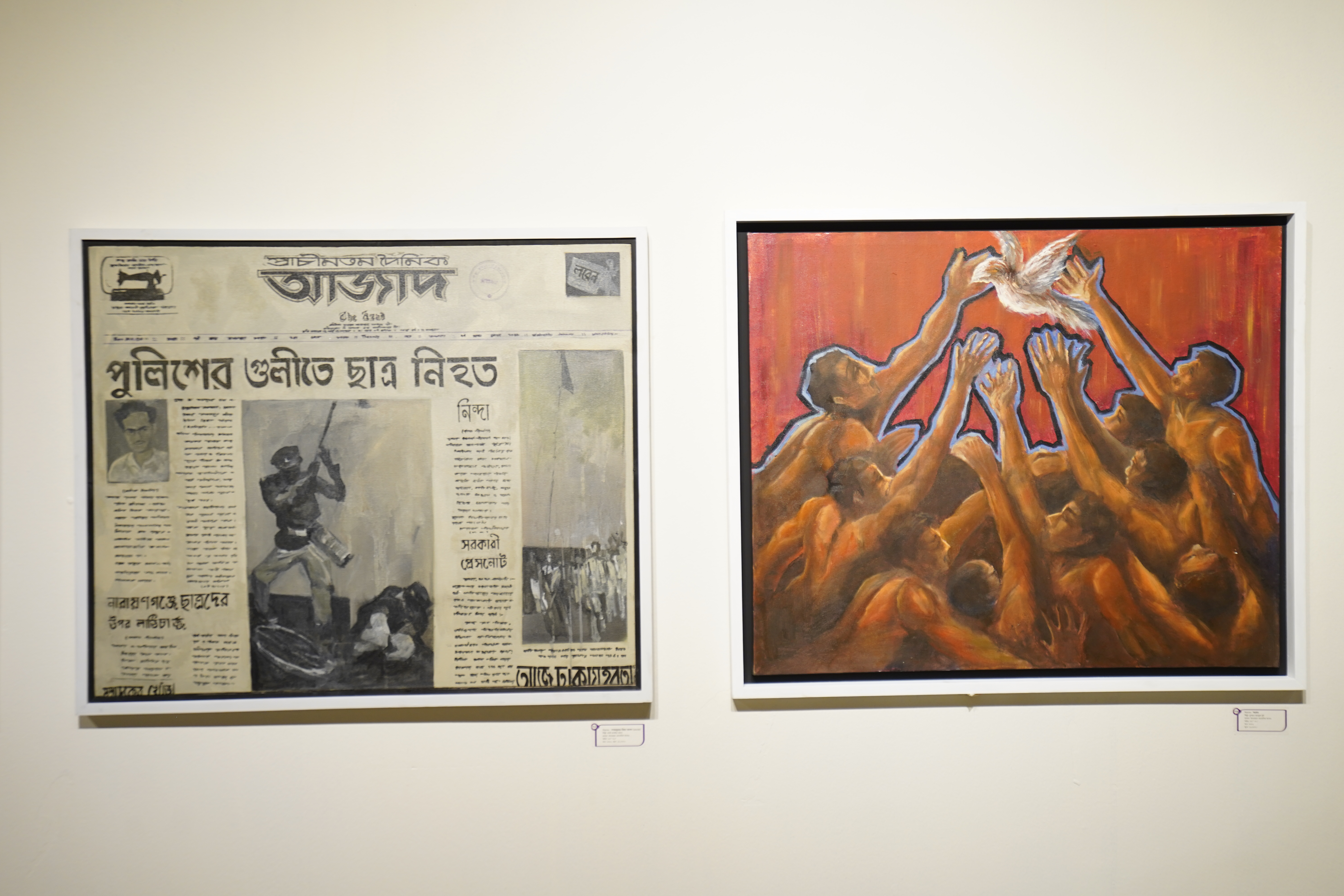
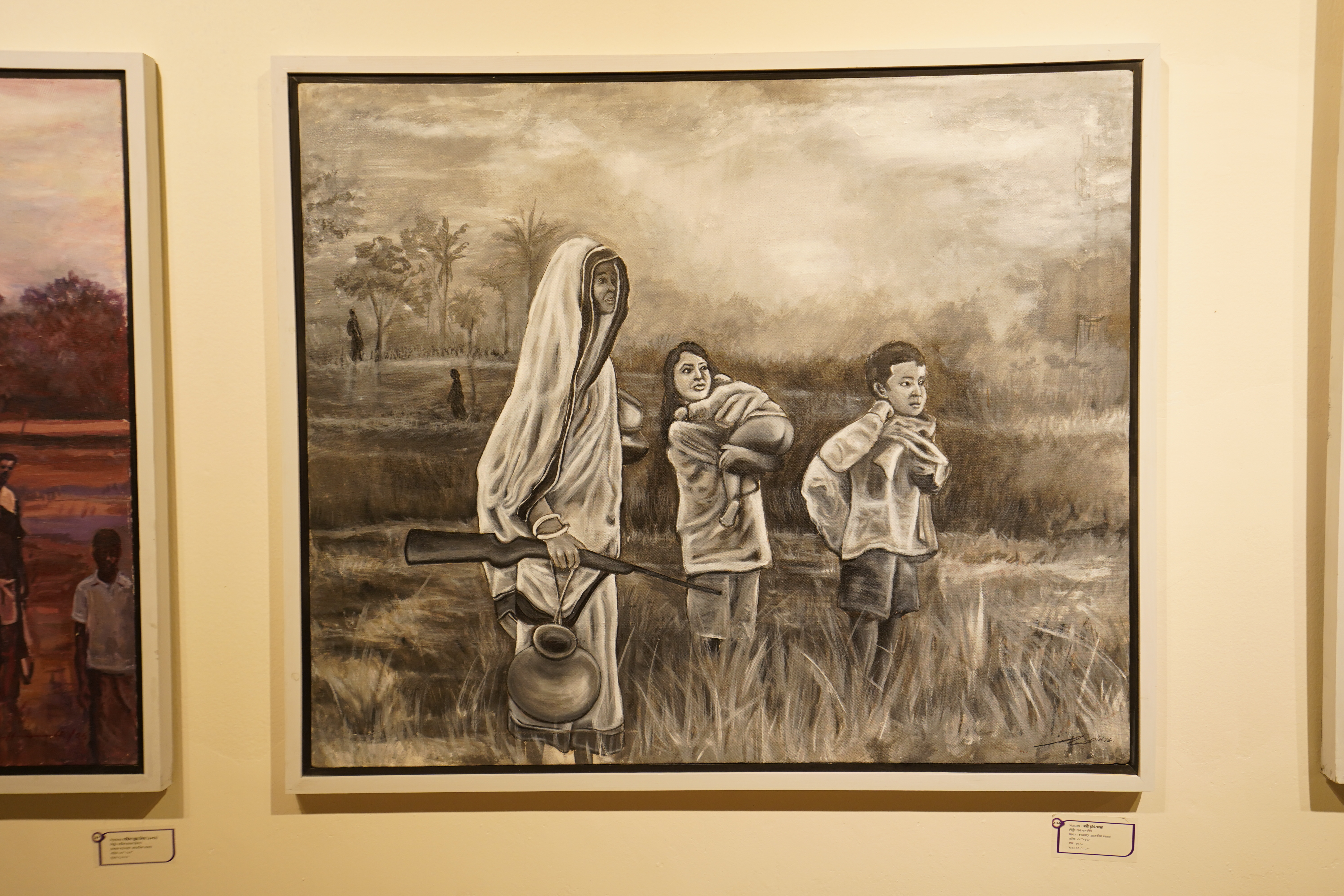
The exhibition’s visual language relies strongly on narrative realism, emphasising the importance of art as a powerful medium for social reflection and civic consciousness. The canvas is thus positioned as a site of memory, where public pain, political courage, and democratic aspiration can be recorded in lasting visual form.
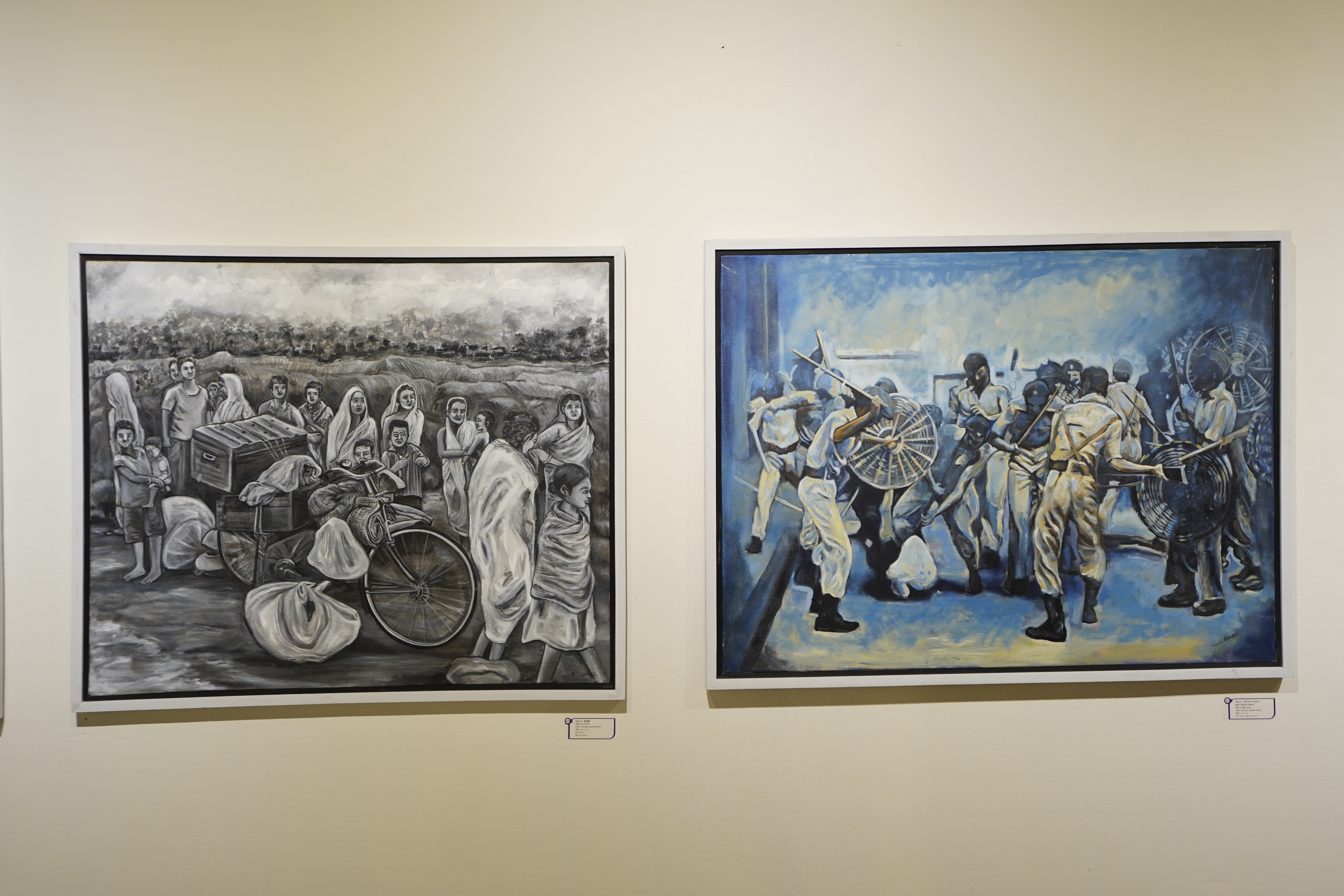
By bringing together nearly 70 young artists, “The Struggle for Rights” seeks to create a large thematic platform reflecting Bangladesh’s democratic journey. The exhibition invites viewers to engage with national history not only through written documents and political speeches, but also through images that carry emotion, trauma, dignity, and resistance.
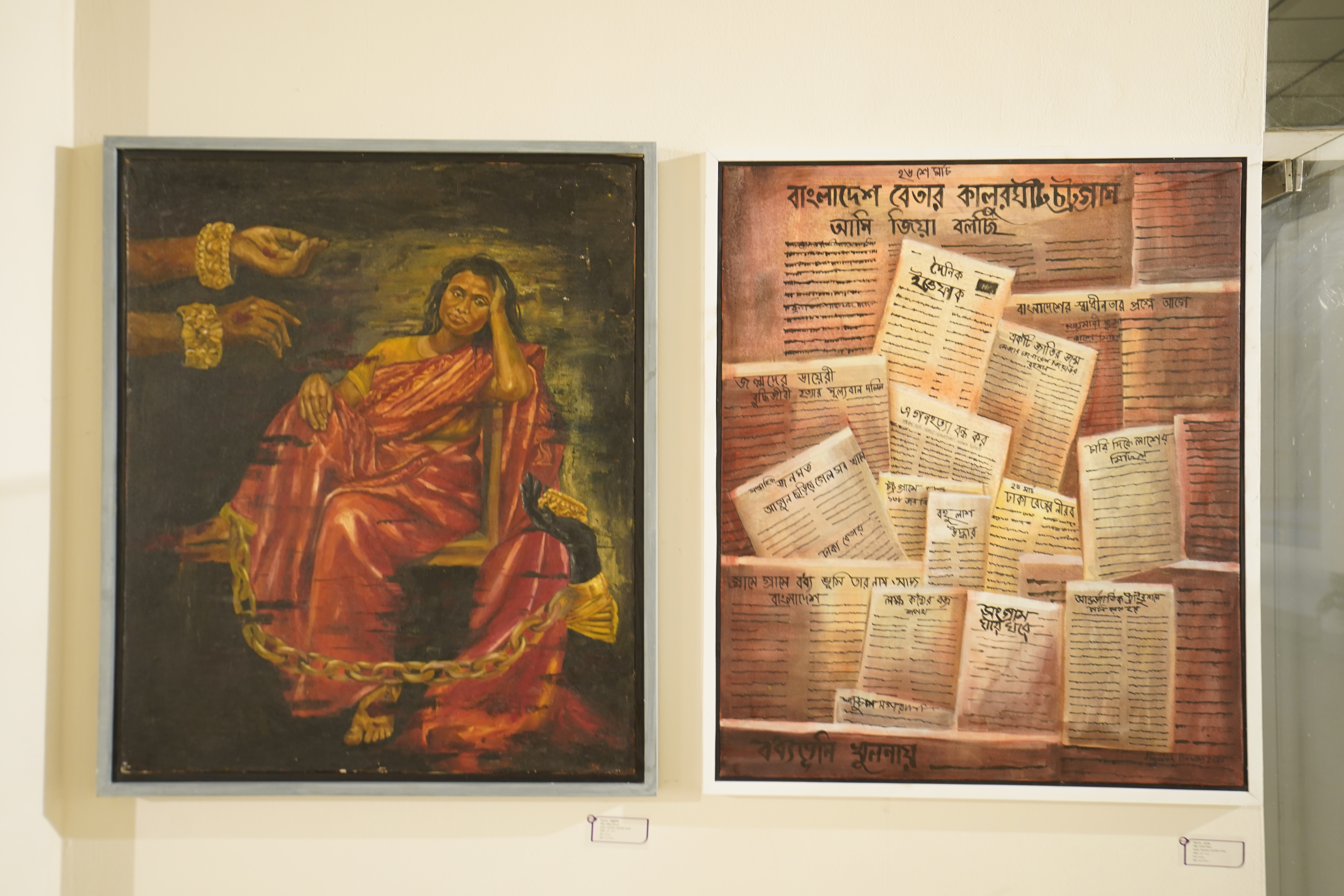
The exhibition stands as an attempt to connect art with citizenship, memory, and the continuing demand for justice.
 For all latest news, follow The Daily Star's Google News channel.
Comments