


Ujjal’s ‘Bonolata Sen’ reflects on poetry, memory and desire

When people read a novel or a poem, a separate world begins to form inside them. With every page, that imagined world becomes wider and deeper. At one point, the words no longer feel like mere words. They begin to feel like a lived experience. This feeling is even stronger in poetry.
In a novel, characters are often described in detail. But in poetry, the reader must build the character in their own imagination. The poet offers only a hint, a shadow, a name. The rest depends on the reader.
Jibanananda Das’s Bonolota Sen is exactly such a character. The poet described Bonolota in many forms. Yet he never clearly said who she was, where she lived, or whether she was a real woman at all.
So, the question remains: who is Bonolota? A woman of flesh and blood? A symbol of loneliness and shelter? Or a metaphor for the poet’s incompleteness and failure?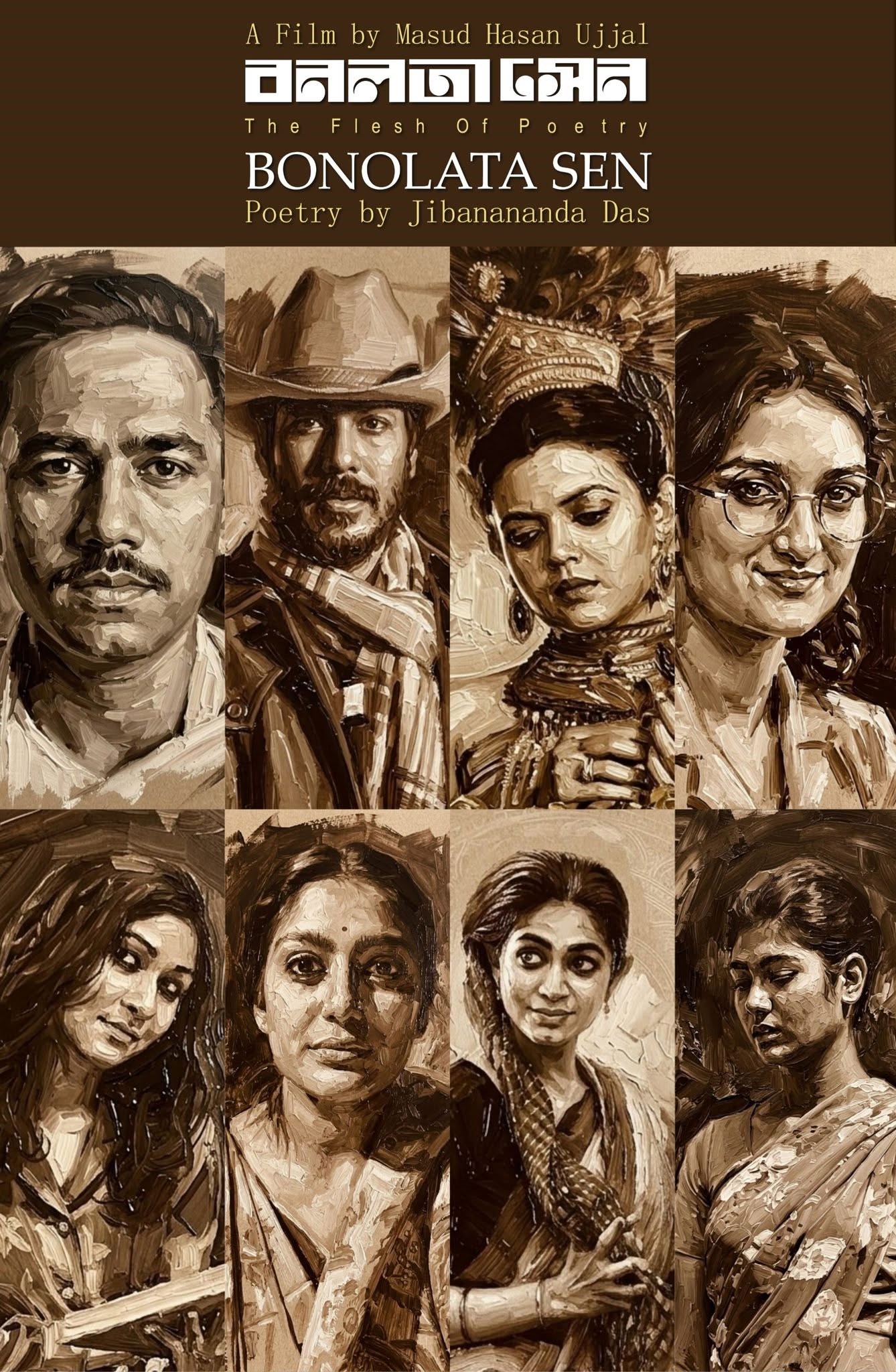
The film “Bonolata Sen” is built around this timeless question. In many ways, it is a poetic journey through a poet’s life, death, longing, love, illusion and escape.
From the beginning, director Masud Hasan Ujjal takes the audience into a magical atmosphere. The calm background music, the soft sound of water, and the visual of a woman, seemingly Bonolota, standing in water immediately draws the viewer in. Flowers float around her, and ritual objects rest beside her. The frame sets the tone for a film that moves through memory, metaphor and longing.
The story then slowly moves around the poet. But it is not a straightforward biography. Rather, it becomes an earnest attempt to search for Bonolota, the woman created by his poetry.
Soon after, another scene deepens that visual language. A woman, again seemingly Bonolota, stands as if bathing, yet there is no water around her. Flowers fall from above, turning the moment into a quiet metaphor. From these early scenes, the film chooses suggestion over plain realism.
The film later appears to move through two parallel timelines: the present and the era of Jibanananda Das. Mohin, played by Shohel Mondol, seems to travel between these worlds, carrying the search for Bonolota.
One memorable scene comes when Mohin appears before the professor, who is sitting inside a stationary car. Hundreds of pieces of paper fly through the air, and the cloudy sky gives the scene an unreal texture. The moment feels less like an ordinary encounter and more like pure imagination.
When Mohin speaks of “Meghdoot”, “Gitanjali”, “Bishad Sindhu” and “Meghnad Badh Kavya”, he seems to recognise the professor’s world of literature, memory and longing. His dialogue then moves towards time and existence. How would people leave their mark if no alphabet had been discovered and no book had been printed?
Right after, the car driver says the dynamo belt has snapped and it will cost 1000 tk. The film instantly brings us down from surreal thought to ordinary reality. This is one of its most intelligent choices.
The film also gives a body to the relationship between poet and poem. Once a poem leaves the poet’s hand, it begins to live on its own, travelling through many lives. The poet may write and move on, but the poem remains, carrying its own loneliness.
The film does not blindly celebrate Jibanananda’s romanticism. It places him before modern psychology and the gender lens of the 21st century. Poetry has often described women through flowers, animals, cities and darkness. Jibanananda wrote of eyes like a bird’s nest. But the film questions the patriarchal gaze behind such romanticisation.
The most powerful part comes when Bonolota speaks against the metaphors imposed on her. She questions why her beauty must be compared to Shravasti or Vidisha. She asks whether she exists only as a figure of desire and pleasure, or whether she can also be understood through love.
Here, Bonolota is not merely a passive figure in the poet’s imagination. She becomes a living being. As a woman, I felt this resistance took the film out of conventional romanticism.
Bappa Mazumder’s background score gives the film’s silences a heavier emotional charge. When “Ekhane Keu Nei” arrives alongside Jibanananda’s inner emptiness, it deepens the sense of absence.
In terms of acting, Khairul Basar fits into Jibanananda’s role with restraint. Shohel Mondol is outstanding throughout the film as Mohin. Masuma Rahman Nabila feels like Bonolota in almost every scene. Naziba Basher as the professor also performed well. Except for some VFX, the film’s visual design remains carefully shaped.
Still, some incompleteness remains. The film is not a biography, but a search for Bonolota. “The Last Supper” symbol towards the end feels detached. The additional explanation of the poet’s life also feels unnecessary. The two timelines are fascinating, but their connection does not always receive a clear resolution.
Mohin’s fate may not satisfy many viewers. Yet his earlier reflection on death gives the ending another meaning. He tells Jibanananda that he has only just been born, while the poet has not yet died. Therefore, neither of them knows the taste of death. The ending can then be read as both of them facing that unknown experience.
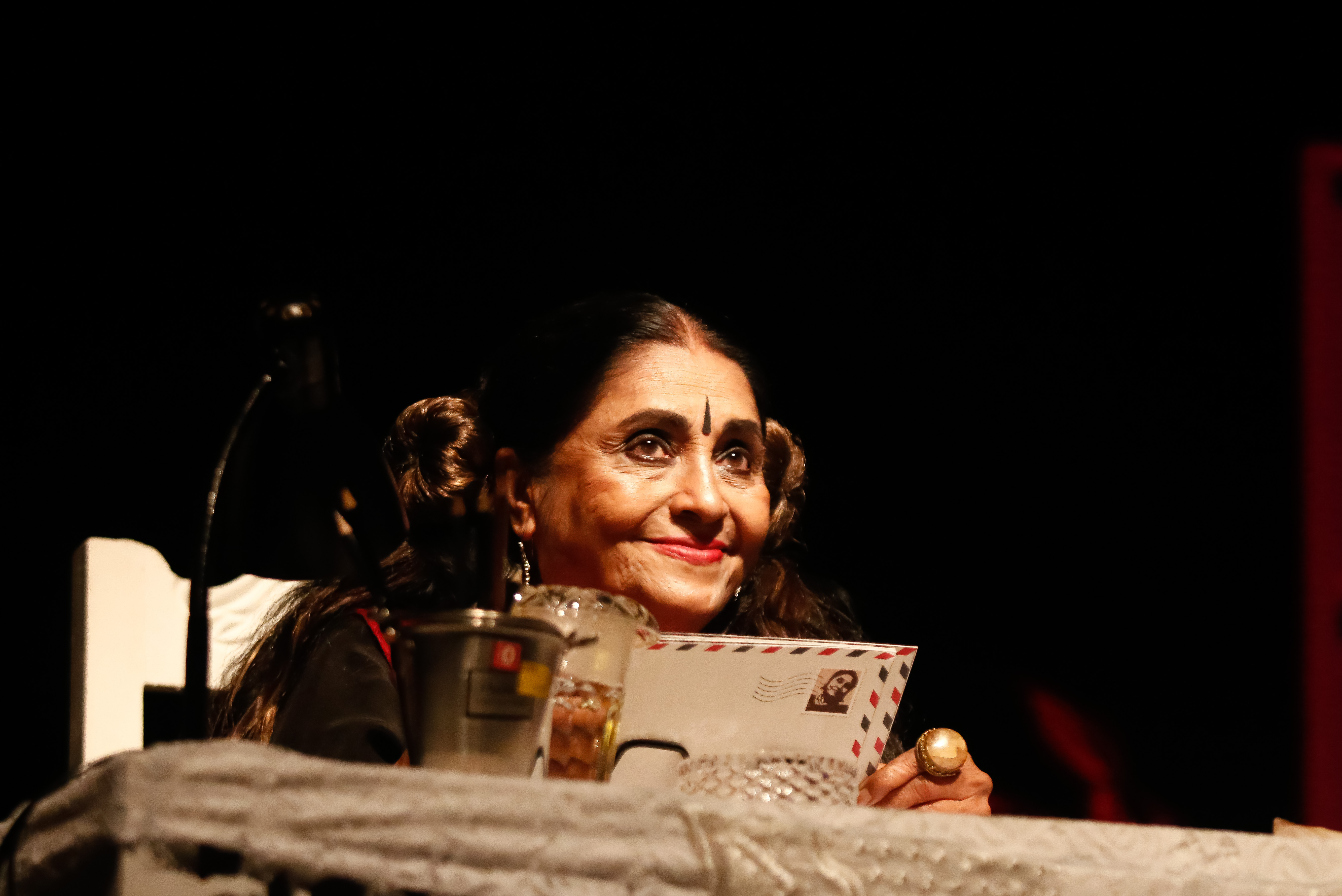
All things considered, “Bonolata Sen” is a new kind of addition to Bangladeshi cinema. Those who expect a straightforward biography of Jibanananda Das may feel disappointed. The film can also be challenging for viewers accustomed to direct storytelling.
But for those who love poetry and symbols, this film offers a rare psychological experience. It is about the loneliness of life, the hunger for meaning, and the things we keep searching for, even when we cannot name them.
Jannatul Ferdus is an education professional. She can be reached at jannatuljuthyru@gmail.com.

 For all latest news, follow The Daily Star's Google News channel.
Comments