


‘Shaone Dala’ and a generation growing distant from its roots
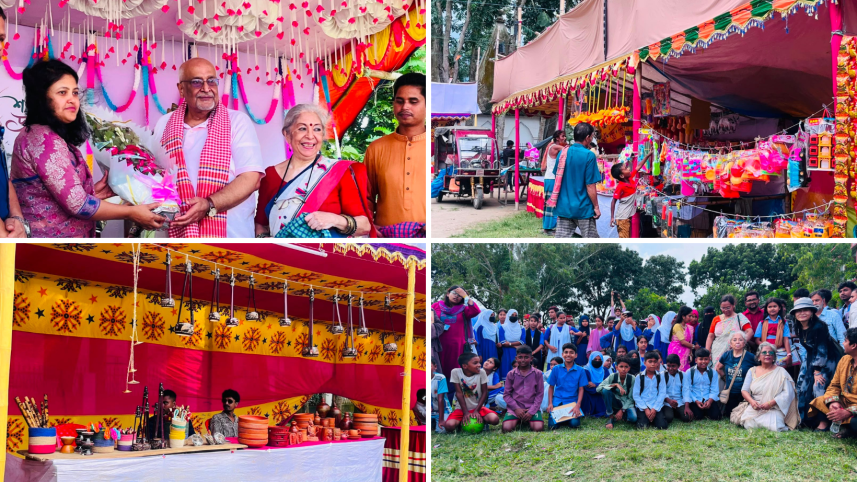
“Shaone Dala”, a traditional folk ritual primarily observed in parts of Tangail, carries the cultural traditions of Bengal’s riverine communities. Seeking to draw greater attention to the ritual and its cultural significance, renowned dancer and cultural activist Lubna Marium organised a day-long tour to Elenga, Tangail, on August 18.
The tour brought together a group of guests to experience the Shaone Dala Festival and its rituals, including a visit to the festival fair and a traditional boat procession. The itinerary also included a visit to the historic Mahera Zamindar House.

However, an unexpected encounter during the tour left a deeper impression on Marium. Sharing her experience today, she recalled a lunch stop at Hat-Fatehpur High School in Mirzapur, where the group met students from Classes Nine and Ten.
“A lunch stop at Hat-Fatehpur High School in Mirzapur became an unexpected encounter with Classes Nine and Ten, warmly arranged by their gracious teachers,” Marium wrote.
Despite living close to where the festival takes place, the students knew little about Shaone Dala, which Marium described as “a centuries-old riverine festival unfolding virtually in their own backyard”.
According to Lubna Marium, the festival also reflects a long-standing tradition of communal harmony, with Muslim performers participating in rituals honouring a Hindu deity.
“The students knew almost nothing of Shaone Dala,” she wrote, expressing concern over the growing disconnect between young people and the cultural traditions around them.
She also recalled seeing several young girls wearing what she described as “stark, almost mask-like black veils”, a sight she felt stood in sharp contrast to the cultural experience unfolding around them.
For Marium, the encounter underscored the need for educational institutions to play a greater role in connecting young people with the country’s living cultural heritage.
“It reminded us how urgently schools must reconnect young people with their living cultural inheritance,” she wrote, adding that such efforts could help ensure that “curiosity may overcome distance, knowledge may resist intolerance, and the shared traditions of Bengal may remain visible, understood and alive.”
The day-long tour began with the group leaving Dhaka at 6am and arriving in Elenga at around 9am. After breakfast, they visited the festival fair before the main Shaone Dala rituals began at 10am, followed by a traditional boat procession.
Guests were served light refreshments and tea on the boat at around 11:30am. Lunch was served at Fatepur Ghat at 2:00pm, after which participants could either visit Mahera Zamindar House or continue observing the festival rituals.
The rituals continued until 7:00pm, with the group departing Mirzapur for Dhaka at 7:30pm.
Through the initiative, Marium sought to introduce more people to Shaone Dala while drawing attention to the importance of preserving Bangladesh’s diverse folk traditions and passing them on to younger generations.
 For all latest news, follow The Daily Star's Google News channel.
Comments