


‘A child should never suffer twice in pursuit of justice’
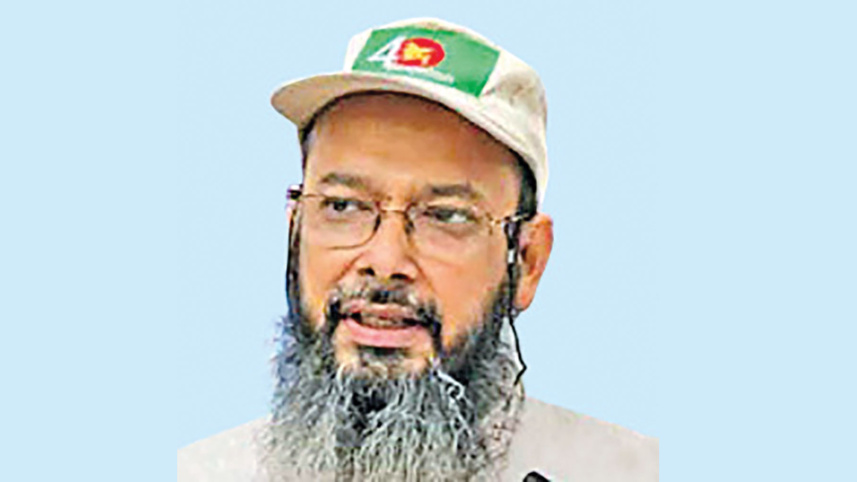
Why do cases of child sexual abuse fail to secure justice despite stringent laws? Fowzul Azim, legal analyst, researcher and former judge of the Women and Children Repression Prevention Tribunal, speaks to Star’s Nilima Jahan about systemic failures in investigation, prosecution and case management, and the reforms
needed to address them.
TDS: Stringent laws exist, yet the overwhelming majority of child sexual abuse cases end in acquittal. Where does the fundamental failure lie?

Fowzul Azim: The crisis stems not from a lack of stringent laws, but from a breakdown in coordination across three vital stages: investigation, prosecution and adjudication.
A court cannot convict based on moral certainty or social probability. Guilt must be established beyond reasonable doubt through lawful, admissible evidence.
A recent Supreme Court–BRAC study identified the primary obstacles: absent witnesses, repeated adjournments, investigative delays, weak evidentiary chains and lack of witness protection.
A crucial distinction must be understood: a crime not occurring is not the same as a crime not being proven beyond reasonable doubt in court.
In sexual violence cases, discrepancies between the First Information Report and trial testimony, absent witnesses, improperly collected medical evidence, delayed forensic or DNA reports, and hostile witnesses can prevent conviction despite strong suspicion.
Increasing conviction rates is not about imposing harsher penalties, but ensuring cases are supported by sufficient, admissible evidence before reaching court.
TDS: The Supreme Court–BRAC study reveals that trials take an average of 1,370 days (nearly 3.7 years) across 22 hearings. How does this prolonged delay compromise justice for child survivors?
Fowzul Azim: Delay is not merely an administrative bottleneck; time directly erodes evidence.
Over nearly four years, a child’s memory can fade, witnesses may relocate or become unavailable, and families may succumb to social pressure, financial exhaustion or coercion to settle. Repeated court appearances also re-traumatise children.
Out-of-court settlements should therefore not be mistaken for survivors voluntarily abandoning cases. They are almost always driven by economic dependency, intimidation, procedural fatigue and lack of state protection for witnesses.
Although the 2025 amendment reduced the statutory trial limit from 180 to 90 days, halving the deadline achieves nothing unless underlying systemic and procedural bottlenecks are addressed.
TDS: How does the system fail when the alleged perpetrator is a parent, relative or trusted guardian?
Fowzul Azim: When a guardian, caregiver, teacher or family member is the alleged perpetrator, the child’s primary avenue for seeking help is severed.
Such children face double vulnerability: first, when abusive family members silence them through intimidation or beatings; and second, when their own guardians accept money to settle with the accused during court proceedings.
If a father is accused, the question “Who will file the complaint?” exposes the inadequacy of simply advising the child to approach police. Children cannot navigate police procedures alone, are financially dependent, and other family members may rely on the accused for survival. State intervention therefore becomes essential.
Although the Children Act 2013 provides for child affairs police officers and probation officers, a vast gap remains between statutory provisions and implementation.
The most critical reform must be that an accused guardian immediately loses legal and protective guardianship over the child for the duration of proceedings.
The state must then arrange an independent legal guardian, social worker, probation officer, safe shelter, legal aid and emergency protection orders.
 For all latest news, follow The Daily Star's Google News channel.
 We need an unbroken protection pathway, from disclosure, immediate risk assessment, safe placement, independent legal representation and medical support to investigation, prosecution, child-sensitive trial and rehabilitation.
If one link breaks, the entire protective structure collapses.
TDS: If witnesses drop out or medical and DNA evidence is weak, what are the boundaries of a judge’s role? Should judges take a more proactive stance?
Fowzul Azim: A judge cannot independently fill evidentiary gaps or assume the prosecution’s role. The judiciary must remain neutral while ensuring the prosecution discharges its burden of proof.
However, judicial neutrality does not mean passivity. Under existing law, including safeguards under the Children Act 2013, courts can issue protective orders, compel witness attendance, recall key witnesses, record serious investigative lapses and direct corrective action.
But a judge cannot become a prosecutor. If investigators fail to secure crucial physical evidence or prosecutors fail to produce key witnesses, judges cannot build the case. Investigation quality remains the most important determinant of conviction rates.
Judges must instead exercise proactive case management within the bounds of judicial neutrality.
This requires rejecting repeated, unjustified adjournment requests; establishing structured witness calendars at the start of trials; and digitally monitoring investigation deadlines, charge-sheet submissions, forensic reports and reasons for adjournment.
Prosecutors must also be evaluated objectively using performance indicators, as recommended by the Supreme Court–BRAC study. Forensic and DNA laboratories should prioritise court-related work, while tribunals must be expanded in high-caseload districts. Otherwise, overwhelming caseloads will render the statutory 90-day limit meaningless.
TDS: What statutory reforms are necessary to make trials faster and genuinely child-sensitive?
Fowzul Azim: Existing laws already contain progressive provisions, including specialised court environments, child-sensitive seating, probation assistance and testimony safeguards under the Children Act 2013.
The question must shift from how strict new laws are to how effectively existing laws are enforced.
Bridging the gaps requires several reforms: a comprehensive Witness Protection Act; an independent child advocate or guardian system; mandatory psychosocial referrals upon disclosure; specialised, non-intimidating interview rooms with video-recorded evidence; pre-trial depositions for vulnerable child witnesses; procedures to shield children from accused guardians’ influence; and mandatory coordination protocols binding police, social services, prosecutors and the judiciary.
Low conviction rates in child sexual violence cases cannot be treated as an isolated judicial issue. They reflect failures across a long chain involving families, educational institutions, police, medical services, forensic facilities, prosecution and rehabilitation systems.
Our ultimate objective must not merely be faster disposal of cases, but timely, accurate justice that prevents secondary victimisation.
Success means building a system where a child is never forced to suffer a second time in pursuit of justice.
Comments