


Sundarbans crackdown drives poisoned shrimp from Mongla markets


A year-long crackdown on poison fishing in and around the Sundarbans appears to be paying off, with poisoned shrimp becoming harder to find in Bagerhat’s Mongla markets while the overall supply of fish and shrimp remains normal, according to officials, traders and residents.
The use of pesticides and other toxic substances to catch shrimp and small fish in the rivers and creeks of the Sundarbans has raised concerns among local communities and environmentalists for years.

A sustained enforcement drive by forest officials and the local administration, running for around a year now, appears to be curbing the practice.
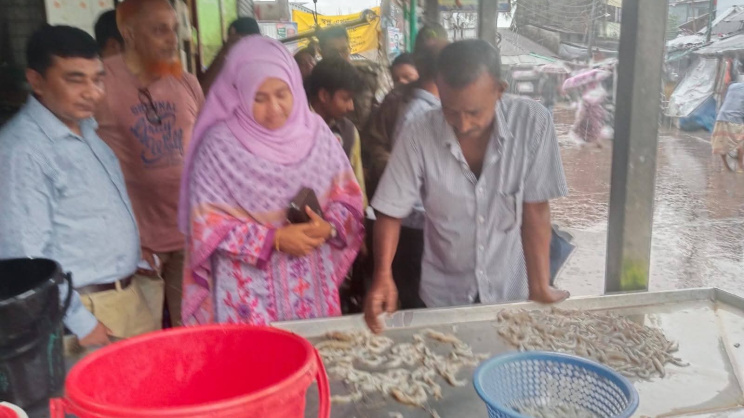
In the latest operation, the upazila administration and the Chandpai Range of the Forest Department raided the Mongla wholesale fish market early yesterday morning.
"No shrimp or white fish suspected of being caught with poison were found. Such operations will continue," said Mohammed Rezaul Karim Chowdhury, divisional forest officer (DFO) of the East Sundarbans, thanking the Chandpai Range team for its work.
This find follows a series of operations targeting illegal fishing and makeshift drying camps in the forest. On July 30, a team led by the Chandpai Range officer carried out a 12-hour operation, from 7:30am to 7:30pm, in the Charaputia patrol area.
The team located three makeshift fish-drying camps at the mouths of Kaga Khal, Indurkani Khal and Chhoto Hormal Khal. The first two were empty, but officials at the third recovered two sacks of dried fish, around five maunds of freshly caught shrimp being prepared for drying, two litres of poison, two boats, two "tona" nets and three sacks of rice, among other materials.
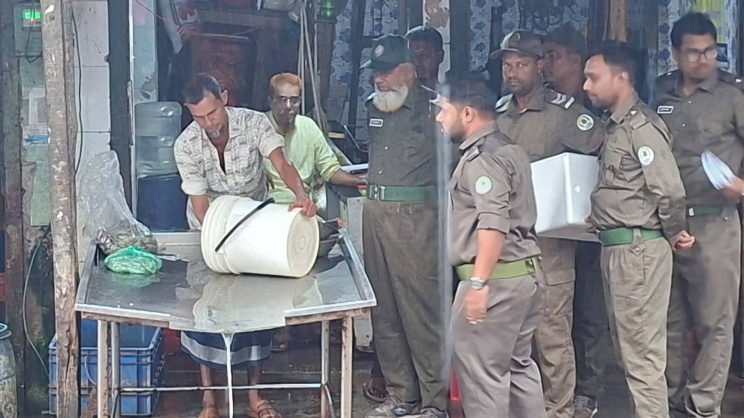
Officials destroyed the raw shrimp at the site after detecting a foul smell believed to have come from poison mixed in with the catch -- currently the only method used to identify poisoned fish.
During the same operation, the team also seized a crab-catching boat loaded with 95 pieces of "charu", a crab-fattening bait used by local fishermen, the DFO said.
The shift is visible in the markets too. At Badhal Bazar, the largest growth centre in Kachua, Meher Riasan Khan, a local resident, who recently visited to observe the trade, said poisoned shrimp were far less visible than before, with fewer arriving for drying, even as overall supply of shrimp and fish in local markets held steady.
Noor Alam Sheikh, a coordinator of Dhoriti Rokhhay Amra (Dhora), echoed the observation, saying the rate of catching shrimp and other fish with poison had fallen considerably compared with previous years.
He added that a device exists to detect poison in fish, but the forest department has yet to procure it, leaving officials to rely on smell alone to determine whether a catch was poisoned.
Residents attributed the overall change to repeated operations across the Sundarbans and surrounding waterways, saying fishermen using toxic substances now face a higher risk of detection and punishment.
The practice poses a wider threat to the mangrove ecosystem, as toxic substances released into rivers and creeks can harm not only the targeted catch but also juvenile fish, shrimp, crabs and other aquatic species that form part of the Sundarbans food chain, Noor Alam Sheikh added.
 For all latest news, follow The Daily Star's Google News channel.
Comments