


Act before anthrax spreads further
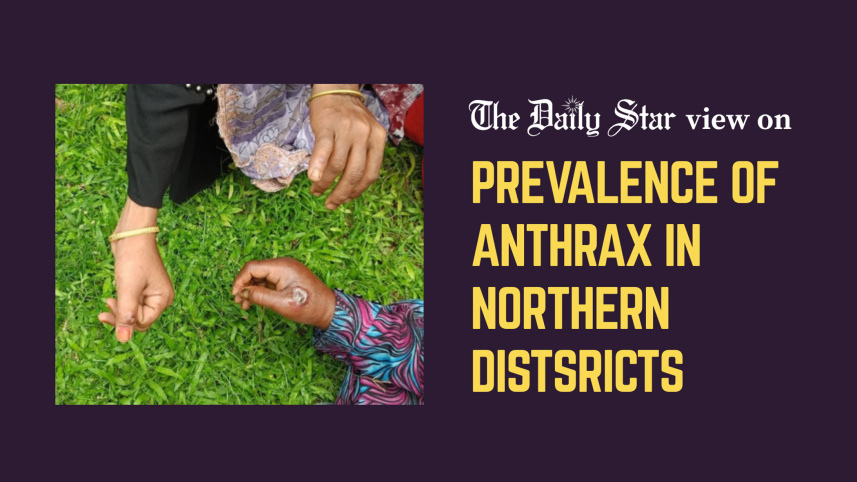
It is worrying that anthrax has reportedly infected a considerable number of people and an undetermined number of animals in the northern parts of the country. According to a report by this daily, at least 53 people have received treatment for symptoms related to the disease over the past month. Notably, 16 of them have fully recovered already. Unlike for humans, anthrax in animals can only be cured if treated with antibiotics at a very early stage of the infection.
The anthrax cases in the northern districts this year appear to have originated from cattle raised in Gaibandha’s Sundarganj upazila and neighbouring Pirgacha upazila of Rangpur after a sick cow was slaughtered on September 9 and the meat was distributed among 100 families. Considering that cases were reported in the same area around the same time last year, we must ask why specific safeguards were not put in place to prevent another outbreak. Sundarganj upazila has around 2.54 lakh cattle, and following a localised outbreak last year, the government vaccinated around 19,000 cattle—merely 7.5 percent of the cattle population in the upazila. Official guidelines require 100 percent livestock vaccination within a 3-km radius of an affected zone, so why has less than 10 percent of the cattle been vaccinated so far? This is particularly concerning given that anthrax can spread through goats, sheep, and buffaloes; so only vaccinating cattle alone may not be enough.

According to the Sundarganj Upazila Livestock Officer, some 11,000 vaccines remain in stock, and a requisition for an additional 15,000 has been submitted. Why are available vaccines sitting unused as infections spread, and why is the additional requisition so far below the requirement? Any oversight on the part of relevant authorities should be investigated.
The local administration has so far begun conducting awareness campaigns in the high-risk areas. We urge the administration to ramp up these efforts, alongside expanding the vaccination drive. We would also caution against reactive measures that could result in the senseless culling of livestock, particularly when timely treatment can cure anthrax in animals at an early stage. If culling is deemed necessary, it must be carried out with caution and compassion, given that blood from infected animals can spread the disease to healthy animals through grazing.
 For all latest news, follow The Daily Star's Google News channel.
Comments