


NAZA, Israel’s war on witnesses, and media complicity

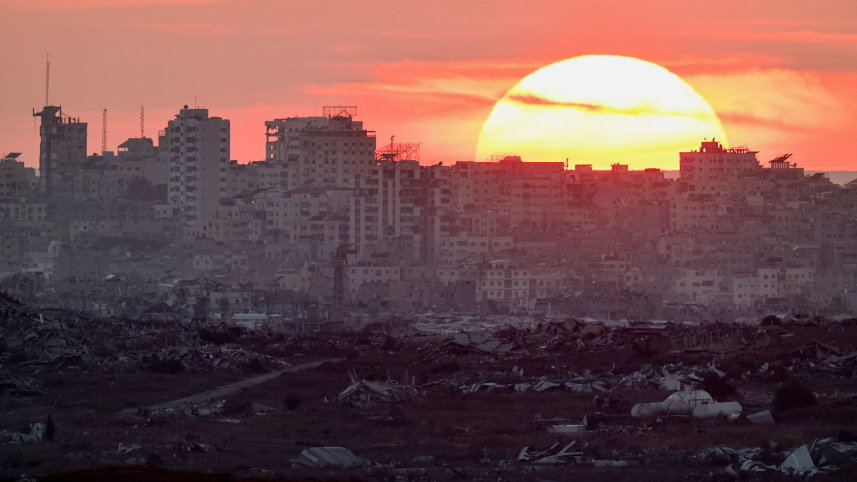
When Israel barred international journalists from Gaza after October 2023, the explanation was that it was for journalists’ own “safety;” that reporters could not be protected in an active war zone. One year after the one-sided ceasefire, Israel’s excuse has been invalidated, yet the ban remains. Leaving behind, unchecked, the largest graveyard of children on earth and an occupying army still refusing to let the world’s press see what is buried underneath.
In April 2026, the Foreign Press Association, joined by the Committee to Protect Journalists, Reporters Without Borders, and the Union of Journalists in Israel, petitioned Israel’s Supreme Court to end the military’s ban on foreign reporters entering Gaza, arguing that a “ceasefire” was in place, all captives had been released, and there was no substantiated threat to journalists. The Israeli government opposed the petition, this time invoking the war with Iran as a new justification.

Unlike the excuses, what has not changed is the price Palestinian journalists have paid and are still paying for doing the job Israel won’t let others do. Hundreds of local journalists have been killed, more than in all the wars combined since Vietnam. Three journalists died together in January 2026, after the “ceasefire,” while documenting genocide. The message is clear: with foreign correspondents locked out, Israel can and will murder Palestinian journalists and bury its war crimes with the children under the rubble.
The same script plays out in the West Bank, where the threat is Israeli settler mobs whom the state empowers. When journalists reported on Zionist youth violence in Jannatah near Bethlehem in August 2026, soldiers declared the area a “closed military zone” and ordered the media out, while the youth mobs who attacked them continued their rampage. In Hebron, the army designated a Palestinian rights defender’s home as a closed military zone after he complained of harassment by settlers, sealing off the area and preventing journalists from documenting evidence of criminal activities. Israel does not close these zones to deter settler lynching mobs, it declares them “military areas” the moment cameras arrive, turning the army’s power into a curtain to hide the crimes of settler youth.
This was always the plan. Controlling the discourse requires controlling the witnesses: keep the press out, murder the journalists carrying those “threatening” cameras, and let the Zionist Goebbels spew its hasbara to fog the truth. Chief among the Israel-first talking points was the claim that Israel’s civilian-to-combatant kill ratio in Gaza was better than the US’ in Iraq or Afghanistan. It was a statistic tailor-made for cable news: precise-sounding, authoritative, and impossible to independently verify because those who could have done so were either excluded by the same news outlets from challenging the claim, banned from entering Gaza, or already murdered.
That is why the recent documentary film NAZA, written and directed by Israeli journalists and filmmakers Yuval Abraham and Rachel Szor, received the attention it did. Its title comes from the Hebrew military acronym Nezek Agavi, a chilling term meaning “copllateral damage” and used to describe the number of civilians expected to be killed, which is factored into Israeli intelligence assessments when making targeting decisions in Gaza. The film is based on testimonies from 24 Israeli military and intelligence officers who spoke on camera anonymously. “There was once approval to kill 500 people for one human target,” one former Israeli soldier reportedly says in the film. Meanwhile, Israel’s military did not stay quiet, and instead of disputing, not just denying, it waged a witch hunt to identify the 24 Israeli soldiers and officers, most from intelligence units.
I have written extensively, dating back three years, about Israel’s AI “mass assassination factory,” including a system called “Where’s Daddy?” that tracks individuals until they return home, then targets them, killing their family members as well. The same accounts reported in NAZA were repeated again and again by Palestinian journalists throughout the nearly three years of Israeli genocide, only to fall on deaf ears. It is disheartening that it had to take two Israelis to break through the silence and, far too late, compel the world to acknowledge what Palestinians had been telling it all along.
Israel’s ban was always about controlling the story NAZA now threatens to unravel from the inside. If the civilian-to-combatant ratio that Zionist and Israel-first US pundits claimed had been true, why not open Gaza’s gates journalists and allow them to debunk the film? Instead, Gaza was blocked off, and its internal witnesses were murdered.
The deeper indictment, however, belongs to the international media itself. Major outlets spent the last three years covering Gaza from a distance, editing and diluting the work of Palestinian freelance reporters and treating Israel’s ban on international journalists as a legal matter to be litigated, all while continuing to report comfortably from hotels in Tel Aviv.
On September 18, Trump announced that CNN, MS NOW, and Politico would be banned from the White House. US newsrooms erupted, rightly describing the move as an assault on press freedom. The response was swift: ABC, CBS, NBC, and Fox News suspended the White House TV pool, refusing to provide replacement coverage, in solidarity with the “banned” networks. Following a court order, the networks’ access is now restored and the TV pool has resumed shooting and distributing footage of Trump from the White House.
Of course, these same institutions have witnessed a foreign government bar them outright from covering an ongoing genocide, not merely a briefing room, for nearly three years, and treated it as normal business. Four news outlets turned away at the White House gate demanded a revolt, but a closed border denied to an entire profession, with 260 fellow journalists murdered, barely registers.
“Israel’s press ban” was the world’s most documented military dictating the terms under which the war could be covered by the media: embed with the Israeli army or stay out. The same media industry that splashed stories and photos such conditions under colourful headlines condemning Moscow, Beijing, or even Washington as non-democratic attacks on a free press, largely buried Israel’s ban, relegating it to back pages, if they mentioned it at all.
It is the ultimate, stark irony that, in Washington, Donald Trump’s infringement on US press’ access was met with outrage and defiance; in Tel Aviv, Benjamin Netanyahu’s sweeping ban on the same media, under false pretences, draws only compliance and silence.
Jamal Kanj is a commentator on Arab affairs whose work appears regularly in national and international publications. He is the author of Children of Catastrophe: Journey from a Palestinian Refugee Camp to America.
Views expressed in this article are the author's own.
Follow The Daily Star Opinion on Facebook for the latest opinions, commentaries, and analyses by experts and professionals. To contribute your article or letter to The Daily Star Opinion, see our guidelines for submission.
 For all latest news, follow The Daily Star's Google News channel.
Comments