


Childcare is key to our economic progress
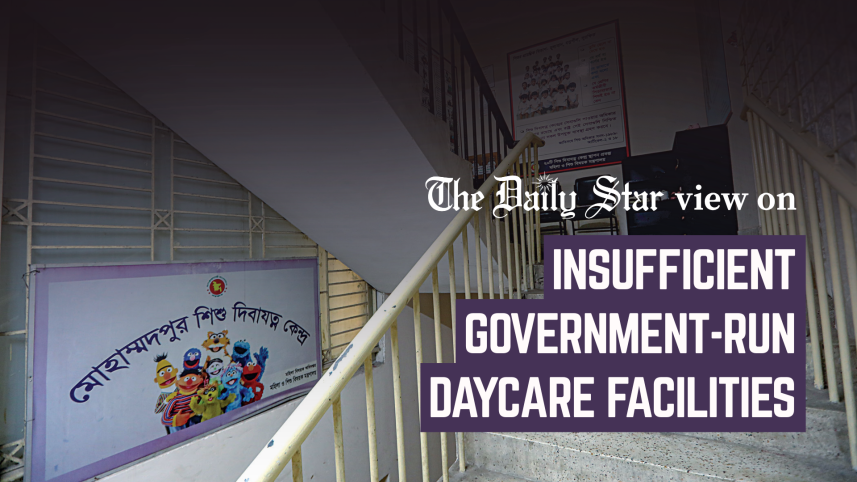
Bangladesh has seen a significant rise in women’s employment in both the formal and informal sectors since independence. It is part of the country’s development success story. Yet, in recent times, with the rise of nuclear families, many women have to drop out of the workforce because of the lack of daycare facilities for their young children. Unlike many other countries, Bangladesh has not developed a strong, affordable daycare system that can support working mothers. Needless to say, this is not only a step backwards for women’s empowerment but also a major obstacle to the nation’s economic progress.
Around 2.36 crore women are in the labour force, as per the 2024 Labour Force Survey, but there are currently only 64 government daycare centres, with the capacity to serve around 4,000 children. This glaring gap between the number of working women and the number of state-run daycare centres is exacerbated by the fact that private daycare remains unaffordable for the majority. Moreover, given the prevailing crisis, getting a place at a government daycare centre can take months. Some of these centres are located within institutions (such as the Secretariat complex) that are not accessible to the general public. There is also a lack of information about the other centres, and many parents simply do not know they exist.

The long waiting lists at daycare centres point to the high demand for affordable childcare facilities. At around 44 centres, low-income families can get childcare services for as little as Tk 100 per month, while middle-income families pay around Tk 500, with additional admission fees. But due to the limited number of seats and centres, most working mothers are forced to use expensive private daycare facilities. According to our report, private daycare can cost as much as Tk 6,000 to over Tk 9,000 per month for one child. The number of public daycare centres, therefore, must be increased substantially, especially in areas with high concentrations of working women. The proposed 150 new centres must be set up as soon as possible.
The government, moreover, should encourage private-sector employers to provide daycare facilities on their own premises. Such initiatives will help expand the number of facilities without placing the entire burden on the state. All daycare centres, however, must meet minimum standards for safety, hygiene, nutrition, staffing, and facilitating early childhood development, with regular monitoring and inspection by authorities. Childcare workers should receive proper training and decent wages. The government must also maintain a national database of daycare centres with all relevant information so that parents can easily find these services.
Affordable childcare is a crucial part of the infrastructure needed for a modern economy. The government must recognise this reality and commit to greater investment in childcare facilities to ensure that women do not have to drop out of the workforce.
 For all latest news, follow The Daily Star's Google News channel.
Comments