


Why are we failing to contain dengue?

With the government’s dengue response remaining lacklustre throughout the year, cases and deaths due to the mosquito-borne disease saw a sharp rise in September. According to the health directorate, 148 dengue patients died and 43,774 were hospitalised in September, up from 43 deaths and 20,536 cases in August. As of September 30, at least 245 deaths and 79,620 hospitalisations have been recorded across the country this year. As this daily has reported, hospitals are now struggling to cope with the growing patient load.

Take, for instance, the situation at Shaheed Suhrawardy Medical College Hospital, where the dedicated dengue wards and corners are full, forcing doctors to admit patients outside these designated areas. Doctors are also seeing more seriously ill patients, including those with liver or kidney failure and altered consciousness. While early testing and timely medical assessment can significantly reduce the risk of severe illness, many patients are still arriving in a critical condition. Moreover, district-level hospitals still remain inadequately prepared to provide the required care, putting further pressure on hospitals in the capital.
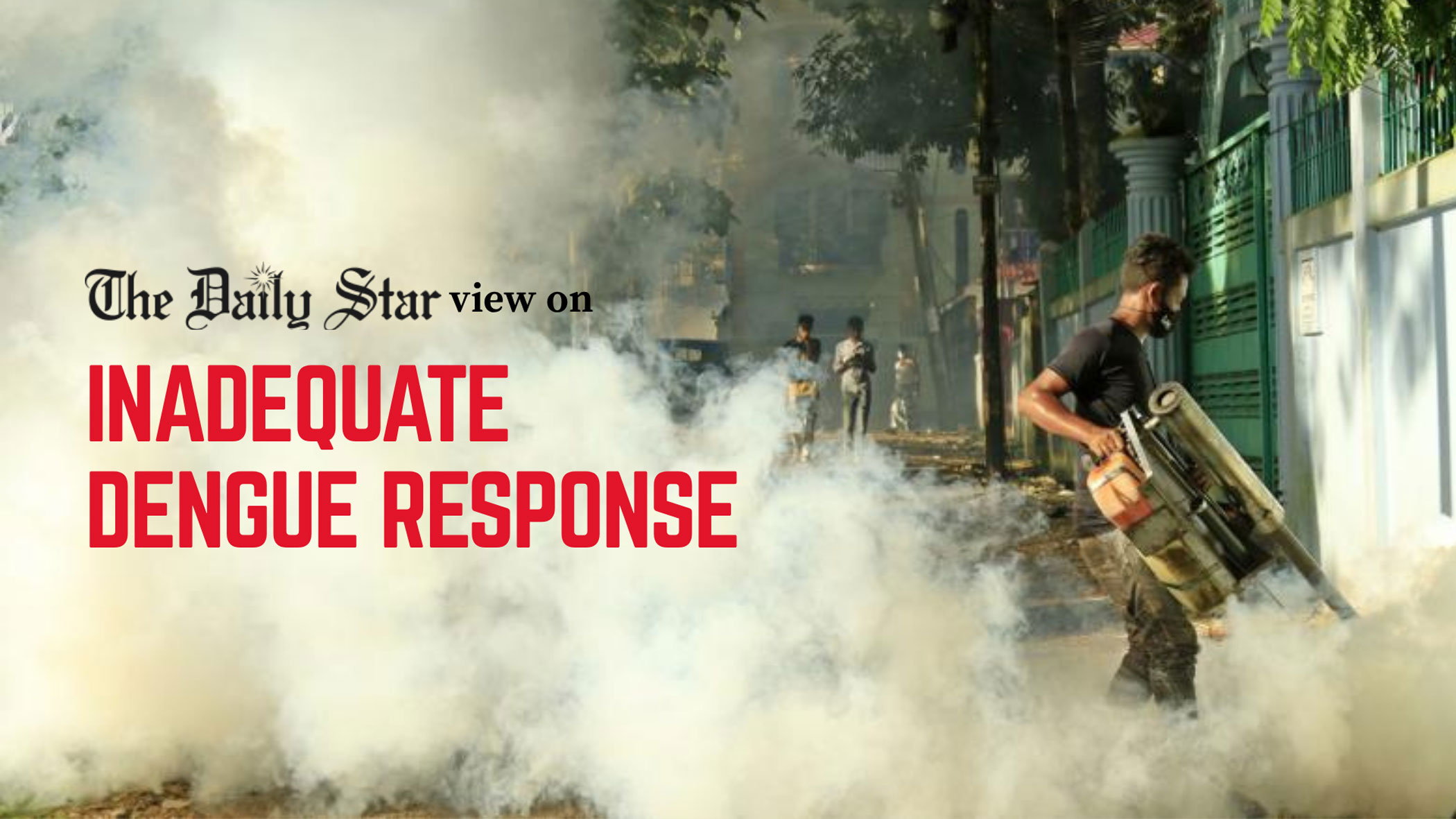
One major reason we are still failing to control dengue is that the government’s mosquito control efforts remain too reactive and not sufficiently science-based. Over the past 11 years, Dhaka’s two city corporations have spent around Tk 825 crore on mosquito control, but dengue continues to recur. Fogging and larviciding are often conducted without adequate surveillance to identify Aedes breeding sites or assess whether interventions have worked. The regular nationwide entomological surveys that could provide such information have also not been conducted this year. Moreover, the DGHS currently collects dengue information from only a fraction of the country’s health facilities, and a recent comparison found a substantial discrepancy between the DGHS-reported figures and hospital records at four major Dhaka hospitals.
This is unacceptable. Accurate and reliable data are essential to identify hotspots, track where patients are coming from, and allocate resources effectively. Lack of public awareness is also worsening the situation. People need clear guidance not only about preventing Aedes breeding but also about recognising early symptoms and knowing when to seek medical care. Proper information on home-based care and warning signs could help patients seek timely treatment before their condition becomes critical, easing pressure on our already overcrowded hospitals.
Dengue has become a year-round public health threat. The government must strengthen its prevention, surveillance and treatment capacity across the country, particularly outside Dhaka. Responding only after hospitals begin to fill up is clearly not working.
 For all latest news, follow The Daily Star's Google News channel.
Comments