


Coastal women need better chances
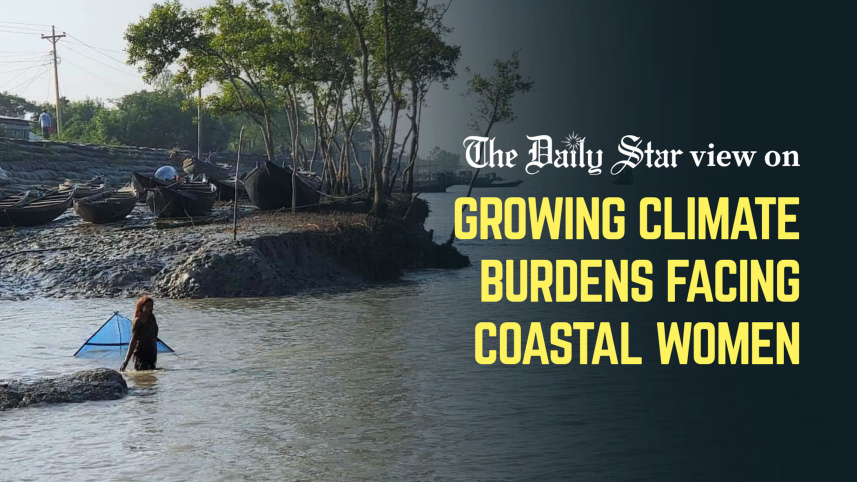
A recent roundtable discussion organised by Badabon Sangho and Prothom Alo revealed how salinity, water scarcity, poverty and livelihood insecurity are undermining the health and well-being of women and adolescent girls in the country’s coastal regions. While climate change is a major factor, socio-economic conditions also determine how severely women are affected, as speakers at the discussion pointed out. For many women in these areas, earning a living means fishing in saline water while also managing household responsibilities and collecting drinking water. The combined burden of these strenuous activities is taking a heavy toll on their health.
For instance, Kusum Akter of Mongla walks 1.5-2 km every day to collect drinking water while also working at a shrimp farm. Spending long hours in saline water has resulted in her having persistent skin problems; she reportedly spent Tk 17,000-18,000 on treatment in one year, but finding no relief. Another woman named Parvin Sultana said she was struggling with debt after taking a Tk 60,000 loan to buy a fishing net.

Working in saline water is also putting women’s reproductive health at risk. Many suffer from uterine prolapse, but fear of social stigma keeps them from seeking treatment. Continued exposure to saline water to earn a living, while having untreated conditions, can further worsen their health; some of them end up requiring a hysterectomy. Pregnant and breastfeeding women are particularly vulnerable to the effects of salinity. The lack of safe water infrastructure, inadequate healthcare, poverty, debt and women’s limited participation in decision-making all compound their vulnerabilities. A 2025 study published in the Global Health Action journal estimates that around two crore people in coastal Bangladesh are already affected by salinity in drinking water, underscoring the need for urgent action.
Therefore, the government must make women’s health and livelihoods a central part of its climate adaptation policies. The National Adaptation Plan should address women’s reproductive health and the specific impact of salinity on it. Safe drinking water must be ensured through better water management, rainwater harvesting, and other locally appropriate solutions. Healthcare services in remote coastal areas should also be strengthened, with greater access to reproductive healthcare and treatment for skin and water-related diseases. Alternative livelihood opportunities should be created for women, along with access to affordable credit, so that they are not forced to work in hazardous conditions. The government and development partners must also ensure that adaptation programmes are designed with women’s participation.
 For all latest news, follow The Daily Star's Google News channel.
Comments