


Impunity is fuelling violence
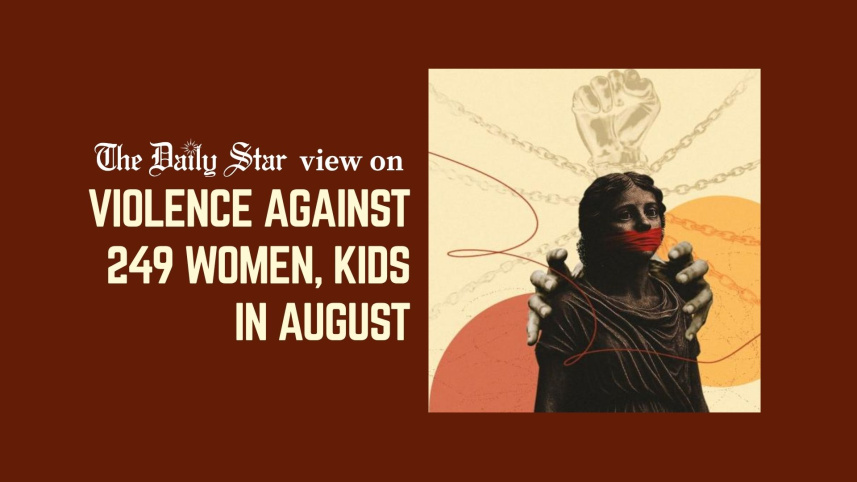
We are deeply concerned by the continued reports of violence against women and children across the country. According to a Human Rights Support Society (HRSS) report, at least 249 women and children were subjected to violence across Bangladesh in August, including 79 who were raped. More alarming is the fact that 46 of the rape victims were children. Eighteen women and girls were victims of gang rape, while 93 women and girls, including 38 children, faced sexual harassment. Meanwhile, six women and girls were killed and seven injured in dowry-related violence, while one died by suicide. These numbers show that not enough is being done to protect women and children from persistent violence.
Domestic violence also claimed the lives of 49 women, injured 31, and drove 23 to die by suicide in August. This is particularly disturbing because violence within families often remains hidden. The latest Violence Against Women Survey by Bangladesh Bureau of Statistics (BBS) found that 64 percent of ever-married women did not tell anyone about their experience of abuse, while only 7.4 percent sought legal action. Fear of stigma, financial dependence, family pressure and a lack of confidence in support systems continue to silence the survivors. Moreover, in recent months, an increasing number of cases of child rape have been reported in residential madrasas. We must ask: why do those who prey on children continue to feel so emboldened?

Clearly, the culture of impunity and delay in the delivery of justice are allowing violence to persist, with the conviction rate in rape cases remaining less than one percent. According to a report published by this daily in March this year, more than 10 lakh cases were pending before the country’s Women and Children Repression Prevention Tribunals, with over 10,000 rape cases remaining unresolved for more than five years. When cases take years to resolve and punishment remains uncertain, the existence of laws means little to the survivors.
The government must, therefore, make serious efforts to reform the system that continues to deny justice to the survivors and victims of violence and rape. It must ensure that cases of rape and other serious violent crimes are investigated properly, and that perpetrators are tried without unnecessary delay. The authorities must strengthen survivor and witness protection, make One-Stop Crisis Centres fully functional, and ensure access to legal aid, shelters and counselling for those who need them. Educational institutions must also be monitored closely, with clear mechanisms for reporting abuse and holding those responsible accountable. At the same time, we must collectively raise our voices against the culture that allows such violence to become deeply entrenched. Families, educational institutions, communities and citizens must reject attitudes that excuse or conceal abuse. The state must not falter in its fundamental duty to ensure the safety of women and children.
 For all latest news, follow The Daily Star's Google News channel.
Comments