


Green certification alone cannot guarantee safe ship recycling

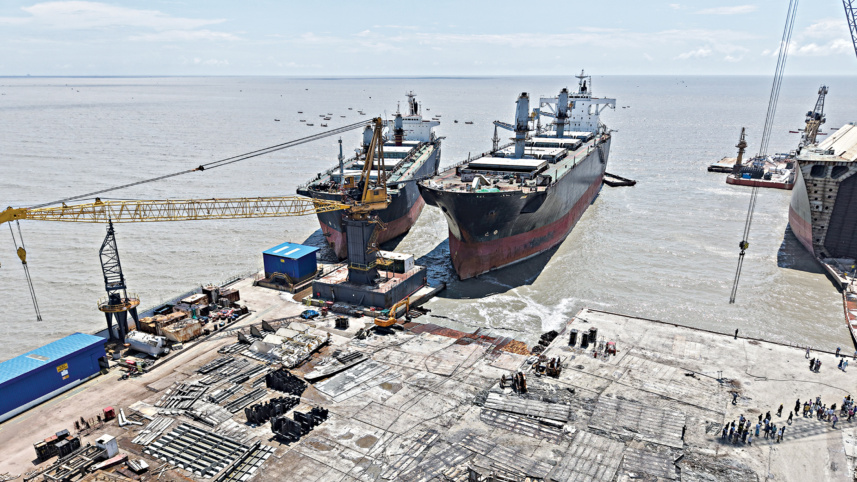
The tragedy met by nine workers inside an LNG carrier at the Ferdous Steel Ship Recycling Industries in Chattogram’s Sitakunda on August 14 has, once again, raised concerns about the effectiveness of the safety, compliance, and certification system in our ship recycling sector. According to data compiled by the Bangladesh Institute of Labour Studies (BILS), 84 accidents were recorded between June 26, 2025 and August 14, 2026, killing 15 workers and injuring 81. Another estimate puts the numbers of deaths and injuries recorded since 2014 at 161 and 225, respectively. While there hasn’t been a noticeable increase in fatalities in recent years, accidents remain a constant concern, with 12 workers already having died so far this year.
These figures underline that “green” certification alone cannot guarantee safety. Today, 23 of the country’s 31 functioning shipyards have gone fully green, while eight are under trial for the certification. True, ship recycling is an inherently high-risk work, and one accident should not define the entire industry. Several yards did make meaningful progress in safety and responsible recycling, but those failing to continuously meet standards, as evidenced by the continuous accidents, must be critically scrutinised and held accountable.

In the latest accident, the workers were exposed to toxic gas while inside the ballast tank of the scrap vessel, MT Rasi, including the highly toxic hydrogen sulphide. Several workers were also injured. The Ferdous Steel yard was reportedly certified as compliant with the Hong Kong International Convention for the Safe and Environmentally Sound Recycling of Ships (widely known as Hong Kong Convention or HKC). This raises the question: If a facility was certified as HKC-compliant, how did such a serious and potentially foreseeable enclosed-space hazard occur? For this, the entire safety and compliance chain must be investigated, including the role of local consultants, safety advisers, certification bodies, inspectors, and departments responsible for approving or monitoring such facilities.
Most importantly, it should be established what advice the consultants engaged by the yard in question had provided on safety and risk management before the accident. Were the ballast tanks and such enclosed spaces identified as high-risk areas? Were hydrogen sulphide and other toxic gases detected during risk assessments? Were gas-testing, ventilation, work-permit, emergency-rescue and respiratory-protection procedures properly established? Were these recommendations actually implemented and verified?
In general, following a major accident, questions are directed at the yard owners, workers, relevant authorities, and safety arrangements. However, the role or effectiveness of consultants who have provided advice on the yard’s safety, environmental and compliance management often receives much less scrutiny. So, it is essential to investigate what advice they provided before the accident, what risks they identified, whether their recommendations were implemented at all and, if they were not, what action they advised the yard and relevant authorities to take.
There are also allegations that the same consultants may subsequently become involved as “experts” in various investigation committees formed after accidents. This could create a potential conflict of interest if they participate in investigating the failure of a safety or environmental compliance system for which they themselves had previously provided consultancy services. If a consultant has been responsible for advising a particular yard on safety and compliance, the question of how impartial that person can be when subsequently participating as an expert in an investigation at the same yard must be seriously considered.
These questions become even more serious because the Department of Inspection for Factories and Establishments had reportedly taken legal action against Ferdous Steel only months before the accident, following repeated occupational-safety failures. If repeated safety deficiencies had already been identified, the investigation should establish what corrective actions were required, who was responsible for implementing them, who verified their implementation, and why the yard continued operating until this tragedy occurred.
The role of consultants should therefore not be overlooked. Consultancy fees, safety assessments, environmental management plans, risk assessments, and compliance certificates should be examined alongside their actual effectiveness in preventing accidents. A document demonstrating compliance cannot, by itself, be treated as proof that workers were actually protected at the workplace. The same principle applies to the certification bodies and approving authorities. Certification cannot become a substitute for continuous operational verification. If a facility is certified but serious safety failures continue to occur, the effectiveness of the certification and monitoring process itself deserves scrutiny.
Besides, proper implementation of the Hong Kong Convention should be accompanied by effective implementation of relevant Basel Convention requirements, rather than the two being treated as substitutes for one another. The HKC is a ship-specific framework focused on the safe and environmentally sound recycling of ships, including hazardous-material inventories, recycling plans, worker safety, facility standards, and certification. In contrast, the Basel Convention primarily regulates the transboundary movement and environmentally sound management of hazardous and other wastes. Bangladesh must ensure that HKC compliance goes beyond obtaining certificates. It must be reflected in daily risk assessment, worker protection, hazardous-material handling, monitoring, and enforcement. At the same time, Basel principles must be followed for controlling and safely managing hazardous wastes generated during recycling.
A coordinated approach to both frameworks is essential to address regulatory gaps and ensure that ship recycling is genuinely safe for our workers as well as the environment.
Finally, as highlighted before, accountability must extend beyond the yard gate—to everyone who advised, certified, inspected, approved, monitored or otherwise had responsibility for ensuring that workers were safe. A certificate can demonstrate compliance on paper. But only safe operations can protect lives.
Muhammed Ali Shahin is a ship recycling analyst involved with Young Power in Social Action (YPSA). He can be reached at shahin@ypsa.org.
Views expressed in this article are the author's own.
Follow The Daily Star Opinion on Facebook for the latest opinions, commentaries, and analyses by experts and professionals. To contribute your article or letter to The Daily Star Opinion, see our guidelines for submission.
 For all latest news, follow The Daily Star's Google News channel.
Comments