


How long can farmers keep producing as costs keep rising?

High input costs, low market prices for agricultural produce, fertiliser shortages or distribution problems, fuel price hikesthere seems to be little relief for farmers in Bangladesh. The latest blow, the government’s decision to hike fuel prices across the board by Tk 20—the second such increase in just five months—has hit small and marginal farmers particularly hard, leading many to wonder whether they should reduce production, stop farming, or seek alternative livelihoods.
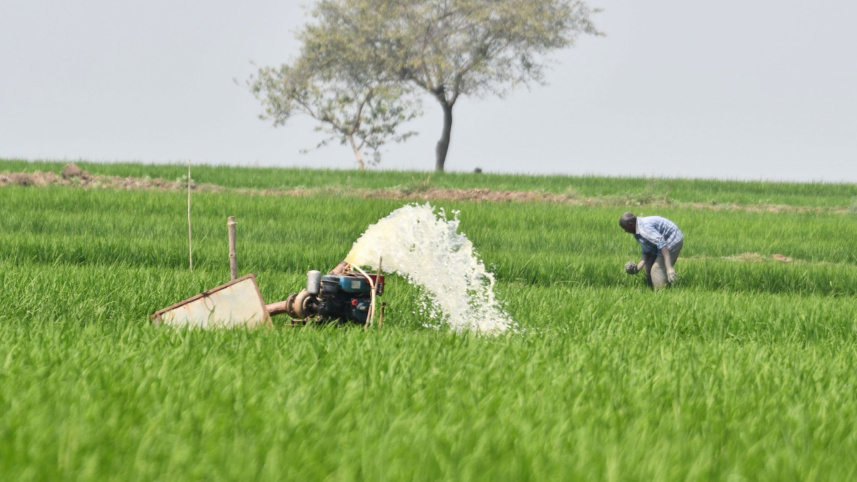
Data on fuel consumption by the farming community explains the situation better. More than 12 lakh irrigation pumps and 3.8 lakh power tillers in Bangladesh run on diesel. Meanwhile, Bangladesh Petroleum Corporation (BPC) estimates that roughly 12.55 lakh tonnes of diesel are consumed by farm machinery annually, and the agricultural sector alone accounts for over 15 percent of the country’s annual fuel consumption.

Besides, most small farmers do not have electric irrigation pumps. They rely on diesel pumps. With the fuel price hike, not only has irrigating fields become costly for them, but so has transporting produce to the markets. This situation is forcing many growers to question the worth of the effort that goes into farming. But halting production or quitting farming remains impossible for most, as agriculture is the only livelihood known to the lakhs of farmers of this fertile delta. Most of them would rather continue working with full dedication, driven by the hope that market conditions will improve in upcoming seasons, than leave a profession inherited from their ancestors.
Bangladesh’s potato growers exemplify this persistence: consecutive years of nationwide overproduction led to recurring financial losses for growers even after they paid for off-season cold storage. Farmers incurred losses in 9 out of the last 15 seasons, and although potato exports increased in the last fiscal year, local farm gate prices did not. And yet, farmers continue to grow potatoes, hoping for better days.
Meanwhile, in Naogaon this year, a key Aush paddy hub, farmers cultivated over 58,000 hectares of land, incurring a cost of Tk 14,000-15,000 per bigha and yielding 15-16 maunds per bigha. But plunging market prices of Tk 700-800 per maund resulted in losses of Tk 5,000-6,000 per bigha.
Recent natural disasters, including flash floods, extreme rainfall, and storms in several districts, further compounded farmers’ struggles, yet government aid remained grossly insufficient. Although the BNP government distributed farmer cards to a limited number of farmers shortly after assuming power; waived debts up to Tk 10,000, including interest, for about 12 lakh small and marginal farmers; and provided cash assistance to affected farmers in the haor region, these measures fall far short of properly addressing the on-ground reality.
Under the farmer card programme, each farmer receives agricultural inputs worth a meagre Tk 2,500 per year, a trivial sum under current economic conditions. For a farmer who has lost Tk 2 lakh worth of potatoes or paddy in extreme rainfall, a modest cash transfer or a Tk 10,000 loan waiver offers negligible relief.
Over the past decade, my conversations with flood-affected and debt-burdened farmers across the northern region reveal a consistent sentiment among them: they do not seek government handouts or relief. What they demand instead is cost stability for key inputs such as diesel, gas, electricity, seeds, and fertiliser, alongside fair prices for their produce. They expect the government to ensure timely and uninterrupted supply of fertilisers and other inputs at reasonable prices. Unfortunately, the ground reality today remains starkly at odds with these basic expectations.
Moreover, decade-long persistent price disparities trap growers in generational, high-interest debt cycles with moneylenders and NGOs. Even if produce prices rise during harvests, escalating input costs guarantee growing, not diminishing, debt burdens. Yet, two decades ago, rural farming families were more self-reliant and could protect themselves from market forces as they saved seeds, used organic fertilisers, family labour, and draft animals at minimal expense.
Today, this landscape has drastically shifted. While commercial transport operators, retailers, and businesses easily pass rising costs onto consumers, farmers lack collective bargaining power, organised representation, or institutional avenues to adjust crop prices or negotiate with state agencies. Government paddy pricing primarily benefits commercial traders, while local syndicates dictate rates for other crops.
Moreover, marginal farmers lack independent resources unlike in the past: around 93 percent of seeds are now imported, while machinery, irrigation, chemical fertilisers, pesticides, and transport are commercially controlled. Amid these challenges, a fuel price hike adds costs to every production phase without boosting returns. And farmers’ dependency deepens.
This year has been particularly difficult for farmers. Input distribution challenges have disrupted farming operations in many districts across the country. Growers paid Tk 400 to Tk 500 above official rates per bag of fertiliser. In Kurigram, recent fertiliser shortages and distribution anomalies sparked farmer unrest, altercations, and warehouse break-ins. Following legal actions and arrests, including a case filed over allegedly assaulting an agriculture officer, many Bhurungamari farmers fled their homes in fear of arrest and could not return to their villages. While the frustrated farmers’ actions cannot be legally justified, it does raise the question: how ethical is it to punish them for the government distribution channels’ failure to supply fertilisers at official rates?
Because the state serves as the primary support system for the agricultural community, abruptly hiking fuel prices without addressing underlying vulnerabilities severely impact rural livelihoods. To mitigate these pressures, the government should review and reduce fuel rates. Authorities should assess whether it is possible to reduce the price of diesel for the agricultural community to prevent further increases in production costs. Diesel purchases can be tied to the farmer’s card, which the government must distribute nationwide urgently. Besides, establishing a dedicated agricultural commission would help the government evaluate farming profitability, identify systemic failure points, and formulate debt-relief mechanisms. Additionally, given the growing threat of climate crises, introducing comprehensive crop insurance schemes and direct cash assistance is essential.
More than 17 crore people in this country rely on farmers who toil in the fields, come rain or shine, to feed the nation. Protecting their interests cannot be an afterthought. The impact of policy-level decisions on farmers and marginal producers must be evaluated with caution and compassion before implementation.
Mostafa Shabuj is a journalist at The Daily Star.
Views expressed in this article are the author's own.
Follow The Daily Star Opinion on Facebook for the latest opinions, commentaries, and analyses by experts and professionals. To contribute your article or letter to The Daily Star Opinion, see our guidelines for submission.
 For all latest news, follow The Daily Star's Google News channel.
Comments