


The fine line between moral courage and entitlement

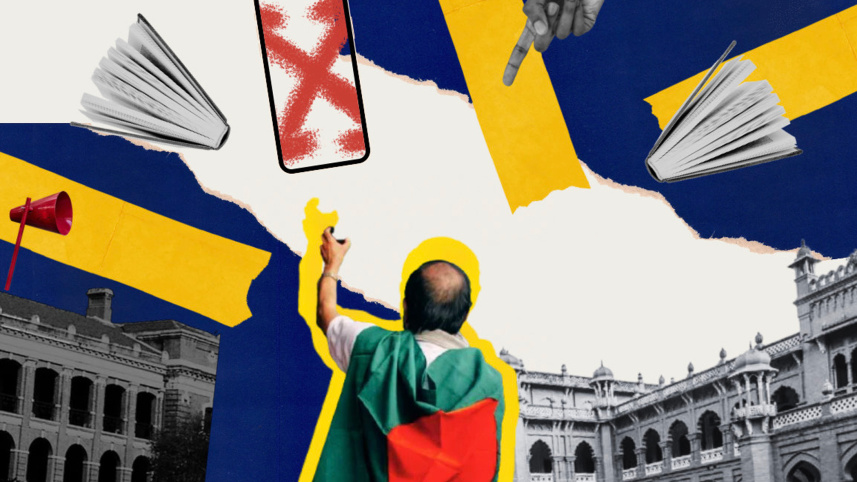
Do I have the right, or the moral courage, to call a spade a spade? Images of a student leader confronting and beating his party opponents with a spade in front of teachers and university administration made me reflect on the instruments of obedience that have been inculcated in us with an effect of silence. These student leaders fought against arbitrary power and helped the older generation acknowledge its failures, such as tolerating compromised elections and weakened institutions while preferring institutional stability through silence. But in the post-uprising scenario, we have also realised that overthrowing authority and building democracy are two different matters. The urgency, solidarity and disruption that accompanied the toppling of the previous regime must change the rules for restoring democracy. For that, we need a different set of values: patience, room for disagreement, and institutional restraint. And above all, there has to be the willingness to accept that no generation possesses the whole truth. And there is no shortcut to knowledge.
It is unfortunate that we are seeing a culture where moral power is exercised arbitrarily, where accusation precedes evidence and power precedes procedure. Students are deciding who could teach, who must apologise, and which political associations are permissible. Some of this anger is valid. Partisan appointments, patronage, and teachers’ silence during repression have damaged the profession’s moral standing. But public humiliation and collective punishment reproduced the very logic of the former authoritarian rule the uprising opposed.

A wise philosopher once said, “Revolution devours its children.” The pandemonium we are witnessing across campuses is a reminder of the paradox that Milton’s Satan faced after challenging the existing hierarchy. Unwittingly, he created an alternative hierarchy where that question became, “Did we reject arbitrary authority, or did we merely change who is entitled to exercise it?”

As a student of literature, I am no stranger to disobedience as a cultural theme. In Sophocles’ play, the daughter of King Oedipus, Antigone, defies the state law to bury her dead brother in defiance of the king’s decree. For her, the divine law of respecting the dead and the duty of standing by a family member matter the most. Antigone shows us that defiance alone is not an ethic; it becomes ethical only when it submits itself to a principle larger than the defiant individual. We hailed the students for showing us the big picture. So it pains us to see how these students have now gotten entangled in reproducing some of the old cruelties. Sporadic violence across campuses to assert political dominance is one instance of that. Has our youthful agency become youthful absolutism?
We are seeing the growing sentiment that views “we were right” as “we are always right.” History tells us that political courage in one historical moment does not confer permanent epistemic authority. My students, who have returned to the classrooms after the uprising, recognise that being able to identify an injustice does not automatically provide the knowledge needed to run a university or to reform a curriculum. Managing an economy or constructing a constitutional democracy is not an AI prompt that can yield ready-made solutions.
The power with which our student leaders claimed, “We did it,” must also recognise the power of the first-person plural. The beauty of democracy demands that “we” remain open enough to include people who disagree with us.
Once again, we return to the fall of a seemingly immovable regime within weeks. Two alternative versions are competing for legitimacy: one group is saying that we simmered the rice pot to a boiling point over 15 and a half years, while the other group is saying that we cooked the rice in just a few weeks. Our memory is long enough to know that a shortcut is not always the best method. The uprising can unintentionally encourage the belief that every difficult structure can be bypassed: the government through the streets, expertise through confidence, education through artificial intelligence, and employment through a start-up pitch.
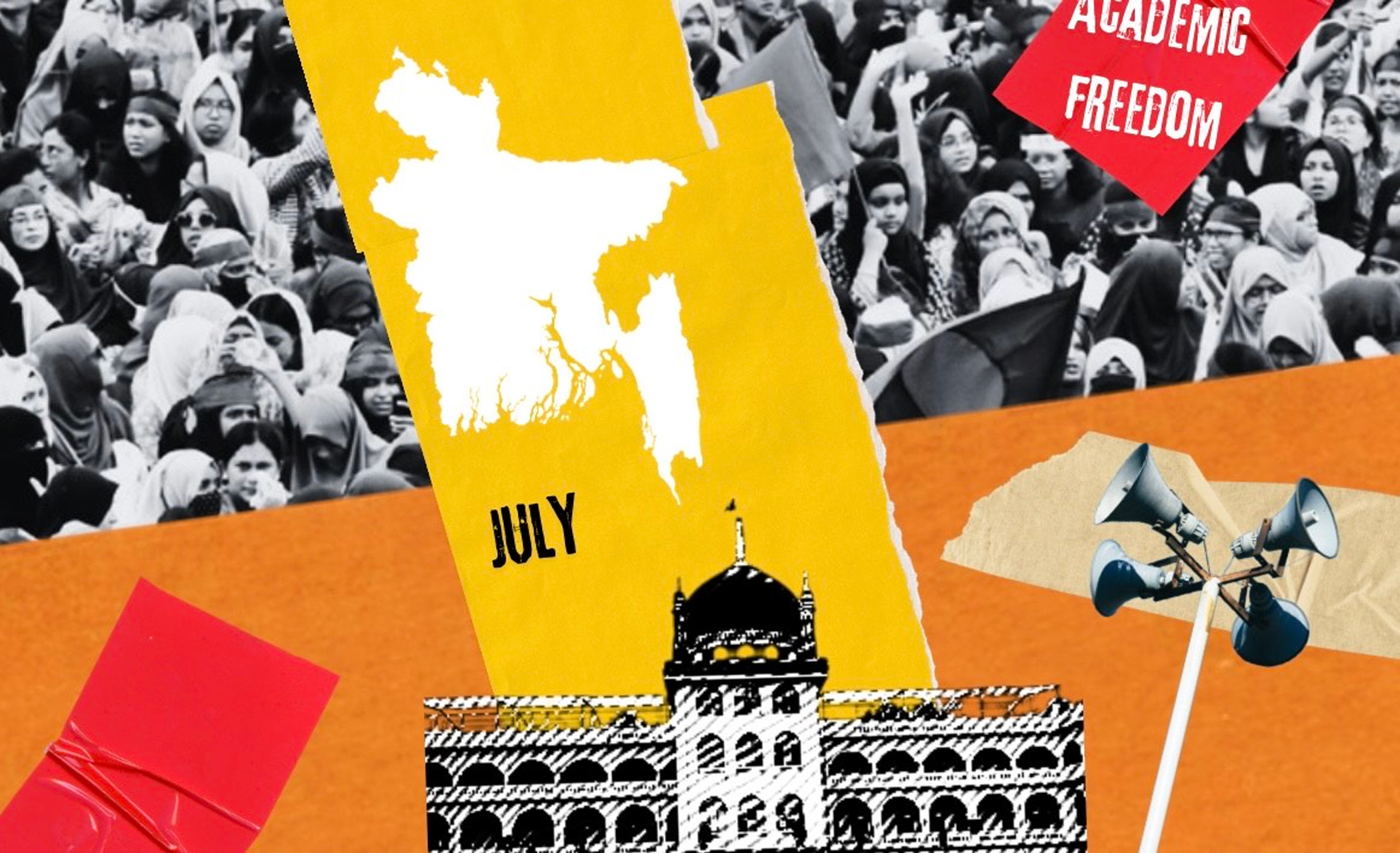
Now that we have a settled, democratically elected government, we need to resort to some policy interventions to shift the mindset. From the top, we must send a clear message: becoming ready for democracy takes time. Becoming ready for the job market requires time. The disrespect for individual teachers is also reflected in the disregard for the institutions. Our policymakers must restore faith in the educational institutions. Heroics through violence are compromising the very purpose of education.
We need to return to the fundamentals of education: that required reading takes time. Knowledge can only be attained through repetition. We cannot expect all our graduates to become entrepreneurs overnight. “Be your own boss” can be a glamorous escape from apprenticeship, disciplinary knowledge and accountability. A business requires solid foundations in accounting, governance and persistence. The tendency to pursue shortcuts is leading to a path filled with short-term success. The same goes for modern technology; AI, for instance, can accelerate thought but can also create the appearance of competence without substance. With so much discourse on change and reform, we must not delete institutional memory or the human knowledge base that we have.
Then again, we need to be aware of corrupt teachers with compromised morality. However, a rotten apple does not necessarily spoil a teaching “barrel,” just like a naughty parliamentarian does not make parliamentary democracy obsolete. Institutions preserve rights precisely because individuals—including heroic individuals—are fallible. Due process protects not only the accused but also the accuser from the eventual misuse of precedent. If students can remove a teacher today without investigation, another political group can use the same method against a principled teacher tomorrow.
The agency and entitlement that we see pervading our system, along with the tendency to take shortcuts that affect our mindset, are creating social tensions and frictions. The children of revolution must be aware of the trap that gives the false impression that they have assumed a privileged position from which they can proclaim what is right and what is wrong. The same goes for us, the older generation, who also have been ambivalent and lost some of our agency.
One can argue whether, in a post-truth era, it is really possible to discern the truth from untruth and right from wrong. Then again, where do we garner the courage to call the spade a spade? The clash of students across campuses makes me wonder.
Dr Shamsad Mortuza is vice-chancellor at the University of Liberal Arts Bangladesh (ULAB).
Views expressed in this article are the author's own.
Follow The Daily Star Opinion on Facebook for the latest opinions, commentaries, and analyses by experts and professionals. To contribute your article or letter to The Daily Star Opinion, see our guidelines for submission.
 For all latest news, follow The Daily Star's Google News channel.
Comments