


Bangladesh needs to invest in home-based childcare

Every morning before work, Rima, a garment worker living on the outskirts of Dhaka, faces a painful dilemma: there is no safe place to leave her two-year-old daughter. Her elderly mother lives in a distant village, her husband works as a rickshaw puller, and the nearest daycare centre is too expensive. Some days, she leaves her child with a neighbour, constantly worrying about her safety. On other days, she misses work to care for her daughter, sacrificing much-needed income. Eventually, unable to balance work and childcare, Rima leaves her job altogether.
With every woman leaving the workforce because she cannot find reliable childcare, a family loses income, an employer loses a productive worker, and the economy loses valuable human capital. One of the primary reasons behind this is the limited availability of safe, affordable childcare services in Bangladesh. Today, this has become a major challenge to national productivity, women’s economic empowerment, and the country’s future human capital development.

A study by the International Labour Organization found that 54 percent of working parents believe the lack of affordable, quality childcare is one of the main barriers to women’s participation in the workforce. Furthermore, 18 percent of parents reported having to leave a job or other income-generating activities at some point due to childcare responsibilities. These findings reveal the crucial need for quality childcare services in Bangladesh.
In recent years, the importance of childcare has increasingly been recognised worldwide. While participating in the World Bank’s Invest in Childcare Policy Academy in May 2026, we observed that countries investing in childcare have achieved notable success not only in improving children’s well-being but also in increasing women’s labour force participation, creating employment opportunities, and sustaining long-term economic growth.
Moreover, the number of formal daycare centres in both the public and private sectors remains extremely limited across a country of nearly 18 crore people. Beyond formal daycare centres, many countries have successfully introduced income-generating home-based childcare models, such as Australia’s Family Day Care, the UK’s Registered Childminders, Canada’s Licensed Home Child Care, and South Africa’s Community-based Childcare system. In Bangladesh, we can explore Rwanda’s community-based childcare and Kenya’s home-based childcare systems, as all three nations face similar socioeconomic challenges and share large informal labour markets.
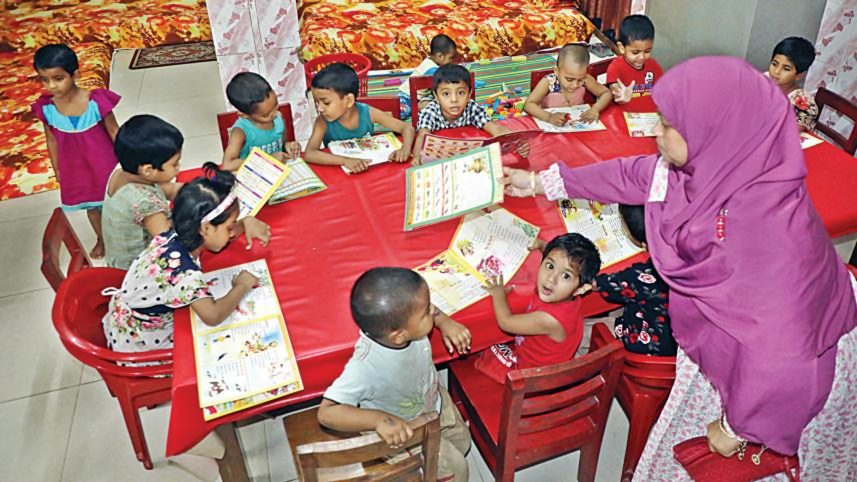
Although on a very limited scale, informal home-based childcare services have begun to emerge in Bangladesh, particularly in urban and peri-urban areas around garment factories. Following the examples of other countries, Bangladesh may introduce professionally trained local women to provide home-based childcare services. This model can become a safe, affordable and sustainable childcare system. With proper planning and implementation, home-based childcare services could create thousands of women entrepreneurs across the country with relatively modest investment, simultaneously expanding access to childcare while generating significant employment opportunities.
The next question is: who should implement this on a large scale? A nationwide expansion cannot rely solely on grants or donor-funded projects; the private sector and NGOs must also step in. NGOs, in particular, are uniquely positioned to lead this effort. Over the years, they have successfully delivered microfinance, healthcare, skills training, and income-generating programmes to marginalised communities across Bangladesh. By leveraging their vast grassroots networks and field experience, NGOs can easily scale home-based childcare services across the country.
Under such a programme, potential women entrepreneurs would first be identified and equipped with the right skills. They would receive structured training in Early Childhood Care and Development (ECCD), child protection, nutrition, first aid, and business management. Once they meet national competency standards, these women could be certified and given affordable loans and business support. They would then open and run registered childcare centres in their own homes. Ongoing monitoring and mentoring would ensure high service standards and child safety. To guarantee the long-term success of these services, several key policy measures must be adopted.
First, Bangladesh should develop a national policy and licensing framework for home-based childcare services. Second, a national competency standard and certification system should be introduced. During the initial phase, certification requirements may be relaxed. Third, subsidies for childcare services should be introduced for low-income families. Fourth, women interested in becoming childcare entrepreneurs should receive professional training together with access to affordable credit.
Investment in childcare, whether through formal or informal systems, should not be viewed as a social expense but as an investment in the country’s future. Quality childcare enables more women to participate in the workforce, supports children’s early learning and development, increases household income, and enhances national productivity over the long term. Therefore, childcare represents an integrated strategy for social protection, skills development, women’s entrepreneurship, and inclusive economic growth. Now, it is time for policymakers to give this issue the earnest attention it deserves.
Golam Gilane is a development practitioner working at Palli Karma Sahayak Foundation (PKSF). He can be reached at ggilane@gmail.com.
Views expressed in this article are the author's own.
Follow The Daily Star Opinion on Facebook for the latest opinions, commentaries, and analyses by experts and professionals. To contribute your article or letter to The Daily Star Opinion, see our guidelines for submission.
 For all latest news, follow The Daily Star's Google News channel.
Comments