


Good governance, not just incentives, will improve Bangladesh’s investment climate

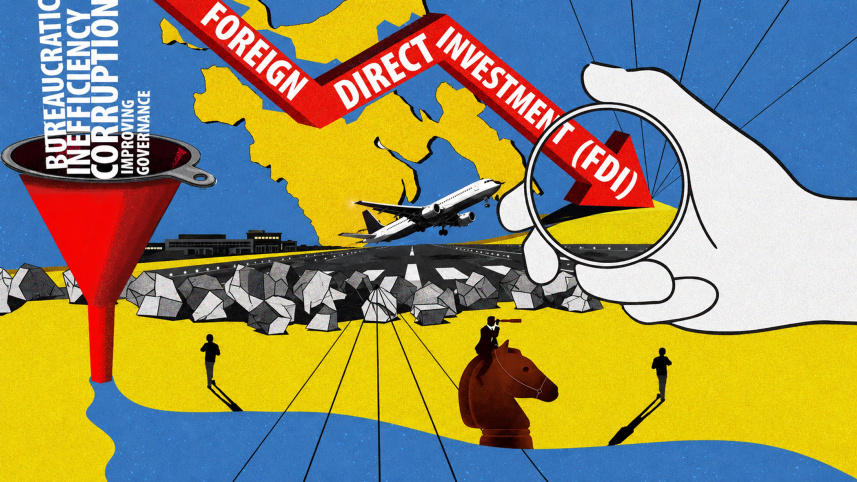
Recently, to support investors and present Bangladesh more competitively as an investment destination, parliament passed the Invest Bangladesh Bill, 2026, merging the Bangladesh Investment Development Authority (Bida), the Bangladesh Economic Zones Authority (Beza), and the Public-Private Partnership Authority (PPPA) into a single agency, Invest Bangladesh. The question is whether this merger will improve Bangladesh’s investment climate. To answer that, let us try to see Bangladesh through the eyes of a potential foreign investor.
Imagine the investor landing at Hazrat Shahjalal International Airport for the first time. He has heard encouraging stories about Bangladesh’s remarkable economic progress, its emergence as the world’s largest garment manufacturing hub, its market of more than 17.5 crore people, its strategic location between South and Southeast Asia, and the young workforce. He arrives with genuine optimism.

His first impression, however, is not formed in a corporate meeting room. It is formed at the airport, the country’s foyer. Just as visitors often judge a home within moments of entering it, investors begin judging a country before attending a single meeting. He notices that the arrival hall is crowded and disorganised. He joins a long queue at immigration and, after completing the formalities, proceeds to collect his luggage and look for a trolley, several of which are either damaged or unusable. Then he finds that at customs, almost every passenger must have their luggage scanned, creating another long queue. He notices a sign “Foreign Investors’ Desk,” but finds little evidence of an active service to guide or assist prospective investors.
Of course, none of these inconveniences is serious enough to deter a multimillion-dollar investment. Yet, together they create a lasting impression. An international airport is more than a transport terminal; it is the first demonstration of how a country organises itself. Long before an investor visits a factory site, he begins asking a simple question: if this is how the country’s principal gateway functions, how efficiently will the rest of the system work?
Outside the airport, another picture begins to emerge. Vehicles of every description, including buses, trucks, cars, motorcycles, auto-rickshaws, rickshaws and pushcarts, compete for the same road space with little regard for traffic rules. Buses stop wherever passengers wave them down. Motorcycles weave between vehicles, and pedestrians jaywalk even on arterial roads. A journey that should take less than an hour takes more than two. For the people of Dhaka, this is part of everyday life. For a foreign investor, it is something else entirely. He is not merely observing traffic. He is subconsciously evaluating systems. If movement through the capital is so unpredictable, he wonders, what might this mean for transporting raw materials, delivering finished products, or meeting shipping schedules? Every delay represents time, and in business, time is money.
The following morning, he travels to Gazipur with a local business partner to inspect a proposed factory site. Halfway there, traffic comes to a complete standstill because several hundred factory workers have blocked the road after not being paid their wages. Waiting for several hours on the road, the potential investor finally abandons his planned visit and returns to his hotel.
Later that evening, he meets executives from foreign companies that are already operating in Bangladesh. They praise the country’s hardworking people, entrepreneurial spirit, and long-term potential. But they also describe having to obtain licences from multiple government agencies through repeated visits and unnecessary paperwork; delays in obtaining utility connections; complicated tax administration; congestion at ports; inconsistent implementation of rules; the prolonged delays in resolving commercial disputes—all of which increase operating costs. Investors in most developing countries face similar challenges. However, in Bangladesh, these issues compound and shape one of the most important considerations in any investment decision: confidence.

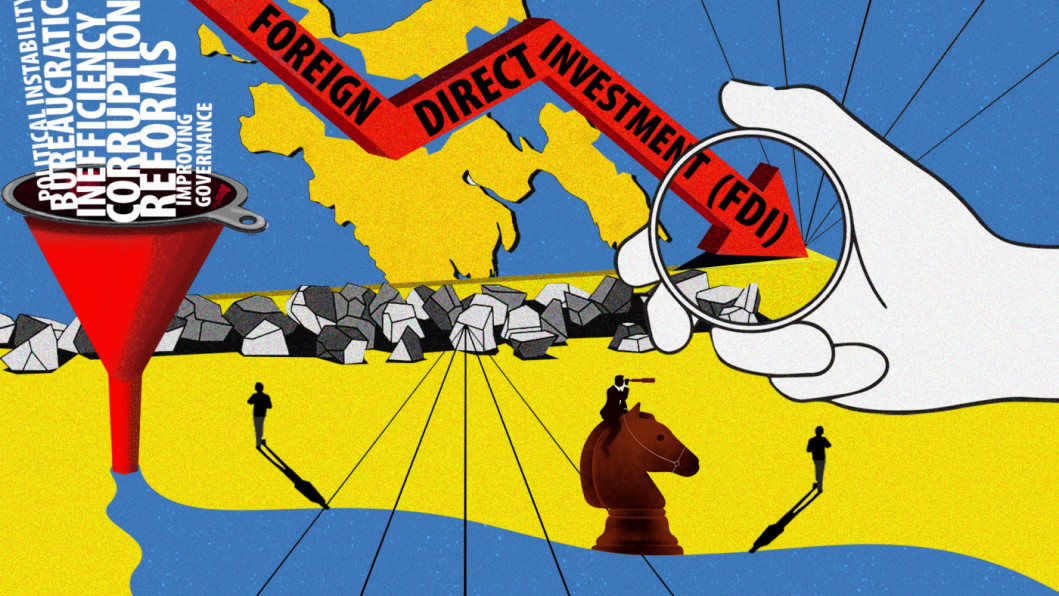
Governments frequently assume that investors are attracted primarily by tax holidays, subsidised land, or generous incentives. Such measures may encourage companies to examine a country more closely, but they rarely determine the final decision. Investors are willing to pay higher wages, higher taxes, or even higher land prices if they know the business environment is predictable, institutions are dependable, and decisions are made within predictable timeframes. What they struggle to accommodate is uncertainty. Every manufacturing project begins with assumptions. Construction schedules assume that permits will be issued on time. Financial projections assume that utility connections will be available as promised. Export contracts assume that goods will move efficiently through ports without unnecessary delays. When those assumptions prove unreliable, the economics of the entire investment begin to change.
This is why investors comparing Bangladesh with Vietnam, Indonesia, or India ask questions that seldom appear in investment brochures. Can a factory be built on schedule? Will imported machinery clear customs quickly? Will electricity and gas be available when needed? Can business disputes be resolved within a reasonable time? Will policies remain broadly consistent throughout the life of the investment?
The quality of a country’s institutions matters to investors besides labour costs and tax incentives. Bangladesh has made remarkable progress over the past two decades. Modern bridges, expressways, metro rail and power projects have transformed the country’s infrastructure. These achievements deserve recognition. But infrastructure alone does not create an attractive investment climate. Roads must move traffic efficiently. Ports must operate predictably. Customs must facilitate trade. Public services must be reliable, and government decisions must be timely and transparent.
The creation of Invest Bangladesh may simplify investors’ first point of contact with government. However, there are dozens of other investment-related services spread across more than 50 public institutions. The merger of just three is unlikely to considerably reduce the number of licences and permits investors require from multiple government agencies. Therefore, the investment decision will still depend on how efficiently these agencies function. This is why improving the investment climate should not be viewed as the responsibility of a single agency. Every immigration officer, customs official, tax administrator, utility engineer, port operator, traffic police, and judge becomes part of the country’s investment promotion effort. Every interaction either strengthens or weakens an investor’s confidence.
Now imagine the same investor returning to Bangladesh a few years from now. Immigration is efficient. Customs procedures are quick. The Foreign Investors’ Desk welcomes business visitors and connects them with the right agencies. Traffic moves more smoothly, travel times are predictable, and other foreign investors he meets in Bangladesh speak not of administrative delays or unnecessary paperwork but of expansion. Upon returning home, when he presents his report to the company’s investment committee, he does not say Bangladesh offered the lowest taxes or other incentives. He says something far more valuable: “The system works.”
That simple sentence is worth more than any investment summit, advertising campaign, or promotional brochure. Because, in the end, governments may persuade investors to visit a country. Only good governance persuades them to stay.
Abu Afsarul Haider is an entrepreneur. He can be reached at afsarulhaider@gmail.com.
Views expressed in this article are the author's own.
Follow The Daily Star Opinion on Facebook for the latest opinions, commentaries, and analyses by experts and professionals. To contribute your article or letter to The Daily Star Opinion, see our guidelines for submission.
 For all latest news, follow The Daily Star's Google News channel.
Comments