


Nigel Farage is facing his biggest test of credibility

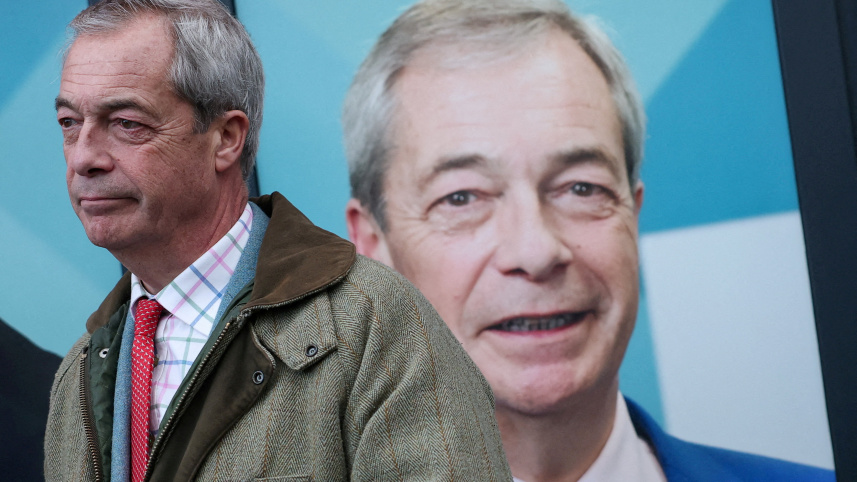
For more than a week, the British press has been consumed by allegations of Nigel Farage's financial dealings and his association with a convicted fraudster. Poll after poll suggests that Farage, the maverick politician who has built his career on opposing immigration, is now a frontrunner to becoming the UK’s next prime minister.
The controversy centres on allegations that Farage failed to declare millions of pounds' worth of gifts and benefits from wealthy supporters in accordance with parliamentary rules. At the heart of the case is a 5-million-pound gift from cryptocurrency billionaire Christopher Harborne, alongside questions about financial support connected to George Cottrell, a former Farage aide. Cottrell pleaded guilty to wire fraud in the United States in 2017 and served a prison sentence in Arizona. Britain's Parliamentary Commissioner for Standards is investigating whether Farage breached MPs' disclosure rules.

Farage vehemently denies any wrongdoing. He insists he complied fully with parliamentary rules and portrays himself as the victim of an establishment determined to destroy Reform UK before the next general election. In one of the boldest political gambles in recent British politics, he resigned as MP for Clacton and sought a fresh mandate from voters. His calculation is straightforward: if the electorate returns him to parliament despite the allegations, he can argue that the judgement of voters carries greater political legitimacy than that of Westminster's ethics watchdogs.
All the major mainstream parties—the Conservatives, Liberal Democrats, and the Greens—have announced they will boycott the Clacton by-election, arguing that it is a politically manufactured contest. They clearly do not want to give legitimacy to the by-election that they contend was triggered to divert attention from the scrutiny surrounding Farage's financial affairs. Therefore, Farage is certain to retain his seat in the by-election scheduled for August 14. Yet, even victory would not end the parliamentary investigation. Britain's standards system operates independently of elections, meaning questions over transparency and compliance with parliamentary rules will remain until the inquiry reaches its conclusion.
For any politician, the allegations would be serious. For someone aspiring to become prime minister, they strike at the heart of one of the most sensitive issues in British public life: standards in politics. Following years of parliamentary expense scandals and ethics investigations involving politicians from all major parties, voters have become increasingly intolerant of perceived failures to disclose financial interests. Even where no criminal offence is alleged, questions over transparency can inflict lasting political damage.
The irony is particularly striking because Farage's political identity has long been built on demanding strict adherence to British laws, values, and institutions. For nearly three decades, he has portrayed himself as the champion of ordinary Britons against an unaccountable political establishment. Whether this controversy becomes politically fatal depends less on parliamentary procedure than on the unique relationship Farage has cultivated with his supporters.
A political outsider only a decade ago, Farage transformed British politics through his relentless focus on immigration. His defining achievement came in 2016 when, as leader of the UK Independence Party (UKIP), he became the most recognisable figure in the successful campaign to take Britain out of the European Union. His message—that Britain had lost control of its borders and needed to "take back control"—resonated with millions of voters at the time. By tapping into anxieties among many working-class voters over immigration, pressure on public services, and rapid cultural change, Farage turned migration into the defining political issue of modern Britain. Although he has never served in government, he succeeded in forcing both the Conservative and Labour parties to adopt much tougher positions on immigration.
Few politicians in modern Britain have made immigration such a consistent political theme. During the Brexit campaign, Farage unveiled the infamous "Breaking Point" poster showing a long queue of migrants, an image widely condemned by political opponents as inflammatory but defended by Farage as highlighting the consequences of uncontrolled migration. Since then, he has consistently argued for drastically reducing both legal and illegal immigration, stopping asylum seekers crossing the English Channel in small boats and, if necessary, withdrawing Britain from the European Convention on Human Rights to facilitate deportations.
His relationship with the UK’s Muslim communities has been equally contentious. Following the 2015 Paris terrorist attacks, Farage said there was a "fifth column" within Britain and referred to what he described as a "split of loyalties" among some British Muslims. During the 2024 general election campaign, he argued that sections of British society had become "unrecognisable" because of immigration and questioned whether some young British Muslims fully embraced British values. Muslim organisations and anti-racism groups have repeatedly accused Farage of fuelling hostility towards Muslims. Farage rejects those accusations, insisting that his criticism is directed at Islamist extremism and failed integration rather than Islam itself. His supporters also point out that Reform UK's former chairman, Zia Yusuf, a British Muslim of Sri Lankan heritage, played a prominent role in the party.
Political analysts are divided over whether the latest controversy will seriously damage Farage. Britain's leading election expert, Sir John Curtice, has consistently argued that Reform UK's rise is driven primarily by widespread concern over immigration and deep dissatisfaction with the two main parties rather than Farage's personal popularity. His analysis suggests that as long as immigration remains one of Britain's dominant political issues, Reform UK will continue to command significant electoral support.
A more sceptical assessment comes from The Guardian columnist Simon Jenkins. He argues that Farage's reliance on wealthy benefactors and his habit of portraying every investigation as establishment persecution are becoming increasingly difficult to sustain. In Jenkins' view, the challenge for Farage is no longer winning attention but convincing voters that a lifelong protest politician is capable of governing.
For Britain's immigrant communities—including the country's large Bangladeshi diaspora—the stakes extend well beyond Westminster. A Farage-led government would almost certainly pursue tougher immigration controls, stricter asylum policies, and a more robust approach to integration, making his political fortunes closely watched by many families with ties to South Asia.
The current controversy, therefore, represents much more than an ethics investigation. It is the most significant test yet of whether Farage's anti-establishment brand can withstand allegations that would probably have ended the careers of more conventional politicians. With all the major parties boycotting the by-election, Farage is effectively being handed a walkover and is all but certain to reclaim his Clacton seat. If he gets a significant number of votes, he is likely to claim political vindication and emerge energised. Yet, even a comfortable electoral victory will not answer the questions now confronting him. Ultimately, only the outcome of the parliamentary investigation—and the verdict of UK voters at the next general election—will determine whether Nigel Farage's march towards Downing Street continues or whether this marks the beginning of its end.
Shakeel Anwar is former journalist at the BBC.
Views expressed in this article are the author's own.
Follow The Daily Star Opinion on Facebook for the latest opinions, commentaries, and analyses by experts and professionals. To contribute your article or letter to The Daily Star Opinion, see our guidelines for submission.
 For all latest news, follow The Daily Star's Google News channel.
Comments