Salinity and the unseen health burden in coastal Bangladesh
For many years, salinity in coastal Bangladesh has been discussed mainly as an environmental, agricultural and livelihood problem. The familiar policy language has focused on crop loss, shrimp cultivation, embankment failure, drinking-water scarcity and migration. These concerns remain valid. Yet observations from southern Khulna, particularly Rampal, Mongla and neighbouring coastal communities, suggest that salinity must also be understood as a public health concern with possible implications for reproductive health, maternal safety, disability, non-communicable diseases (NCDs) and climate-sensitive infections.
This is not a claim of settled causality. It is a call for scientific seriousness. Coastal families are living with multiple and simultaneous exposures: saline drinking water, heat, insecure livelihoods, seasonal water scarcity, changing disease ecology and unequal access to health services. The public health question is whether Bangladesh is prepared to study these combined risks before they become normalised as unavoidable suffering.
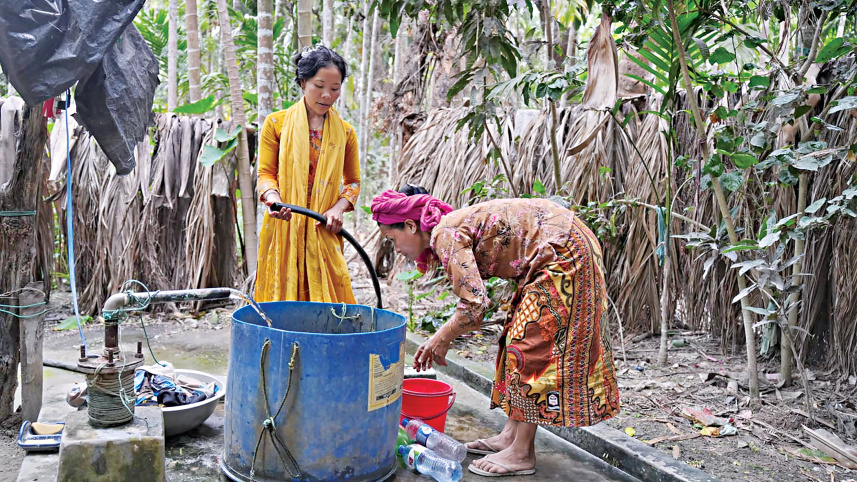
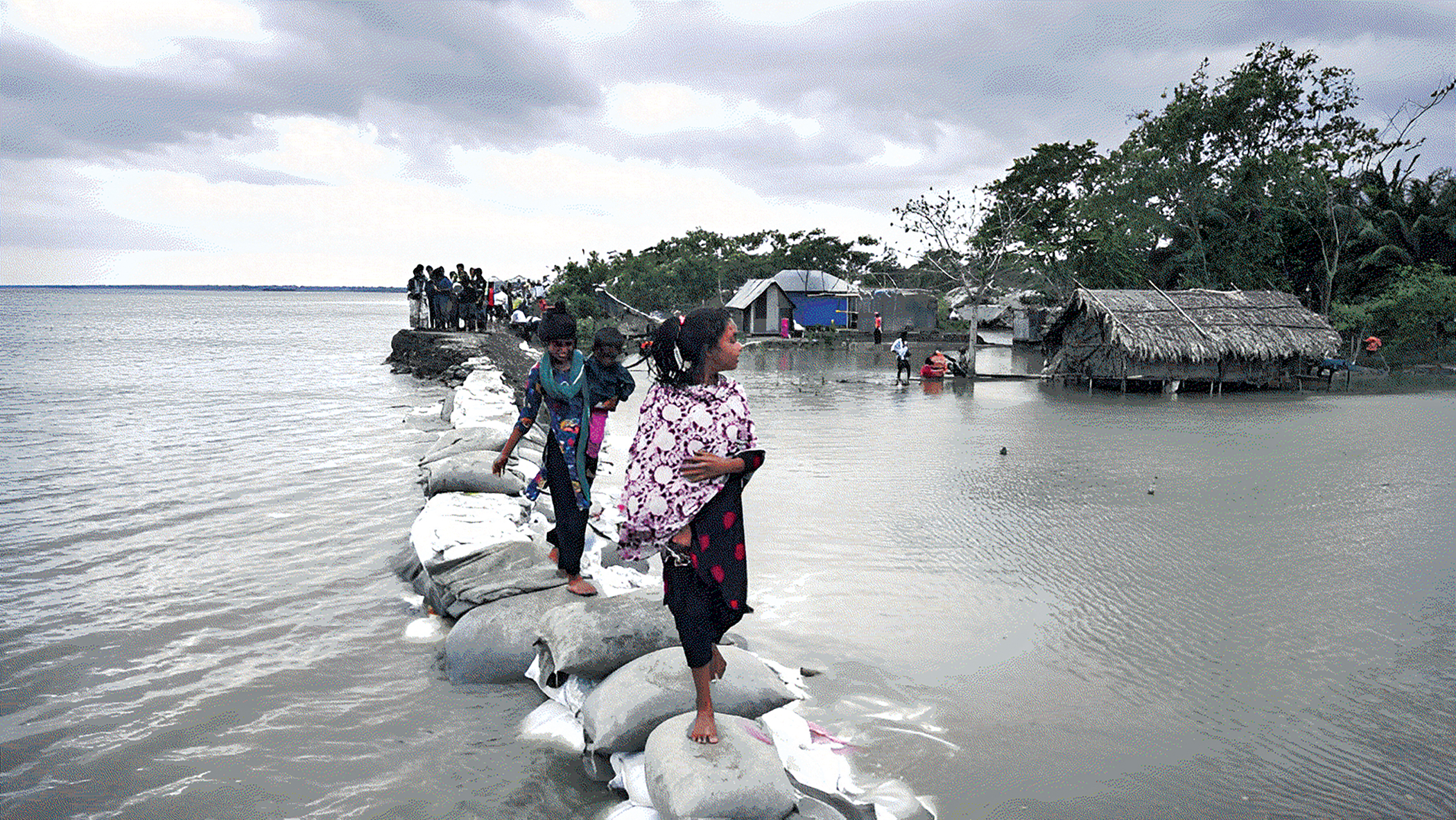
A paper to which I contributed in The Journal of Climate Change and Health framed salinity intrusion as a matter of community planetary health. The article argued that sea-level rise-induced salinity in coastal Bangladesh is intensified by shrimp cultivation, reduced dry-season transboundary river flow, embankment mismanagement and cyclone-related storm surges. In southern Khulna, these drivers are not abstract. They enter daily life through drinking water, cooking practices, food systems, household labour, pregnancy care and chronic disease risk.
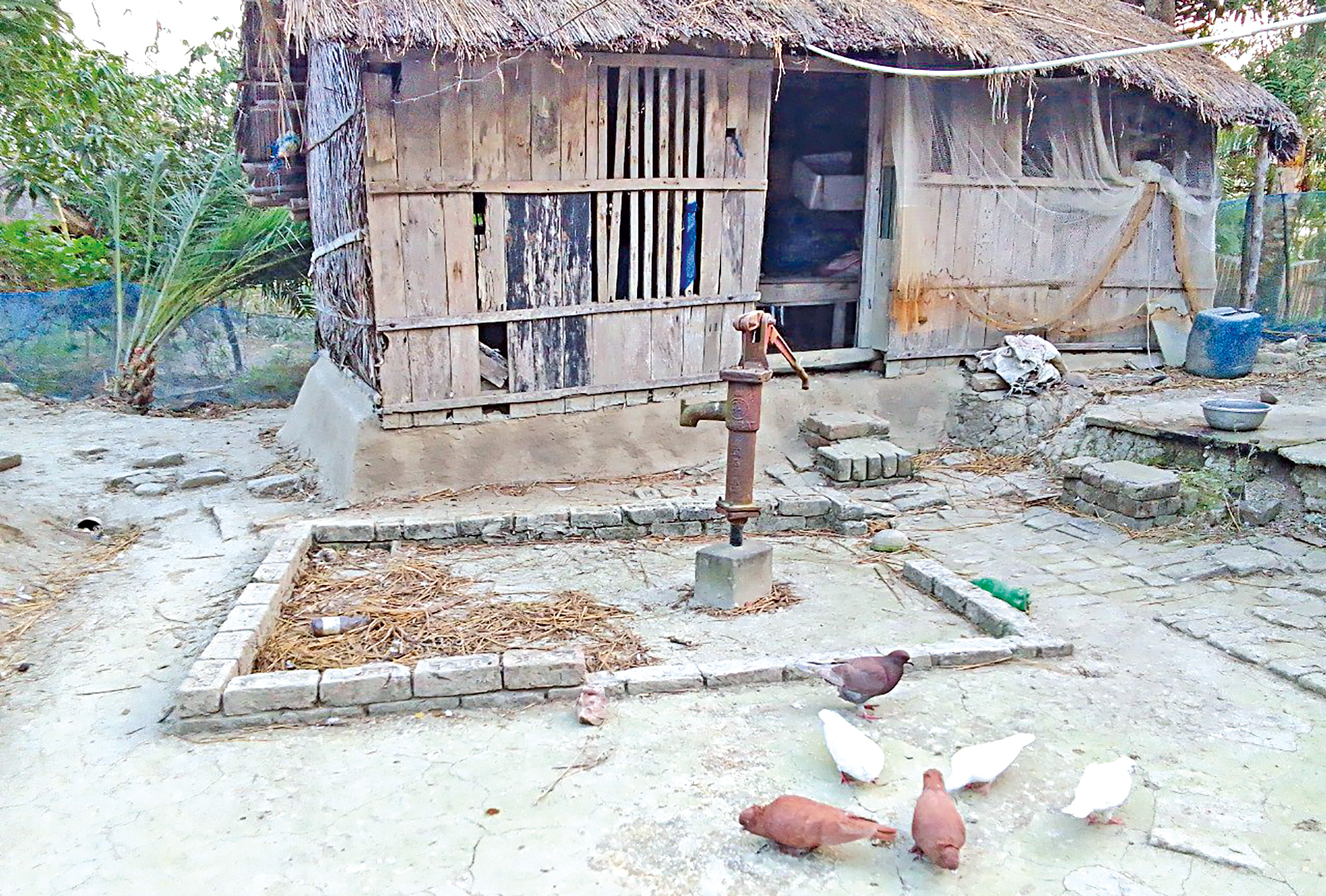
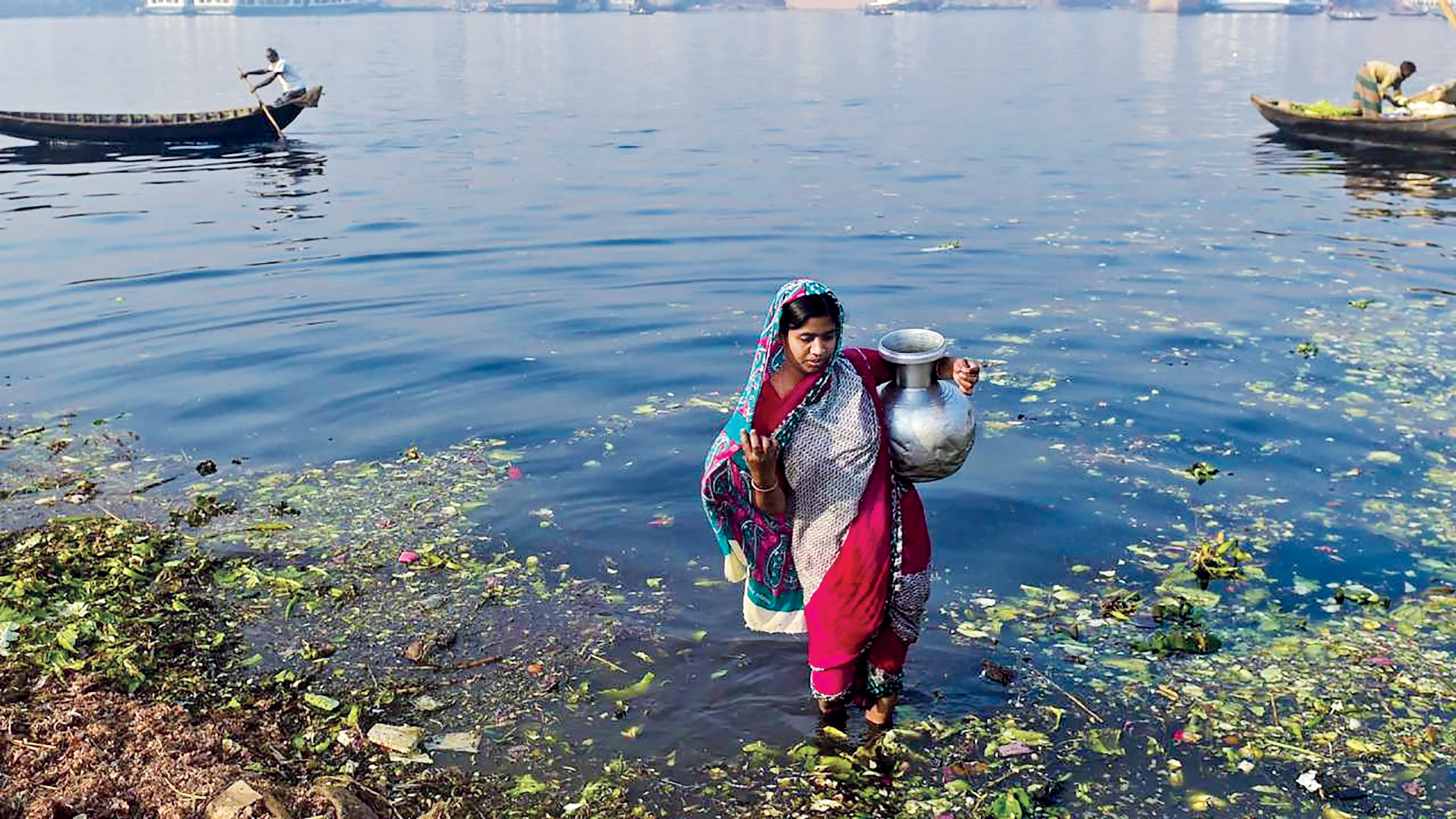
Among the most urgent concerns is pregnancy. In Rampal and Mongla, community-level observations suggest that pregnant women may be exposed to overlapping risks: saline drinking water, high dietary salt intake, heat stress, long distances to safe water, limited antenatal follow-up, poverty and inadequate early detection of hypertension. Many households do not associate salty water with pregnancy danger. Many women do not have regular blood pressure monitoring. Symptoms such as swelling, headache or weakness may be treated as routine pregnancy discomfort until complications become severe.
Evidence from coastal Khulna should make policymakers cautious. A population-based case-control study in Dacope Upazila examined 202 pregnant women with pre-eclampsia or gestational hypertension and 1,006 matched controls. It reported high sodium levels in drinking-water sources and found that women using tube-well groundwater had higher disease risk than rainwater users. This evidence does not mean that all pregnancy complications in coastal Bangladesh are caused by salinity. It does, however, establish a scientifically plausible and locally relevant pathway between drinking-water salinity, hypertension in pregnancy and serious maternal or perinatal outcomes.
Pre-eclampsia is not simply high blood pressure. It is a dangerous hypertensive disorder of pregnancy that can threaten both mother and child. It may contribute to emergency delivery, preterm birth, poor foetal growth, maternal complications and newborn risk. In coastal upazilas where transport, referral and emergency obstetric care remain uneven, any environmental exposure that increases hypertension risk in pregnancy becomes a matter of equity and human security.
The concern extends beyond pregnancy. A cohort study in coastal Bangladesh found evidence linking higher drinking-water sodium with raised blood pressure. This finding is directly relevant to NCD prevention. Hypertension is a major risk factor for cardiovascular disease, stroke and kidney disease. If saline water contributes even modestly to population-level increases in blood pressure, the long-term public health burden may be substantial. In saline zones, NCD prevention cannot be separated from water security.
The disability question also deserves careful attention. The Population and Housing Census 2022 reported that 1.43 percent of Bangladesh's population had at least one disability, while Khulna Division recorded the highest divisional rate at 1.77 percent. These figures do not establish a relationship between disability and salinity. Disability has many causes, including genetic, birth-related, nutritional, infectious, injury-related, environmental and social factors. But the higher reported rate in Khulna should prompt an investigation into whether climate-related exposures, maternal hypertension, birth complications, childhood nutrition, infections and access to care are interacting in ways that remain insufficiently studied.
Bangladesh should resist both denial and overstatement. It would be scientifically wrong to say, without primary data, that salinity causes disability in Khulna. It would be equally irresponsible to ignore the possibility that environmental change may be influencing reproductive outcomes, child development and chronic disease patterns. The ethical response is to investigate carefully, using epidemiology, community observation, geospatial data and health-system records.
The dengue experience offers a useful warning. For many years, dengue was widely perceived as a predominantly urban disease associated with Aedes mosquitoes and city environments. The 2023 outbreak challenged that assumption. WHO reported an unusual surge in Bangladesh, with cases from all 64 districts, and linked the outbreak context to rainfall, high temperature and humidity that increased mosquito populations. In 2024, Bangladesh again faced a high dengue burden, with Reuters reporting more than 400 deaths and over 78,000 hospital admissions by mid-November. The lesson is clear: climate-sensitive diseases can move beyond old categories of urban and rural, seasonal and exceptional.
The central problem is fragmentation. Water experts study salinity. Agricultural experts study crop loss. Climate scientists study sea-level rise. Health workers treat hypertension, pregnancy complications, kidney disease, dengue and disability. But families in Rampal, Mongla and other coastal areas experience these risks together. A pregnant woman does not live inside separate academic disciplines. She drinks from one household water source, cooks with one supply, carries one pregnancy, faces one climate and depends on one local health system.
For this reason, southern Khulna should be treated as a priority site for a coastal climate-health observatory. Such an observatory should not be merely a data-collection exercise. It should integrate household water testing, maternal health surveillance, blood pressure evaluation, kidney function monitoring, birth outcome tracking, disability and child development assessment, dengue and vector surveillance, and geospatial mapping of salinity exposure. It should connect community clinics, upazila health complexes, universities, public health institutes and local organisations.
The next generation of climate adaptation must begin with a simple proposition: safe water is healthcare, and climate resilience is maternal, child and community health.
Amader Gram is already functioning as a social laboratory in this region. Through community engagement, field observation, health service delivery and local trust, it is trying to identify risks related to salinity and rural health. But a social laboratory cannot substitute for national research investment. It can generate questions, organise communities, support primary data collection and test practical models. To answer the larger questions, Bangladesh needs interdisciplinary and population-based studies supported by the government, universities, research councils and development partners.
A serious research agenda should begin with household-level water salinity mapping. It is not enough to know that rivers, ponds or soils are saline. Bangladesh needs to know what people actually drink, how sources change by season, whether households rely on tube-wells, ponds, rainwater, purchased water or mixed systems, and how sodium exposure varies among pregnant women, children, elderly people and people with hypertension or kidney disease.
Second, pregnancy surveillance should be strengthened in high-salinity unions. Every pregnant woman should have regular blood pressure measurement, urine testing where feasible, counselling on safe water and clear referral pathways. Birth outcomes — including preterm birth, low birth weight, stillbirth, neonatal complications and maternal complications — should be recorded in ways that allow linkage with household water exposure and other social determinants.
Third, NCD screening must be brought into the climate adaptation agenda. Blood pressure, diabetes risk, kidney function indicators, dietary salt intake and access to safe water should be studied together. In saline zones, safe drinking water should be considered not only a WASH intervention but also a preventive health intervention.
Fourth, disability and child development research should be expanded. The higher disability rate reported for Khulna Division should lead to careful inquiry, not speculation. Researchers should examine birth histories, maternal complications, neonatal care, childhood nutrition, infections, environmental exposure and access to early intervention services. This work must be conducted ethically and without stigma.
Fifth, dengue surveillance must move beyond a city-centred mindset. The 2023 and 2024 experiences show that vector-borne disease risk is changing. Coastal and semi-rural areas need community-level entomological monitoring, climate-informed outbreak preparedness and year-round public communication on water storage and mosquito control.
The policy implications are clear. Bangladesh needs a Coastal Salinity and Health Research Mission, beginning with southern Khulna. The Ministry of Health and Family Welfare, the Ministry of Environment, Forest and Climate Change, the Ministry of Water Resources, Bangladesh Bureau of Statistics, DGHS, universities, local government and community organisations should work together. Research should be designed not only to publish papers but also to guide prevention, referral, budget allocation and adaptation planning.
The climate crisis is often described through carbon, temperature and sea-level rise. In coastal Bangladesh, it is also present in the glass of water a pregnant woman drinks, the blood pressure reading recorded during antenatal care, the newborn delivered too early, the child whose development requires support, the kidney patient who never knew the risk, and the mosquito breeding where it was not expected. These are not separate stories. They are part of one emerging climate-health reality.
Southern Khulna is warning us. Rampal and Mongla should not be treated as peripheral locations. They are frontline laboratories for understanding how salinity, climate change and health interact in Bangladesh. What we learn there may help protect millions across the coastal belt. The next generation of climate adaptation must begin with a simple proposition: safe water is healthcare, and climate resilience is maternal, child and community health.
Reza Salim is the Founding Director of Amader Gram Cancer Care & Research Centre, Rampal, Bagerhat. He works on rural health, social innovation and climate-related health risks, and is a contributor to the Journal of Climate Change and Health paper on salinity and community planetary health.
Send your articles for Slow Reads to slowreads@thedailystar.net. Check out our submission guidelines for details.

Bangladesh’s gold paradox: From a shadow market to an export industry
Anu Muhammad speaks / Why Bangladesh’s energy crisis keeps coming back
The $5 billion opportunity Bangladesh is failing to see

How Bangladesh is failing its Qawmi graduates
Why is water-rich Bangladesh running short of water?

Bangladesh's education crisis: The future has already begun
The global injustice behind Bangladesh’s shipbreaking industry

How to make essential medicines affordable and accessible in Bangladesh
Can Bangladesh make its plastic waste policy work?