


Is our fiscal system addressing inherited inequality?

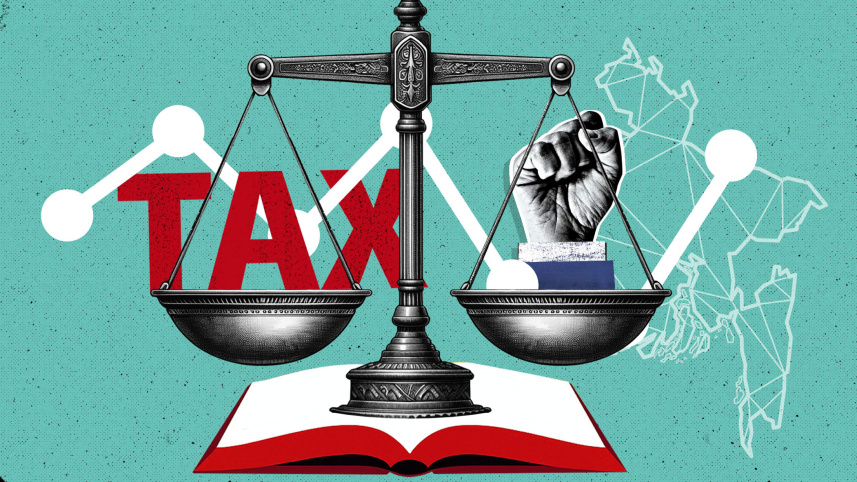
Imagine two equally talented children born in the same year, a few kilometres apart. One is born into a family that owns land, a house, a business, and a cushion of savings able to absorb a bad harvest, a failed venture, or a medical emergency. The other is born into a family with few or no assets, where a month of lost income can threaten the household’s basic security. Their abilities may be similar, but they don’t start the race from the same line. Two decades later, the difference is rarely subtle. The first child pursues education without worrying about affordability, and the family’s resources buy something more valuable than tuition: the freedom to take risks, to wait for a better job, to plan. The second may enter the labour market early, accept whatever low-skilled work is available to support the household, with little time and resources left to invest in their own prospects. Such disadvantages can persist across generations, as deprivation, debt, and diminished expectations are passed from parents to children.
This is how economic inequality reproduces itself across generations. A child’s prospects are strongly shaped by parental education, wealth, occupation, and social position. The Organisation for Economic Co-operation and Development (OECD) finds four in 10 sons of rich fathers remain in the top earnings quartile, and in an average member country it takes four to five generations for a child from the bottom earnings decile merely to reach mean earnings. Such intergenerational transmission of inequality is inevitable in any society. Fiscal policy, however, can soften these unequal starting points by employing redistributive fiscal policies. This requires a progressive tax system that asks more from those with greater capacity to pay and use the revenue to invest in public goods and social protection that expand opportunities for those starting with less. This raises two questions for Bangladesh: does the government collect enough to finance such investments, and does it collect it equitably?

The first question pertains to the fundamental fiscal revenue constraint. Bangladesh has one of the lowest tax-to-GDP ratios in the world, hovering between 7 and 9 percent for much of the past decade, well below the 15 percent level that the World Bank suggests countries with low tax revenues should aim for to support inclusive growth. A country collecting so little cannot invest adequately in the education, healthcare, and social protection that can reduce the extent to which inheritance determines a child’s economic destiny. The second question concerns who bears the burden of raising that revenue. On paper, the income tax is progressive. A study by the Research and Policy Integration for Development (Rapid) finds that the richest 10 percent of households in Bangladesh are liable to pay about 11.03 percent of their aggregate income as personal income tax, against 4.12 percent for the second-richest decile, while the bottom 40 percent of the households have almost no taxable earners. Statutory progressivity, however, means little where compliance is weak. With roughly 85 percent of the workforce in informal employment and limited enforcement capacity, only around 4.4 percent of the labour force file a return. Exemptions and concessions, estimated to be nearly as large as actual collections, allow some high-income individuals and firms to contribute considerably less than what their actual economic states would suggest.
The progressivity of the tax system in practice also depends on which sources of income it can effectively capture. In FY 2022-23, around 68 percent of income tax revenue came through withholding at source. Withholding is administratively sensible, but it concentrates the burden on income that is readily visible to the tax authorities. Salaried and other formal-sector earners are more likely to have income taxes deducted directly at source, making their tax liability certain to be captured, while income from business, self-employment and professional services is harder to verify and easier to underreport. This discrepancy in the effective tax base erodes the progressive intent of the income tax structure. Furthermore, Bangladesh relies heavily on indirect taxes, including VAT, customs duties, and supplementary duties. Such taxes have a more limited redistributive effect compared with direct taxes on income and wealth, making the overall tax structure less effective for reducing inequality. For instance, the same study by Rapid finds that VAT liabilities amount to roughly 20.4 percent of income for the poorest 10 percent of households, compared with 2.8 percent for the richest, resulting in the over imposition of VAT on the poor with respect to income.
Then there is wealth, the most direct channel through which advantage clings across generations; however least integrated into the tax system, regardless of being more concentrated than income. The existing wealth surcharge links asset holdings above specified thresholds to additional tax on income tax payable, but its yield depends on accurate declaration of both income and assets, and underreporting leaves taxpayers of similar means treated differently. Collectively, these features describe a fiscal system that disproportionately taxes the consumption of the poor with respect to income, struggles to reach higher incomes beyond the visible formal base, and barely touches accumulated wealth. The case for it is establishing redistributive justice, not revenue, and for Bangladesh, effectiveness would depend on the quality of asset and transfer records, valuation mechanisms, and rules covering lifetime gifts, and illiquid holdings.
Children cannot choose the families to be born into, but fiscal policies can determine how much inheritance determines their future. The fiscal system must ensure that the gap between their starting points does not widen with every generation.
Tahsin Rifat is research associate at Research and Policy Integration for Development (Rapid).
Views expressed in this article are the author's own.
Follow The Daily Star Opinion on Facebook for the latest opinions, commentaries, and analyses by experts and professionals. To contribute your article or letter to The Daily Star Opinion, see our guidelines for submission.
 For all latest news, follow The Daily Star's Google News channel.
Comments