


Rohingya settlement: A ‘town’ we still call a camp

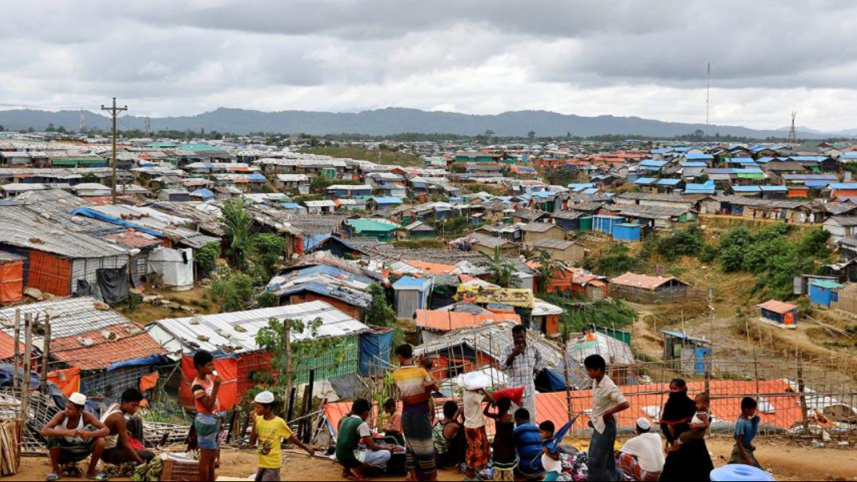
This August 25 marks the ninth anniversary of the 2017 military crackdown in Myanmar that subsequently forced more than 700,000 Rohingya to flee into Bangladesh. Recently, I attended a conference in Dhaka called “Confluence 2026: A Convening of Partnership, Appreciation and Commitment,” organised by the International Rescue Committee, where officials, donors, representatives of UN agencies and national NGOs, academics, and members of the refugee and host communities came together to share their views. After nine years, the real question surrounding the Rohingya is no longer how to manage a temporary shelter for them, but whether we are willing to admit what that shelter has increasingly become.
Are the Rohingya camps in Cox’s Bazar still a temporary settlement that will fold away once repatriation becomes possible, whenever that may be? Or is it becoming something more permanent—a township with its own economy, society, and politics—that our policy still refuses to see? How we approach this issue may have far greater consequences than many of us realise.

Currently, Bangladesh hosts nearly 1.2 million registered Rohingya. Around 150,000 of them are newer arrivals who have crossed the border since late 2024, fleeing renewed fighting in Rakhine. More than half of the Rohingya population is under 18 years of age. Yet, as needs rise, funding falls. The 2026 Joint Response Plan seeks $710.5 million, already 26 percent lower than last year’s appeal, and even this reduced amount faces a 37-percent shortfall. In simple terms: more people, less money to meet their needs.
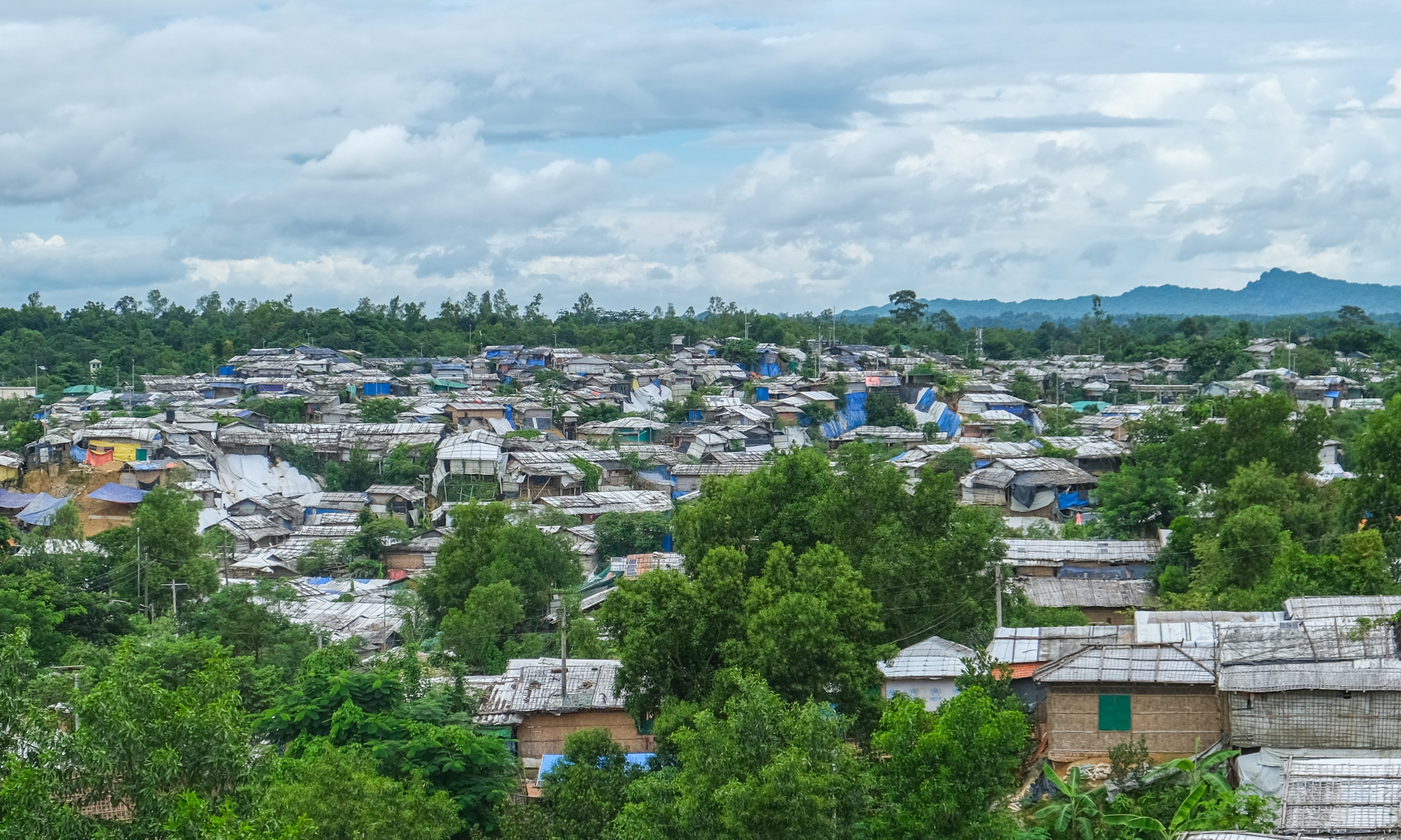
Against this backdrop, it is important to recognise that the realities around the Rohingya crisis have shifted over the last few years, even as our policy has not kept pace with them.
Firstly, the Myanmar now is not the Myanmar of nine years ago. The Arakan Army, a non-state armed group, now controls most of Rakhine and almost the entire 271-kilometre border with Bangladesh. The junta is no longer the dominant actor on that frontier. Yet, repatriation discussions remain largely centred on Naypyidaw. You cannot make a plan without engaging those who exercise de facto control over the places to which the Rohingya are expected to return.
Secondly, Bangladesh has gone through its own political transformation. But on Rohingya policy, remarkably little has changed. The same position—“strictly temporary, no local integration, no right to work”—continues, as if the realities surrounding the crisis have stood still. The recently formed national committee on Rohingya repatriation, headed by Prime Minister Tarique Rahman, may give fresh impetus to efforts to resolve the crisis, but any workable strategy must begin by acknowledging how profoundly the situation has changed.
Third, the wider world. The wars in Ukraine and the Middle East have added to the competing demands on donor attention and resources, while the freezing of US assistance earlier this year has directly affected humanitarian support, including food assistance. The frontline actors and circumstances surrounding the crisis have changed, but our diplomatic imagination remains largely frozen in 2017.
A more gradual change is taking place inside the camps, too. A whole generation has now been born there, with no memory of Myanmar. When we tell them to “go home,” we are pointing them towards a country they have never seen. What does repatriation even mean to them?
Here, our own field research complicates the neat official story. The camps may look fenced and guarded. On paper, they are tightly controlled. In reality, however, the boundaries are far more porous. A substantial local political economy has grown up around the Rohingya: daily trade with local businesses, informal arrangements involving some officials and law enforcers, competition with local labourers over wages, occasional marriages and kinship ties with local residents, and darker networks involving human trafficking and the drug trade that runs along the coast.
This is not to blame the Rohingya community. It is just that the camps are increasingly woven into the wider Cox’s Bazar society, and any plan that treats them—and the people living in them—as a sealed box, removed from the communities around them, fails to reflect the reality on the ground.
And here is the critical part. Our official policy still says “temporary,” as it was always intended to be. But everyday reality increasingly says “settled or connected.” After nine years, denying these people opportunities to work, study, or move does not necessarily prevent integration; it can only push their economic and social activities into informal—and sometimes criminal—channels, where traffickers and drug networks are happy to exploit the gap. In trying to preserve the camps’ temporary character, we may be contributing to some of the very insecurities we fear.
So, what should year 10 look like? At the conference, I proposed a four-part framework.
First, renewed international and regional diplomacy for a safe, voluntary, and dignified return, backed by sustained, multi-year funding rather than shrinking annual appeals. Return cannot be discussed realistically without engaging all those who exercise authority and control in Rakhine today. Second, a Bangladesh-led and Bangladesh-centric plan. Bangladesh is not merely a passive host performing an act of charity. It is a central party to this crisis, with its own legitimate security, economic, and sovereignty interests that must be represented at every negotiating table.
Third, recognition of Rohingya agency. The Rohingya—including women and young people—must have a meaningful place at the table where their future is discussed and designed, rather than merely being counted as beneficiaries. Fourth, human capital should be given a prominent place at the discussion. Beyond food and shelter, they need education, training, leadership development, and meaningful livelihood opportunities. A skilled Rohingya population can be an asset in rebuilding Rakhine tomorrow and is less vulnerable to exploitation by the criminal economy today.
We can keep telling ourselves that the camps are still just a temporary arrangement that will be folded away next year. Or we can acknowledge that, after nine years, the shelter has developed many of the characteristics of a town, and treat it with the honesty and foresight it deserves. The first may seem cheaper or easier to deal with now, but sticking to it may turn very costly and difficult in the years that follow.
Dr Kazi Maruful Islam is a professor at the Department of Development Studies in the University of Dhaka.
Views expressed in this article are the author's own.
Follow The Daily Star Opinion on Facebook for the latest opinions, commentaries, and analyses by experts and professionals. To contribute your article or letter to The Daily Star Opinion, see our guidelines for submission.
 For all latest news, follow The Daily Star's Google News channel.
Comments