


Extremism grows when faith, knowledge, and humanity fall out of balance

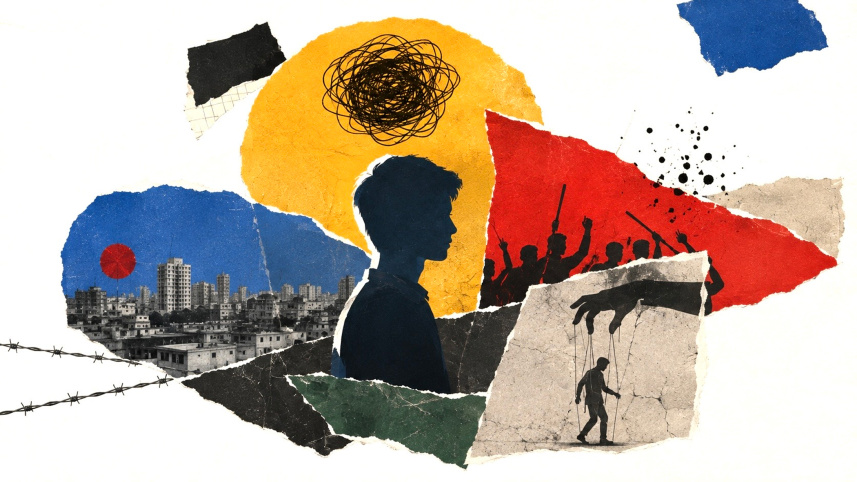
In Bangladesh, whenever militancy is discussed, attention usually turns to the details of specific incidents: where an attack occurred, who was arrested, which organisation was involved, or how many young people were drawn into extremist networks. But an equally important question precedes these: how does religion—historically a source of moral guidance, solace, and social cohesion—become, in the hands of some, a language of intolerance and violence? Understanding militancy in Bangladesh requires us to look beyond individual attacks and examine a more gradual social transformation.
In earlier decades, religion was deeply embedded in everyday life, but its presence was largely personal, communal, and reassuring. The imam of a village mosque, a madrasa teacher, or a respected religious elder was often a source of guidance and comfort. Families sought their prayers when a child faced an examination, when someone fell ill, or when hardship befell a household. Religion was not simply a matter of prayer; it supplied moral values, psychological reassurance, and an informal mechanism of social regulation.

In many communities, religious morality performed functions that formal institutions could not. Children were taught that lying, stealing, or hurting someone was sinful. Social shame, family authority, and religious values worked together to regulate behaviour.
This is not to romanticise the past. Bangladesh has always had superstition, conservatism, and episodes of religious intolerance. Yet, even through the 1960s, 1970s, and much of the 1980s, greater religious observance was not automatically understood as a security concern. Religious commitment was more likely to be associated with personal morality and trustworthiness. That distinction remains essential: religiosity is not militancy. Increased religious observance does not inevitably produce extremism. The problem begins when religious commitment becomes detached from intellectual inquiry, when questioning declines, and when faith becomes vulnerable to emotionally powerful but intellectually shallow interpretations.
Bangladesh has modernised rapidly, but unevenly. Television, overseas migration, closer social connections with the Middle East, and later the internet and social media transformed the country’s cultural landscape. People acquired immediate access to global political conflicts, religious sermons, images of war, and ideological arguments originating thousands of kilometres away.
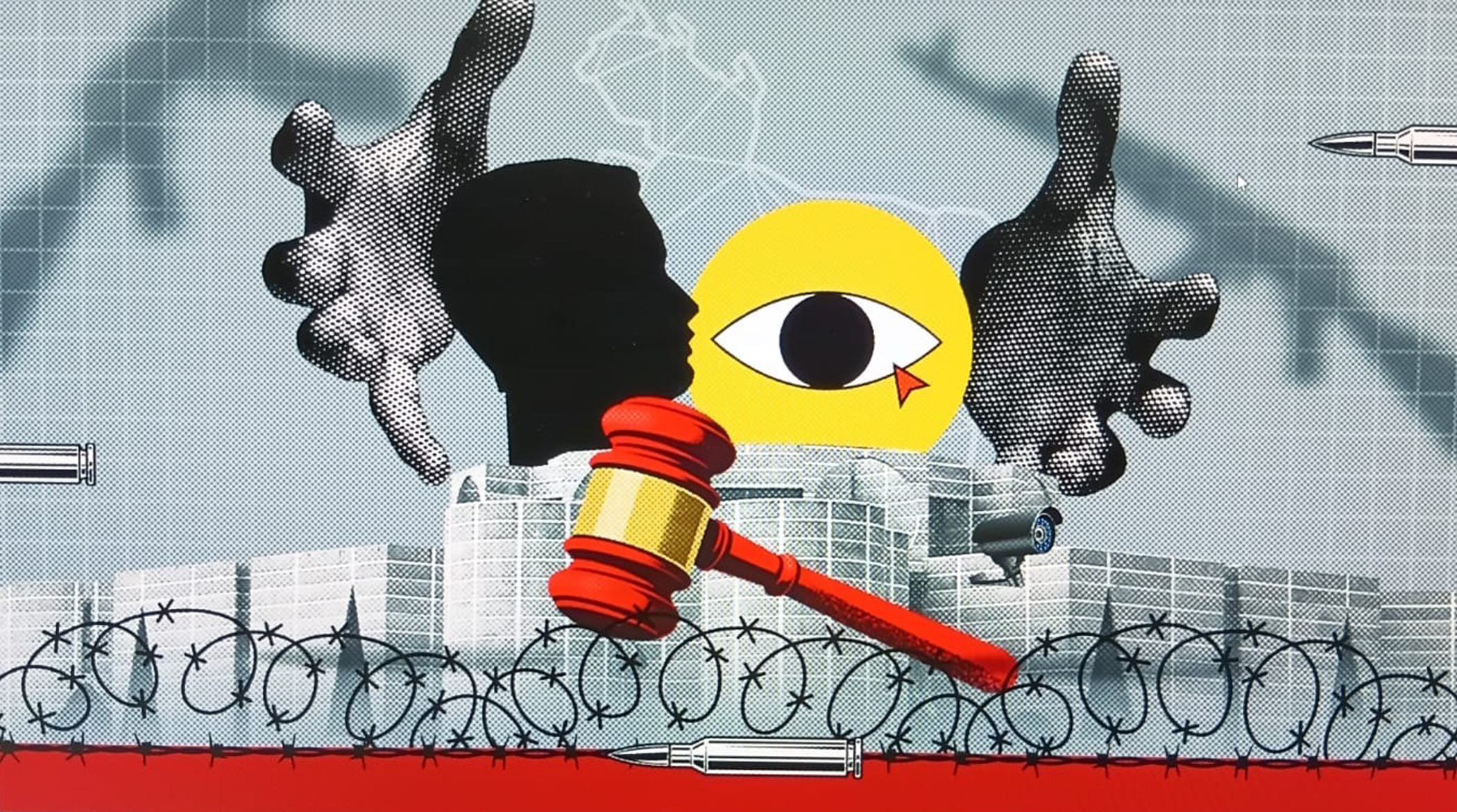
But the expanded access to information was not always accompanied by a comparable expansion of critical education, historical knowledge, comparative theology, or serious engagement with the diversity within religious traditions. A gap therefore emerged in some quarters between religious enthusiasm and religious knowledge. This is why a person who cares deeply about religion may not know its intellectual history or the plurality of interpretations within it, as religious statements circulate without historical or political context. Social media magnifies the problem: a short sermon, a dramatic image, or a decontextualised claim can travel much faster than careful, critical explanations.
Emotion then becomes more susceptible to manipulation. When people cherish something deeply, criticism naturally creates discomfort. But when strong emotional attachment is not accompanied by intellectual confidence, disagreement can be interpreted as attack. Protest may then be presented as a duty of faith, anger as evidence of commitment, and tolerance as weakness. This is one of the spaces in which radicalisation can begin.
Radicalisation is rarely instantaneous, and is better understood as a process shaped by interacting social, political, psychological, and economic factors. A UNDP report, titled “Prevention of Violent Extremism: 2022 Annual Report,” for example, emphasises that pathways into violent extremism are multidimensional and highly context-specific. There is no single profile of an extremist and no specific route into militancy.
However, when emotions are manipulated, a person may first become intensely anxious about their identity. The world becomes divided into “us” and “them.” They are told that the religious community is permanently under attack, that ordinary people fail to understand the danger, and that governments are unwilling or unable to respond. Eventually comes the most dangerous proposition: a small group of “true believers” must act on everyone else’s behalf. Organised extremist movements understand this psychology well. They combine genuine grievances with selective narratives of humiliation, international conflict, discrimination, unemployment, injustice, and religious persecution. They construct a larger story in which an uncertain young person suddenly becomes important: “The world is against you, your identity is threatened, others remain silent, but you can act.”
The motivation to go with such narratives is not always financial and is often psychological. Some people are searching for a sense of belonging, recognition, purpose, or heroism. Others carry political anger or personal frustration. Extremist organisations identify these vulnerabilities and offer seemingly clear answers. This is why explaining militancy primarily through poverty or lack of education is inadequate.
Researchers C Christine Fair, Ali Hamza, and Rebecca Heller from Georgetown University in Washington, DC, in their 2017 study of attitudes towards suicide terrorism in Bangladesh, demonstrated how support for extremist violence cannot be reduced to a simple poverty-or-education explanation. Bangladesh has also seen educated, urban, and middle-class individuals drawn into militant networks. The issue, therefore, may sometimes be less about material poverty than about a poverty of meaning: who am I? Why is there so much injustice? What is my purpose? Why does my society appear powerless? What should I do?
The real world offers complicated answers. Extremists offer simple ones. That simplification is central to their appeal. Politics is complex; extremists identify one enemy. Religious traditions contain centuries of disagreement and interpretation; extremists insist that only one interpretation is legitimate. Human beings possess multiple identities—as members of families, communities, professions, nations, and cultures—but extremism reduces the individual to a single identity.
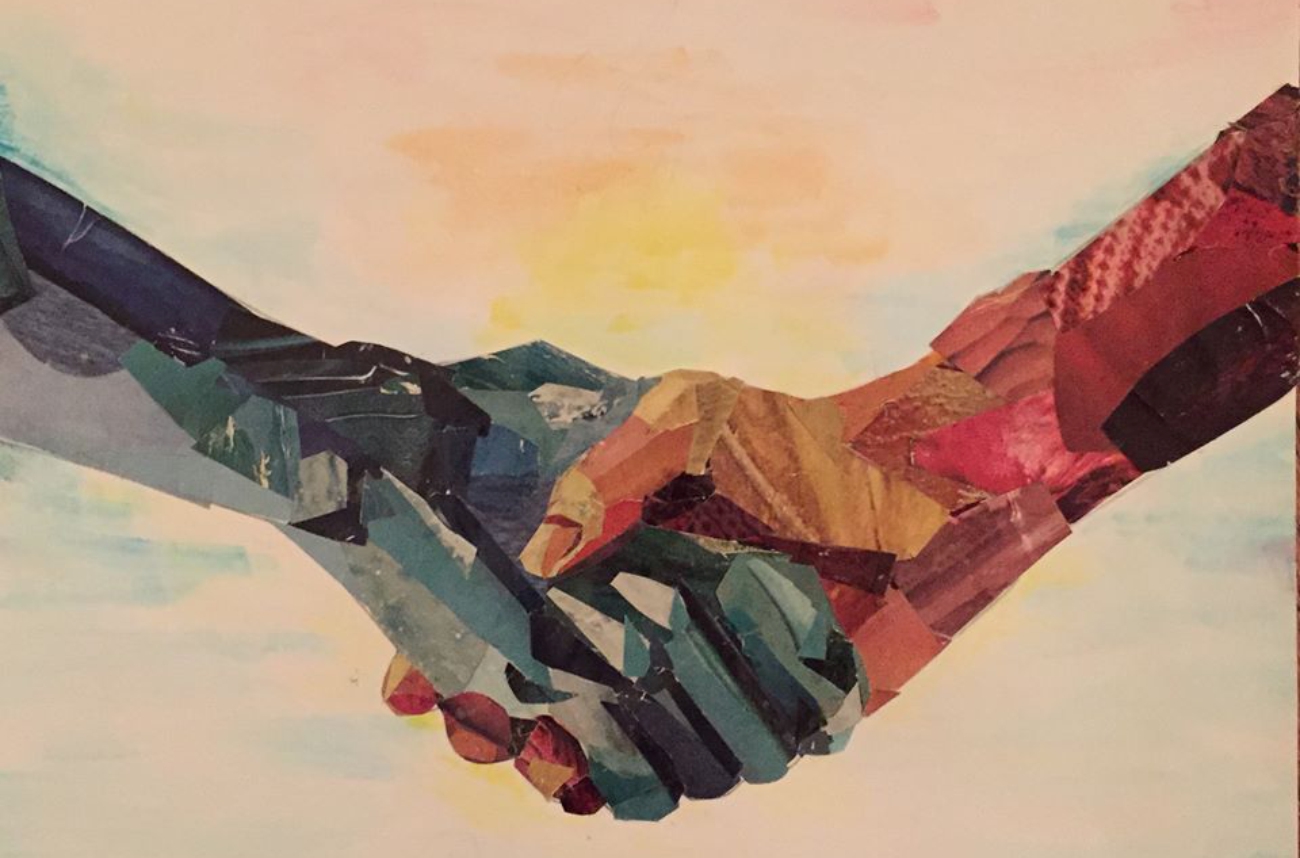
Such reductionism also diminishes religion itself. Most religious civilisations contain rich traditions of jurisprudence, philosophy, science, mathematics, medicine, literature, and intellectual debate. Reducing religion to prohibition, punishment, anger, and confrontation detaches it from much of its historical and intellectual depth.
Religious leadership therefore has an important role to play. Simply saying “this is not really religious” is insufficient. Young people need to understand why it is not so. Religious education should engage seriously with tolerance, disagreement, justice, the sanctity of human life, and the intellectual diversity of religious traditions. It should also interact with history, politics, ethics, and knowledge of the contemporary world.
But responsibility does not lie with religious institutions alone. Sections of self-described secular or modern society should also avoid treating religious people as intellectually inferior or presenting faith itself as synonymous with backwardness. Such contempt can widen social distance and provide extremist recruiters with precisely the narrative they need: “They do not merely oppose us; they despise your faith.”
Bangladesh therefore does not need to choose between religion and modernity. It needs knowledge-informed religiosity alongside ethically grounded modernity. Militancy in Bangladesh has always been connected to a wider political and institutional environment. Political scientist Ali Riaz’s 2007 book on this topic shows that militancy in Bangladesh developed through a complex interaction of ideology, political opportunity, and organisational networks. Another political scientist, Jasmin Lorch, in an article published in 2018, demonstrated how political actors themselves at times contribute to this process of radicalisation. This reminds us that extremism cannot be understood simply as an individual psychological deviation; it is also shaped by institutions and political incentives.
To contain militancy, police, intelligence agencies, and effective laws remain indispensable. But security operations alone cannot remove the social processes that may render another generation vulnerable to extremism. Long-term prevention begins in families, schools, universities, religious institutions, and an open intellectual environment. In a report published in 2022, UNDP Bangladesh similarly places tolerance, inclusion, and responses to hate speech at the centre of efforts to prevent violent extremism.
Young people must learn that loving one’s religion does not require hatred of another; that injustice can be opposed without violence; and that strong faith and tolerance are not contradictory. The greatest analytical mistake would be to portray militancy as the natural consequence of religion. An equally serious mistake would be to deny that religious language can be selectively manipulated for political and violent purposes.
 For all latest news, follow The Daily Star's Google News channel.
 The critical space lies between these extremes where emotion, partial knowledge, identity insecurity, political grievance, and organised persuasion intersect. Extremism, ultimately, is not evidence that religion has become “too strong.” It may instead indicate that the balance among faith, knowledge, and humanity has become dangerously weak. Restoring that balance may be Bangladesh’s strongest defence: a society in which religion offers refuge rather than fear, teaches responsibility rather than division, and inspires people not to stand against one another but to stand beside one another.
Dr AKM Ahsan Ullah is a professor of international studies, security, and migration at Universiti Brunei Darussalam in Brunei. He can be reached at akmahsanullah@gmail.com.
Views expressed in this article are the author's own.
Follow The Daily Star Opinion on Facebook for the latest opinions, commentaries, and analyses by experts and professionals. To contribute your article or letter to The Daily Star Opinion, see our guidelines for submission.
Comments