


Should essential services like fuel and electricity be left to private hands?


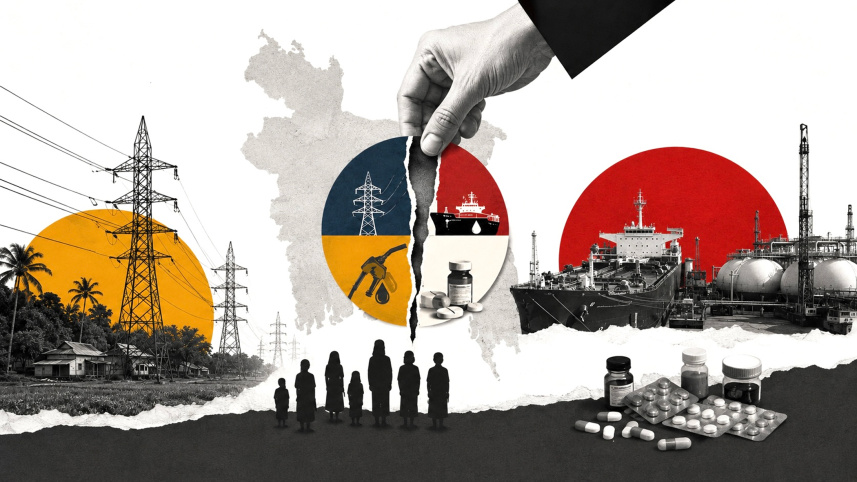
In 1976, Ziaur Rahman, then Chief Martial Law Administrator, established the Bangladesh Petroleum Corporation (BPC) by ordinance, bringing fuel marketing and distribution under one state roof. A year later, as president, he established the Rural Electrification Board (REB) to carry power into Bangladeshi villages, where it did not exist.
There’s an irony here. Zia is remembered mainly as the man who reversed Mujib-era nationalisation, returning jute mills, textile mills and dozens of other enterprises to private hands. Private investment was the core of his economic programme. But on electricity and fuel he went the other way. Whatever his faith in markets was, he drew one line and didn’t cross it: some things are too essential to leave entirely to whoever profits from them.

Five decades later, the REB alone runs about 6,11,000 km of distribution line and 3.8 crore connections, and BPC still anchors the fuel supply. The party Zia founded is now in government. And it is that government now mulling to erase the line Zia drew.
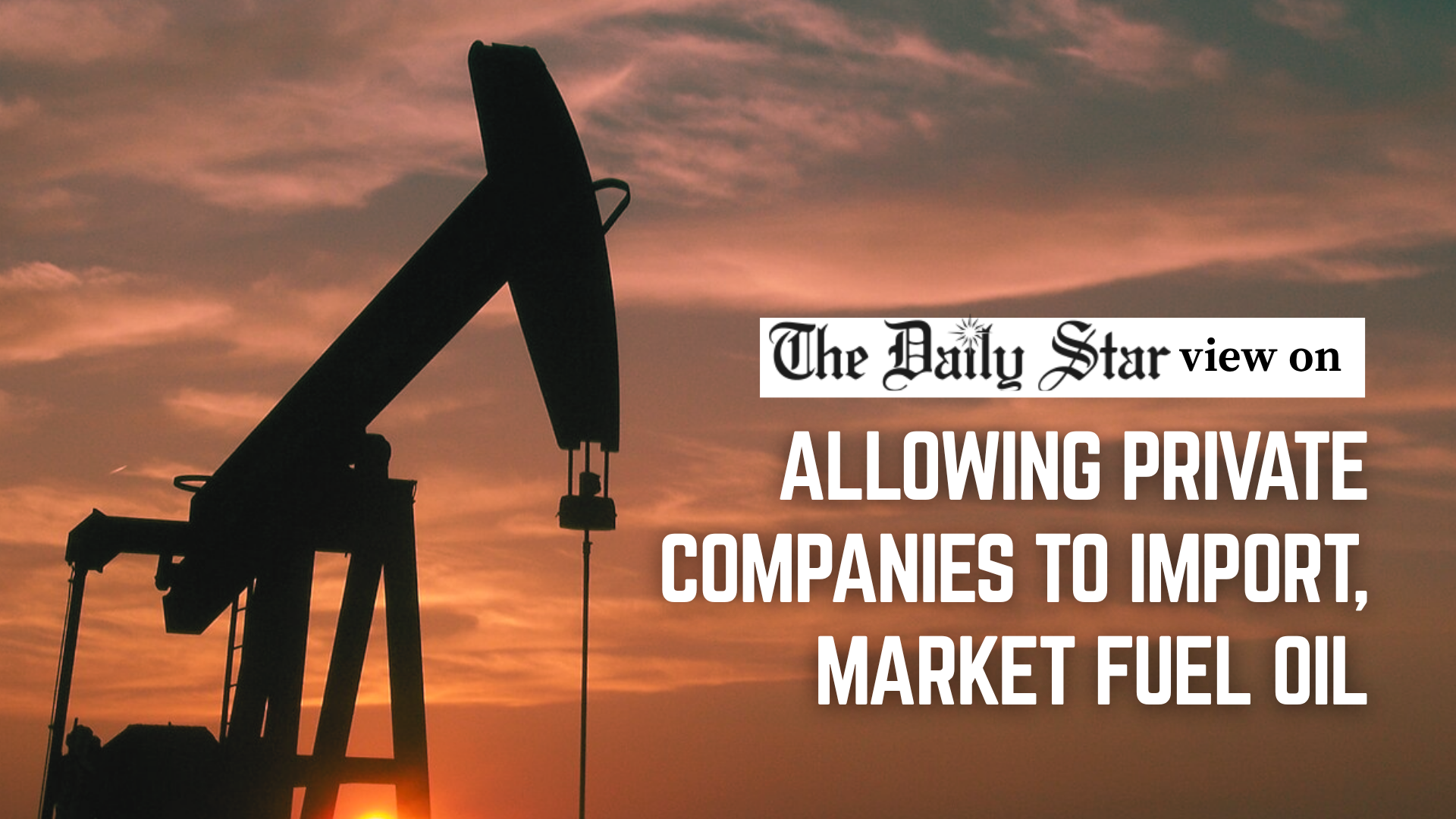
The signs came fast. In July, the energy minister said he wants to “privatise all our distribution companies,” with the prime minister’s consent already secured. On August 6, the Energy and Mineral Resources Division (EMRD) asked BPC to draft policy to open refined fuel import and distribution to private companies. And on August 3, the cabinet scrapped the expanded list of 295 price-controlled essential medicines the interim government introduced, reverting to a 1994 list of 117 drugs and handing pricing power for everything else back to drug companies.
Individually, each of these moves can be defended as a technical adjustment. Together, over three months, they describe control over the three things no household can do without—power, fuel and medicine—moving steadily into a small number of private hands. More than a difference in economic philosophy between the current BNP government and that from the 70s, these decisions raise the question: whom is the state organised to serve?
The world has run this experiment often enough that we need not guess the ending. Britain privatised water in 1989 by transforming 10 regional publicly owned water and sewerage authorities into private limited companies and writing off significant amount of government debt. Since then, the private companies have accumulated over 70 billion pounds in debt, water bills have risen by more than 40 percent and shareholders have been paid more than 85 billion pounds in dividends. Meanwhile, English rivers absorbed some 3.5 million hours of sewage discharge in 2023 because the investment the companies promised never came. Nigeria privatised power in 2013; more than a decade and roughly seven trillion naira in public spending later, most Nigerians still endure regular blackouts and the country’s own senate has called the reform a total failure. In Cochabamba, Bolivia, a 1999 water privatisation raised bills by up to 200 percent within weeks, ending in deadly protests and a cancelled contract.
Bangladesh too has its own experience of privation in the fuel sector, where the results have not been hopeful.
In 2016, Bashundhara Group won approval to build the country’s first private bitumen plant. Refining crude into bitumen also yields diesel and furnace oil, which under Bangladesh’s rules had to go to BPC at government-set prices. A year later, the company applied to sell them directly to the market, but BPC objected. But the company kept pushing, and on November 20, 2023, the Awami League government issued a policy letting private refiners market 40 percent of their output themselves. On June 10, 2024, just two months before that government fell, Bashundhara Oil and Gas Company Limited was granted permission to import, refine and market crude fuel oil under several conditions. The political changeover of August 2024, however, put a pause to that approval.
But it gained momentum again under the current government. An 11-member BPC committee recommended against privatising fuel imports on July 21. Five days later, its chairman Rezanur Rahman was removed and made an officer on special duty; on August 6, the EMRD gave BPC four days to draft a privatisation policy (which, however, has yet to be submitted as of August 14). Nobody can say with certainty why the chairman was moved. But across two very different governments, the pattern repeats: officials hold the line, pressure builds, and the line moves.
The justification that BPC is inefficient does not hold, because between FY2015-16 and FY2024-25, the enterprise was profitable in nine out of the 10 years. This year’s losses come from a political decision to hold pump prices below import cost—a reversible policy choice, not a structural defect requiring new ownership.
The LPG market, where 98 percent of supply is private, also shows the consequences of the experiment, “let the market decide,” without proper oversight. Although the Bangladesh Energy Regulatory Commission (BERC) sets the official price, there have been times when retailers charged Tk 800 to Tk 1,000 more. Enforcement is often confined to the retail end and the regulator struggles to close the gap.
LNG is the same story at higher stakes. A July 21 fire at one of the two Moheshkhali floating terminals, owned by a private concern, disrupted gas supply across the country, and within weeks the government was buying spot cargoes at over $22 per MMBtu, almost double the pre-crisis benchmark.
And the quick-rental experiment, running since 2009 under a law placing contracts beyond open tender, has cost the country over Tk 1 trillion in capacity charges, paid to private plant owners whether or not they generated a single unit of electricity. Several of the largest recipients were linked to people close to the then ruling party.
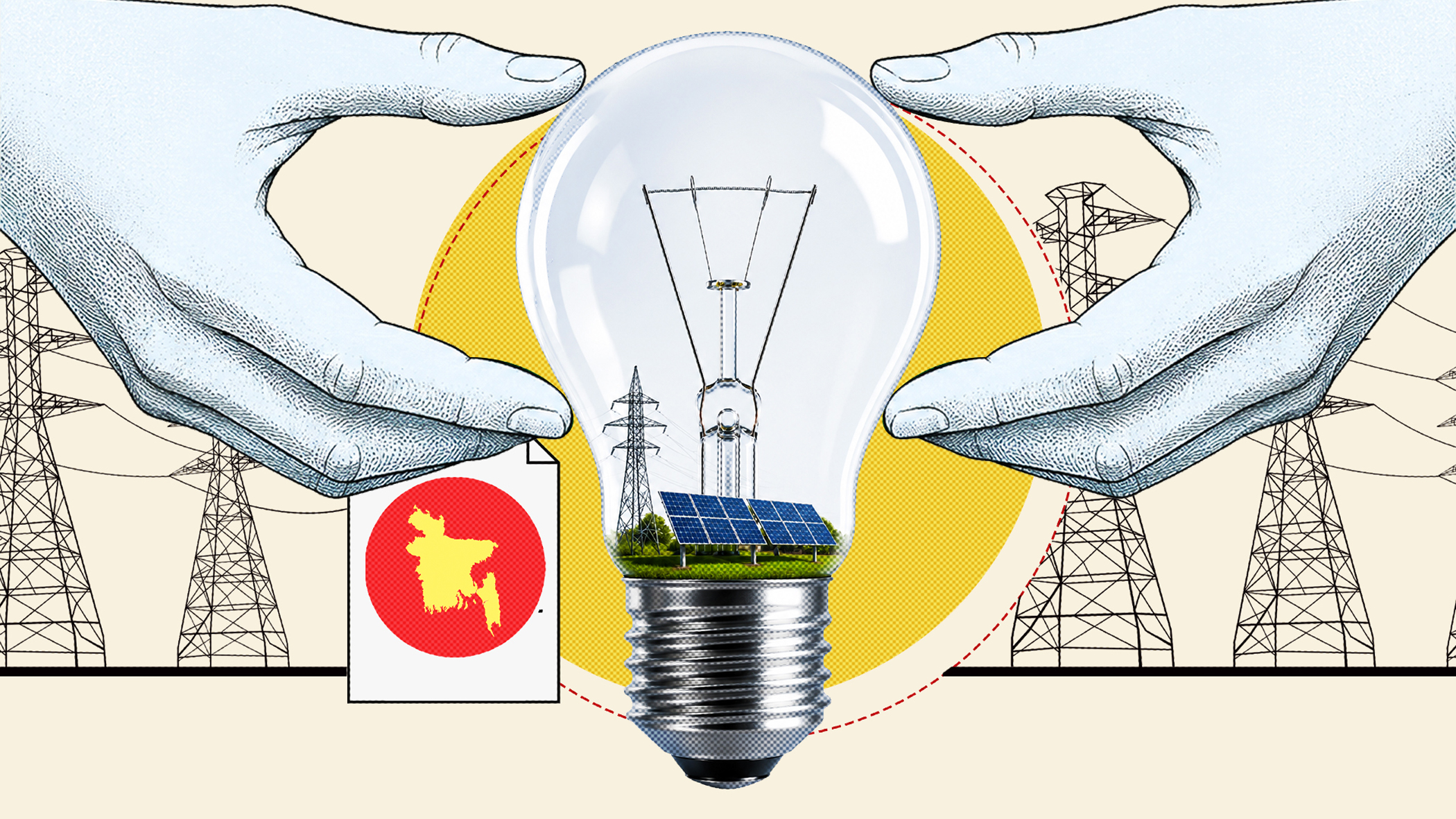
Therefore, changing who runs distribution of electricity will not ease the pressure unless those contracts are fixed first, opined Professor M Shamsul Alam of the Consumers Association of Bangladesh, per a report in the Jugantor, pointing to the LPG sector and adding that a weakly regulated private sector delivers no real price control. In the same report, Professor Abdul Hasib Chowdhury of Buet noted that the Dhaka Electric Supply Company Limited and Power Grid Bangladesh PLC, having both public and private ownership, have shown little improvement.
There is a further danger specific to distribution. Private companies supply where the profit is, not where the need is. Rural households are mostly first-slab users: lowest consumption, lowest price, thinnest margin. An operator answering to shareholders has little incentive to prioritise them over industrial or high-consumption urban customers. The predictable result is not that villages lose power outright, but that they go first when supply tightens, because keeping the lights on in a low-margin village costs more than it earns. That is almost the opposite of the original vision of REB.
Furthermore, a state corporation, however imperfect, answers to parliamentary questions, audits and information requests. A private company answers to shareholders. LPG has shown what that difference produces.
Besides, the poles, substations, more than 6,11,000 km of distribution line just through REB and 87.50 lakh prepaid metres were not installed by the private companies now being invited in. They were paid for over five decades of public money. Even today they are still being expanded with concessional public borrowing: the World Bank alone lent $500 million dollars for distribution modernisation in 2021, and a further $515 million the following year. What is on offer is not a licence to build something new. It is a finished public asset, handed over to be operated and profited from by parties who bore none of the cost or risk of building it.
 For all latest news, follow The Daily Star's Google News channel.
 None of this means every state enterprise deserves protection. Some are genuinely inefficient and badly run, and selling them may be right. That is a separate conversation. Handing over profitable corporations and functioning networks on efficiency grounds, when the efficiency case does not exist, is not reform.
The government says nothing has been decided, that stakeholders will be consulted, and that no company stands to benefit. That may be sincere. But it would carry more weight if the direction of travel were less consistent, and if the party making these decisions had not been founded by the man who understood, half a century ago, exactly why these things were put in public hands.
Dr Sibbir Ahmad is an assistant professor of economics at North South University. He can be reached at sibbir.ahmad@northsouth.edu.
Ariful Islam Abir is a final-year undergraduate student in the Department of Political Science at the University of Dhaka. He can be reached at abirdups16@gmail.com.
Views expressed in this article are the author's own.
Follow The Daily Star Opinion on Facebook for the latest opinions, commentaries, and analyses by experts and professionals. To contribute your article or letter to The Daily Star Opinion, see our guidelines for submission.
Comments