


Time to fix the anthrax vaccination strategy

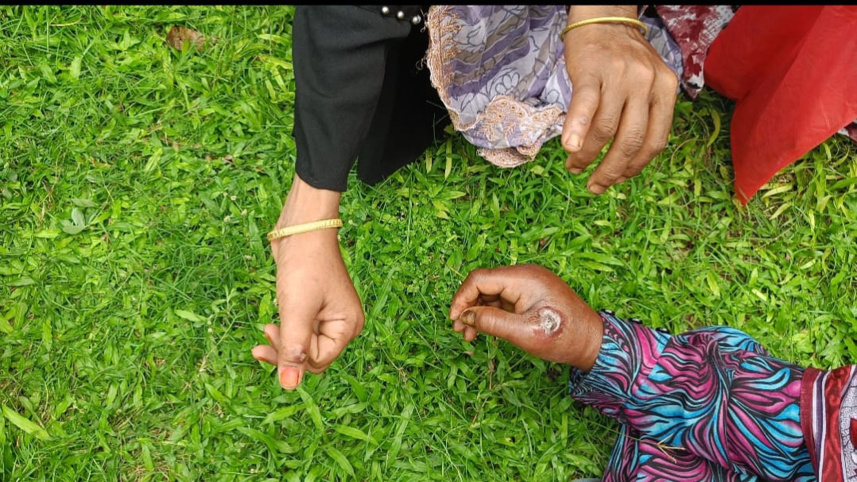
Already strained by measles and dengue, the health sector now faces a new threat: anthrax in several districts of the country. Spreading from infected livestock to humans, this highly contagious disease endangers public health and risks severe damage to the national economy if left unchecked. However, the local livestock departments’ handling of the vaccination programme raises serious concerns.
This has less to do with which animals are being vaccinated than the ones being left out. According to reports published in this daily, at least 465 people with anthrax symptoms have been treated in hospitals in Gaibandha, Rangpur, Dinajpur and Meherpur. In Meherpur’s Gangni upazila, 262 of the total 412 patients were infected after contacting and consuming sick goat meat. However, as per the media reports, local livestock departments were administering anthrax vaccine to cattle like cows and bulls, leaving goats, sheep, and buffalo unvaccinated. Even last year, on October 5, 2025, in Gaibandha’s Sundarganj upazila, a woman, Rozina Begum, 45, died while undergoing treatment in the hospital for anthrax symptoms after processing and cooking the meat of a sick goat. This raises the question why goats are not the main focus of the vaccination drive against anthrax.

Experts suggests that the primary way to prevent anthrax is to stop slaughtering sick animals. Obtaining clearance from a veterinary surgeon before slaughtering any animal and achieving 100 percent vaccination coverage for cattle, goats, sheep, and buffaloes in the affected areas are crucial. Alongside this, widespread public awareness must be built among butchers and the general public. However, local health officials in affected areas say that existing public awareness campaigns alone have failed to stop the slaughter of sick animals. Unknowingly, ordinary people consume meat from diseased livestock and fall ill. In other words, many of these guidelines are not being followed, while vaccination efforts in affected regions across the country continue to focus almost exclusively on cows and bulls. The outcome: anthrax is are spreading to new locations.
Meherpur and Gaibandha livestock officials explain that, because of their low body weight, goats and sheep often cannot tolerate even the lowest vaccine dosage. After being vaccinated, goats become restless; they jump around and drool. That’s why many livestock farmers do not want to get their goats vaccinated. As a result, the livestock department generally refrains from vaccinating goats unless a farmer allows it voluntarily. This is worsening the current problem.
Besides, anthrax spores can remain active underground for decades. During the monsoon, rain brings them up, and during summer, soil evaporation carries them to the surface, where they attach to grass. Herbivorous animals then ingest or inhale them. The bacteria typically enter human bodies through saliva, blood, and meat of infected herbivores.
Unfortunately, not all herbivores humans are coming in contact with are being vaccinated properly. In fact, vaccinating only cows and bulls and not goats has led to the recurrence in Meherpur’s Gangni for nearly a decade, with this year’s infection rate reaching alarming levels. On the other hand, in Gaibandha, infections have multiplied significantly compared to last year and are spreading to new areas.
However, livestock rearing has become the economic backbone of Gaibandha as well as Rangpur. Over the past six to seven years, livestock farming has grown exponentially in these areas, boosting the socioeconomic well-being of people in these remote regions. The Department of Livestock Services (DLS) data indicates that meat production in Bangladesh has increased fivefold over the last decade, while milk production has grown fivefold over the past 15 years. In the 2025-26 fiscal year, the livestock sub-sector recorded a GDP growth rate of 3.19 percent, with 50 percent of the country’s population directly and indirectly dependent on it. These livestock statistics highlight how a major anthrax outbreak could devastate our economy.
Therefore, it is imperative that goats, the primary source of human infection this year, as well as other herbivores, humans consume, are vaccinated to control this highly contagious disease. If small livestock cannot tolerate low doses of the anthrax vaccine, the government must address it urgently. While goats are notoriously sensitive to the vaccine, other countries successfully manage this by strictly regulating the dosage and administration site of the vaccine. For example, protocols often dictate a precise half-dose (0.5 ml) for sheep and goats compared to the full 1.0 ml given to cattle, frequently administered in the loose skin of the inner thigh to minimise severe localised reactions. Additionally, for farmers reluctant to vaccinate their goats, the government must build awareness of the severity of the outbreak and actively pursue alternative control measures.
Considering the economic significance of the promising livestock sector and the grave health risks to humans, the government must take immediate action. Every domestic animal in affected areas must be properly vaccinated. The government can leverage public and private television, radio, and social media platforms for this purpose. Furthermore, strict enforcement must ensure that all animal slaughter adheres strictly to health protocols. The relevant government departments should work together to rein in the anthrax outbreak before it burdens the already overstretched health sector and deals a blow to the economy.
Mostafa Shabuj is a journalist at The Daily Star.
Views expressed in this article are the author's own.
Follow The Daily Star Opinion on Facebook for the latest opinions, commentaries, and analyses by experts and professionals. To contribute your article or letter to The Daily Star Opinion, see our guidelines for submission.
 For all latest news, follow The Daily Star's Google News channel.
Comments