The politics behind the Nobel Prize in economics
I. The Stockholm coup: a central bank buys scientific authority
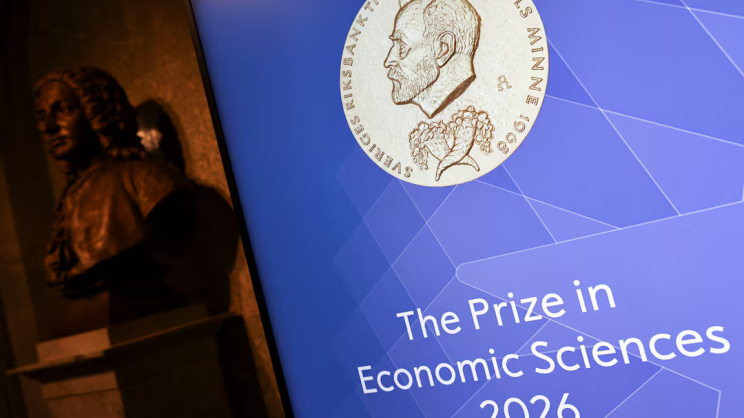
On Wednesday, 10 December 1969, two economists, Ragnar Frisch (Norway) and Jan Tinbergen (the Netherlands), found themselves where no economist had ever been: among the elite of science. They had cause to cheer. As the first winners of the new prize, honoured for their contribution to econometrics, they accepted gold medals that recognised economics as a ‘hard science’. Economics had come of age. It had finally found a seat in the pantheon of Alfred Nobel.
Entry into an elite club did not come without drama. Some protagonists were driven by Adam Smith’s ‘self-interest’; others appeared when the time was ripe. In the end, it was a masterclass in institutional alchemy.
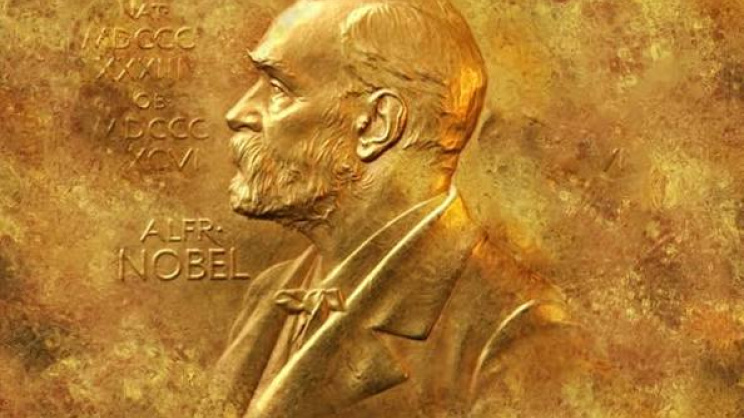
Alfred Nobel died in 1896. His will established five prizes in his name: physics, chemistry, physiology or medicine, literature and peace. These were his Panchapandavas. Nobel did not include economics. He made a fortune from 355 patents, one of which was for dynamite, and he owned Bofors, a manufacturer of heavy weaponry and defence systems. And yet, in personal correspondence with his French business partner, Paul Barbe, and his close assistant and executor, Ragnar Sohlman, Nobel wrote, ‘I hate business with all my heart.’ Worn down by patent lawsuits, he frequently confessed his deep distaste for commercial life to Barbe.
To a central bank, it was an opportunity to gain international recognition. To ruling politicians, it was a breach of democratic authority. Natural science viewed the prize as an unearned invasion. To the Nobel family, it was a hijacking of Alfred Nobel’s legacy.
The award that emerged was the Sveriges Riksbank (Swedish Central Bank) Prize in Economic Sciences in Memory of Alfred Nobel. Yet, as in Akira Kurosawa’s Rashomon, the story cannot be told through one lens. To a central bank, it was an opportunity to gain international recognition. To ruling politicians, it was a breach of democratic authority. Natural science viewed the prize as an unearned invasion. To the Nobel family, it was a hijacking of Alfred Nobel’s legacy.
The birth of a Pandava
To understand why a sixth Pandava was needed in 1968, we need to look at the long feud between Sweden’s oldest political party, the Swedish Social Democratic Party (SAP), and the country’s central bank, Sveriges Riksbank.
Established in 1668, Sveriges Riksbank is the world’s first central bank, so 1968 would mark its 300th anniversary. The occasion needed to be celebrated with grandeur and style. Per Åsbrink, the bank’s governor at the time, had an idea, and he put a proposal to the Nobel Foundation.
Sveriges Riksbank would donate a permanent endowment to fund the prize money and all administrative costs in perpetuity. It also needed an institution to run the selection, and the Royal Swedish Academy of Sciences would choose the winners in the same spirit as for physics and chemistry.
The question now was how to pull it off.
For over three decades, Sweden had been governed by the SAP. The party built a welfare state, Folkhemmet (the People’s Home), in which high taxes paid for redistribution aimed at low inequality, full employment and subsidised public housing. This constrained Sveriges Riksbank. Interest rates were kept artificially low. Credit was rationed. The bank was forced to buy government and mortgage bonds.
To the central bankers in Stockholm, this was economic heresy. Cheap credit would lead to inflation, which would destroy the credibility of money and financial contracts. In their view, a central bank should be independent of political influence. Sveriges Riksbank was not.
In July 1957, there was a coup d’état, staged not by the military but by Sveriges Riksbank. It entered the annals as the one per cent coup.
The governor, Per Åsbrink, unilaterally raised the central bank’s discount rate by one percentage point to choke off credit. For the government, this crossed a red line. By 1962, the bank’s profits from interest on government bonds had mushroomed, and parliament demanded that they be surrendered to the treasury. Sveriges Riksbank reached a compromise with the government: it surrendered two-thirds of its accumulated profit and set up a special fund to celebrate its 300th anniversary in 1968. Critics in parliament viewed Sveriges Riksbank as a ‘state within a state’.
Assar Lindbeck, a mastermind and an architect
As 1968 approached, Per Åsbrink, the governor, was on the brink of making history. But he needed a young, energetic economist to turn sparks into flames. Assar Lindbeck was that man. He was in the right place at the right time.
Lindbeck was an economist in his thirties who had embraced market-liberal economics, and he was confident he could pull it off. Economics would become the sixth Pandava. Lindbeck acted as the intermediary between Sveriges Riksbank and senior academic economists at the Royal Swedish Academy of Sciences. He also lobbied key figures on the board of the Nobel Foundation, including Marcus Wallenberg, the patriarch of Sweden’s capitalist banking dynasty.
The idea of a sixth prize in memory of Alfred Nobel was not warmly received by the Nobel family. Peter Nobel, Alfred Nobel’s great-grandnephew, was furious. In his view, a prize in economics would jeopardise Alfred Nobel’s humanitarian prestige. The family had to be consulted. Martha Nobel, the eldest surviving member of the Nobel line, resisted at first, as Peter Nobel had. When it became clear the battle was lost, she and the family set one condition: the prize could never be called a ‘Nobel Prize’. Hence, its official name is the Sveriges Riksbank Prize in Economic Sciences in Memory of Alfred Nobel.
The Nobel family were not the only one to resist. Members of the Royal Swedish Academy of Sciences argued that economics lacked universal laws of nature, and that treating it as a science would dilute the spirit of the Nobel Prizes.
1968 was a year of student unrest around the world, and radical intellectuals and student activists objected. A prize funded by a central bank, they argued, would become a political weapon. In their eyes, with free-market ideology behind it, the neoclassical paradigm had won over heterodox economics from day one.
One final hurdle remained for Per Åsbrink and Assar Lindbeck: the Nobel Foundation. The foundation accepted the endowment from Sveriges Riksbank on three conditions.
First: the Nobel Foundation would not pay a single krona towards the prize money or administrative costs.
Second: the prize would be explicitly barred from using any name, such as ‘Nobel Prize in Economics’.
Finally, no further prizes of this kind would be added after 1968. The doors were shut.
There was also a fourth provision. The selection process would remain secret for 50 years. In effect, central bankers and market-liberal economists could buy scientific authority and global recognition. This was the icing on the cake for Per Åsbrink and Assar Lindbeck.
II. Controversies at dawn
Gunnar Myrdal, Friedrich Hayek and Milton Friedman
The first shock came in 1974, when the prize went to two economists from opposing schools. Gunnar Myrdal was an architect of Swedish social democracy; Friedrich von Hayek was a free-market libertarian. The political balancing act backfired, as the two opposites repelled rather than attracted. Myrdal turned his back on Hayek at the official reception. The two did agree on one point, however. Both opposed the very idea of the prize.
1976 would prove a year to remember: the prize went to Milton Friedman. The global backlash was aimed less at Friedman and his theories than at his links with the Chilean dictator Augusto Pinochet. The scandal exposed a paradox. For all the promise of his book’s title, Free to Choose, market liberalism could be imposed by destroying political democracy.
The seeds of elitism
Assar Lindbeck served on the selection committee for 25 years, from 1969 to 1994, and chaired it for 14 of them (1980–1994). Under Lindbeck, the prize slowly took on a distinct character.
Chicago-affiliated scholars began to win more and more prizes. Lindbeck’s committees systematically passed over prominent left-leaning institutional scholars. John Kenneth Galbraith and Joan Robinson both deserved the prize but were ‘cornered’ into oblivion, arguably because of their left-wing views.
By 1994, the kingmaker had had his day. A silent revolution had been brewing within the Royal Swedish Academy of Sciences, and an internal investigation concluded that the Academy’s integrity had been compromised. Lindbeck’s departure opened the door to a more pluralistic prize. But by then, the prize had a structural problem: it had become elitist.
That elitism ran in two streams. The first was a near-monopoly for economists with a US background. More than 80 per cent of the prize’s laureates have been US citizens or affiliated with a US university at the time of the award. Eight US universities have dominated the prize: Chicago, MIT, Harvard, Stanford, UC Berkeley, Princeton, Yale and Columbia.
The second stream was an academic dynasty. Paul Samuelson won the second prize, in 1970, and was the first US citizen to win it. He personally supervised two future laureates, Lawrence Klein (1980) and Robert Merton (1997). He also sat on the thesis committees of, or mentored, Robert Solow (1987), Joseph Stiglitz (2001), George Akerlof (2001) and Paul Krugman (2008). And it does not end there. Wassily Leontief (1973) had been Samuelson’s professor at Harvard.
Why did this happen?
Under the Nobel Foundation’s statutes, past laureates, members of the Royal Swedish Academy of Sciences and ‘selected’ professors at elite universities can nominate candidates for the prize. Who determines these ‘selected’ professors? The Nobel Foundation. Three leading journals, the American Economic Review, the Quarterly Journal of Economics and Econometrica, are edited by faculty at the top US universities. These editors control peer review and shape citation counts and orthodoxy, which are the very metrics the Nobel committee evaluates.
III. Conclusion
Taking the prize with a pinch of salt
Central bankers established the Sveriges Riksbank Prize in Economic Sciences in Memory of Alfred Nobel to give economics the authority of the physical sciences. More than half a century later, it is evident that economics is not a pure science. It has human, social and political elements.
An establishment bias, inside and outside the selection committee, has turned the prize into an ‘old boys’ club’. The neoclassical paradigm won in the end. All that is heterodox can only be found on ‘the dark side of the moon’.
Prize-winning models have also drawn criticism. Robert Merton and Myron Scholes won the prize in 1997 for options pricing. One year later, their own hedge fund collapsed. An establishment bias, inside and outside the selection committee, has turned the prize into an ‘old boys’ club’. The neoclassical paradigm won in the end. All that is heterodox can only be found on ‘the dark side of the moon’.
When the Sveriges Riksbank Prize in Economic Sciences in Memory of Alfred Nobel is awarded each year, it should be taken with a pinch of salt. The analytical tools for which it is awarded deserve respect, as long as we remember that no single economic doctrine holds a monopoly on truth.
Asrarul Islam Chowdhury is a professor of economics at Jahangirnagar University and the host of the Bangla podcast Alape Arthanity. Email: asrarul@juniv.edu
Send your articles for Slow Reads to slowreads@thedailystar.net. Check out our submission guidelines for details.

Can Bangladesh bring its hilsa back?

Can the new strategy achieve Bangladesh’s renewable energy targets?
André Wink speaks / What we get wrong about the Indo-Islamic world

Bengali Muslims and the ghosts of India's citizenship politics

Bangladesh’s solar growth: Will the incentives be enough?

The missing link in Bangladesh's innovation economy

Dhaka’s battery rickshaw problem is economic, not just about traffic
The staircase between our mothers and care
Is Bangladesh prepared for the next food shock?