Bangladesh’s China question in a changing Indo-Pacific

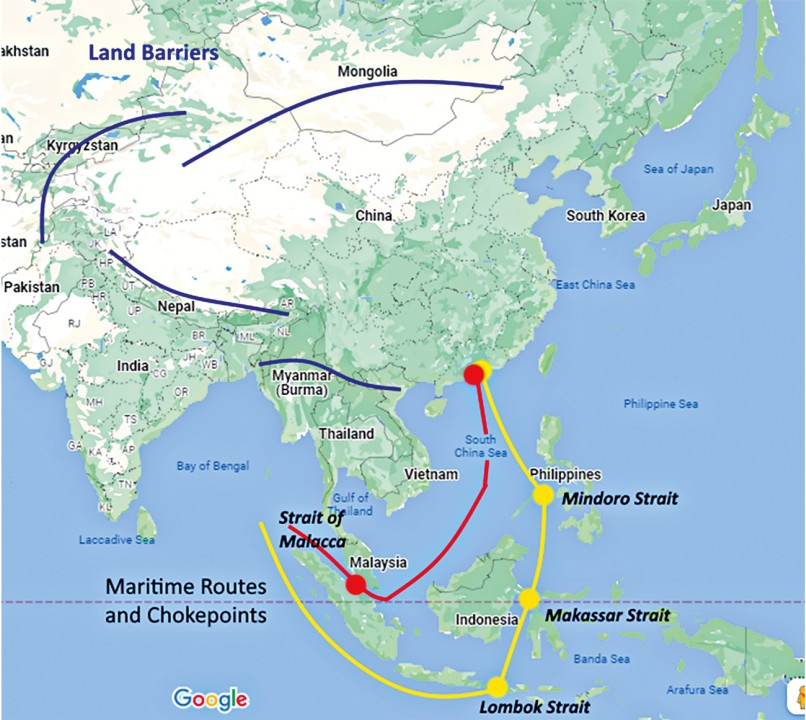
Decades ago, the term ‘balance’ was often used to describe Bangladesh’s foreign policy. Today, however, this term is no longer sufficient. As the Indo-Pacific region emerges as the primary arena of great-power competition, Dhaka is increasingly being called upon to clarify its position, both publicly and through informal diplomatic channels. Strategic rivalry in the Indo-Pacific is intensifying, and Bangladesh faces a major foreign policy puzzle: how to strengthen relations with China while maintaining constructive ties with other countries, including India, the United States and Japan. As Beijing expands its presence in the Bay of Bengal, New Delhi is keeping an eye on its sensitive north-eastern region and the wider security implications of China's growing influence. At the same time, a watchful Washington seeks to maintain its presence in the Indo-Pacific. Dhaka’s challenge is not whether to choose China or its competitors, but how to convert their conflicting interests into opportunities for national development.
The Bay of Bengal is fast emerging as an economic and strategic hotspot. China's participation in Bangladesh's infrastructure projects is part of Beijing's efforts to enhance trade routes, industrial connections and access to the Indian Ocean. This includes an agreement to develop a 110-acre economic zone near Mongla Port. In June 2026, the Bangladesh Economic Zones Authority signed a memorandum of understanding (MoU) with China Civil Engineering Construction Corporation for an investment of around $650 million in the proposed project. The site was previously designated for an Indian economic zone, a designation that was withdrawn in 2025. The change matters not only economically but also diplomatically, as infrastructure projects in the Bay of Bengal are increasingly viewed through the lens of regional competition.
Another dimension is China's growing interest in the Teesta River Comprehensive Management and Restoration Project. During Prime Minister Tarique Rahman's June 2026 visit to China, Beijing expressed support for the project and further feasibility studies. This increased attention reflects the growing competition between China and India over the Teesta River. The region has attracted considerable Chinese interest, including proposed investments and feasibility studies. At the same time, the long-standing water-sharing dispute and the strategic importance of the Teesta basin to India, particularly its proximity to the Siliguri Corridor, a critical link to India's north-eastern states, have made the project geopolitically sensitive. India has also expressed keen interest in funding and implementing the Teesta River Comprehensive Management and Restoration Project in Bangladesh, partly in response to China's growing presence in the region.

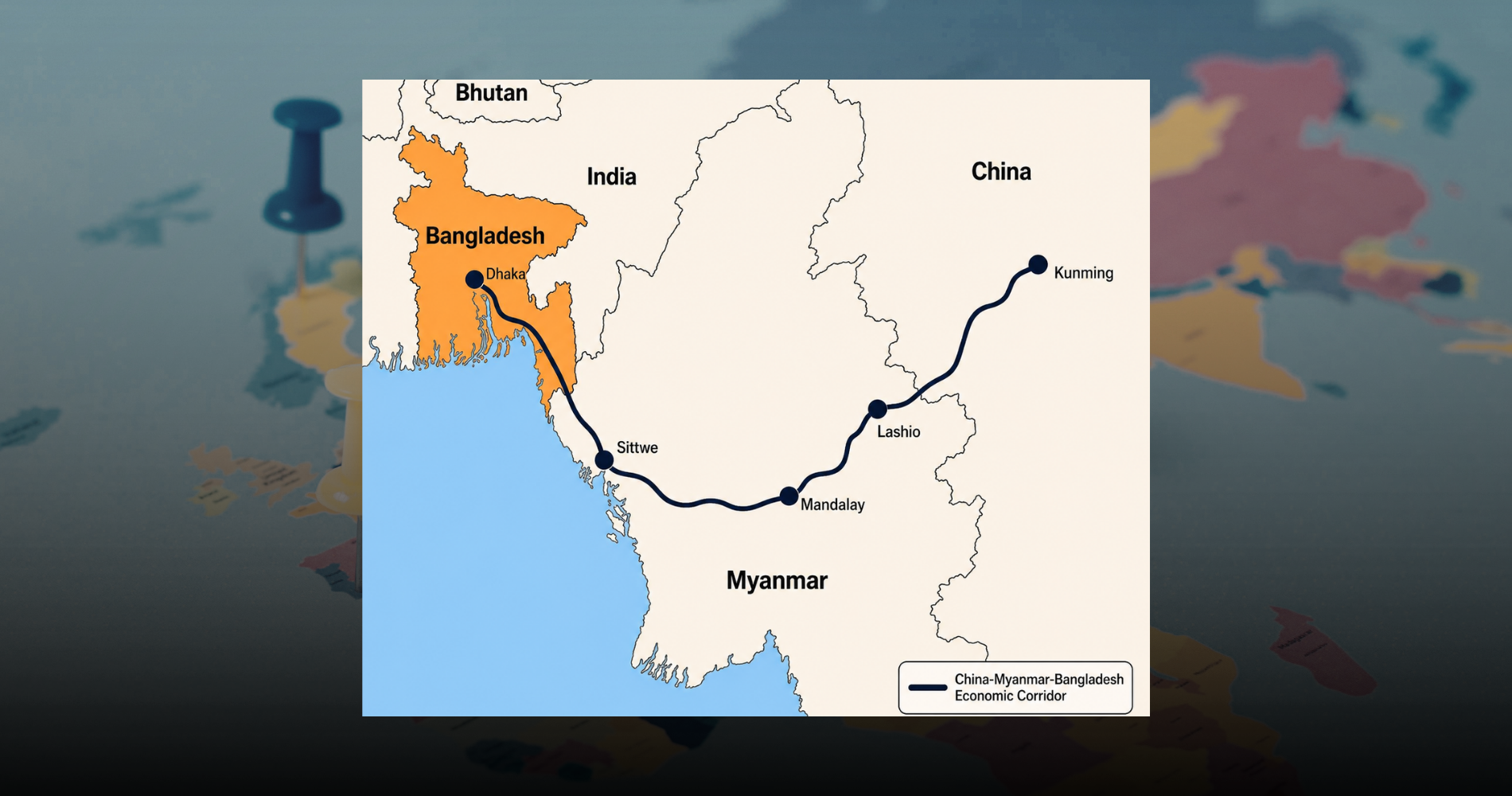
Beijing has also said it is ready to further develop the proposed China–Bangladesh–Myanmar Economic Corridor (CBMEC), which is intended to enhance regional connectivity. The idea has gained attention, with potential trade and investment opportunities through overland and maritime routes linking Bangladesh to south-western China. However, significant obstacles remain to the development of these corridors. The proposed routes are far more complex than they may appear on a map, given Myanmar's instability, the security situation in Rakhine State and the unresolved Rohingya crisis.
The concept is welcome in principle, but Dhaka must undertake detailed feasibility studies and debt sustainability analyses, while ensuring tangible benefits for Bangladeshi businesses. Moreover, Bangladesh's maritime policy is not confined to its relationship with China. Dhaka has also partnered with Japan on the Matarbari Port Development Project, emphasising the importance of diversifying its foreign trade and development partnerships. Financed through Japanese official development assistance and implemented by Japanese construction companies, Matarbari aims to expand the country's port capacity and meet the rising demand for cargo transportation. A Japanese joint venture secured the port construction contract in March 2025, valued at approximately ¥73.4 billion. The project comprises a deep-water container terminal, a multipurpose terminal, dredging and supporting works.
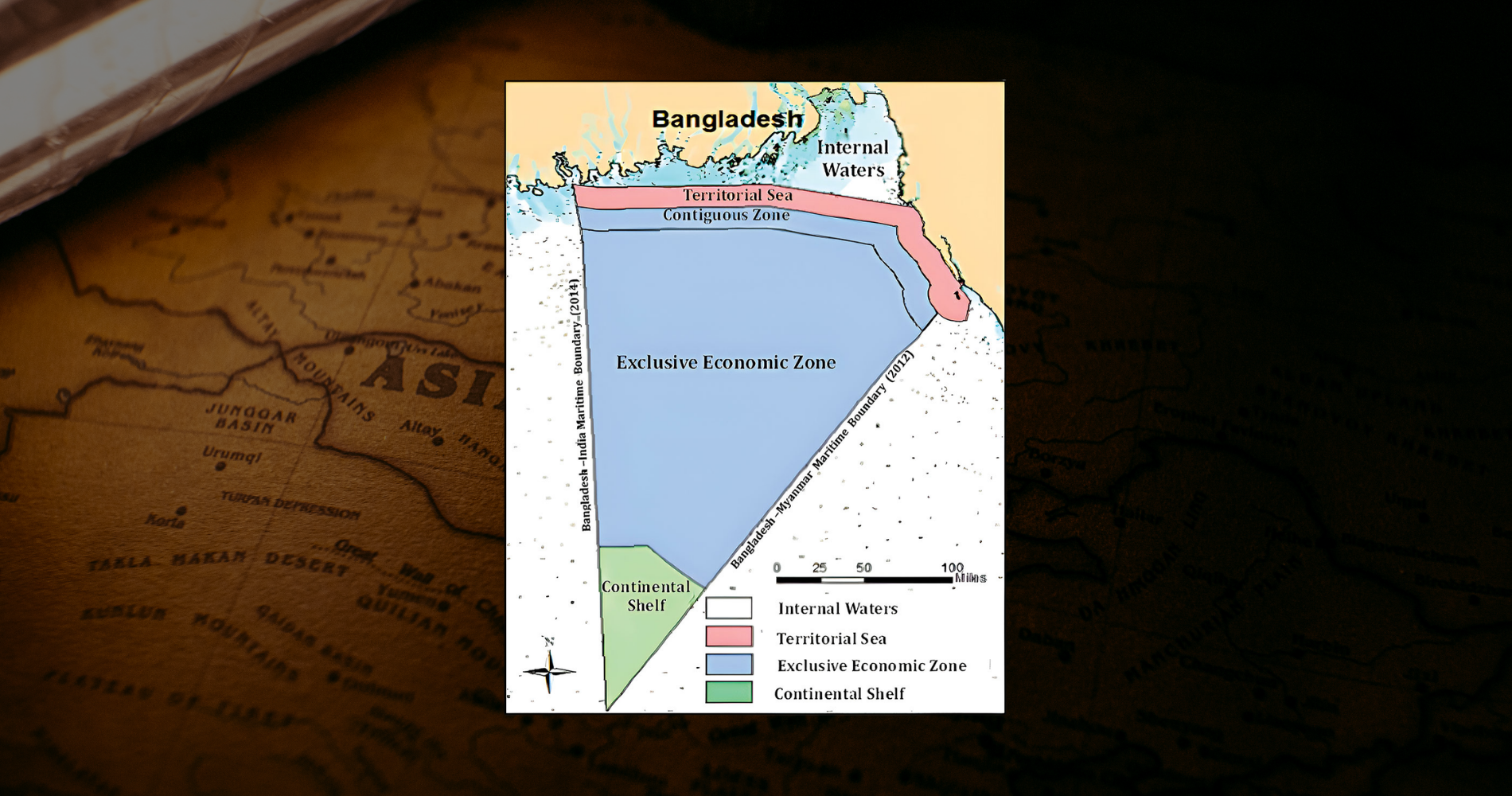
Bangladesh can pursue infrastructure partnerships with both China and Japan without allowing their geopolitical rivalry to dictate its strategic choices. Different partners can complement one another by providing the necessary capital, technology, construction expertise and market access. The vision should be to develop an interconnected maritime economy comprising ports, industrial zones, logistics networks, energy infrastructure and export-oriented industries. Bangladesh would be better served by pursuing integrated connectivity rather than treating individual projects as symbols of geopolitical alignment.

New Delhi and Western capitals are also paying close attention to defence cooperation between China and Bangladesh. Bilateral ties involving the procurement of military equipment, training, exchanges and the development of defence-related infrastructure have existed for many years. The development of BNS Pekua has strengthened Bangladesh’s maritime capabilities while drawing greater regional attention to the strategic importance of Cox’s Bazar. However, military cooperation does not necessarily imply a strategic or military alliance. Bangladesh has good reasons to modernise its armed forces, defend its maritime interests and enhance surveillance and maritime security. The key questions concern the capabilities being developed, the terms of cooperation and the extent to which these arrangements align with Bangladesh’s overall defence policy.
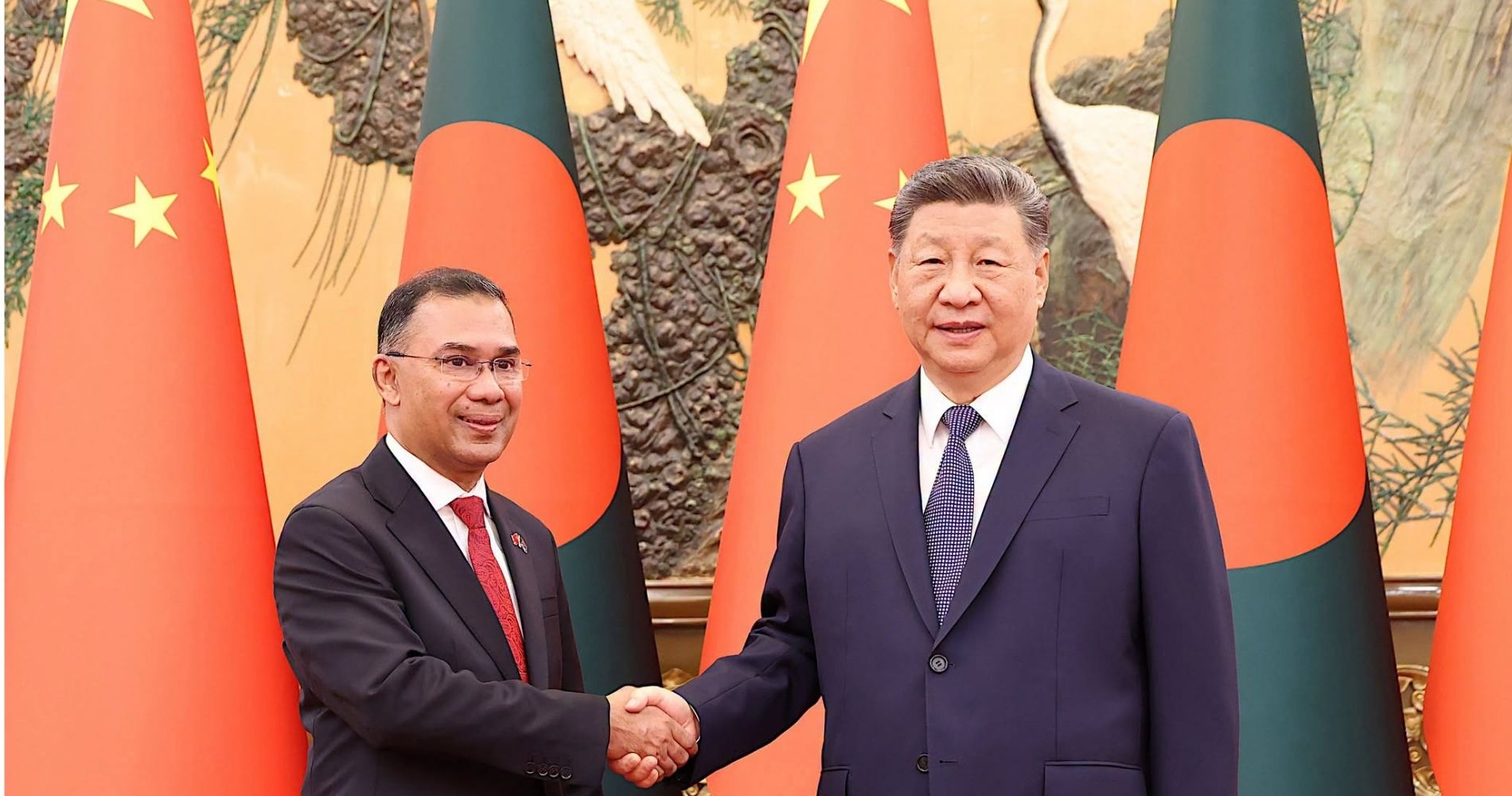
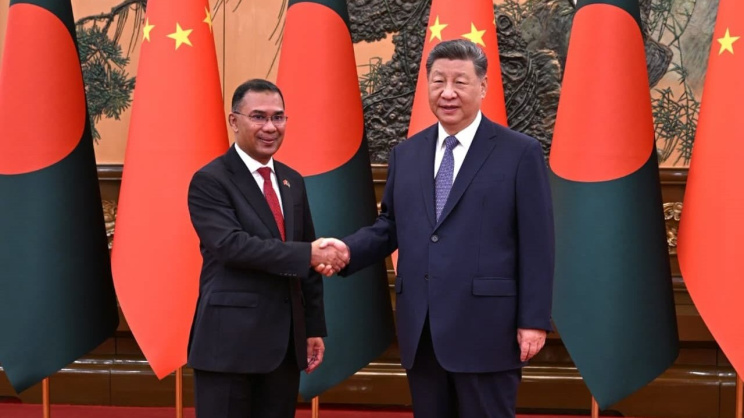
Tarique Rahman’s official visit to Beijing from 22 to 26 June 2026 marked a step forward in diplomatic relations between Bangladesh and China. The joint communiqué stated that the two sides would plan a foreign minister-level strategic dialogue and a “2+2” mechanism for diplomacy and defence. Both sides also agreed to deepen cooperation in maritime affairs, defence visits, training and exchanges, as well as connectivity and technology.
India remains central to Bangladesh’s geopolitical calculations because of their shared geography, transboundary rivers, extensive land border, trade relations, energy connectivity and deep people-to-people ties. Against this backdrop, China's growing involvement in infrastructure projects in the Bay of Bengal and Bangladesh's northern river systems has implications for New Delhi's strategic interests. Of particular concern to India is the Siliguri Corridor, commonly known as the “Chicken's Neck”, a narrow stretch of territory connecting its north-eastern states to the rest of the country. Given the corridor's strategic sensitivity, New Delhi may view Chinese-financed infrastructure in Bangladesh with suspicion, even when such projects are primarily commercial or developmental. The United States, meanwhile, has its own economic and strategic interests in Bangladesh. As Bangladesh's largest single-country garment export market, Washington is an important economic partner, while its broader Indo-Pacific strategy emphasises cooperation with regional countries to promote an open, rules-based maritime order. However, cooperation with America should not be seen as a test of loyalty requiring Bangladesh to choose between Washington and Beijing, and Bangladesh has good reasons to reject such a binary choice. Cooperation with Washington must be assessed on its own merits, taking into account Bangladesh's national interests and long-term development priorities.
A prudent approach would be to pursue a ‘Bangladesh First’ policy grounded in strategic autonomy. This does not mean maintaining equidistance from all powers or adopting a one-size-fits-all approach to partnerships. Rather, it means assessing relations through the lens of national priorities, economic returns, security needs and long-term development goals. China can contribute investment, industrial capacity, infrastructure development, connectivity and technology. India plays a significant role in regional cooperation, trade, connectivity and economic integration, while the US remains important for export markets, investment and technological partnerships. Bangladesh must develop these relationships while also strengthening its productive capacity and institutions at home. Another regional platform from which Bangladesh can benefit is BIMSTEC, particularly through cooperation on transport, energy, trade, climate resilience and maritime security. Such a regional framework could reduce excessive dependence on bilateral negotiations and create meaningful opportunities for cooperation among countries with different strategic interests.
Bangladesh's core issue in its relationship with China is how to protect and advance its national interests by strengthening its own capabilities. Dhaka has little choice but to build its economic strength, institutional capacity and strategic autonomy if it wishes to become a more influential player amid great-power rivalry. As a geopolitical reality, India remains central to Bangladesh's calculations concerning trade, water-sharing, border management and security. Meanwhile, the US remains a key export market for the ready-made garment industry and a source of investment and technology. China, for its part, offers infrastructure financing and defence cooperation, which Bangladesh can pursue when these arrangements serve its national interests, while avoiding excessive dependence on Beijing. The possibility of rival powers responding to one another's initiatives through competing arms transfers, security partnerships and strategic pressure could further complicate Bangladesh's position in an increasingly fluid Indo-Pacific order. A hedging strategy may therefore be more sensible, allowing Bangladesh to engage all major actors while preserving flexibility and avoiding binding, exclusive alliances. Ultimately, Bangladesh's foreign policy should not serve the interests of any foreign capital at the expense of its own people. Its central purpose should be to promote their prosperity, security and well-being.
Last but not least, Bangladesh's relationship with China is fundamentally a question of statecraft. As Beijing becomes more deeply involved in the country's economic and strategic affairs, maintaining financial discipline, institutional accountability and transparency will become increasingly important. A foreign policy that is neither exclusively pro-China, pro-India nor pro-US would allow Bangladesh to pursue cooperation with different partners according to its national priorities. Such a strategy would require consistent diplomatic engagement, careful evaluation of external partnerships and a clear understanding of the country's long-term interests. Bangladesh's foreign policy should ultimately focus on investment, connectivity, technological development, national resilience and sovereignty.
Dr Sujit Kumar Datta is Professor in the Department of International Relations at the University of Chittagong, Bangladesh, and Director of the Hong Kong Research Center for Asian Studies-Bangladesh Center (RCASBC). He can be reached at datta.ir@cu.ac.bd.
Send your articles for Slow Reads to slowreads@thedailystar.net. Check out our submission guidelines for details.

Youth, protests and pragmatism: What history tells us about the future

What should 'Bangladesh First' mean for foreign policy?

Navigating the US-China rivalry: Bangladesh cannot outsource its AI sovereignty

After America leaves, what next for Iraq?

Three years after October 7: When a date became an alibi for genocide

Can Bangladesh capitalise on the Bay of Bengal’s strategic rise?

Who pays for Israel’s nuclear dominance?

How much higher can oil prices go?

Beyond the ‘end of history’ and the ‘clash of civilisations’ / What kind of world order is emerging?