BRICS is bigger, but can it deliver?

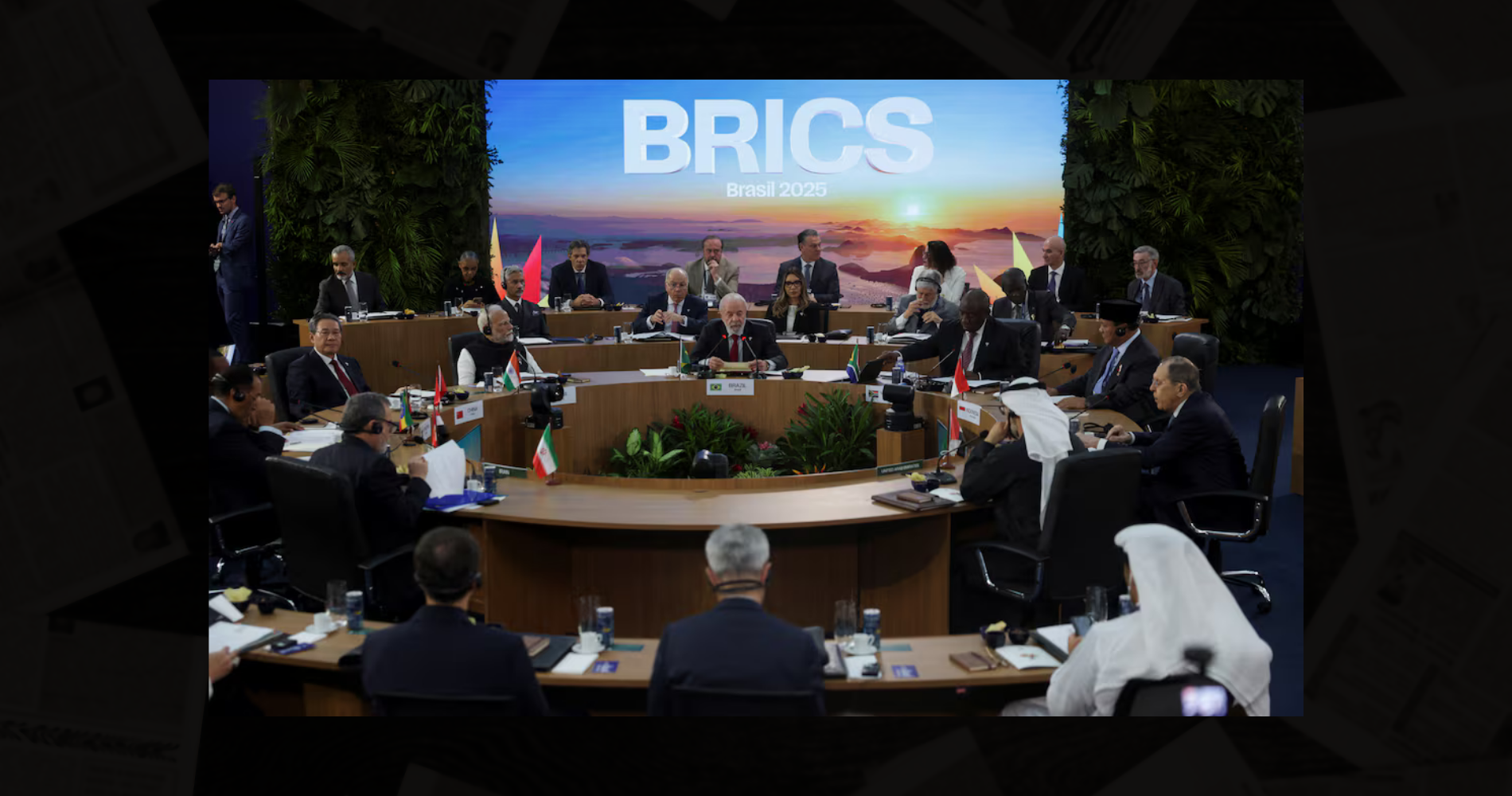
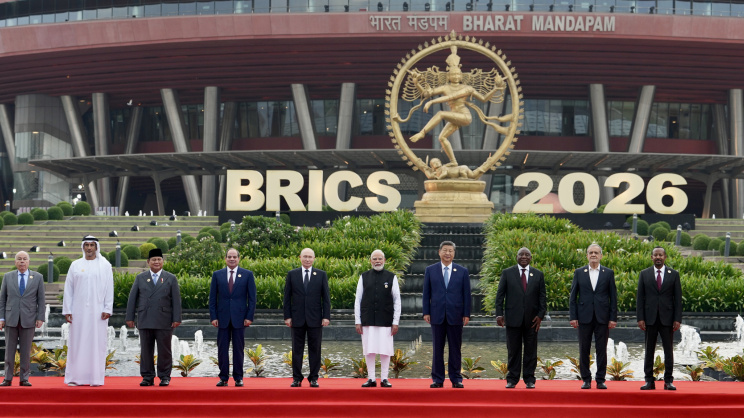
India hosted the 18th BRICS Summit on 12–13 September 2026, and while questions have been raised about the efficacy of an expanded organisation, not to mention varied comments about the Indian culinary choices offered to the invited guests, the 140-point New Delhi Declaration that was adopted was certainly a substantive document. That such a document could be adopted by a grouping comprising traditional regional rivals was particularly laudable.
Building on the declarations of previous summits, the document was, in particular, an endorsement by all members of the Indian perspective on terrorism. BRICS’ unambiguous condemnation of “any acts of terrorism as criminal and unjustifiable, regardless of their motivation, whenever, wherever and by whomsoever committed” was particularly significant in the context of the terrorist attack in Jammu and Kashmir, India, on 22 April 2025, in which 26 people were killed and many others injured. The declaration further emphasised that terrorism cannot be associated with any religion, nationality, civilisation or ethnic group. For India, this position represented an important validation of its longstanding efforts to draw international attention to the challenge of cross-border terrorism and its decades-long struggle against such violence.
This year’s BRICS theme, “Building for Resilience, Innovation, Cooperation and Sustainability,” placed particular emphasis on strengthening multilateralism, preventing conflicts and promoting more equitable global governance. At the same time, the agenda focused on deepening economic and financial cooperation and advancing initiatives in technology and innovation. The expanded and diverse BRICS grouping found several points of convergence.
Expanded grouping
As it is well known, BRIC was coined by British economist Jim O’Neill in 2001 as an acronym for four rapidly growing emerging-market economies: Brazil, Russia, India and China. The foreign ministers of these four countries held their first formal meeting on the sidelines of the United Nations General Assembly in New York, and the grouping would then hold its first summit in 2009 in Russia. With South Africa joining the following year, the acronym changed to BRICS. The financial crisis of 2008 gave an impetus to these nations to push together for institutional reforms, leading to the International Monetary Fund quota reform in 2010. The founding members of BRICS shared, from its inception in 2009, a common interest in reforming global institutions and providing emerging economies with a greater voice in international affairs, which had been largely shaped by the United States and its allies.
Since its formation, BRICS has continued to reiterate its commitment to reforming multilateral institutions and improving global governance, with the objective of promoting a more just and equitable international order. The grouping has met periodically and gradually built upon areas of economic and political convergence, expanding cooperation beyond its initial economic focus.
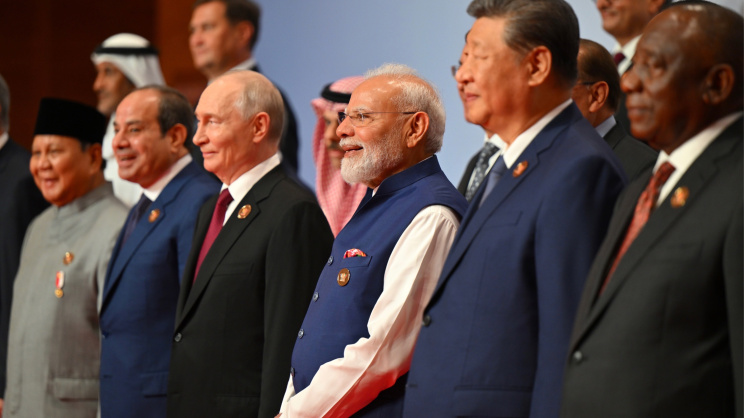
In 2023, BRICS expanded with invitations to Egypt, Ethiopia, Iran, Saudi Arabia and the United Arab Emirates (UAE). Argentina refused to join, seeing it as an anti-Western grouping. Indonesia joined the following year, making it a 10-member grouping, alongside the addition of “partner countries” that also participate in summits, including Belarus, Bolivia, Cuba, Kazakhstan, Malaysia, Nigeria, Thailand, Uganda and Uzbekistan, from 2024. The growing membership has extended the group’s footprint across wider and different geographies, but has also brought regional differences, varying priorities, different security concerns and fundamentally different bilateral relationships with the G2, the USA and China.
Internal contradictions
Even as nearly 400 consultative meetings were held across 30 Indian cities in the run-up to the summit, the members continued to hold divergent, and at times openly hostile, political positions. This was particularly evident as the US–Iran conflict intensified, with Iran retaliating by targeting US military bases in the region, including those in the UAE and Saudi Arabia. The continuing Russia–Ukraine war, not surprisingly, found no mention in the declaration.
The contradictions within the grouping are difficult to miss. While the original members shared certain similarities, the expanded membership does not necessarily have much in common, limiting the scope for substantive engagement within the grouping. Thailand, for instance, could potentially benefit from bilateral cooperation with some BRICS members, but developing a meaningful trade partnership with South Africa would appear far-fetched. Similarly, the Philippines, which has adversarial relations with China, may be restrained in seeking areas of convergence within the BRICS framework.
The diversity of the membership consequently cast a cloud over the prospects for a common economic agenda and significant political convergence. Yet the outcome was not entirely unexpected. Despite these internal tensions, the principles of multilateralism and a multipolar distribution of power provided a degree of common ground. Significantly, the group chose engagement over confrontation, demonstrating that cooperation within a diverse grouping need not depend on complete political alignment among its members.
The diversity of the membership consequently cast a cloud over the prospects for a common economic agenda and significant political convergence. Yet the outcome was not entirely unexpected. Despite these internal tensions, the principles of multilateralism and a multipolar distribution of power provided a degree of common ground. Significantly, the group chose engagement over confrontation, demonstrating that cooperation within a diverse grouping need not depend on complete political alignment among its members.
There has certainly been a significant shift in the distribution of global power since BRICS first came into being in 2006. Yet, despite the many moving parts in the international political landscape, BRICS, through its increasingly diverse membership, has demonstrated an ability to hold the grouping together without being overwhelmed by the various geopolitical conflicts across different regions.
This is particularly noteworthy given the divergent perspectives of its members on the critical issue of energy. Russia and Brazil, as major energy exporters, have an interest in sustaining higher energy prices, whereas China and India, as major importers, face growing pressures from energy insecurity in the aftermath of prolonged and intensifying conflicts. The fact that these competing interests could nevertheless be accommodated within a common framework underscores the grouping's capacity to pursue areas of convergence despite substantial differences among its members. However, given that one economy stands taller than the others, its predisposition to exert influence cannot be ruled out.
Can BRICS offer a stable multilateral platform?
China has emerged as a much larger power over the past two decades, which possibly explains the hesitancy to usher in the issue of de-dollarisation, a theme that had in the past seized the attention of the members. Not only would it seem that India was keen to ensure that no anti-Western messaging emerged from the BRICS platform, but it would also not wish to create any enabling economic advantage for China. It has also been argued that, despite Indian interests in BRICS, its inherent territorial disputes with China will never be resolved and that, in the longer term, India would benefit from closer engagement with the United States and the West. Thus, while BRICS did not openly frame its agenda as “replacing the US dollar”, the members did find ways to work towards a common financial path through more technical language.
India, China, Russia, Brazil, the Gulf members and others have different monetary and geopolitical interests, so seeking a common currency or an explicit anti-dollar policy would require much greater agreement. BRICS found ways to move towards local-currency trade settlements, advance the mandate of the BRICS Payment Task Force, and promote Global South artificial intelligence (AI) governance, ensuring that the GCC states and Iran had strong financial and technological incentives to remain unified despite their political differences. In continuation of the 2025 Rio Declaration, BRICS continued to work on cross-border payments and interoperability while encouraging local-currency settlements. India and Russia trading in rupees and roubles, while also enabling Russia to invest in India given the trade surplus it holds, is one example for now, but more countries may seek similar trading practices.
Non-Western but not anti-Western
Many of the members have faced tariff penalties from the USA, and many are questioning the American role and its unpredictability over trade agreements, which have inflicted extraordinary damage. Thus, while it was not unfounded to see BRICS as an anti-US grouping, the Indian Prime Minister clarified that BRICS is a non-Western grouping with a forward-looking outlook. The expanded membership has changed the nature of the grouping, with the presence of the UAE, Saudi Arabia and Indonesia, which are commonly seen as pro-Western.
Some of these members, however, were not going to burn bridges with the USA, but most agreed to stand against unilateralism and exceptionalism and resist the bullying tendencies of the developed world. Indeed, the latest summit has given the issues of the Global South greater salience. Members are seeking greater representation in a more inclusive manner, something that appears to be missing in several of the multilateral organisations dominated by developed nations.
While it would seem that India ensured that the document did not explicitly mention the United States, it appears to have made a few concessions in the larger scheme of things. On Israel, India also seems to have moved somewhat away from the position it had articulated during PM Modi’s visit to Israel. The Declaration takes a notably sharper joint position on Gaza, including an explicit reference to the International Court of Justice proceedings initiated by South Africa against Israel and calls for adherence to ceasefires. Several paragraphs reflected a strong position against Israel’s conduct in Gaza. The Declaration reaffirms the Palestinian people’s right to self-determination, opposes forced displacement and any geographic or demographic changes to Gaza, and supports a Palestinian state within the internationally recognised 1967 borders, including Gaza and the West Bank. Taken together, these provisions suggest that, while the document avoids explicitly naming the United States in certain contentious sections, India accepted language on Gaza that is considerably more pointed than its traditionally cautious diplomatic formulation on Israel.
Economic limitations
BRICS has always been referred to as a grouping with considerable economic heft. According to the latest data, BRICS countries, which account for nearly 49.5% of the global population, account for 26% of global trade. Although intra-BRICS trade has experienced a massive 13-fold increase over the past two decades, climbing from a modest $84 billion in 2003 to over $1.17 trillion in 2024 and crossing the $1.2 trillion mark, it still accounts for only about 4% to 5% of total global trade. While BRICS members conduct much greater volumes of trade and commerce with non-BRICS nations, China dominates intra-BRICS trade, exporting $550.8 billion to other members and importing $464.9 billion from them. India conducts substantial trade within BRICS but has a deficit of $226.1 billion (2025–26), mostly centred on trade with China and Russia. Similarly, Iran, Ethiopia and Russia also have significant import dependence within BRICS nations.
Russian President Vladimir Putin’s interest in the proposed digital investment platform, built on the framework of the New Development Bank, holds promise for the economic health of the NDB if the proposal moves forward. The bank has funded around 140 projects globally, totalling around US$42.9 billion, in sectors such as clean energy, transport infrastructure, water and sanitation, environmental protection and social infrastructure. India has benefited in several of these sectors and, since 2016, has had 21 projects costing US$7.2 billion. While the NDB remains rather limited in comparison with other multilateral financial institutions, its portfolio of projects has grown over time.
Coordination within a large and increasingly disparate grouping such as BRICS is inherently challenging. Without a degree of political consensus and a broader strategic outlook, its ability to demonstrate meaningful heft vis-à-vis the dominant powers will remain limited. The past two decades have nevertheless seen considerable progress. The more consequential question now is whether, in the next few years and amid an increasingly fractured international order, BRICS can translate its growing weight into tangible outcomes for its members.
The members discussed good practices and sought ways to pursue reforms in global governance. Education, one of the least controversial sectors, has also seen progress. The BRICS 2026 education track has five core areas, including connecting school education, skill development and research innovation. Exploratory work towards a BRICS University Global Ranking and Evaluation System may also be able to garner greater convergence and facilitate more rapid progress.
Coordination within a large and increasingly disparate grouping such as BRICS is inherently challenging. Without a degree of political consensus and a broader strategic outlook, its ability to demonstrate meaningful heft vis-à-vis the dominant powers will remain limited. The past two decades have nevertheless seen considerable progress. The more consequential question now is whether, in the next few years and amid an increasingly fractured international order, BRICS can translate its growing weight into tangible outcomes for its members.
The meeting on the sidelines between Iranian President Masoud Pezeshkian and Abu Dhabi Crown Prince Sheikh Khaled bin Mohamed bin Zayed Al Nahyan, the eldest son of the President of the UAE, understandably attracted media attention. Yet such encounters also point to the wider potential of the grouping. BRICS needs to develop a stronger strategic underpinning, one capable of accommodating differing national interests while providing a framework for members seeking greater multilateralism, multipolarity and, where necessary, multi-alignment.
Its future relevance will ultimately depend not simply on the size of its membership, but on its ability to convert that diversity into sustained cooperation and collective influence.
Dr. Sreeradha Datta is Professor at the Jindal School of International Affairs, O.P. Jindal Global University, and a Non-Resident Senior Fellow at ISAS-NUS, Singapore.
Send your articles for Slow Reads to slowreads@thedailystar.net. Check out our submission guidelines for details.
Can Tarique Rahman’s plan break the Rohingya repatriation deadlock?
Diplomacy in a turbulent world: How Bangladesh should navigate bilateral ties and regional platforms
What is the UN still good for?
Can the 81st UNGA restore hope in a world of crises?
What Malaysia’s Rohingya repatriation plan means for Bangladesh
Why Bangladesh must reconsider its trade agreement with the US
The Indo-Pacific at a crossroads: What it means for Bangladesh
Could the Teesta redraw the map of India-Bangladesh diplomacy?
Iran’s China moment? From isolation to regional hegemony