


Dhaka’s deal with Washington: Why the bargain keeps getting more unequal

Some trade deals are negotiated. Others are simply accepted. Bangladesh's Agreement on Reciprocal Trade (ART) with the United States, signed in the last frantic days of an interim government, looks unmistakably like the second kind. And seven months later, Dhaka is still making commitments under a bargain whose legal foundations have crumbled twice.
An old grievance, formalised
The programme that produced it began on April 2, 2025, when President Trump unveiled what his administration called "Liberation Day": country-by-country tariffs calculated using a formula publicly associated with trade adviser Peter Navarro and built around each nation's trade surplus with the United States. According to Regime Change, the 2026 book by New York Times reporters Maggie Haberman and Jonathan Swan, when the President found the competing economic estimates from Navarro, Treasury Secretary Scott Bessent and Commerce Secretary Howard Lutnick unsatisfying, he turned to aide Natalie Harp to produce numbers closer to what he already intuitively believed, undercutting any claim to scientific rigour in how the tariff rates presented on Liberation Day were determined. Indeed, the President's instinct behind the policy was long-standing. In a full-page advertisement in the New York Times, the Washington Post and the Boston Globe on September 2, 1987, Trump argued that America's allies were free-riding on US trade and defence policy and ought to pay for it. Thirty-nine years later, the same argument animates the reciprocal tariff programme.
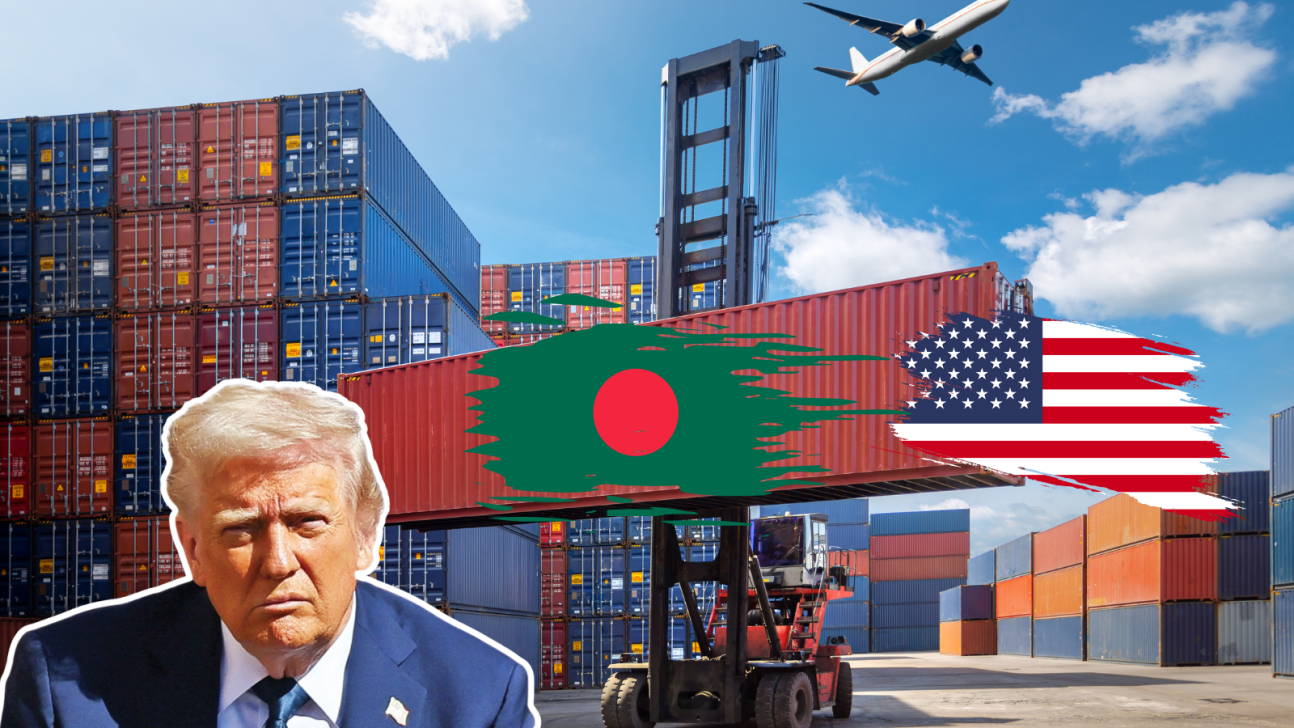
Out of that programme came the ART, the bilateral instrument Washington has used to reset tariff terms one country at a time. Partners could be classified into five rough groups: first, nations with a fully signed ART; second, nations with only a framework, still under negotiation; third, nations offered bespoke "strategic trade and investment" arrangements, such as Korea and Japan, instead of a standard treaty; fourth, Gulf states substituting investment pledges for any treaty; and fifth, nations where talks have broken down into open disputes. As of this writing, of the ten countries that have actually signed the ART, Bangladesh's agreement has the strongest claim to being the most one-sided. Not because any single clause is exotic; most of its mechanisms exist, in some form, in some other countries' agreements too. It is the aggregate, how the obligations stack up and the peculiar circumstances under which Dhaka signed at all, that sets it apart.
The ground shifts twice
The legal scaffolding beneath the tariff side of the ART programme has meanwhile been dismantled and rebuilt twice. On February 20, 2026, the Supreme Court ruled that the International Emergency Economic Powers Act (IEEPA) never authorised a president to impose tariffs at all, striking down the Liberation Day regime in its entirety, including the country-specific caps individual ARTs had negotiated. Within days, the administration invoked Section 122 of the Trade Act of 1974 to address a serious balance-of-payments crisis and imposed a flat 10% global surcharge, a stopgap capped by statute at 150 days. That, too, expired on schedule on July 24, 2026, and was replaced, without a day's gap in collections, by new Section 301 tariffs targeting inadequate enforcement of forced-labour import bans, set at 10% or 12.5% across sixty economies. A second Section 301 investigation, aimed at resetting rates based on "excess manufacturing capacity" across sixteen economies, including China and Vietnam, remains unresolved months past its own informal deadline, with its statutory window stretching into March 2027. Bangladesh, notably, is featured in both investigations.
Through all of this, the underlying non-tariff commitments inside the ARTs, including investment pledges, forced-labour provisions and standards recognition, have proven sturdier than the tariffs themselves, surviving as separate memoranda even as the specific rate attached to each deal was rebuilt from scratch: first under IEEPA, then Section 122, then Section 301. Against this backdrop of a legal foundation that keeps giving way, Bangladesh's bargain has to be understood.
A deal nobody can quite explain
The first puzzle is why, among South Asian nations, Bangladesh rushed to sign first. Looking back, it's hard to identify what that haste bought. If the goal was to lock in better terms than a slower negotiation might yield, the text doesn't bear that out. Its neighbours all declined to sign anything resembling a full ART and appear none the worse for their caution. Pakistan and Sri Lanka remain in active, unhurried negotiations, without conceding Bangladesh's terms. India operates under its own separate interim framework, despite being in the crosshairs of the Lindsey O. Graham Sanctioning Russia and Iran Act, which targets purchasers of discounted Russian oil and gas. More tellingly, Vietnam and the Philippines, both of which export far more to the United States and run considerably larger trade surpluses than Bangladesh, have signed no comparable agreement at all. If exposure to American tariff pressure were the deciding factor, those are the economies that should have moved first. Instead, it was Bangladesh, with lower exports and a smaller trade surplus, that signed the most sweeping and asymmetric text of the ten.
Signed by a government on its way out
Compounding the puzzle is the timing. Bangladesh signed its ART on February 9, 2026, under the outgoing interim administration of Dr Muhammad Yunus, three days before a national election that would replace it. No elected parliament debated or approved it before it was signed, and the new one has not scrutinised it since taking office. No one has clearly explained what economic or political calculus persuaded an interim government to lock in an open-ended trade relationship on its way out the door. Critics are right to call this what it is: a lame-duck administration locking its successors into commitments the country never had a chance to vote on. That charge doesn't apply to the other signatories, whose governments actually had a mandate to sign.
A textual imbalance without precedent
The imbalance is visible even in the drafting. One textual count in the Bangladeshi press noted that the ART uses 179 instances of the mandatory "shall", most of which are attached to Bangladeshi commitments. Such counts are an imperfect measure of substantive burden, but the broader text leaves little doubt about the direction of the obligations: Bangladesh promises considerably more than Washington does. No comparable analysis has been published for the other ARTs, so this is suggestive rather than a verified ranking.
The harshest penalty on the highest starting tariff
An analysis by the non-partisan think tank Peterson Institute for International Economics concludes that these ART deals were "built to push America's trade partners away from China". Bangladesh's agreement carries a non-market-economy clause, foreclosing new trade deals with countries the US designates as non-market economies, including China, Russia, Vietnam, Belarus and others, on pain of snapback tariffs. For Bangladesh, the non-market clause sits in the same maximum-severity tier as five other agreements, including Cambodia's and Guatemala's. What is unusual is what is riding on it: Bangladesh's original "Liberation Day" tariff was 37%, among the highest of any ART signatory, so a snapback would cost Dhaka more than almost any peer. It is, in effect, the same gun pointed at everyone, but loaded heaviest for Dhaka.
Reaching beyond tariffs
The agreement's obligations extend well beyond market access, reaching into Bangladesh's regulatory discretion, digital governance, procurement behaviour and its future room to manoeuvre with third countries. Its specific commitments include not contesting US export-tax rebates at the WTO and not applying VAT measures that discriminate against US goods. None of these mechanisms, taken individually, is exotic; versions appear in some other cases. What makes Bangladesh's case distinctive is the accumulation: a documented obligation imbalance without precedent, one of the highest snapback tariffs in the group and a signing process with no democratic mandate. Whether that combination makes it objectively "the worst" of the ten ARTs is a matter of interpretation.
An exchange that keeps getting more unequal
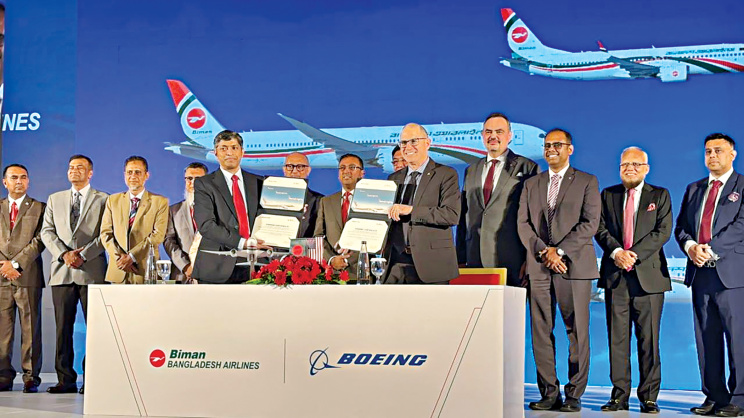
Post-signing developments have widened the imbalance, not narrowed it. Dhaka has kept expanding its Boeing commitments in a confusing sequence. Bangladesh raised its planned Boeing purchase from 14 to 25 aircraft in July 2025. Yet, on April 30, 2026, Biman Bangladesh Airlines formally ordered 14 jets, its largest-ever order, valued at about $3.7 billion. Then, on August 30, US envoy Sergio Gor announced that Bangladesh had committed "billions of dollars" to buy still more Boeing aircraft, "significantly increasing" its initial order, without identifying the number, models, price or contractual status of the additional planes. The next day, President Trump disclosed that Prime Minister Tarique Rahman had written to him concerning a Boeing purchase. Trump thanked Rahman for his "decision of purchase", adding, "Boeing will not let you down, and I will not forget." Yet Bangladeshi officials subsequently said that no separate agreement beyond Biman's 14-aircraft order had been signed. What additional purchase Trump was thanking Rahman for, and whether it represents a firm contract, a political commitment or merely an intention to buy more aircraft, therefore remains publicly unclear.
The contrast with Indonesia is instructive. Garuda Indonesia, negotiating a comparable Boeing commitment under its own ART, had still not signed a binding contract as of late 2026, while Indonesia's sovereign wealth fund warned that deliveries could take up to seven years, given Boeing's production backlog and unresolved financing questions. The Strategic Trade and Investment deals with Japan and Korea have been so large that the Wall Street Journal argues they will never materialise. The same uncertainty has been flagged with respect to the Gulf countries.
Bangladesh, by comparison, has moved faster and further, committing to more while securing less in return, even as its underlying agreement is, by most measures, the most lopsided of the treaties.
What makes the speed more striking still is what the process appears to have skipped over. Biman is, by its own numbers, in no position for a $3.7 billion wager: it loses money on most of its international routes, carries more than Tk 6,000 crore in unpaid dues to the Civil Aviation Authority and has turned a profit in only a few years of its existence. It is, in other words, a loss-making carrier committing to its largest-ever purchase on a timetable set by the seller and the geopolitics of a trade dispute, not by any internal business logic. A capital commitment of this magnitude would ordinarily trigger commensurate due diligence, including board-level risk assessment, fleet-financing review and route-profitability modelling. There is no evidence that any of this happened.
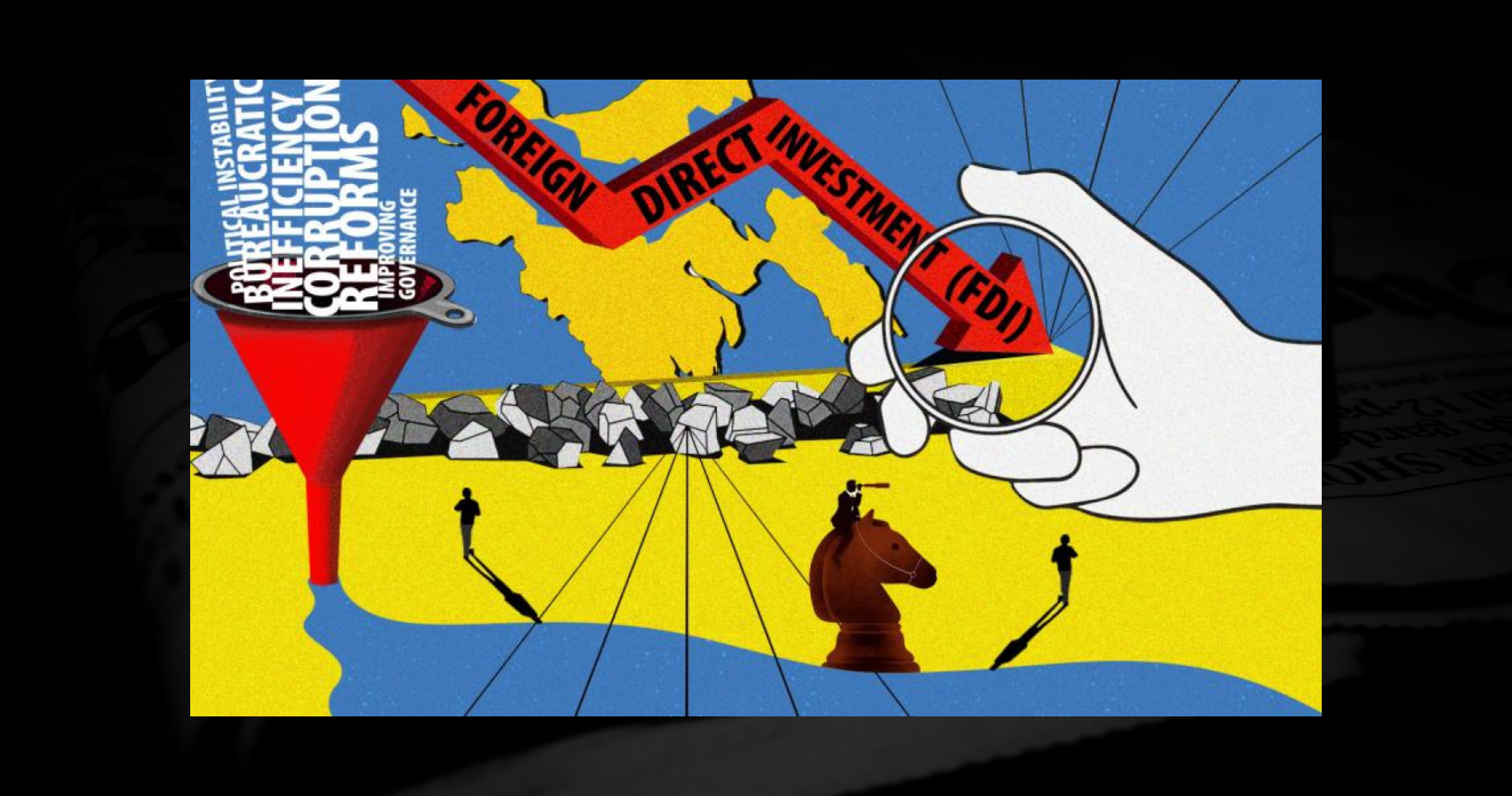
The pattern repeats in energy. On August 12, 2026, Bangladesh's cabinet cleared a twelve-year liquefied natural gas deal with Gunvor USA covering 117 cargoes, roughly 7.5 million tonnes, through 2038. The contract was awarded without competitive bidding, through an unusual state-to-state pricing formula negotiated with a private trading firm, and the government has defended it as prudent hedging against Qatar's own difficulties in meeting its LNG commitments amid regional tensions.
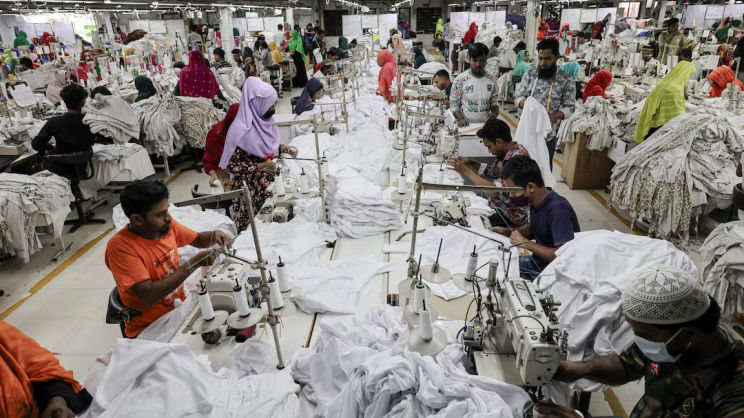
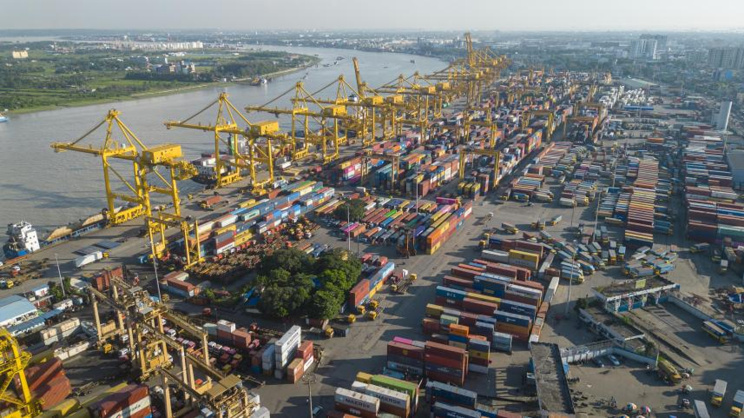
Meanwhile, the reciprocal side of the bargain remains thin to the point of translucence. Bangladesh's garment sector, which accounts for more than 85% of everything the country exports to the United States, now faces a real cumulative burden considerably higher than the headline figures suggest: the 10% Section 301 forced-labour duty stacks on top of an existing 15.6% MFN tariff on apparel, pushing the effective rate into the mid-20% range. In exchange, the US commitment on garments, under Article 5.3 of the agreement, remains only a promise to "establish a mechanism" for zero-tariff access tied to US-origin cotton and fibre, with no volume guarantees or deadline. Bangladesh is executing binding, multi-billion-dollar purchase commitments in real time against a promise that, more than half a year after signing, remains entirely undrawn and vague.
A legal irony, and a democratic one
There is further legal ambiguity. The agreement contemplated domestic procedures before entry into force, and Washington's February announcement explicitly said those procedures remained to be completed. The striking point, therefore, is not that the ART "does not exist". It is that Dhaka has acted with more certainty than the underlying tariff regime warrants. Aircraft orders, LNG contracts and purchase pledges are all proceeding on schedule against a treaty that, strictly speaking, does not yet exist. The irony compounds: the agreement's own snapback clause authorises Washington to reimpose tariffs under Executive Order 14257 if Bangladesh defaults, but the Supreme Court has already struck that order down, and neither government has said what replaces it. Dhaka, in effect, is honouring the letter of a contract with no legal force, enforced by a threat that no longer exists.
A second irony is more political than legal. Bangladesh, as of this year, has once again emerged as a democracy. One might expect a vigorous parliamentary reckoning with a sweeping, open-ended trade deal signed by an outgoing, unelected administration. Dhaka also inherited a clear opening to ask whether the bargain still made sense once the legal foundation of Washington's original tariff threat collapsed. Instead, the commitments have continued and may be expanding. The mystery is no longer why Bangladesh signed such a deal. It is why, having gained both the democratic authority and the legal opening to reconsider it, Dhaka appears so reluctant to use either.
*Except for those hyperlinked references, this analysis draws on trade press, USTR fact sheets and reporting through early September 2026.
Dr M.G. Quibria is an economist and public policy commentator whose work explores trade, development, governance and democratic change in Bangladesh and beyond. He can be reached at mgquibria.morgan@gmail.com.
Send your articles for Slow Reads to slowreads@thedailystar.net. Check out our submission guidelines for details.
The Indo-Pacific at a crossroads: What it means for Bangladesh
Could the Teesta redraw the map of India-Bangladesh diplomacy?
Iran’s China moment? From isolation to regional hegemony
Makkah Pact: The geopolitics beyond Islamic solidarity
Myanmar’s deteriorating crisis and the political future of the Rohingya
Bangladesh between India and China: The dilemma of defence diversification
What Bangladesh should ask before joining the Makkah Pact

Nepal’s difficult passage: Political change meets ecological crisis
BRICS at 20: Why the New Delhi Summit matters to the Global South
