Geopolitical ghosts and the United Nations

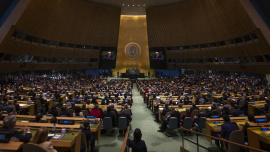
The 81st meeting of the United Nations General Assembly (UNGA) this September continued the “rapturous” year, in spite of the UN themes of ‘restoring peace’ and ‘investing in peace’. Canadian Prime Minister Mark Carney popularised “rupture” in January at the World Economic Forum. Growing geopolitical twists and turns prompted him to do so. UN pursuits often fall victim to them.
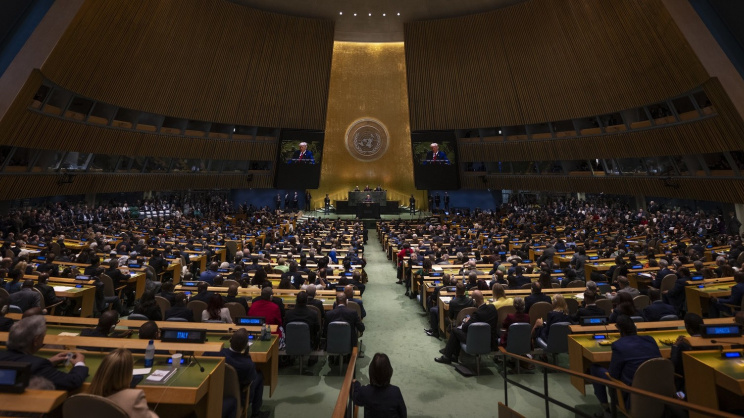
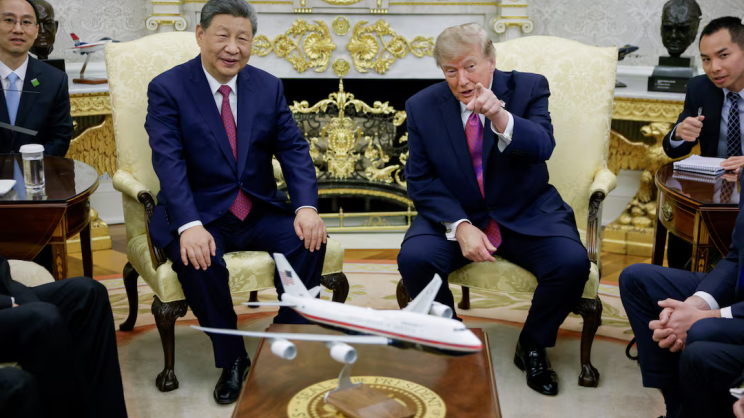
Dressed in their most diplomatic attire, world leaders did not betray their geopolitical instincts in New York. Representing the world’s most powerful military and economic country, Donald J. Trump’s speech was gladiatorial. He reserved his most lavish diplomatic displays for Washington, D.C., two days later, with the leader of China. Given the historical meaninglessness of the New York gathering, Xi Jinping allowed Lao Tzu to speak for him (from his Tao Te Ching): “Those who know do not speak; those who speak do not know.”
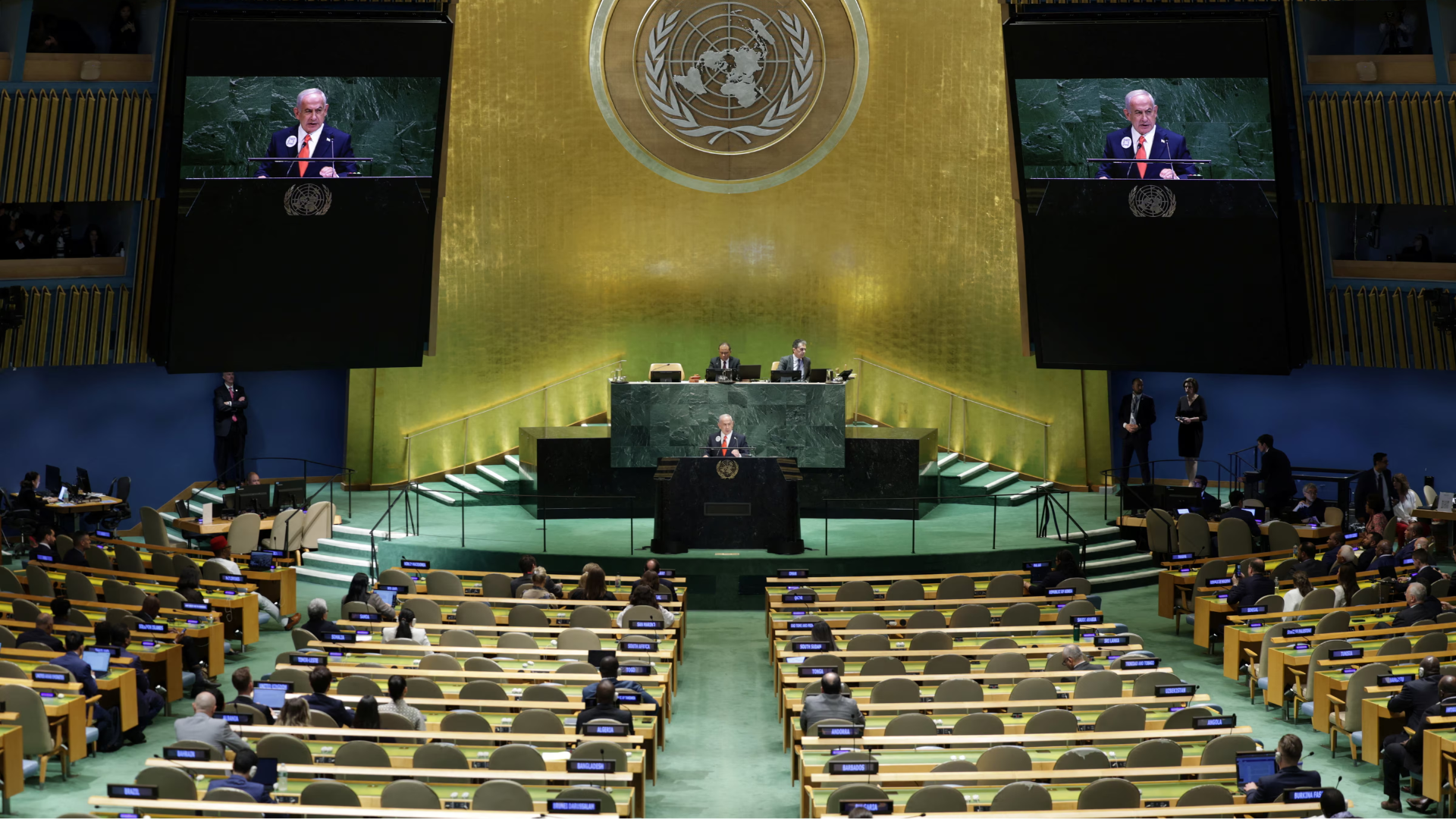
Behind that takeaway lies a second one: Benjamin Netanyahu’s visit and speech. On the one hand, there is an International Criminal Court warrant for his arrest, which the New York Mayor, Zohran Mamdani, supports. Both were blatantly ridiculed by Netanyahu’s speech. On the other hand, the United States denied the Palestinian Authority leader, Mahmoud Abbas, a visa. If that was because of the Israel-US bond against Iran, Trump’s “annihilation” threat to Iran gives Israel the licence to act. After emasculating Palestinians in Gaza and the West Bank, could Persians be next? Is the Middle East being reconfigured?
This visa denial resembles a UN Security Council veto, perhaps the original ‘sin’ holding back the longest-serving international assembly of countries. Utilised about 300 times since 1945, the Soviet Union/Russia accounted for about 130 of them, with the United States accounting for just under 90. In other words, the two top world powers utilised more sticks than carrots to halt contrary voices. Of its 90-odd vetoes, the United States understandably used two-thirds of them during the Cold War. Yet the one-third after 1991, when a ‘unipolar’ world prevailed, raises eyebrows. Was the ‘unipolar’ world being challenged? Of the 130 tally on the flip side, almost 120 were cast by the Soviet Union (before 1991), the rest by Russia (thereafter). Is Russia’s great-power status also being buried?
What about the challenger country? Would it not be in the challenger’s interest to delay or deny collective action under a rival’s leadership? China’s New York absence and veto scorecard vindicate that. Its 30 vetoes before 1991 favoured the Soviet Union, while its 10 after 1991 favoured Russia.
Apparently, the 1969 China-Soviet Union spat over an Ussuri River island, which led Henry Kissinger to court China after 1971, was a misnomer. As China’s solidarity with Russia deepens over Ukraine, we see the world leader isolated. In a ‘cold war’ with West European countries, the United States can only count on Israel as a possible nuclear partner. Although not abandoned, NATO stands in limbo. China can easily summon Russia and North Korea as nuclear partners. Are we witnessing future power-makers and power-breakers? In good times (the 1950s and 1960s), this was not a concern, but in bad times (the 21st century), the United States has no choice but to impose tariffs and strike militarily, unilaterally and unprovoked, as Trump exposes.
Russia defies its power slide for a good reason. NATO creeping eastward through Ukraine reawakens a Russian ghost: ‘Western’ invasions. It has happened before: Adolf Hitler’s Operation Barbarossa from 1941, Napoleon’s 1812 invasion, and Sweden’s Charles XII and the 1700 Battle of Narva. US withdrawal from Ukraine elates Vladimir Putin, but his high point would be a US withdrawal from NATO too. Trump might hand it to him. Rightfully, Trump disdains Europeans for incessant security free-riding. An imperilled Europe would threaten the European Union’s future, with Putin leaping joyously. Until then, Russia refuses to acknowledge its economic collapse and demoralised military, much as the Soviet Union did in the 1980s in Afghanistan and the United States did in Vietnam (1965-75) and Afghanistan (2001-21).
Trump often belittles Europe and persistently speaks of Middle East divisions spiralling outwards to the Red Sea and Africa now. Yet his first area of concern was the American continent, the third takeaway of geopolitics outweighing multilateralism. Beyond his ownership threats and showmanship over Canada, Greenland, the Gulf of Mexico, and Lake Ontario, he extracted 80 million barrels of oil and 65 billion more barrels of proven oil reserves from Venezuela, while paving the way for treating Cuba similarly. These merely reawaken the 19th-century US ‘cowboy’ years (as did Russia’s more protracted ‘western front’ ghost), when skirmishes with Canadians, the taking of Mexican territories, making economic claims on Cuba during Cuba’s independence insurrection, and supporting filibuster William Walker’s occupation of Nicaragua ran rampant. As destabilised today as it has ever been in this century, Latin America may pass that trait on to the United Nations, since the next UN Secretary-General is likely to be from South America.
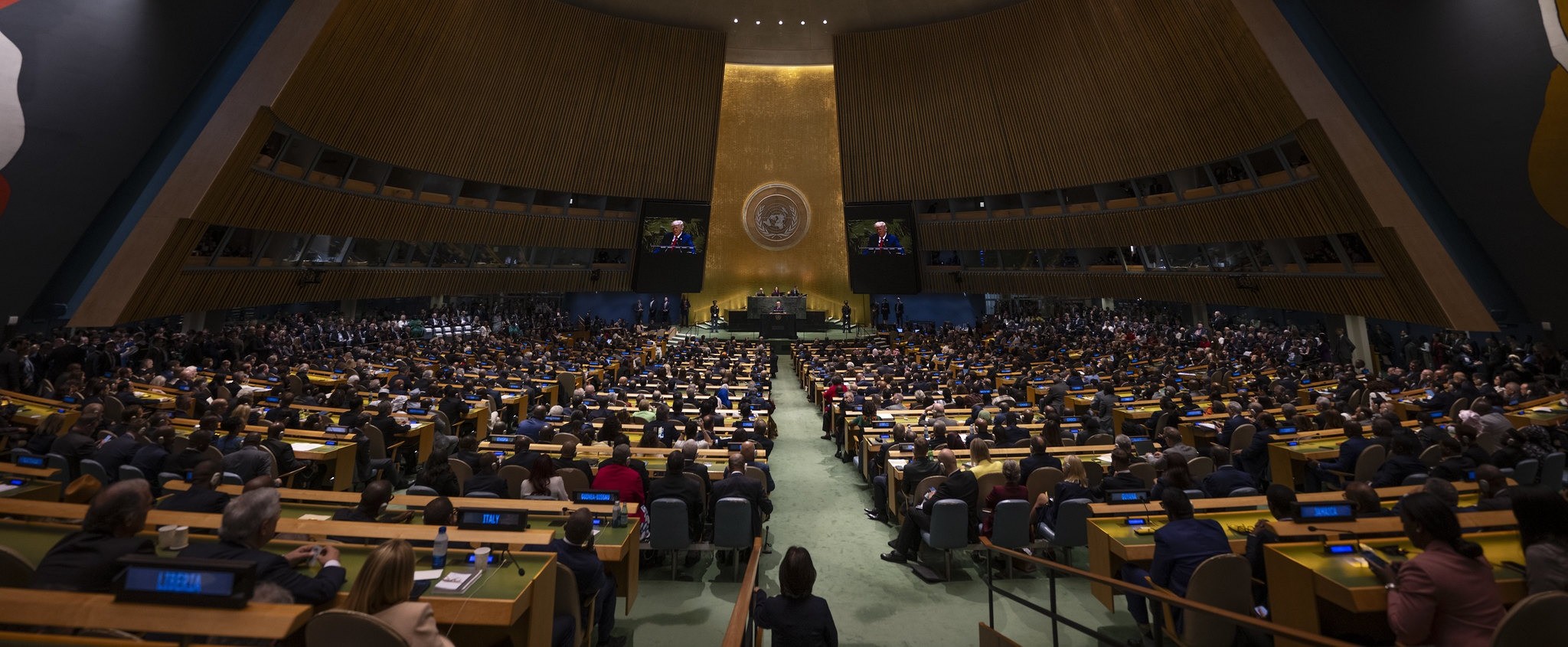
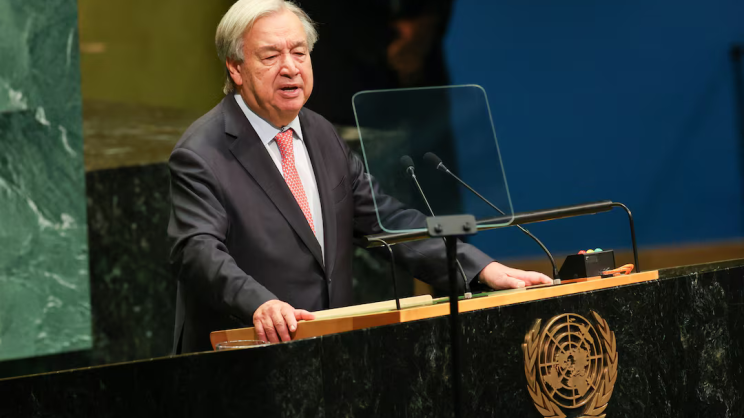
This is the final takeaway. Portugal’s António Guterres finishes his tenure amid anything but routine circumstances. The ambience is more “ruptured” than when he assumed that position ten years ago. He navigated the COVID-19 pandemic successfully (helped no less by one of the most valiant anti-COVID forces, the World Health Organization); managed a mammoth spike in both refugees and asylum-seekers, from 25-odd million in 2016 to 41+ million today (whom only multilateral agencies, like the UNHCR, have consistently supported); and, of course, steered the 15-year SDG crusade from 2015 to retrieve mankind (yet facing the most unsettling El Niño predicted to hit the planet in 2027). Guterres sturdily channelled UN principles to give multilateralism a belated, perhaps final, glow. Evolving circumstances unfortunately leave the United Nations at the same crossroads today as the League of Nations in the 1930s: geopolitics in control, multilateralism in the back seat or the trunk.
The half-dozen candidates battling to replace Guterres give another fading crusade another chance: women’s empowerment. It is not simply that more women candidates are stepping forward when gender prospects keep dwindling nationally and globally, nor that the consistently leading candidates in the polls this year (Costa Rica’s Rebeca Grynspan Mayufis and Guyana’s Carolyn Rodrigues-Birkett) are women. No matter how forbidding the atmosphere for women, tiptoeing into Guterres’s respectable footsteps may be too bitter a pill to swallow in a masochistic environment.
With self-help (‘might is right’) displacing collective action (cooperation), the 1930s collapse of the League of Nations conceals possible saviours today. Women stood up resiliently then, won voting rights in many Western countries, and remained persistently present. Could non-‘Western’ women do the same using multilateral channels? Their softer touches may tip the SDG crusade, trust restoration, and the pursuit of peace favourably. Latin American women have that chance.
Other positives prevail. There were more colonies a century ago than sovereign states. Not so today. As they experiment with democracy (thus liberating stratified groups), African, Asian, and Latin American youths proportionately overtake their industrialised-country counterparts. If that means a different non-‘Western’ future ball game, one of their inherited assets can be maximised: their collective culture (evident in extended families rather than the ‘Western’ nuclear counterpart) contrasts with ‘Western’ self-help practices (as preached by Europe’s 18th-century Enlightenment scholars, such as Adam Smith on capitalism and John Locke on democracy). Domestic collective action becoming collective action globally finds an opening. Seizing that chance could resurrect multilateralism, while purposeful and meaningful leaders would make it flourish. Today’s women and youths may provide the much-needed means to restrain geopolitics. Latin American women could spearhead that outcome.
Imtiaz A. Hussain is Professor in the Global Studies & Governance (GSG) Department at Independent University, Bangladesh (IUB).
Send your articles for Slow Reads to slowreads@thedailystar.net. Check out our submission guidelines for details.
Beyond the ‘end of history’ and the ‘clash of civilisations’ / What kind of world order is emerging?
The South Korea opportunity Bangladesh is overlooking
BRICS is bigger, but can it deliver?
Can Tarique Rahman’s plan break the Rohingya repatriation deadlock?
Diplomacy in a turbulent world: How Bangladesh should navigate bilateral ties and regional platforms
What is the UN still good for?
Can the 81st UNGA restore hope in a world of crises?
What Malaysia’s Rohingya repatriation plan means for Bangladesh
Why Bangladesh must reconsider its trade agreement with the US