Why fencing the Myanmar frontier alone won’t work

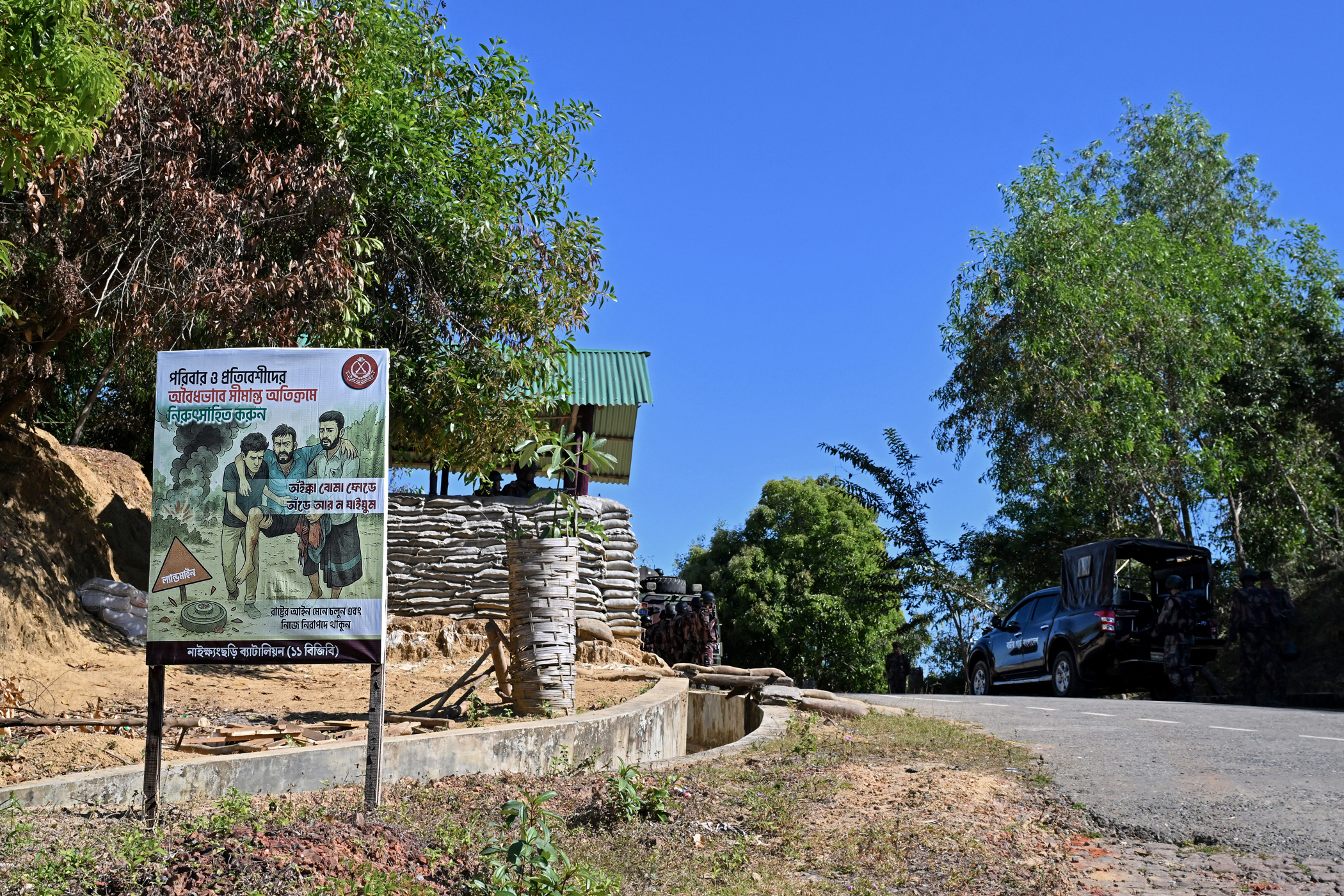
On May 24, three Bangladeshis were killed in landmine explosions on the “zero line” of the Bangladesh-Myanmar border near Naikhongchhari in Bandarban. Nine days later, a 12-year-old Tanchangya boy died from an abandoned mortar shell in the same border district.
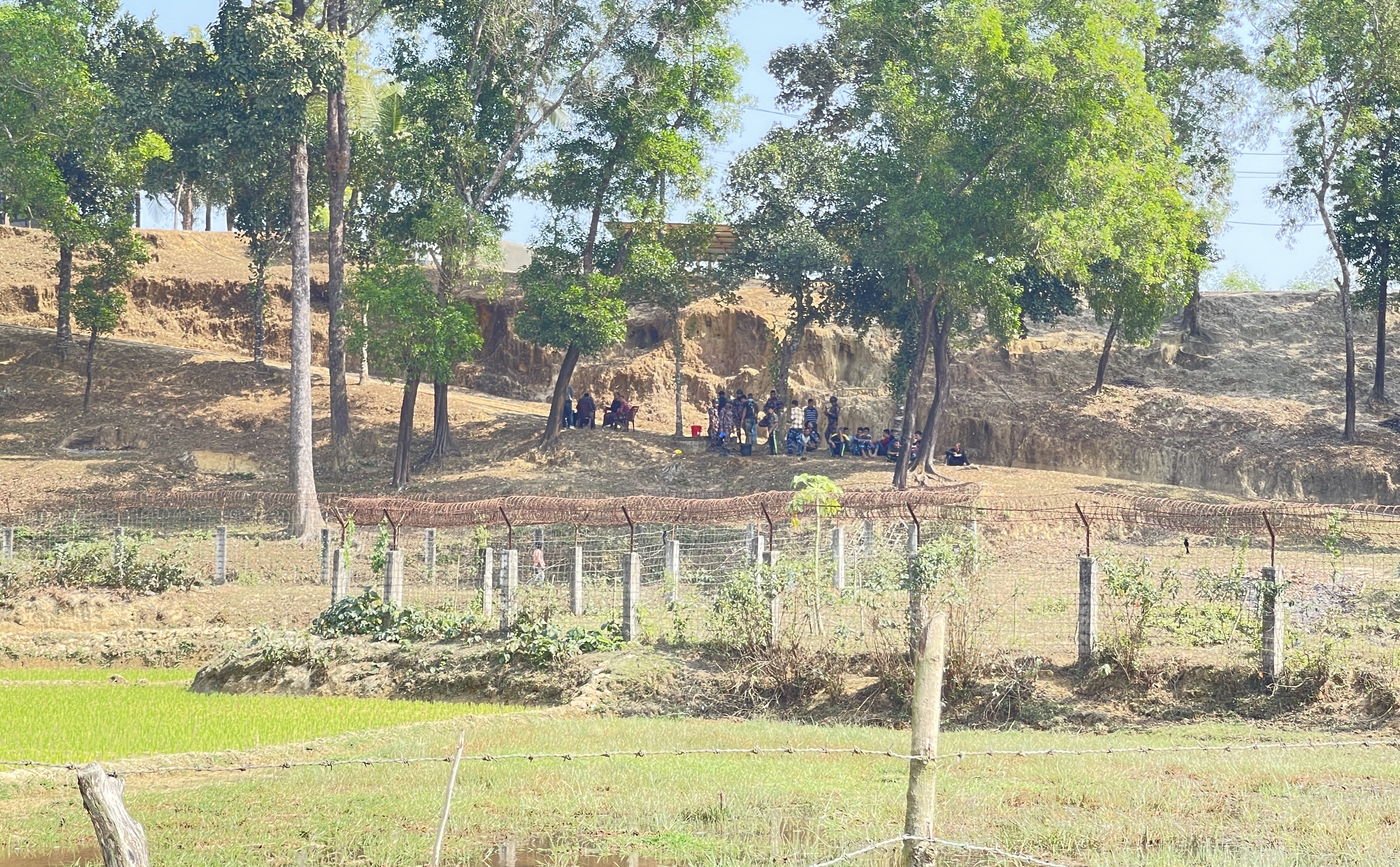
Two weeks after that second explosion, Home Minister Salahuddin Ahmed revealed in Parliament on Wednesday (June 17) that barbed-wire fences were being erected along the Myanmar border, similar to those already standing at sensitive points along the Indian frontier.
According to him, new Border Outposts had been built, roads extended into hilly terrain, and a “Smart Border Surveillance System” installed in the south-western and north-western frontier zones. The Border Guard Bangladesh was also following a zero-tolerance policy against yaba, crystal meth, and Phensidyl.
While the statement is not incorrect, it captures only one layer of a far more complex emergency, framed in the language of infrastructure, surveillance, and patrols that is increasingly inadequate to describe what the Bangladesh-Myanmar border has become.
A recent study by XCEPT Research, supported by the UK government, characterised the Rohingya camps in Cox’s Bazar as “extended battlefields” of Myanmar’s civil war.
What is true of the camps is, in essence, true of the entire south-eastern frontier. The border is no longer merely a territorial line separating two sovereign states. Instead, it is evolving into an unstable and contested space where armed actors, refugees, smugglers, insurgent groups, and state forces intersect.
Barbed wire, however necessary, cannot fence off a geography that has already been colonised by the logic of war.
A war economy flowing westward
The drug crisis on the Myanmar border is not a trafficking problem in the conventional sense. It is, more precisely, a war economy, and it moves in only one direction.
According to BGB data, 54,887 yaba tablets were seized every day last year. But, by all law-enforcement estimates, these figures capture only a fraction of the actual volume.
The scale of the trade has recently shattered all previous baselines: while full-year seizures historically hovered around 40 to 50 million yaba pills between 2018 and 2022, intensive anti-narcotics operations by the BGB alone hauled in an unprecedented 147 million illicit drugs across 2025, including yaba tablets, crystal meth (ice), Phensidyl, foreign liquor, marijuana, heroin, cocaine, LSD, narcotic injections, and various illegal pharmaceutical products.
The drug is changing shape as it crosses the border, moving from the mass-market pill to the higher-margin crystal product targeting Bangladesh’s growing urban market.
According to the United Nations Office on Drugs and Crime, methamphetamine seizures in East and Southeast Asia hit a record 236 tonnes in 2024, a 24 percent increase over the previous year; and the UNODC is explicit that seized quantities represent only the visible tip of actual flows.
Myanmar’s Shan State is the production engine of the Golden Triangle, a region that, since the 2021 military coup, has operated with minimal state oversight.
The United Wa State Army and other ethnic armed groups in Myanmar finance their operations through drug trafficking, according to security analysts and US government sources.
The drugs produced in Myanmar’s east travel across the country's width and exit westward into Bangladesh through the hills, the Naf River, and the Bay of Bengal.
The Rohingya refugees in Cox’s Bazar have become deeply entangled in this supply chain, though entanglement may overstate their agency.
BGB data indicates that 80 percent of those arrested in anti-narcotics raids in the Cox’s Bazar and Bandarban border regions are Rohingya. But beneath that figure is a structural coercion that demands acknowledgement.
Rohingya youth cannot work legally, cannot study beyond primary school, and, since April last year, have seen food rations cut by nearly half.
A Rohingya man in the camps can earn up to Tk 5,000 to carry a package across the border — a wage no legitimate opportunity can match — and refusal is met with threats against family members.
These are not hardened criminals. Reports describe people who farm salt by day and carry packages at night because the arithmetic of survival has left them with no other calculus.
The zero-tolerance policy of the Border Guard Bangladesh necessarily arrests people in this category, but it does not address the economic conditions that produce them.
The trafficking routes are also more resilient than they appear, as drugs move by boat through the Naf River under cover of fishing, concealed in hulls beneath legitimate catches.
They move overland through Naikhongchhari and Ukhiya. They move by rail — Cox’s Bazar Railway Station has neither a narcotics control office nor passenger search facilities, a gap that traffickers have systematically exploited since the new rail line opened.
When authorities tighten one corridor, the trade tends to shift. This elasticity is why seizure numbers rise year on year without the underlying flow diminishing.
The new landlord of the frontier
On December 8, 2024, the Arakan Army completed its capture of Maungdaw and took full control of the Myanmar side of the border with Bangladesh.
This was not a marginal military development. It transformed the country’s border-management calculus entirely because the entity now governing the other side of the frontier is not a state.
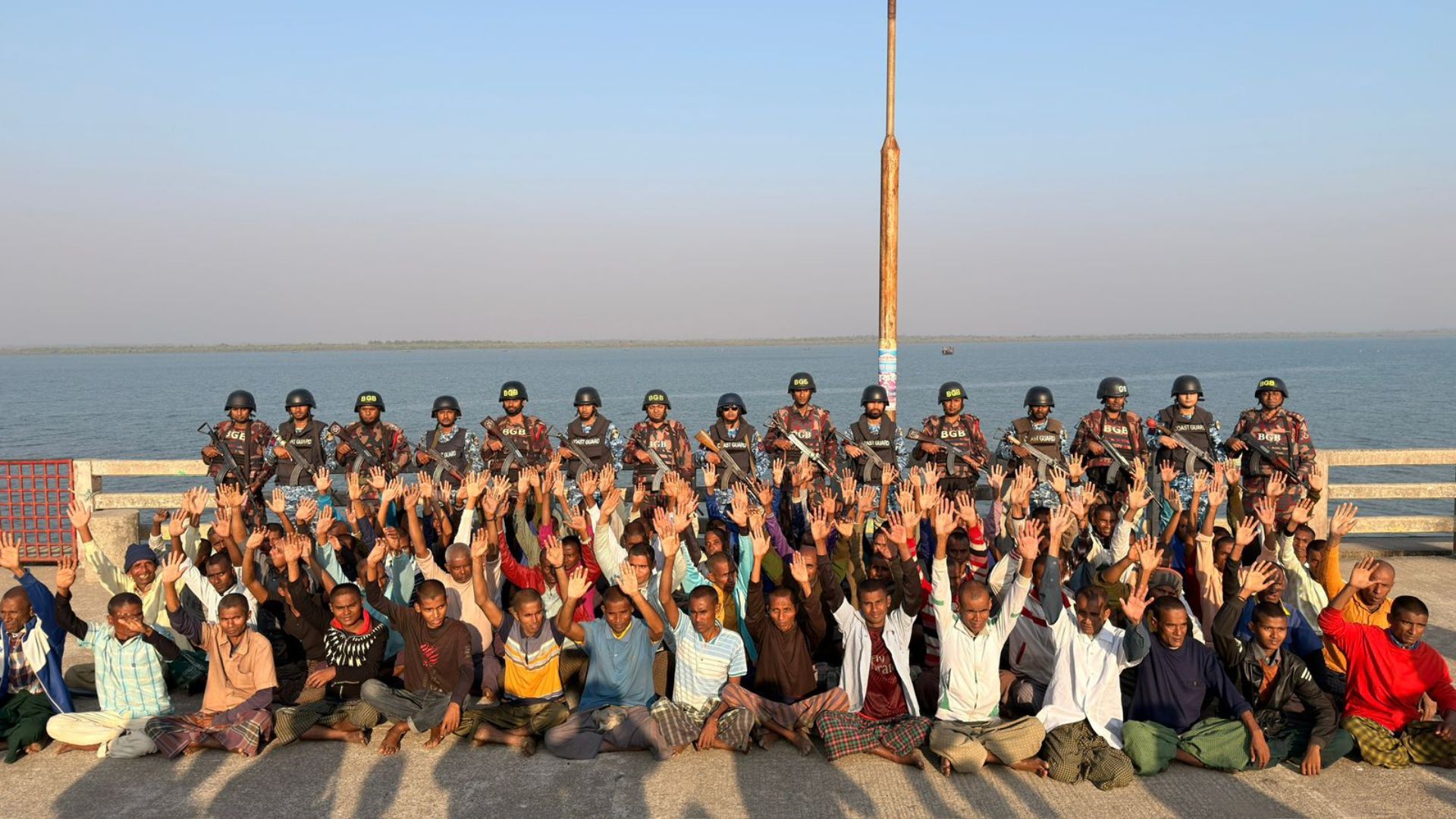
Since that December, at least 399 Bangladeshi fishermen and Rohingya residents have been abducted from the Naf River and the Bay of Bengal by the Arakan Army.
As of May12 this year, 165 remain in custody — 81 Bangladeshis and 84 Rohingya — some having been held for over a year, with families uncertain whether their relatives are alive.
In February, the BGB negotiated the return of 73 fishermen; in May, 14 more came back.
The pattern suggests a system rather than an accident: detention, negotiation, and selective release, often contingent on conditions that resemble ransom, including, in some cases, the payment of money by desperate families.
A 12-year-old named Huzaifa Sultana Afnan died in a Dhaka hospital on February 7, 27 days after a stray bullet fired from across the border struck her in the head while she was returning from buying snacks with her grandfather.
On March 28, 13 fishermen left Shah Porir Dwip before dawn to pull nets from the Naf River, as generations before them had done, and were seized at gunpoint by Arakan Army speedboats by 7:00 am.
These are not isolated tragedies but symptoms of a deeper transformation.
Bangladesh finds itself in a structural bind that fencing cannot resolve. Dhaka cannot use formal diplomatic channels to address the Arakan Army because the Arakan Army is not a state. It has to engage with the Arakan Army through the UN and, at times, through informal channels.
The government with which it does engage directly — Naypyidaw — no longer controls the border territory. What exists across the frontier is a fragmented landscape of ethnic armed organisations, former junta border police who surrendered or fled, and the Arakan Army’s own governance structures, which are expanding but carry no international legal obligations.
In effect, Bangladesh is negotiating across an invisible line with a non-state actor that has no treaty commitments and no structural incentive to moderate its border behaviour.
This is the context in which the decision in February last year to lift the eight-year fishing ban on the Naf River must be understood.
The ban had been imposed in 2017 specifically to limit drug trafficking and Rohingya infiltration. Its lifting restored livelihoods to thousands of fishermen who had suffered for nearly a decade — a genuine and overdue humanitarian gesture issued following a High Court directive.
But it occurred precisely when the Arakan Army had consolidated control of the Myanmar riverbank, had already begun detaining fishermen in the preceding months, and had demonstrated no interest in respecting Bangladesh’s maritime territory or the livelihoods of the people working there.
The result was predictable. As soon as the ban was lifted, detentions escalated. Numerous boats were seized and not returned. Families entered cycles of debt while waiting for husbands and fathers who did not come back.
This is the crisis of a state that can present coherent policy in Parliament while its border communities live under conditions that policy cannot reach.
What the wire does and does not do
The barbed-wire fencing now under consideration for the Myanmar border is neither irrational nor sufficient.
Physical barriers increase the friction for informal crossings, force traffickers towards monitored corridors, and provide anchor points for patrol and surveillance. New border outposts reduce the distance between checkpoints.
Road construction enables rapid patrol responses in terrain that was previously inaccessible. These are genuine operational improvements, and the minister’s statement reflects real investment in BGB capacity.
But the structural drivers of insecurity are not amenable to physical solutions. Myanmar’s Shan State has achieved industrial-scale drug production, sustained by armed groups whose finances depend on its continuation.
The Arakan Army controls Rakhine State and, with it, the entire western approach to the Bangladesh frontier. As long as Myanmar’s civil war persists and ethnic armed groups rely on drug revenues to fund their operations, the flow of narcotics westward will continue regardless of what Bangladesh builds on its side of the border.
Barbed wire does not interdict a war economy. It redirects it.
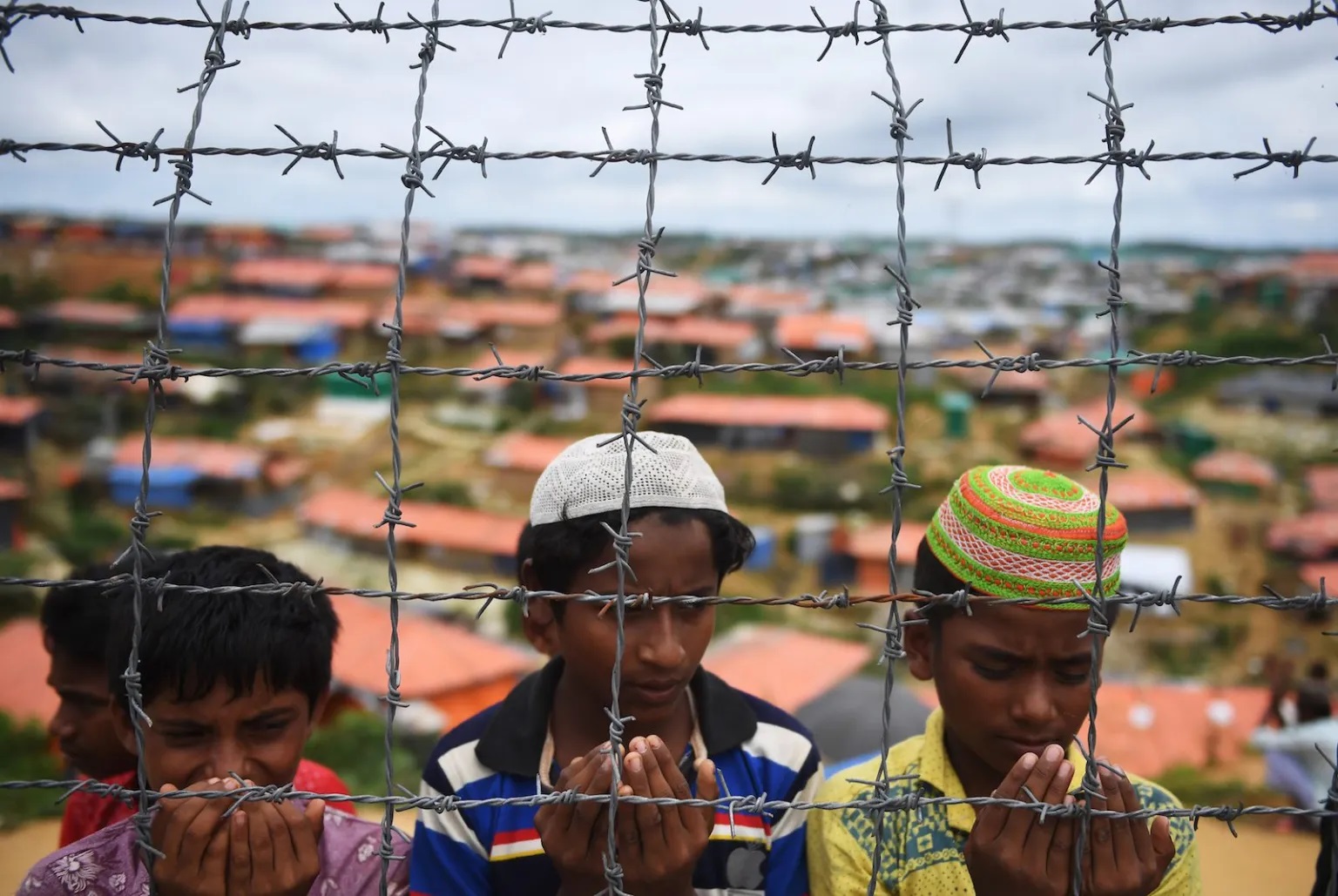
Bangladesh has, for years, maintained barbed-wire fencing around the Rohingya camps in Cox’s Bazar, restricting movement to limited exit points, a policy that drew sustained criticism from humanitarian organisations for effectively imprisoning a refugee population.
The government now proposes extending barbed wire to the Myanmar border, citing the same logic of security.
What the compound image of wire around camps and wire at the border produces is not security but enclosure: a state that uses the same infrastructure to confine its refugees as it uses to control its frontier, without a clear account of how either intervention addresses the conditions that make the border dangerous in the first place.
What the wire will not contain
The Bangladesh-Myanmar frontier has ceased to function as a boundary. It has become a borderland, a zone of overlapping armed actors, displaced populations, criminal economies, and collapsed state authority on the other side.
And a borderland requires a different order of response than a boundary does.
Bangladesh needs a borderland strategy rather than a border policy. The distinction is not semantic. Border policy addresses infrastructure, surveillance, and patrol.
A borderland strategy addresses the conditions that produce insecurity: the Rohingya youth who carries drugs because rations have been cut and legal work is forbidden; the fisherman who crosses an invisible line because a decade-long fishing ban has left him indebted and desperate; the indigenous farmer in Naikhongchhari whose fields now hold landmines from a war in which he had no part.
It requires sustained and assertive diplomacy that moves beyond the single register of repatriation appeals, engaging the Arakan Army through regional proxies and international mechanisms and using whatever leverage Bangladesh can assemble or borrow.
It requires genuine livelihood interventions in the refugee camps as the only durable alternative to the drug economy that is devouring their youngest residents.
And it requires an honest political accounting of what border security actually looks like when sovereignty becomes thin at the margins.
The repeated deaths and abductions along the frontier reveal something that parliamentary statements about fencing tend to obscure: the state appears present through checkpoints, patrols, and rhetoric, but fails to guarantee security and livelihoods for the people living closest to the threat.
When a child can be killed by a stray bullet while buying snacks near her home, and three farmers can step on someone else’s mines on their own land, the infrastructure of sovereignty has already been outpaced by events.
Barbed wire is a symbol, of intention, of commitment, of a government that takes the border seriously. What Bangladesh also needs now is a strategy equal to the complexity of what no wire can contain.
Jannatul Naym Pieal is a Dhaka-based writer, researcher and journalist. He can be reached at jn.pieal@gmail.com.
Send your articles for Slow Reads to slowreads@thedailystar.net. Check out our submission guidelines for details.

Can Bangladesh capitalise on the Bay of Bengal’s strategic rise?

Who pays for Israel’s nuclear dominance?

How much higher can oil prices go?

Beyond the ‘end of history’ and the ‘clash of civilisations’ / What kind of world order is emerging?

The South Korea opportunity Bangladesh is overlooking
Geopolitical ghosts and the United Nations
BRICS is bigger, but can it deliver?
Can Tarique Rahman’s plan break the Rohingya repatriation deadlock?
Diplomacy in a turbulent world: How Bangladesh should navigate bilateral ties and regional platforms