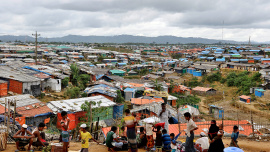
Bangladesh First: Rethinking the relationship with India

Bangladesh-India relations are currently at a point where there is a clear need to rethink the relationship from a new perspective. The Bangladesh-India relationship should be viewed through the post-July-August 2024 lens, based on mutual respect, mutual trust, dignity and sovereign equality. Bangladesh is ready to work with India, but India must also help create a conducive environment in which the two countries can talk and normalize their relationship.
The relationship, however, is currently stalled. After the election and the formation of the new government, there was an impression that relations would soon return to normal. Six months later, that has not happened. Developments such as border killings and push-ins have not been viewed positively by the people of Bangladesh. Rather, they have reinforced a perception that India does not sufficiently respect Bangladesh's sensitivities and aspirations.
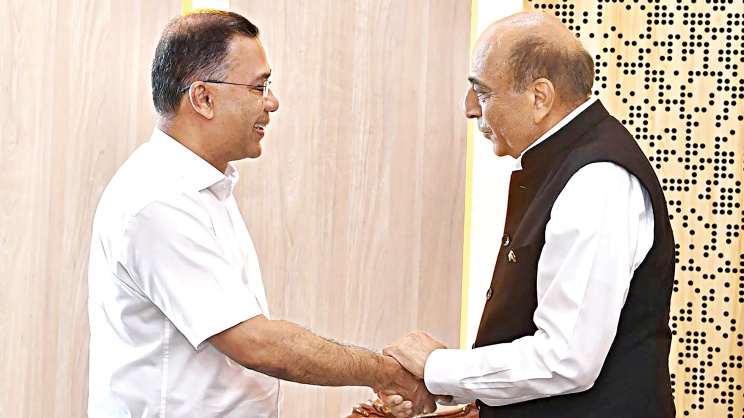
The invitation from India to Prime Minister Tarique Rahman should therefore be viewed from two perspectives. India has invited him, in its capacity as chair of BIMSTEC, to participate in the BRICS summit in Delhi. At the same time, Indian Prime Minister Narendra Modi had sent a congratulatory message when the new government was formed and invited the Bangladeshi prime minister to visit India with his family.
My sense is that India is keen to talk to Prime Minister Tarique Rahman. The Indian High Commissioner recently met him and then travelled to Delhi. Before leaving, he indicated that if the two prime ministers met, the problems between the two countries could be addressed and some results possibly achieved.
India's renewed interest is understandable. Bangladesh and India are deeply interconnected because of geography, history and mutual interdependence. What happens in one country can quickly affect the other. We have a multi-layered and multidimensional relationship that transcends the border.
At the same time, Bangladesh has changed. The July uprising transformed the aspirations of the people. Bangladeshis are now more independent-minded, more ambitious and more aspirational. The subsequent election, which was widely seen as fair and broadly participatory, brought the BNP government to power with a huge mandate. These two domestic developments have cross-border implications and affect how Bangladesh looks at its important partners, including India, China, the United States and other countries.
India naturally wants to understand the new government's perspectives and priorities. What does it think about India and China? How does it want to organize itself and govern the country domestically? How does it view the broader regional and global environment? The best person for India to engage with on these questions is the prime minister because he is the person who ultimately decides.
Any such engagement, however, should be based on Bangladesh's stated principle of Bangladesh First. The policy means that Bangladesh will not be subservient to anyone. We can be equal partners and engage with all our partners, based on protecting and promoting its national interests, on an equal basis without giving special preference to any particular country.
We want bilateral relations with India, China, the United States, the European Union, South East Asian countries and those from the Middle East. Whoever can serve our interests, we will work with them. Just as Bangladesh does not interfere in India's choices, we expect India to do the same for us.
Bangladesh already works with multiple partners. Our core national interest is economic growth and prosperity, and this is built on several pillars.
Among many sectors, Bangladesh's external exposure in agriculture, is extensive, ranging from seeds to fertilisers and insecticides. The United States, India, China and Russia are among the partners with whom Bangladesh has worked to develop the sector. China and India are major sources of imports, while Bangladesh adds value to products and exports them to the United States and the European Union. Bangladesh receives remittances from countries such as Saudi Arabia, Qatar, the United Arab Emirates, the United States and Malaysia. These are also the source of employment for large number of Bangladeshi workers. In similar vein, Bangladesh’s dependence on energy on many of these countries is also huge. This shows that Bangladesh is already connected to multiple stakeholders across the world.
The departure now is that Bangladesh says it will no longer lean excessively on one particular partner for political or domestic reasons. Instead, it will work with everyone according to its own needs and interests. We have already been working quietly with multiple stakeholders. What is changing is that we are now taking a principled position.
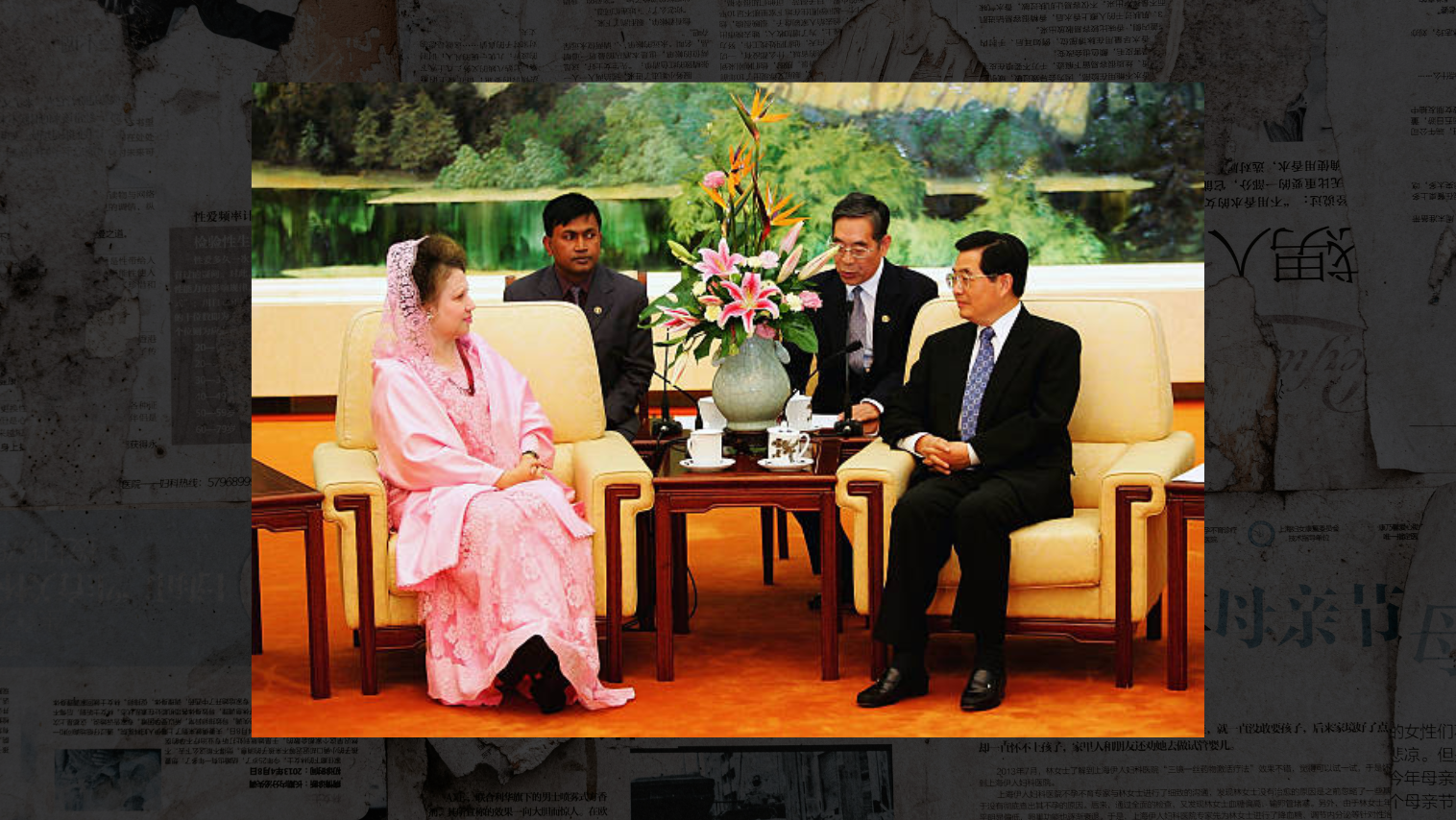
This also explains Bangladesh's growing relations with China, Pakistan, Turkey and other countries. India may have concerns about Bangladesh's relationship with Pakistan, but we can reassure India that this is a normal relationship between two states. Bangladesh does not want its territory to be used to harm a third country. Our relations with China should also not be a source of unnecessary concern. China has been involved in Bangladesh's infrastructure development for decades because Bangladesh needs that assistance and China can deliver it.
Bangladesh will continue to work with China for advancing its national interests without affecting its relationship with any other country. The same applies to the United States, which is a major partner, our largest single export destination, a major investor and home to a large Bangladeshi community that is also an important source of remittances. China is our number one source of imports, and Chinese firms have invested significantly in Bangladesh.
Turkeye, too, is becoming relevant as Bangladesh seeks to create employment and diversify its economic partnership. With two growing economies, it is believed that Bangladesh and Turkeye can work together to expand cooperation in multiple areas for mutually benefits.
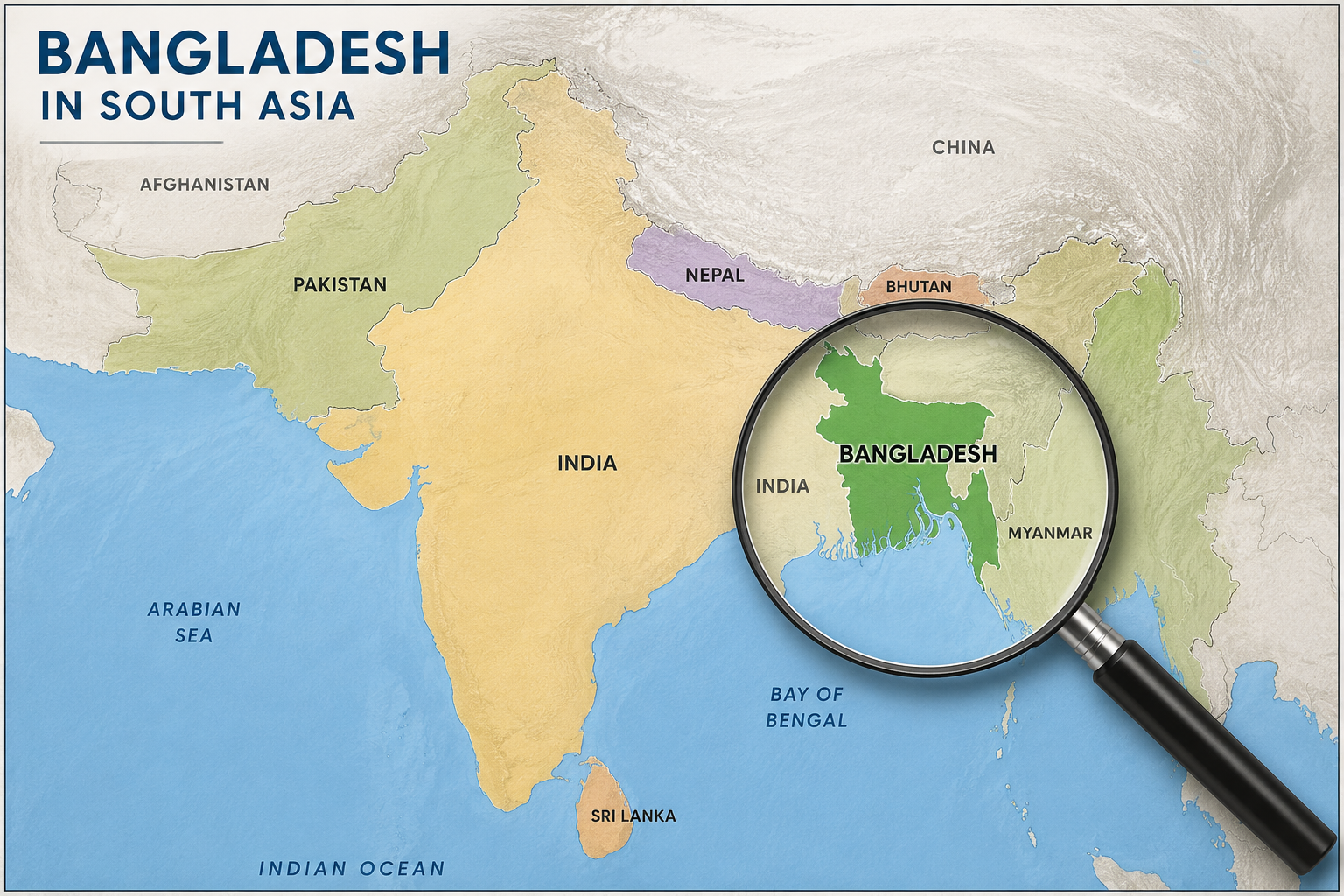
None of this means that Bangladesh has offensive intentions. Our principle is largely defensive. Bangladesh is a peaceful state without territorial ambitions. We want to improve the lives of our people and keep them safe. We want bilateral relations with India, China, the United States, the European Union, South East Asian countries and those from the Middle East. Whoever can serve our interests, we will work with them. Just as Bangladesh does not interfere in India's choices, we expect India to do the same for us.
Water management will remain one of the most important areas of engagement with India. There are 54 rivers flowing from India into Bangladesh, yet the two countries have only one water-sharing agreement, on the Ganges. The 30-year agreement signed in 1996 is coming to an end. If the agreement can be extended, or something better can be achieved, it would be beneficial both for Bangladesh and India, as it has proven during the last 30 years. A relationship of trust between the two prime ministers could help facilitate this process.
There is, however, another issue equally important to Bangladesh’s foreign policy: the level of cohesion and coordination within the country. This is not discussed enough, but it is one of Bangladesh's Achilles' heels. We talk to the outside world, but we must be prepared domestically and well-coordinated if we are to negotiate effectively with India, China, the United States or anyone else.
The principle of Bangladesh First therefore also places an obligation on the country to coordinate its actions domestically. That coordination needs to exist at the political level, the bureaucratic level and among the people, as well as across the intellectual, academic and media communities. Everyone should be on the same team.
Bringing all stakeholders together and ensuring that everyone moves in sync is particularly important when the external environment is challenging. The more difficult the outside world becomes, the more necessary it is for Bangladesh to strengthen domestic coordination and policy cohesion so that it can weather the external storm.
Ultimately, Bangladesh's foreign policy should be guided by its own interests. A more independent foreign policy does not mean choosing one side against another. It means engaging with everyone from the standpoint of Bangladesh's own interests, while treating all partners as equals.
M Humayun Kabir is president of the Bangladesh Enterprise Institute (BEI) and a former ambassador of Bangladesh to the United States.
The article was transcribed by Ystiaque Ahmed of Slow Reads.
Send your articles for Slow Reads to slowreads@thedailystar.net. Check out our submission guidelines for details.

How much higher can oil prices go?

Beyond the ‘end of history’ and the ‘clash of civilisations’ / What kind of world order is emerging?

The South Korea opportunity Bangladesh is overlooking
Geopolitical ghosts and the United Nations
BRICS is bigger, but can it deliver?
Can Tarique Rahman’s plan break the Rohingya repatriation deadlock?
Diplomacy in a turbulent world: How Bangladesh should navigate bilateral ties and regional platforms
What is the UN still good for?
Can the 81st UNGA restore hope in a world of crises?