Do we understand the children we try to teach?
Are our children like the bird inside the cage in Rabindranath Tagore's Tota Kahini?
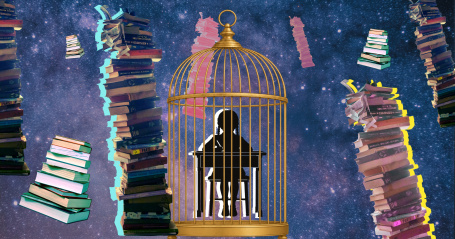
In Tota Kahini, a parrot is considered uneducated and is placed under the care of learned people. A magnificent cage is built for it. Books are brought in. Teachers are appointed. Lessons are delivered. The authorities become increasingly satisfied with the quality of the parrot's education. But somewhere along the way, nobody stops to ask a simple question: What does the parrot actually need?
The story is a satire, but its question remains remarkably relevant to education today.
Children are not empty vessels
We spend considerable time discussing curriculum, textbooks, learning outcomes, assessment, teaching methods, and educational technology. We debate what children should learn and how teachers should teach it. But perhaps there is a more fundamental question that needs to come first: Do we understand the children we are trying to teach?
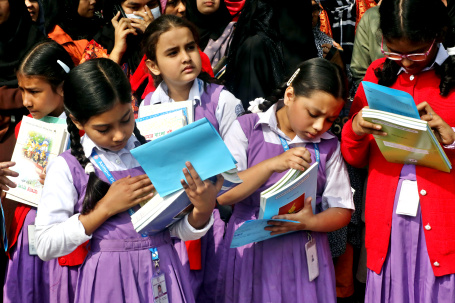
Before designing lessons and learning activities, we need to understand the learners. Children are not empty vessels waiting to be filled with information. They are developing human beings with distinctive ways of thinking, feeling, communicating, and making sense of the world. They have age-specific needs and demands. They are naturally curious and exploratory. They ask questions, investigate, imitate, play, imagine, and make mistakes. They learn through relationships and experiences. Their interests, abilities, and ways of understanding the world change as they grow.
When we understand the child, we can design learning experiences that respect the child's stage of development, needs, interests, abilities, and ways of experiencing the world.
Yet formal education can ask children to do the opposite: sit still, listen quietly, remember information, reproduce it accurately, and move from one lesson to another according to a predetermined schedule.
Recognising the nature of childhood
Children certainly need knowledge, discipline, and the ability to persevere. But we must also recognise the nature of childhood. It is not natural for young children to sit still and remain attentive for long periods in the same way adults can. Their bodies and minds are developing. They need movement, interaction, exploration, and opportunities to engage with their surroundings.
A child who cannot sit quietly for forty minutes should not immediately be considered incapable of learning. A child who asks many questions should not automatically be labelled naughty. A child who struggles with a written exercise may demonstrate remarkable understanding through conversation, drawing, building, play, or experimentation.
When we expect children to learn only in ways that are convenient for adults, we may mistake a difference in behaviour for a deficiency in learning. The behaviour we see is not always the whole child. This is why understanding children should come before designing learning activities.

Different pathways to learning
The goal is to make learning developmentally appropriate, meaningful, and connected to the ways children learn. This requires us to pay attention to children's developmental characteristics. Young children often understand concrete experiences before abstract explanations. They need to see, touch, manipulate, and experience something before they can understand it symbolically. Their attention develops gradually. Their emotional state can affect their ability to participate. Their language and social skills are still developing. Their imagination can be a powerful pathway to understanding.

As they grow, their capacity for abstract reasoning, independent inquiry, collaboration, and critical thinking develops. At the same time, children of the same age are not identical. They have different interests, experiences, strengths, and ways of expressing themselves. One child may speak confidently but struggle to write. Another may remain quiet in class but produce remarkable work independently. One may understand mathematics through numbers, while another may need objects, drawings, or real-life examples. This does not mean every child needs a separate curriculum. It means a good curriculum should provide different pathways towards the same learning goals.
A child who cannot sit quietly for forty minutes should not immediately be considered incapable of learning. A child who asks many questions should not automatically be labelled naughty.
A teacher who understands children becomes an observer as well as an instructor. Instead of asking only, “Did they complete the activity?” the teacher also asks: Why did some children engage while others did not? Which part of the activity sparked curiosity? Where did they struggle? What did their questions reveal? What did they understand even though they could not express it in the expected way?
These observations can change how learning activities are designed.
This is where Tagore's Tota Kahini offers us a lasting warning.
In the story, the machinery of education becomes increasingly elaborate. The cage is carefully constructed. Books are supplied. Instruction is organised. The system appears impressive. But the bird disappears beneath it all.
Could something similar happen in our classrooms? Could completing the syllabus become more important than nurturing curiosity? Could examination performance overshadow genuine understanding? Could maintaining classroom order become more important than allowing children to explore?
A well-designed curriculum cannot succeed if it loses sight of the learner. Curriculum is not simply a list of knowledge to be covered. It is a framework for creating meaningful opportunities for children to encounter, question, understand, and use that knowledge. That requires a shift in perspective.
Structure should support, not confine
Instead of beginning with, “What activity shall we give the children?” we should begin with, “Who are these children, and how do they learn?” Instead of asking, “How can we make them complete this lesson?” we should ask, “What experience could help them discover this idea?” Instead of seeing children's questions, movement, imagination, and differences as obstacles to teaching, we might see them as clues to better teaching. Education does require structure. Children need guidance, boundaries, knowledge, and carefully sequenced learning experiences. But structure should support learning, not confine it.
The cage in Tagore's Tota Kahini was not crude or carelessly made. It was carefully designed and filled with everything the educators believed the bird needed. Yet, in their effort to educate the bird, they failed to understand the bird itself. Perhaps that is the deeper warning hidden in Tagore's story.
Understanding precedes teaching
We may continue to redesign curricula, write new textbooks, introduce new technologies, and develop new assessment systems. But before doing all of that, we need to pause and look more closely at the child. Curriculum and learning design should begin not with the question, “What should we teach?” but with a more fundamental question: “Who is the child we are teaching?”
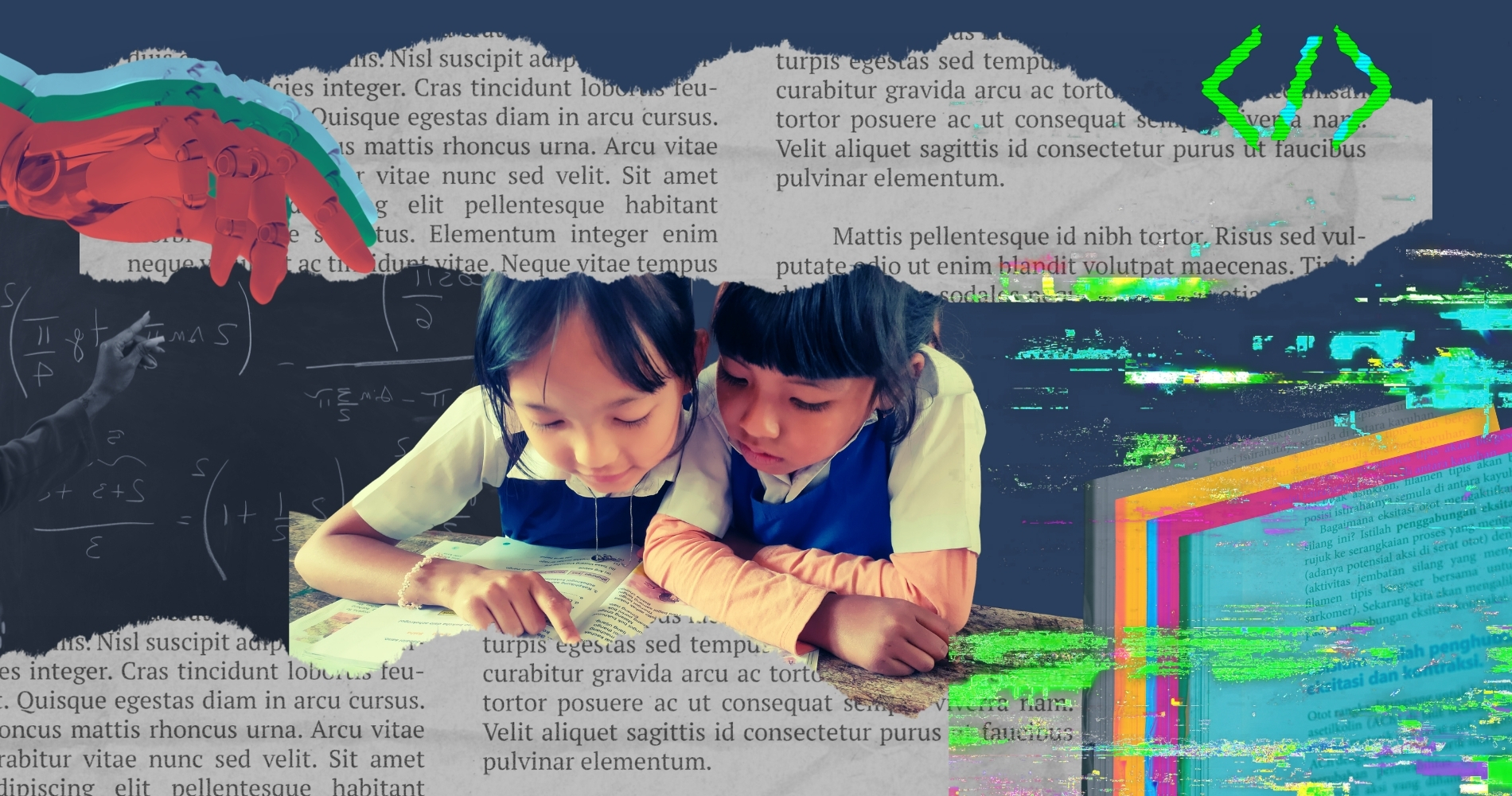
When we understand the child, we can design learning experiences that respect the child's stage of development, needs, interests, abilities, and ways of experiencing the world. We can create classrooms where movement is not automatically mistaken for indiscipline, questions are not dismissed as distractions, play is not seen as wasted time, and differences are not treated as deficiencies. This is because education is not simply about putting knowledge into children; it is about creating a learning environment in which they can grow and learn in ways that are appropriate to their age, abilities, interests, and needs. Therefore, the first step in teaching a child is not teaching at all. It is understanding the child.
Dr Somnath Saha is an Assistant Professor at BRAC IED, BRAC University. He can be reached at somnath@bracu.ac.bd.
Send your articles for Slow Reads to slowreads@thedailystar.net. Check out our submission guidelines for details.

AI is here. Can Bangladesh’s education system adapt?

Why are we in such a hurry to live?

Why I chose teaching over a corporate career

The moral hierarchy of blood

The curious case of Bangladeshi ‘tension’
What can a teacher give that AI cannot?

What phuchka and jhalmuri can teach us about the science of taste

Remembering Yayoi Kusama: My encounters with the master of infinity

Dress and morality : The politics of what women wear