


Australia’s old guard remains their biggest strength and concern
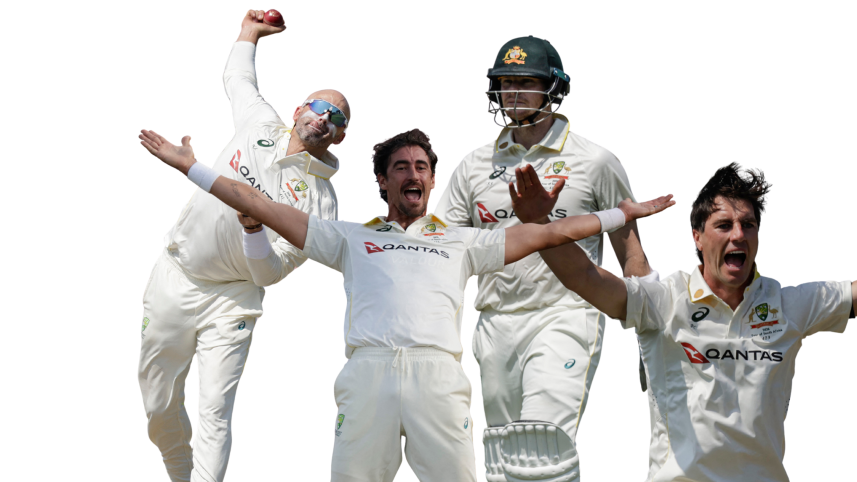
Australia’s veteran Test side have spent much of the past year being questioned over their age, depth and ability to withstand a demanding schedule. On the third day of the first Test against South Africa in Durban, however, their most experienced players offered a reminder that the problem is not necessarily how old they are, but how often Australia can keep them on the field.
Nearly nine years after Mitchell Starc, Josh Hazlewood, Pat Cummins and Nathan Lyon first appeared together as Australia’s bowling quartet, the four once again demonstrated how formidable they can be when fit and firing. Their collective effort helped dismiss South Africa for 284, giving Australia a 139-run lead with two days remaining and putting them in a strong position to press for victory.

It was not simply a case of superior fast bowling overwhelming an opponent playing its first Test since November. Australia’s attack read the conditions, adjusted its lengths and patiently squeezed the life out of a promising South African start. The performance was a reminder that the experience and understanding within this group remain difficult to replicate, and an illustration of why Australia’s reliance on them is both an asset and a vulnerability.
South Africa were 82-1 in reply to Australia’s first-innings 390, with Aiden Markram and David Bedingham scoring freely on a relatively good surface. The hosts were well placed to build a substantial response, but Australia recognised that continued aggression with the new ball was not necessarily the answer.
Cummins turned to Lyon and the fast bowlers began pitching shorter, denying the batters easy opportunities to drive. Having bowled 34 per cent of their deliveries full in the first 20 overs, Starc, Hazlewood and Cummins sent down only 19 deliveries pitched fuller than six metres between the 20th and 60th overs.
The shift brought rewards. Markram and Bedingham edged forced back-foot drives to the slips, while the middle order found it increasingly difficult to score without taking risks. Cummins finished with three wickets, while Starc, Hazlewood and Lyon claimed two apiece.
Australia’s attack has taken 607 wickets in Tests in which all four have played together, far ahead of the 415 collected by England’s James Anderson, Stuart Broad, Ben Stokes and Moeen Ali across their 31 Tests as a group. The numbers underline the longevity of a combination built on complementary skills rather than individual brilliance alone.
Lyon’s control allows Australia to maintain pressure at one end, while the three quicks can rotate through different spells without the attack losing its edge. That balance was evident in Durban, where the captain’s change of approach proved just as important as the quality of the bowling itself.
Steve Smith, meanwhile, supplied a reminder that Australia’s experienced core extends beyond the attack. His three catches included two outstanding efforts off Lyon, both requiring anticipation as much as athleticism. The second, a one-handed grab to dismiss Kyle Verreynne, was particularly spectacular. Smith’s tally of 223 Test catches moved him three clear of Joe Root among non-wicketkeepers, another record built on an instinctive understanding of the game.
Yet Australia’s dependence on these players is also what makes their situation precarious. Starc is 37 and Lyon 39. Their continued effectiveness challenges the assumption that age alone should determine a player’s value, but it cannot remove the physical demands of a packed Test schedule.
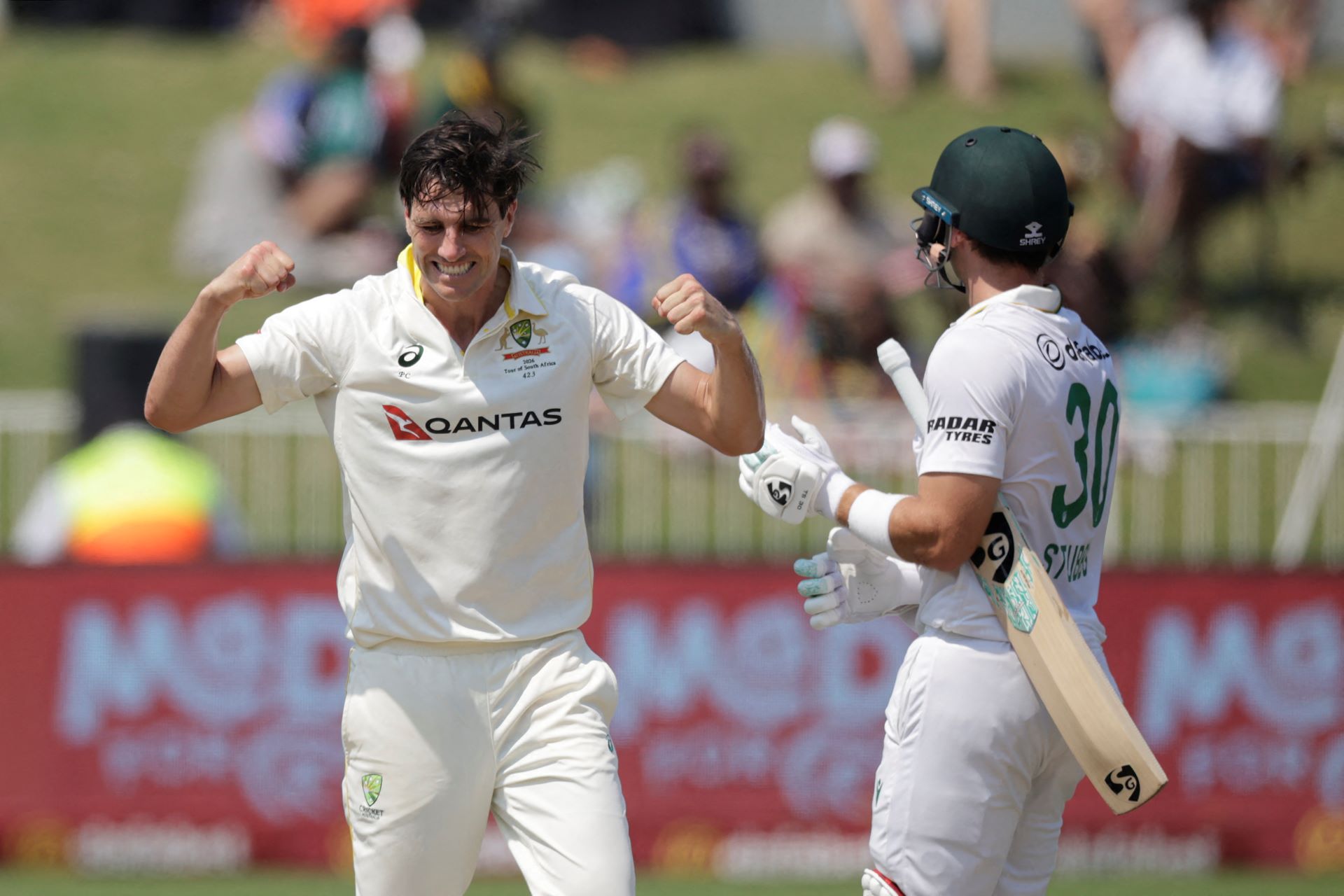
Australia’s recent difficulties have been less about the quality of their senior players when available than their capacity to keep them fit. Hazlewood missed all five Tests of last winter’s Ashes series, while Cummins sat out four. Such absences can turn a formidable attack into a far less imposing proposition, particularly when several members of the same core are unavailable at once.
The distinction matters as Australia approach a demanding run of Tests against New Zealand, India and England. Their veterans may still have the skill and experience to compete with the best, but Australia need to manage their workload without allowing their bowling resources to become excessively dependent on a handful of players. The challenge is not simply finding replacements. It is ensuring that those replacements can sustain the standards established by a quartet that has operated together for so long.
There are concerns elsewhere, too. Australia’s first-innings total was built largely around Matt Renshaw’s 190, an innings of patience and discipline that stood in stark contrast to South Africa’s collapse. Renshaw’s contribution was invaluable, but it also highlighted the batting line-up’s continued need for someone to anchor an innings when the top order struggles. The shock defeats against West Indies and Bangladesh have already shown that Australia are not immune to opponents exploiting their vulnerabilities.
That is why one dominant bowling performance cannot settle the wider debate about this side. Australia remain capable of controlling a Test through the experience, discipline and tactical intelligence of their senior players. Their challenge is to make that level of performance sustainable across an entire season, rather than depend on the same names being fit at precisely the right time.
With Australia at 33 without loss in their second innings, the immediate task is to turn their advantage into a position from which they can dictate the final two days. The longer-term question is harder to answer. Their old guard has shown no obvious loss of its ability to win contests, but Australia’s prospects against the strongest sides will depend on how effectively they manage the gap between the quality of their veterans and the uncertainty of their availability.
For now, experience remains one of Australia’s greatest advantages. Ensuring it does not become a point of dependence may prove just as important as the performance of the quartet itself.
 For all latest news, follow The Daily Star's Google News channel.
Comments