


Bangladesh must start building athletes before it finds them
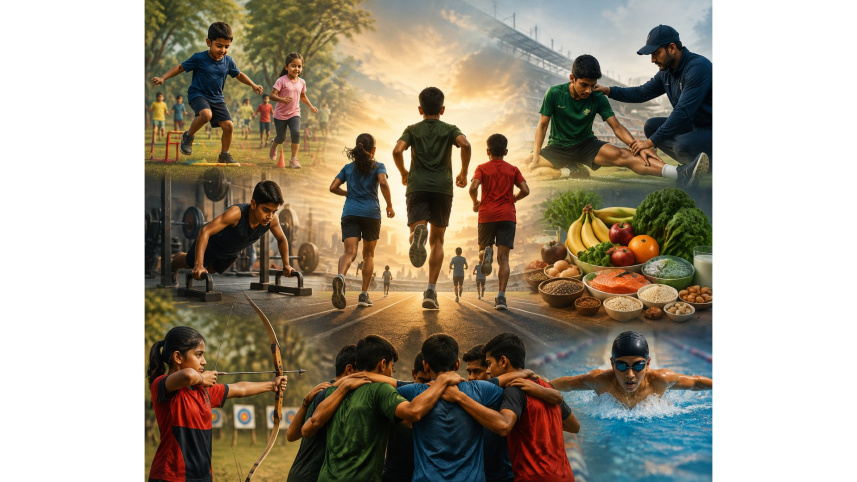
Bangladesh has made commendable progress in several sporting disciplines over the past few decades. Cricket has become a national passion, while athletes in football, table tennis, archery, shooting, athletics and other sports have occasionally shown their ability to compete internationally.
Yet these successes remain sporadic rather than consistent. The question is why Bangladesh, despite having a large and youthful population, has struggled to become a regular producer of world-class athletes.

The answer lies not in a shortage of talent, but in how talent is identified, developed and nurtured. Our approach remains reactive rather than proactive. While successful sporting nations invest in developing children's physical abilities from an early age, we often search for talent only after athletes enter competitive sport.
Early development does not mean forcing children into specialised training at a very young age. It means creating an environment where children develop fundamental movement skills -- balance, coordination, agility, flexibility, spatial awareness and confidence -- during their formative years.
Children between three and six have tremendous potential for motor learning. These years should focus on physical and mental development rather than immediate sporting success. Neglecting this foundation limits their ability to reach their full athletic potential later in life.
Parents have a crucial role. They influence children's habits, discipline, nutrition, sleep and physical activity, yet many still view sports primarily as recreation rather than an essential part of holistic development.
Bangladesh needs a national effort involving parents, schools, coaches and fitness professionals to promote age-appropriate physical development. Schools should incorporate structured physical education, while coaches should follow modern standards rather than relying only on personal experience or outdated methods.
One major misconception concerns strength training for children. Many believe young athletes should avoid resistance training until adolescence. However, properly supervised balance exercises, body-weight training, gymnastics-based movements and age-appropriate resistance exercises are safe and beneficial.
The emphasis should always be on correct technique, gradual progression and safety rather than lifting heavy weights. Such training improves posture, coordination, bone health, muscular endurance and injury prevention, creating a stronger foundation for future performance.
Nutrition is another area requiring greater attention. Athletic performance begins long before an athlete enters the field of play. Proper nutrition during childhood influences growth, recovery, immunity and cognitive development.
Parents, coaches and athletes need better understanding of basic nutrition, including proteins, carbohydrates, healthy fats, vitamins and minerals. Without proper nutrition, even the best training programmes cannot produce elite performers.
Bangladesh must also recognise that fitness is the foundation of every sport. Whether it is football, cricket, table tennis, swimming, athletics or martial arts, excellence begins with physical preparation.
Speed, strength, endurance, flexibility, coordination and agility form the platform on which sport-specific skills are built. Too often, young athletes focus heavily on technical skills while neglecting physical conditioning, limiting performance and increasing injury risks.
Every sports organisation should therefore develop long-term athlete development programmes where fitness remains a priority and technical specialisation progresses gradually alongside it.
Equally important is building a culture of discipline and professionalism. Sporting excellence requires years of consistent effort. Athletes must learn punctuality, commitment, teamwork, accountability and respect for training structures from an early age.
This does not mean discouraging independent thinking or constructive feedback. Successful sporting environments require mutual respect, responsibility and a shared commitment to excellence.
Bangladesh must also develop a more informed understanding of sports supplementation. Modern elite sport uses evidence-based nutritional support to improve recovery and adaptation, which should not be confused with doping.
Supplements such as protein, creatine monohydrate, electrolytes, omega-3 fatty acids and vitamin D can complement a balanced diet when used appropriately under professional guidance. Athletes, parents, coaches and administrators must understand the difference between permitted supplementation and prohibited performance-enhancing substances.
Bangladesh possesses enormous human potential. What we lack is a scientifically planned system that identifies talent early, educates parents, empowers coaches, modernises training methods and places fitness at the centre of athlete development.
Countries that consistently produce Olympic and world champions do not depend on chance. They invest patiently in long-term athlete development, guided by science, discipline and sustained commitment.
 For all latest news, follow The Daily Star's Google News channel.
 If Bangladesh continues to rely on late talent identification and fragmented development systems, we will remain behind nations that began their journey much earlier.
As the saying goes, genius is five percent inspiration and ninety-five percent perspiration. Inspiration creates dreams and reveals potential. But it is the remaining ninety-five percent -- built through scientific planning, disciplined training, proper nutrition, informed support and relentless hard work -- that transforms potential into international sporting excellence.
The author is a former general secretary of the Bangladesh Table Tennis Federation (BTTF).
Comments