


Can Argentina keep fuelling themselves on emotion?
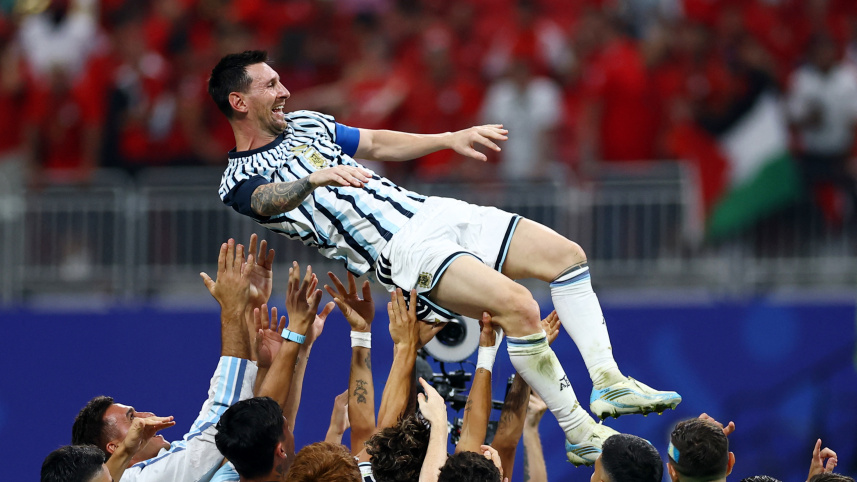
Argentina and Lionel Messi face Murat Yakin's Switzerland in what promises to be a sterner test for the defending champions than any they have encountered so far in the tournament.
Switzerland, ranked 14th in the world, are the highest-ranked side La Albiceleste have faced in North America. Against the backdrop of a seemingly favourable tie, Argentina's own inconsistencies have resurfaced just as a place in the semifinals beckons.

Argentina head into the quarterfinal in Kansas City with a fully fit squad, but their last two matches against Cape Verde and Egypt have exposed the competitiveness of the expanded 48-team World Cup. The defending champions remain unbeaten in 11 World Cup matches since their shock defeat to Saudi Arabia in Qatar in 2022, yet they increasingly appear to be drawing as much on emotion as on tactical control.
Lionel Scaloni was in tears after the victory over Egypt. Messi, too, has looked more human than ever, not only through missed penalties but also in his emotional outbursts. Cape Verde pushed Argentina to the brink in a gruelling 120-minute battle, and if that physical and mental toll was not enough, Egypt further exposed defensive frailties. Argentina were repeatedly caught in transition while chasing the game, and against a Switzerland side that have never beaten them, Scaloni will again be wary of counter-attacks.
But Argentina also have Messi.
The captain is doing the most by seemingly doing the least. He spends long periods walking, observing and conserving energy before accelerating when the moment demands it. For Argentina's third goal against Egypt, he was already pointing to where the pass should be played before the counter-attack unfolded. He dictates, he decides.
If Messi is the compass keeping Argentina on course, there is still a long road ahead. As the tournament progresses, he may have to shoulder even greater responsibility. But Argentina must manage not only his minutes, but also the immense workload undertaken by those around him.
In attack, Argentina have largely managed without relying on natural wingers. Switzerland, however, are likely to line up in a 4-2-3-1 system that makes effective use of wide areas. Scaloni has repeatedly said his side have learned to manage matches through chaos. After two frantic knockout victories, that assessment feels remarkably apt.
"The emotions you get from a football match that we Argentinians get are unmatched. It's a team that regardless of what's happening, keeps pushing forward, trying to play their own game. In the end, this is football. After tactics, strategy… they are important of course, I don't want to say they aren't important. But if you don't have what we had today, not just today, but other times as well, we would have been eliminated," Scaloni said after the Egypt match.
His words revealed the emotional core beneath Argentina's tactical identity.
That was also true in Qatar four years ago. Against the Netherlands, Argentina survived on sheer drive, with the normally reserved Messi confronting Dutch coach Louis van Gaal in one of the defining moments of that tournament.
In the final against France, they mesmerised with intricate football for 70 minutes before Kylian Mbappe threatened to turn the match on its head. Argentina dug deep, refusing to let their dream slip away despite the emotional weight of the occasion.
There has always been a deeply human side to this Argentina team, one that exists beyond systems and tactics. The question now is whether heart alone will continue to be enough as the challenges become even greater.
 For all latest news, follow The Daily Star's Google News channel.
Comments