


In the valley of hope

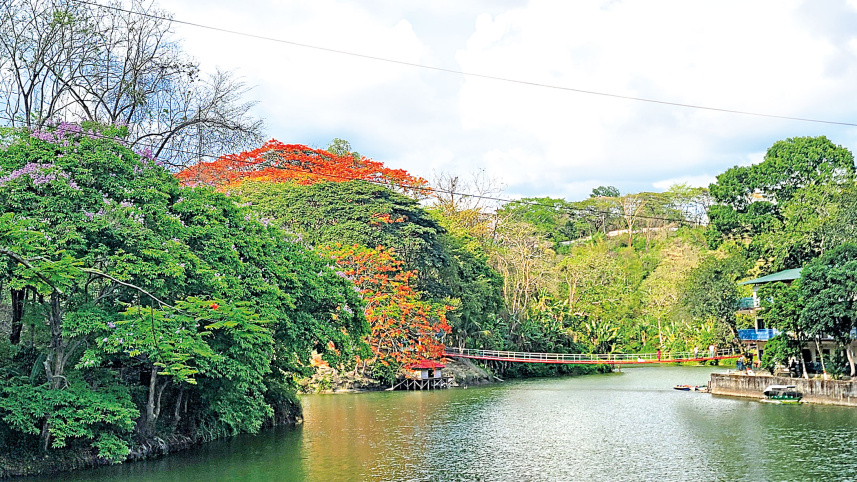
Did you know cashew nuts are cultivated in Bandarban? I had no idea either. When I looked into it, I discovered that cashew cultivation in the hills began as early as the 1960s. However, over the past decade, production has increased manifold. The hilly regions of Bangladesh, especially Bandarban, Khagrachhari, and Rangamati, have soil and weather conditions highly suitable for cashew cultivation.
During an informal gathering, while sharing travel stories with Farhana Alam of the International Labour Organization, the topic of Bangladesh’s hill-grown cashews came up.

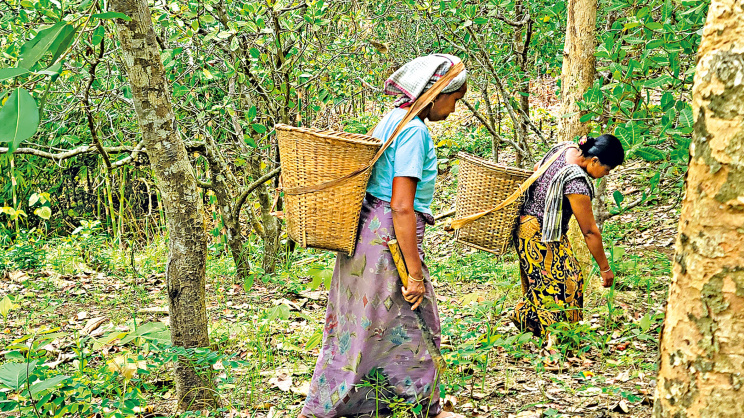
From her, I learned that the harvesting season begins in the first and second weeks of May. I immediately started planning the trip. She helped guide the way, because there are still very limited opportunities for tourists to visit cashew orchards or interact directly with the growers.
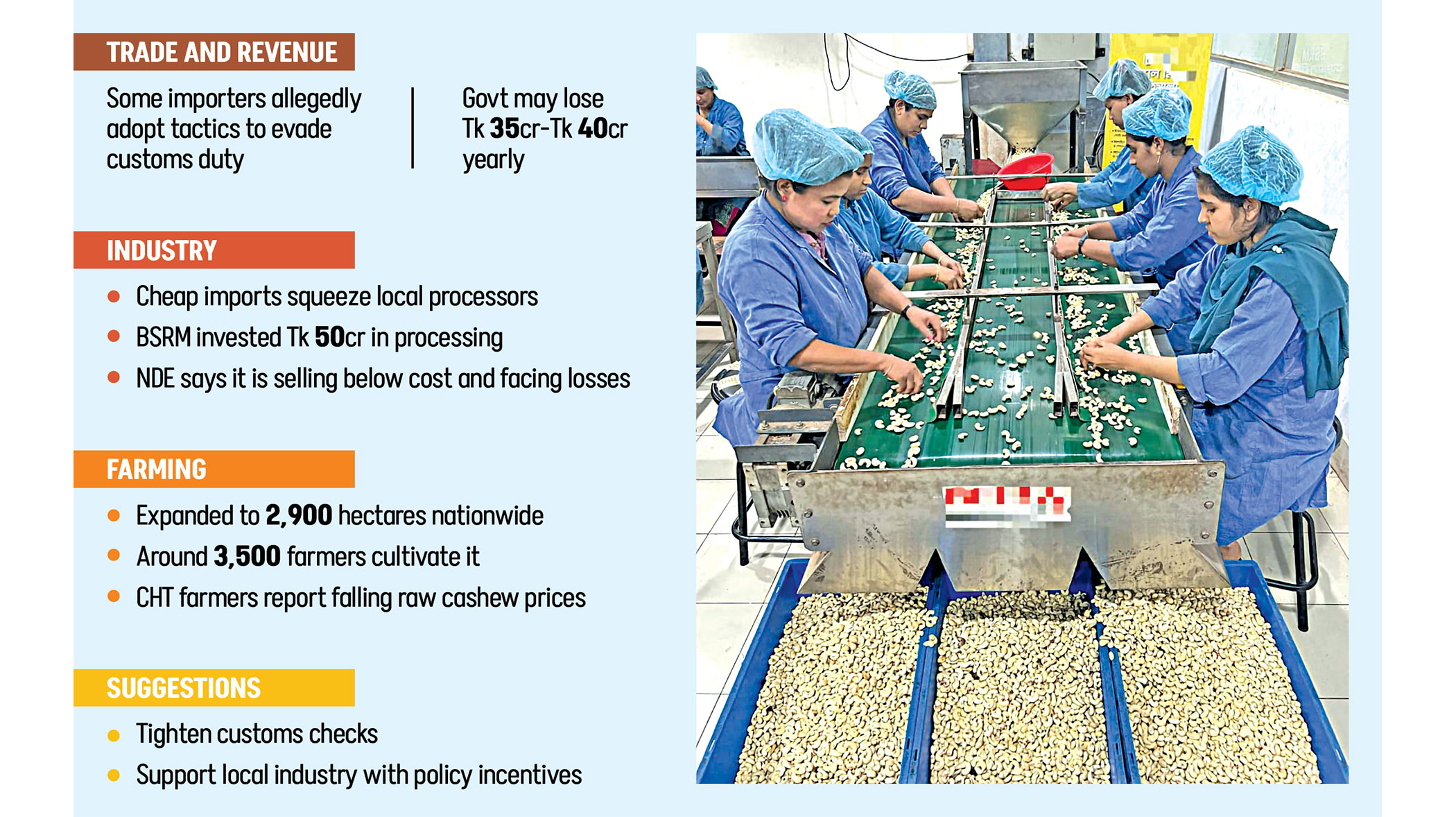
On May 9, I finally set off for Bandarban to explore the orchards firsthand and speak with the farmers. I chose to stay at the Bandarban Parjatan Motel, near the main town. Cashew cultivation takes place in almost every upazila of Bandarban, but I chose Rowangchhari upazila.
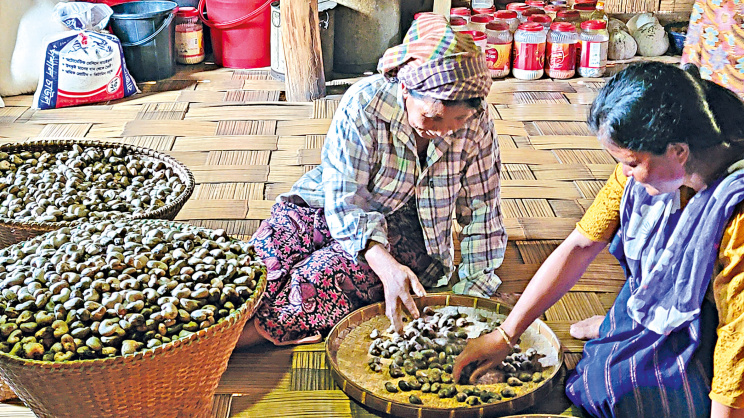
Once-barren hill lands in Bandarban are now transforming into landscapes of new possibilities. Men and women of the hills are embracing a new dream through cashew cultivation. Amid hardships, they have discovered a path toward self-reliance. From planting the seeds to harvesting the fruit, every step carries stories of labour, hope, and transformation.
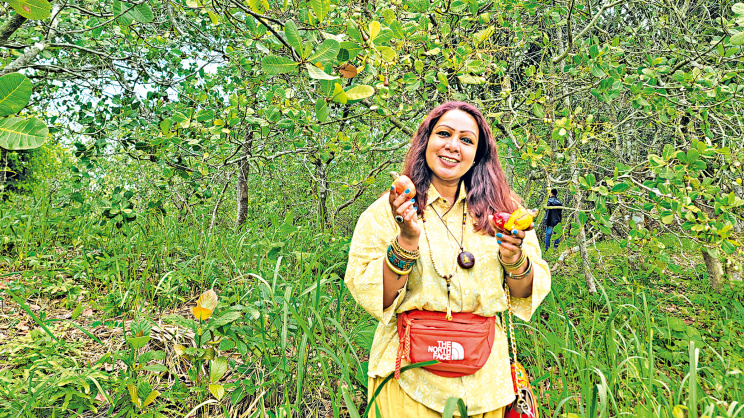
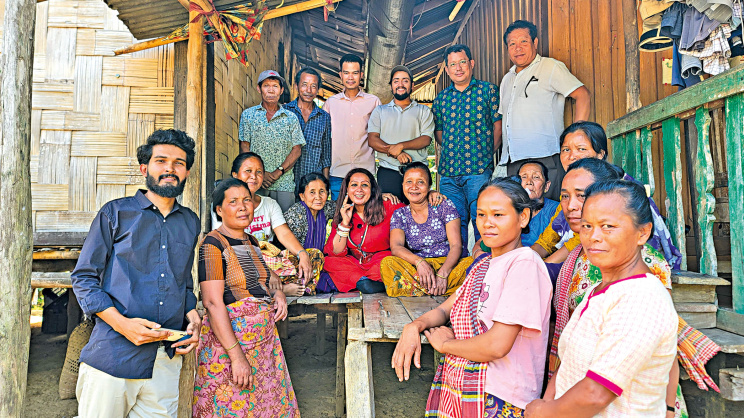
This journey of nature, hard work, and possibility is not merely the story of an agricultural initiative. Cashew cultivation across the hills is becoming a symbol of economic freedom, women’s empowerment, and a sustainable future.
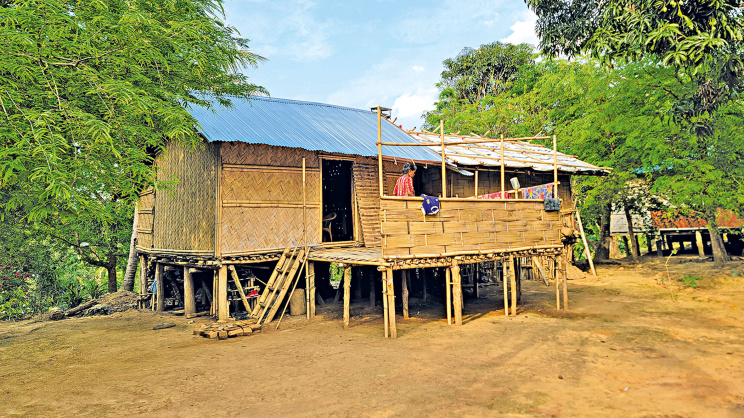
Summer in Bandarban is a riot of colours. As we headed toward Rowangchhari from the town, the roadside was lined with vibrant flowers and small markets overflowing with juicy seasonal fruits. Every bend in the roads of Bandarban seems to hold a story, making it difficult to decide what to admire first.
Rowangchhari is only twenty-two kilometres from Bandarban town, yet on winding hill roads, that distance feels like another world away. Gradually, dense forests of sal and teak surrounded us. The air carried the scent of soil, and from somewhere deep in the forest came the occasional call of birds.
By the time we reached Rowangchhari upazila headquarters, it was around 10 in the morning.
A tiny marketplace, a few scattered shops, and clusters of homes nestled among the hills welcomed us. The land of the Marma, Tripura, and Bawm communities radiated a quiet sense of peace.
Our destination was the cashew orchard in Khamtang Para of Rowangchhari. After crossing the upazila headquarters, we encountered several army checkpoints on the way to the village. Some time was spent there explaining the purpose of our visit and completing security checks. Tahzingdong NGO of Bandarban, an organisation that works closely with cashew farmers by providing training on orchard maintenance, harvesting, and soil preparation, helped me get through the process.
Cashew nuts are highly nutritious and delicious, and the demand for them is rapidly growing across the country. Around 50 families of the Khyang community live in Khamtang Para. According to Putuli Khyang, president of the local Cashew Development Committee, most of the men and women in the village were involved in cashew farming.
The village was remarkably clean. Each house, built on raised bamboo and wooden platforms, looked picture-perfect. Almost every courtyard had giant tamarind trees and colourful flowering plants.
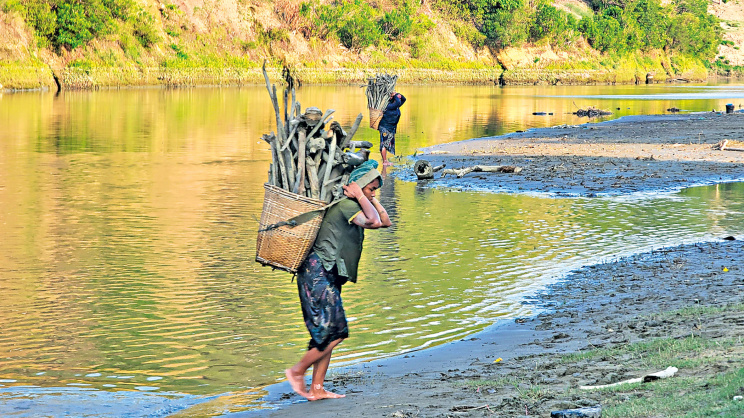
For those of us living in the capital, hill life and its diverse cultures often seem romantic and fascinating. But the reality is different. Life here is intensely challenging. The people must arrange almost everything for survival themselves -- from drinking water and firewood to clothing.
After walking for nearly half an hour from the village, we entered the orchard. At first, I could hardly recognise the trees. Medium-sized trees stood in rows along the slopes of the hills. Their dark green glossy leaves looked as though they were polished daily.
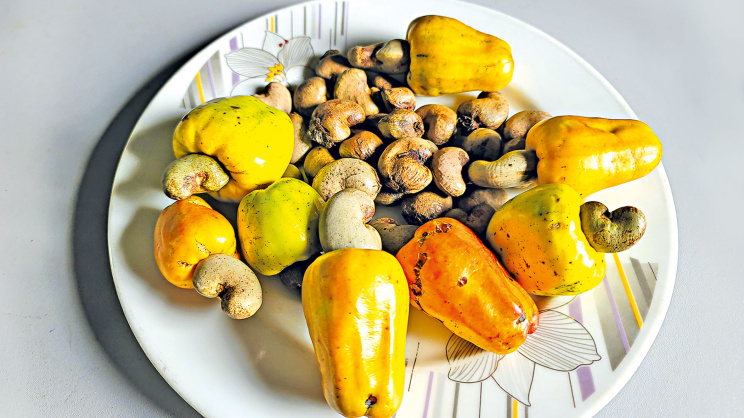
But what truly caught my attention were the fruits. Cashew apples -- glowing in shades of red and yellow, pear-shaped and vibrant -- hung beneath the trees, with the familiar curved cashew shell dangling underneath. Clusters of these strange yet beautiful fruits decorated the orchard, as though the hills themselves were dressed for a festival.
Bandarban, in southeastern Bangladesh, with its reddish loamy highland soils and annual rainfall exceeding 2,500 millimetres, is naturally suited for cashew cultivation. Its hills stretch endlessly in varying shades of green.
Many fruits had already fallen to the ground. I picked up a few in my hands, my very first close encounter with cashews. As I walked deeper into the orchard, I noticed fruits in different colours: red, yellow, and orange. One fruit on a branch was fully ripe, while another beside it had only just formed. I learned that cashew fruits do not ripen all at once; the ripening process happens gradually on each tree.
According to Putuli Khyang and her fellow farmers, the trees in this orchard were around fifteen years old. Cashew trees begin to bear fruit four years after planting. Saplings are planted during June and July, and the harvest takes place between the first and second weeks of May.
 For all latest news, follow The Daily Star's Google News channel.
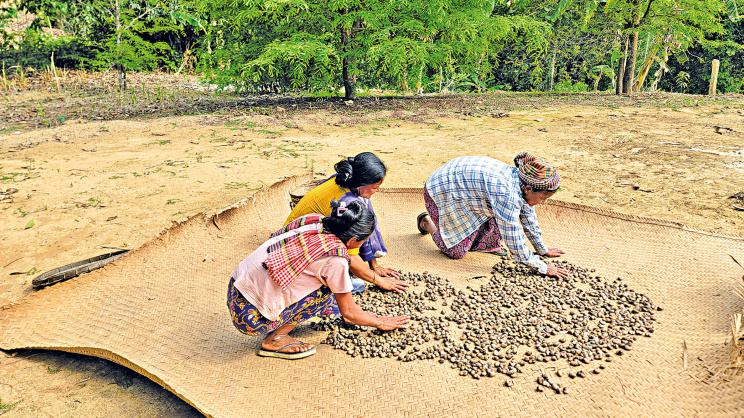
 After collection, the fruits are dried in the sun. The dried nuts are then sent to factories, where they go through several processing stages before becoming edible cashew nuts.
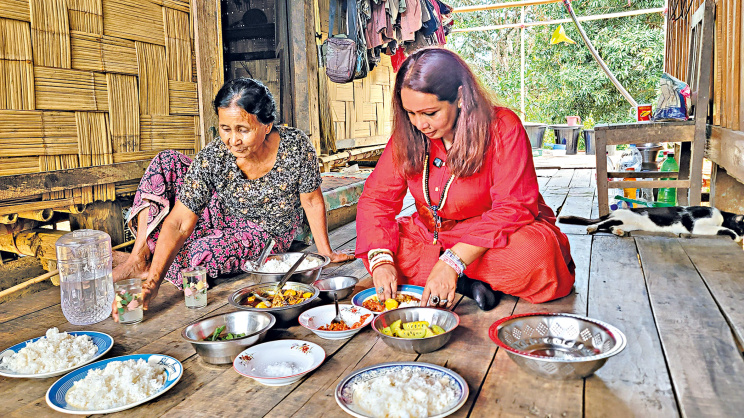
After visiting the orchard, we returned to Khamtang Para, where Putuli had arranged lunch for us. We enjoyed rice with chicken, boiled kakrol (teasel gourd) and borboti (long beans), eggs, and spicy chilli mash.
While we ate, Putuli di said more women were becoming interested in cashew farming. They needed more saplings, water supply, and pesticide-spraying equipment to care for the orchards. She also mentioned that representatives from the International Labour Organization and the High Commission of Canada in Bangladesh had visited the orchards in April.
The villagers told me that Putuli di could speak several languages. Curious, I asked her what cashew nuts are called in different local languages. In Marma, cashew is called “Badangsi”; in Tripura, “Badam-Bathai”; in Chakma, “Tajubadam” or “Tanggulu”; in Bawm, “Cashnak”; and in Chittagonian, “Tam.”
Following the instructions of the army authorities, we had to leave the area before 4:00pm. We quickly began our journey back toward Bandarban town.
As this trip was focussed solely on visiting cashew orchards, I did not explore many other places. However, after returning to town in the afternoon, I visited Meghla Lake and Prantik Lake near the entrance of Bandarban district, both close to the Parjatan Motel. A walk through these clean, well-maintained parks would surely lift anyone’s spirits.
Visitors can enjoy the surrounding hills and natural scenery, relax by the water, and experience activities like kayaking, cable car rides, and ziplining at Meghla Lake. Two hanging bridges there add even more charm.
On the way back to town, a magnificent Buddha statue caught my attention. The temple, known as the Bandarban Golden Temple, was built in 2000 in the Kanapara area along the Bandarban-Keranihat road and has quickly become a major attraction for visitors.
Before evening fell, I had tea at Tong Resort in town. Sitting atop the hill at the resort, gazing over the Sangu river and the town below, I hardly noticed when dusk descended.
The next morning, I visited “Krishan Ghar,” a cashew sales and collection centre in town. The organisation buys raw cashew fruits from farmers, processes them in factories, and delivers edible cashew nuts to consumers. I brought some locally produced cashews home for my family.
Just as the hill farmers are weaving dreams around cashew cultivation, I, too, as a traveller, dream that the cashews produced through the labour of the hill communities will soon secure a place in the international
market.
Comments