


Becoming your own barista
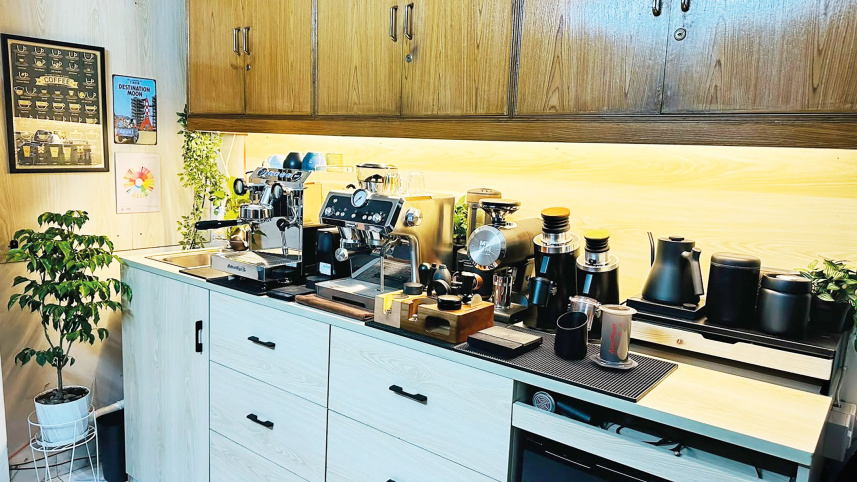
You have probably seen them on Instagram Reels: Gleaming espresso machines, neatly arranged coffee beans and perfectly measured pours into a V60. Everything looks effortless. Then you look at the equipment and wonder if becoming a home barista really needs to cost that much.
It does not.

Becoming a home barista can start with something much simpler. Finding the flavours you enjoy, choosing one brewing method, getting a few useful tools and improving one cup at a time.
The goal is not to recreate a professional cafe at home. It is to build a coffee routine that suits your taste, time and budget. Online resources, coffee communities and barista training in Dhaka can help you take that learning further.
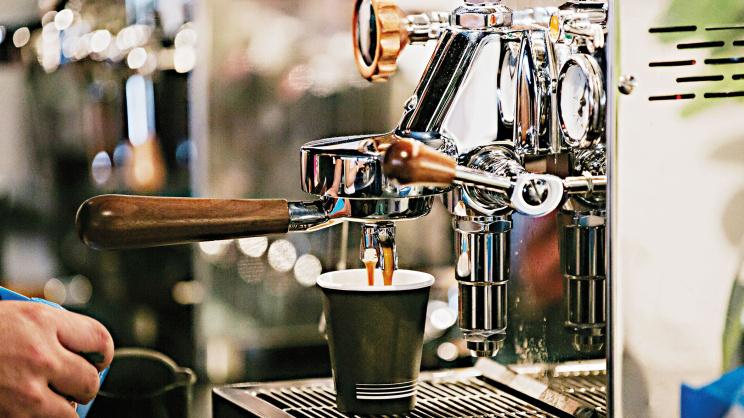
The easiest mistake is to start with equipment.
Before buying anything, first think about the coffee you actually enjoy. Someone who prefers a clean, lighter cup may need a different setup from someone who likes strong coffee with milk every morning.
Md Shahriar Bin Elahi, a home brewer and coffee content creator known online as @bdcoffeeguy, also came to home brewing gradually. His interest grew after he experienced better coffee abroad. When he returned to Bangladesh, he started with a simple drip machine before exploring different beans, flavours and brewing methods.
Much of that learning came from YouTube, Instagram, Google and conversations with other coffee enthusiasts. His experience shows why curiosity can be a better place to start than expensive equipment.
Start with the beans
Beans are the next part of the picture, but beginners do not need to learn every coffee term before buying a bag.
Arabica and Robusta are different coffee species. Neither name alone guarantees quality. The Specialty Coffee Association has noted that high-quality Canephora, commonly known as Robusta, can also have considerable flavour complexity.
For a home brewer, roast level can be a useful starting point. Light, medium and dark roasts can produce different flavour experiences, although these labels are not fully standardised across roasters.
Single-origin coffee comes from one origin, while blends combine coffees to create a particular profile.
What matters most is finding what you enjoy. You may prefer brighter and fruitier cups, or deeper, more chocolatey and roasty flavours.
Elahi makes a similar point about the flavour notes printed on coffee bags. A label may describe a coffee as fruity or chocolatey, but these words become meaningful when you brew the coffee, compare it with others and learn what your palate responds to.
Get the basics right
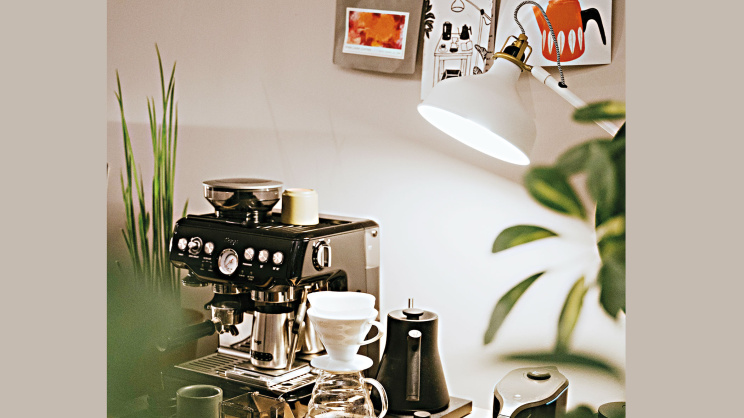
Grinding can make a simple setup much more consistent. Different brewing methods need different grind ranges, so a reliable grinder can be a more useful early purchase than several brewers.
Abdullah Al Nahiyan, senior barista instructor at Bangladesh Barista Training Academy, says a home setup can be much smaller than a cafe station while still following the same basic principles. The beans, grind, ratio and brewing technique need to work together.
An expensive machine cannot compensate for poor coffee or inconsistent preparation. If the grind is unsuitable, or the dose and amount of water change every morning, it will be difficult to produce the same cup each time.
Choose your brewer
 For all latest news, follow The Daily Star's Google News channel.
 The brewer should match both your taste and your routine.
A V60 or another pour-over brewer suits someone who enjoys more control over the process and does not mind taking a few minutes to pour carefully.
A French press is more straightforward. Coffee steeps in hot water before a plunger separates the grounds, making it a simple manual method.
An AeroPress is compact and flexible. It uses immersion and pressure to brew coffee and can support different recipes without a full espresso setup.
Then there is the moka pot. It brews strong coffee on a stovetop and can be useful for people who enjoy milk-based drinks but do not want an espresso machine.
Iffat Ara Mouri, owner of lifestyle cafe and restaurant Coffee Trap, finds the moka pot practical for a busy lifestyle because it involves little fuss and does not take much time. Nahiyan also sees it as a useful way to make concentrated coffee at home for milk-based drinks.
An espresso machine is a different commitment. It gives you more direct access to espresso and steamed-milk drinks, but it also brings more variables, accessories and expense.
Elahi cautions against assuming that it should be the first purchase. He owns many coffee tools but regularly uses only a few. His experience reinforces the idea that consistency matters more than the size of the collection.
A sensible starter setup can stay small. One brewer, a reliable grinder and a kettle may be enough.
A scale becomes useful when you want to reproduce a cup instead of guessing quantities. If you enjoy milk drinks, you can later add a pitcher or simple frothing tool. There is no need to buy everything at once.
Learn through repetition
Ratios can help you make coffee more consistently. Nahiyan suggests that home brewers can experiment around a coffee-to-water ratio of roughly 1:15 to 1:20, depending on the method and preferred strength. It is a starting point, not a universal rule.
The more useful habit is to change one variable at a time.
If a cup tastes weak or harsh and you change the beans, grind, water and brewing time together, you will not know which change affected the result.
This is where tasting becomes part of the process. Brew the same coffee twice with one small change. Compare the cups and note what happened. Repetition can turn an occasional lucky brew into something you can make again.
Keep learning
Learning does not have to happen alone. Elahi says online videos, Google, coffee groups and experimentation can take a hobbyist a long way.
Formal training becomes more useful when someone wants structured feedback or professional skills. Nahiyan points to hands-on practice as an advantage, particularly for understanding extraction, milk texture, ratios and mistakes that can be difficult to diagnose through a screen.
Dhaka now has several places offering structured barista training. BBTA currently lists foundation through advanced professional courses. Dhaka Specialty Coffee Academy offers practical barista programmes. North End Coffee Academy runs basic and intermediate barista training as well as latte-art sessions.
For a casual home brewer, however, a professional course is not a prerequisite. The decision depends on whether coffee is a hobby, a serious interest or the beginning of a career.
The most useful lessons still happen at the cup.
Try another roast. Change the grind slightly. Brew the same bean in two different ways. Notice what happens when milk is added to a stronger brew.
Over time, the equipment becomes less mysterious because each tool has a purpose rather than simply taking up space on the counter. You begin to understand not only how to make coffee, but why one cup suits you more than another.
A home barista is not defined by an expensive espresso machine or a shelf full of coffee equipment. It is someone who understands the coffee they enjoy well enough to make it repeatedly and confidently, while remaining curious enough to keep experimenting with the next cup.
Comments