


Hilsa prices rise Tk 250-300 per kg ahead of 22-day fishing ban

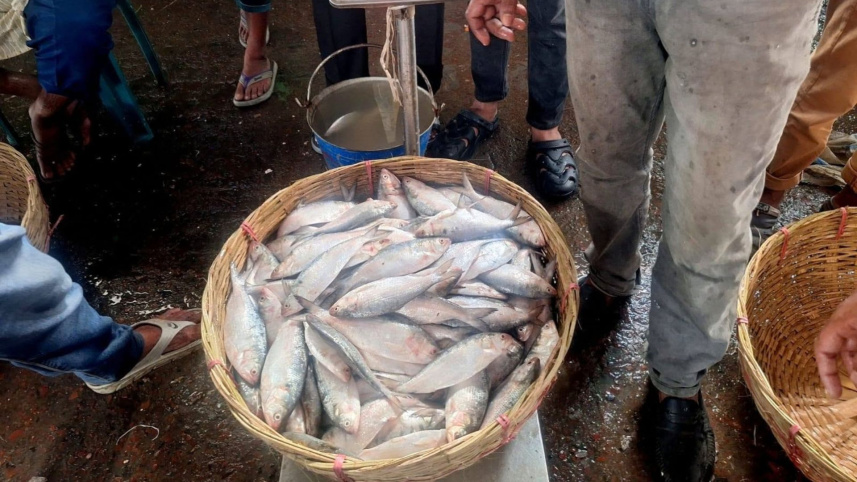
With a 22-day ban on hilsa fishing set to begin on October 8, supplies of Bangladesh’s national fish have declined compared with the same period last year, pushing prices up by Tk 250-300 per kg over the past week.
The Barishal Divisional Fisheries Office said it is currently conducting awareness campaigns ahead of the fishing ban. However, the office said a shortage of fisheries officers in hilsa sanctuaries and a lack of funds for enforcement operations could pose challenges. Officials hope the problems will be resolved within the next one or two days.

According to the divisional fisheries office, 49,790 tonnes of hilsa were produced in the Barishal division in September 2025. This year, 41,134 tonnes were produced in five districts of the division, excluding Pirojpur.
The production was also lower in August. Last year, 14,964 tonnes of hilsa were produced in August, while this year’s production fell to 13,718 tonnes.
Although hilsa production in August and September was higher than in June and July this year, it remained below the levels recorded during the same period last year, fisheries officials said.
Traders attributed the recent price hike to the reduced supply.
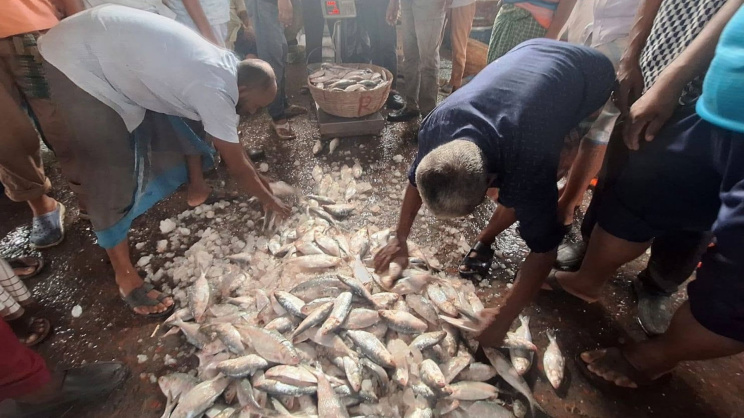
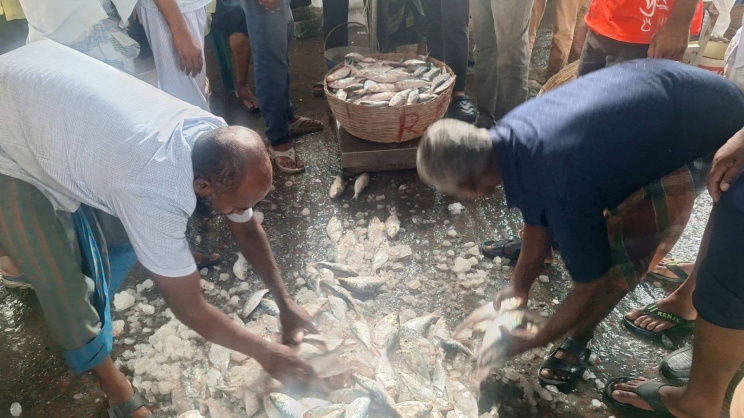
Jahirul Islam Rana, a fish trader at the wholesale hilsa market on Barishal’s Port Road, said around 7,464 kg of hilsa arrived at the market today, lower than the supply seven days ago.
“A one kg hilsa is selling for Tk 2,760 at wholesale markets, while fish weighing 700-900 grams are selling for Tk 2,560 per kg, those weighing 500-600 grams for Tk 2,130 per kg, and 400 gram fish for Tk 1,560 per kg,” he said.
According to him, prices have increased by Tk 250-300 per kg over the past week.
Sanjib Swanyamat, Pirojpur district fisheries officer, said both supply and prices had changed ahead of the ban.
“The price of hilsa is currently high and supply has declined somewhat. We have held meetings with fishermen in fishing villages and at Bangladesh Fisheries Development Corporation (BFDC) facilities and distributed leaflets. We hope fishermen will comply with the ban,” he said.
Mohammad Shakil Ahmed, manager of BFDC at Alipur in Patuakhali, said 33,934 tonnes of fish, including hilsa, were caught from the sea from July to October during the fishing season in 2025. This year, the figure has fallen to 24,079 tonnes.
According to BFDC Alipur data, hilsa caught at sea is slightly cheaper than those caught in rivers. Fish weighing around one kg are selling at Tk 1 lakh per maund (37.32 kg), while 700-900 gram fish are selling for Tk 70,000-80,000 per maund.
The 22-day fishing ban will be enforced in major rivers across Bangladesh and will cover 38 upazilas.
The Barishal divisional fisheries office said seven upazilas in three districts of the division currently have no fisheries officers, despite the presence of hilsa sanctuaries there.
The affected areas include Hizla and Mehendiganj in Barishal, where major hilsa sanctuaries are located; Rangabali, Dashmina and Dumki in Patuakhali; and Lalmohan and Monpura in Bhola.
Besides the shortage of manpower, no funds have yet been allocated for this year’s enforcement operations, fisheries officials said.
They fear the shortage of officers and funds could make enforcement of the fishing ban more challenging.
Meanwhile, more than 500,000 fishermen in the Barishal division are frustrated as they have failed to catch the expected quantity of hilsa even at the end of the season.
Israil Pandit, president of the Barishal Divisional Small Fishermen’s Association, said many fishermen had taken loans hoping to repay them by selling hilsa during the final days of the season.
 For all latest news, follow The Daily Star's Google News channel.
 “But this year they have not found the expected amount of hilsa, so their debts will increase further. The government should consider the situation and allocate 100 kg of rice to each fishing family during the ban,” he said.
The divisional fisheries office said the government has allocated 16,157 tonnes of rice for 646,290 fishermen nationwide, with each receiving 25 kg during the ban.
In the Barishal division, 8,962 tonnes of rice have been allocated for 358,516 fishermen, with each fisherman set to receive 25 kg.
Comments