


Opinion / El Niño and its effects on Bangladesh’s agriculture
23 August 2026
•
Business


A quiet warning from the Barind
22 January 2026

The Singapore story
21 January 2026

The future of retail banking
1 November 2025
•
Opinion

Simpler regulations needed to ignite startups
21 October 2025
•
Opinion
Analysis / Are we doing enough for the urban poor?
5 October 2025
•
Business

Opinion / Why is gold hitting record highs in Bangladesh?
22 September 2025
•
Business

Be bold or be boring
7 August 2025
•
Opinion

BB should be transparent about its consumer credit rating licence
22 May 2025
•
Business

Sizzling Cities: Planning for urban heat resilience in South Asia
South Asia is bracing for yet another hot year. Pre-monsoon temperature records were shattered again in 2023 by the hottest February recorded in India since 1901, along with the hottest day in Dhaka, Bangladesh in 58 years in April.
4 May 2023

Will US bank turmoil spread to Asia?
The recent bank turmoil in the US has awakened ghosts of past financial crises. While the likelihood of a fully-fledged crisis seems limited, it cannot be ruled out. Policymakers in the region must act now to shield their economies from possible negative spillovers.
3 May 2023
We must build food system resilience before the next crisis
In February 2022, news of Russia’s invasion of Ukraine dominated headlines around the world.
18 April 2023
Factories or call centres? Asia charts its development path
Asia’s industries, primarily manufacturing, fueled phenomenal economic growth and poverty reduction in recent decades. But today many countries are looking to the service sector as an alternative.
18 April 2023

Could ChatGPT be a game changer for international development?
Large language model artificial intelligence, such as ChatGPT, Bard and others, has great potential in the world of international development. But – at least for now – it also has serious limitations.
17 April 2023

Banks’ physical footprint and financial technology adoption
The financial industry has undergone several changes in recent years: the emergence of new technologies, the entry of fintechs, and the transition from a physical branch-based business model to an increasing reliance on digital services. These trends can foster competition and the democratisation of financial services.
16 April 2023

Biofuel policies and the current food crisis
Policies to boost biofuel production and use—crop subsidies, mandates, and other measures—came under intense scrutiny during the food price spikes of 2007/08, 2010/11, and 2012/13. As prices of maize, grains, oilseeds, and other feedstocks rose in those crises—more than doubling in some cases—critics pointed to their increasing use in biofuel production as a major factor behind high global food prices.
13 April 2023

How to tackle soaring public debt
Public debt soared to a record during the pandemic, topping global gross domestic product. Now, with government debt still elevated, the rise in interest rates and the strong US dollar is adding to interest costs, in turn weighing on growth and fueling financial stability risks.
11 April 2023

Fiscal policy can help tame inflation and protect the most vulnerable
High inflation can impose serious and lasting costs on the economy and people. But the distributive effects of inflation—the way it transfers money from some individuals to others—are complex.
10 April 2023

How Asia can ease scarring from lower investment, employment and productivity
The pandemic, coupled with trade disruptions and Russia’s war on Ukraine, caused lasting harm to Asia-Pacific economies, damaging growth, productivity, and investment.
1 April 2023

Women must be at the forefront of the transition to a low-carbon economy
Can we truly reimagine a path to a low-carbon transition and change the climate narrative? This is hard to envision when we witness the unprecedented damage we are inflicting on the planet.
30 March 2023
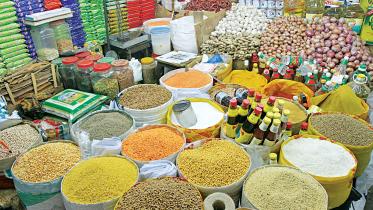
Volatile commodity prices reduce growth and amplify swings in inflation
Food and energy prices surged to near historic highs in recent years amid the pandemic and the war in Ukraine, which prompted major supply disruptions. This was accompanied by a sharp rise in the volatility of commodity prices as well.
30 March 2023

Central banks must enhance transparency to build trust
The Bank of Canada published a detailed summary of its Governing Council deliberations for the first-time last month, joining nearly two dozen other central banks in regularly releasing detailed information on monetary policy decisions.
26 March 2023

How pandemic accelerated digital transformation in advanced economies
As the world does its best to move on from the pandemic, one of the lasting legacies for many advanced economies has been greater adoption of digital technologies. Working from home is now common, and many companies have expanded online operations.
23 March 2023

Why is it important to de-risk the supply chain?
Businesses face supply chain risk, which can cause delays, increased costs, and loss of revenue. To de-risk the supply chain, businesses should identify potential risks and develop mitigation strategies. In a globalised world, businesses depend on suppliers from different countries, making disruptions far-reaching and potentially damaging. Mitigating supply chain risk is especially important for Bangladesh's manufacturing industry to remain competitive and continue its growth. Implementing risk management strategies can help businesses operate more efficiently, reduce costs, and increase customer satisfaction. Overall, de-risking the supply chain is essential for businesses to thrive and contribute to the growth of the economy.
18 March 2023
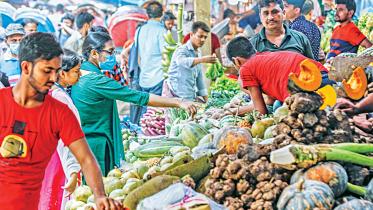
Response to high food, energy prices should focus on most vulnerable
Governments confront difficult policy choices as they try to shield their people from record food prices and soaring energy costs driven higher by the war in Ukraine.
11 March 2023

Countries can’t move forward if half of citizens are held back
If you were to compete in a running race, would you tie, shorten, or burden one of your legs? No, of course not. You would surely lose. Economies will also lose the development race if they don’t allow their women, virtually half their population, have the same rights as men do.
6 March 2023

Insurtech can bring insurance protection to the poor and vulnerable
The global fintech boom has spread to the insurance industry, as new, disruptive “insurtech” companies rapidly innovate business models that are challenging industry norms.
1 March 2023

Ukraine one year later: Impacts on global food security
When Russian troops invaded Ukraine one year ago, the war appeared to pose a grave threat to global food security.
1 March 2023

Technology behind crypto can improve payments, providing a public good
Crypto assets have been more of a disappointment than a revolution for many users, and global bodies like the IMF and the Financial Stability Board urge tighter regulation.
27 February 2023