


The politics of refusal: Nazrul, nation and the grammar of dissent

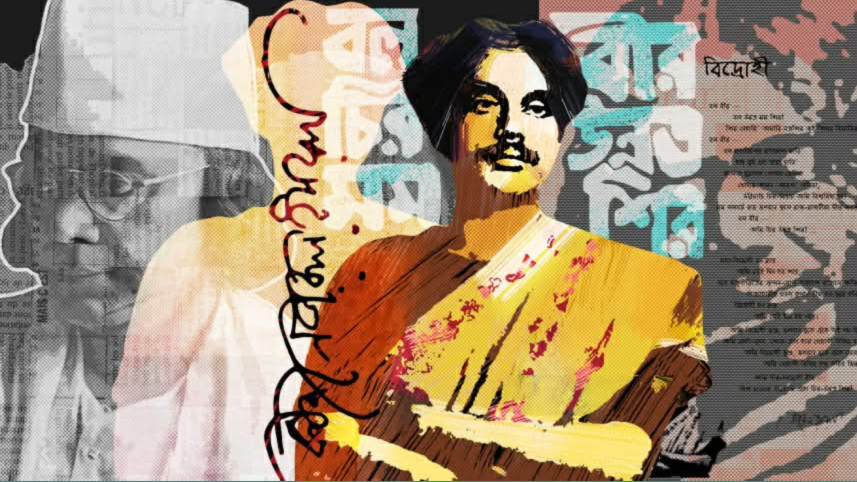
“Aji porikkha jati-er othoba jater koribe tran?”
(“Today’s trial—will it save the nation or the caste?”)
Kazi Nazrul Islam’s poetic enquiries does not behave like ornamented rhetoric, rather, it arrives as interruption. A moment in which the idea of “nation” is already under trial—its moral logic, its exclusions, its silent choices about who counts as part of the collective and who does not. That was the reality of his times, in the post World War I, under colonial India.

From the beginning, Nazrul’s idea of the country was never territorial alone but is ethical. A nation, in his thinking, is not validated by borders but by whether it dismantles hierarchy—of class, of religion, of division and of inherited authority. This is why his writing does not simply oppose power; it destabilises the grammar through which power becomes acceptable.
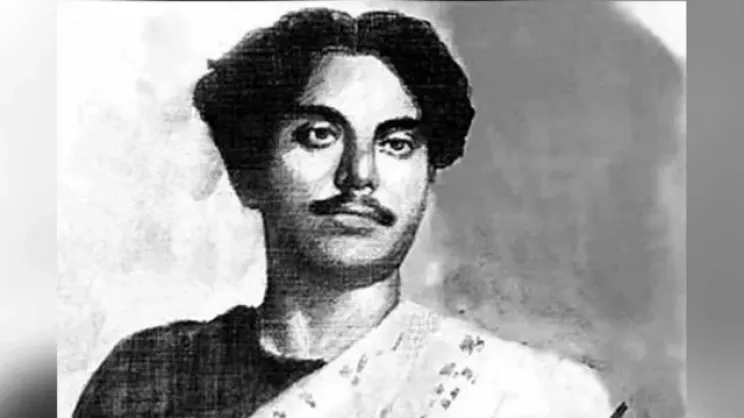
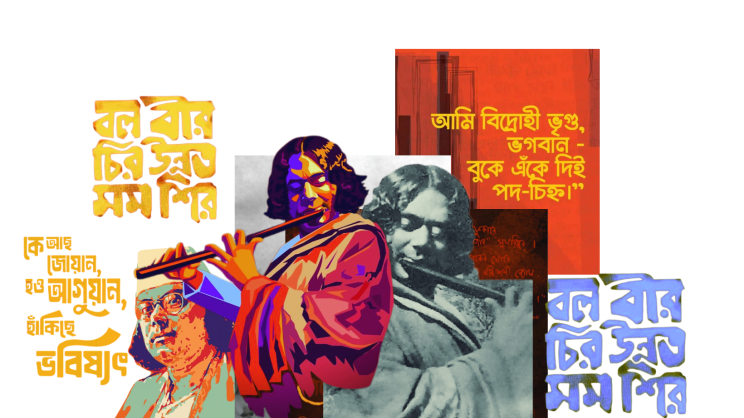
In “Bidrohi” (The Rebel), written in 1921 and published in Bijli in 1922, he constructs a speaking voice that refuses containment. “Bolo bir, ami chiro unnoto momo shir” (“Say, O hero, my head is ever held high”) is often remembered as assertion, but in context it functions more like refusal of submission as civic virtue. The “I” in that poem is not personal identity so much as a political position that cannot be domesticated.
Yet Nazrul’s refusal is not directionless. In “Amar Path” (“My Way”), he writes: “Antore jader eto golamir bhab, tara bahirer golami theke rehai pabe kemon kore?”
(“Those who carry slavery within, how will they be freed from external bondage?”)
The argument shifts here. Independence is no longer only a political condition. It becomes internal discipline—an ethics of self-formation through constant, continuous and moving dissent. Without that, sovereignty becomes repetition of domination in another form.
This distinction matters when reading his intervention in colonial nationalist politics. The early 1920s in Bengal were not ideologically settled; they were crowded with competing models of liberation—constitutional negotiation, Gandhian mass politics, and underground revolutionary movements. Nazrul enters this field not as a commentator but as disruption and steady voice of dissent to whatever that opposes humanity, equality and human identity.
With the launch of Dhumketu in 1922, the tone sharpens further. In its editorial declaration, he writes: “Swaraj-toraj bujhi na… Bharater purno swadhinota chai” (“I do not understand the language of half-measures… I want complete independence for India”). The statement is less policy than linguistic refusal—an insistence that diluted political language produces diluted freedom right back then when the question of total freedom only ceased to exist.
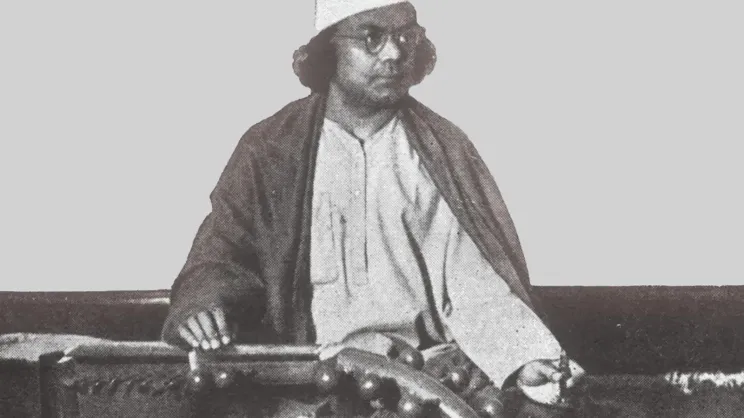
The reaction was immediate and uneven. Sections of the colonial press marked Dhumketu as incendiary; the nationalist readership itself was not uniformly aligned with its radical absolutism. By late 1922, after the publication of “Anandamoyeer Agomone” (“The Advent of the Joyful Mother”), the colonial administration banned the issue, and Nazrul was arrested. In 1923, he was sentenced to imprisonment. Contemporary reports in the Bengali press recorded both alarm and admiration: alarm at the directness of his language, admiration among younger readers who saw in him a rupture from cautious nationalism. The poem had crossed from literary space into prosecutable speech.
This is where Nazrul’s idea of the nation begins to fracture conventional categories. He is not simply a nationalist poet in the standard anti-colonial sense. Nor is he reducible to revolutionary aesthetics. The reception itself already contained this ambiguity: some read him as the voice of militant independence, others as a destabiliser of all fixed identity—including religious and communal identity.
That tension becomes clearer in his sustained rejection of religious nationalism. In a Bengal increasingly shaped by communalisation of public life, his writing insists on a shared human condition that precedes identity labels.
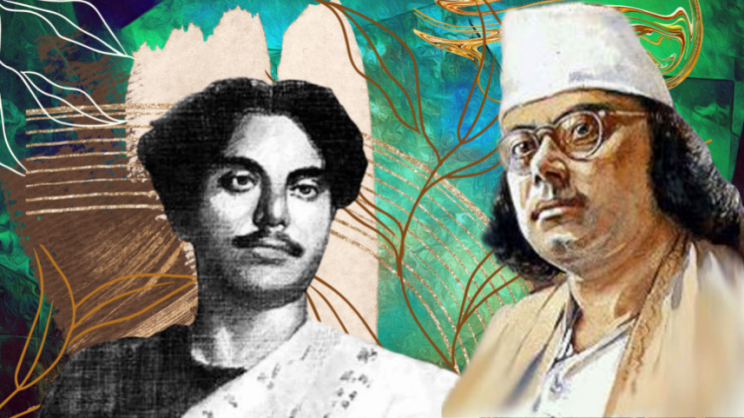
In “Manush” (“Human Being”), he writes:
“Shono mortyer jibon, onnyere joto koribe peeron, nije hobe toto klib”
(“O mortal life, the more you oppress another, the more diminished you become yourself”).
The structure is ethical rather than doctrinal. Oppression is not only injustice, when accepted in some passive form, it is self-degradation. The moral logic does not require external enforcement.
In “Sammobadi” (“The Egalitarian”), he extends this into metaphysical equality:
“Shokolor majhe prokash tahar, shokolor majhe tini”
(“He is revealed in all, he exists in all”).
Here the theological and political converge. If divinity is distributed rather than concentrated, then hierarchy loses ontological justification. Nationhood, in this framing, cannot be complete if it is structurally selective.
A similar logic appears in “Nari” (“Woman”):
“Prithibite ja kichu mahan srishti, tar ardhek nari, ardhek nara”
(“Whatever is great in the world, half of it is woman, half is man”).
The implication is not descriptive equality but structural incompleteness of any system that excludes.
What makes Nazrul difficult to stabilise to one singular identity or structure because of precisely this multi-directional refusal. He resists colonial rule, but also resists communal identity as political foundation, and resists economic and social hierarchies as naturalised order. Different readers have therefore claimed him for different narratives: anti-colonial nationalist icon, revolutionary socialist voice, or radical humanist outside ideological categorisation.
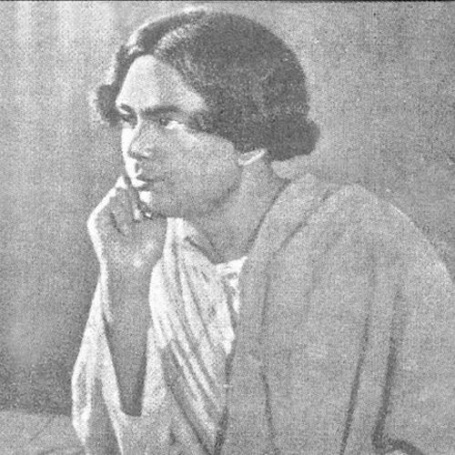
That contest over interpretation continues into the present. The same poems circulate as cultural memory, often detached from their argumentative force. “Chol chol chol,” “Karar oi louho kopat,” and “Bidrohi” remain widely known, but their original pressure points are frequently softened in institutional remembrance. Rrecognition survives, what weakens is confrontation.
Yet even in later reflections Nazrul anticipates this drift. He warns, in various notes and statements, against the transformation of rebellion into ornament—where dissent is remembered as aesthetic posture rather than ethical demand. The warning is not nostalgic; it is structural. Cultural memory tends to stabilise what was originally unstable.
 For all latest news, follow The Daily Star's Google News channel.
 This is why his idea of the nation resists final definition. It does not present a model to be implemented. It presents a condition that must be continuously tested.
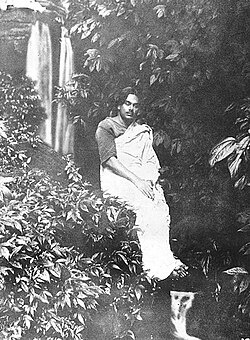
Nazrul’s nationalism never settled into ritual, singular political identity or emblem . It remained a demand—ethical before it was political, disruptive before it was consoling. Read closely, his idea of the nation is not a finished map but an unfinished argument: against fear, against inherited hierarchy, and against every form of authority that asks for obedience before dignity.
Comments