


When we become the people in Manna Dey’s ‘Coffee House’

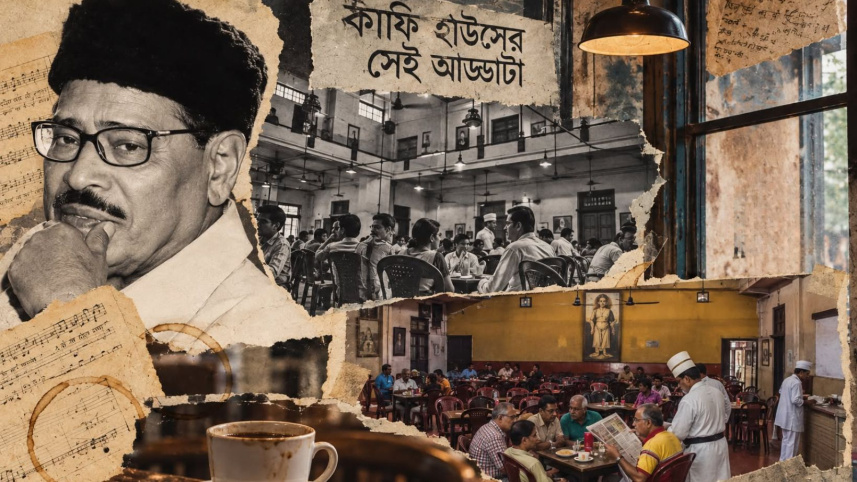
Last week, I was sitting in a café in Delhi with a group of friends I have known since childhood when I suddenly understood an old song differently. We had spent years growing into people our younger selves could barely have imagined. We now live in different cities, have different careers, different relationships with money and work, and very different ideas of what constitutes a good life. Some of us have become very serious adults. Some are still figuring it out. And yet, around that table, the old dynamics returned almost immediately.
Someone was telling a story. Someone interrupted to dispute it. Someone was laughing before the punchline because they already knew where it was going. Someone was giving unsolicited advice. Someone was quietly listening. We moved between childhood memories, work, relationships, money, family, and the absurdities of adulthood with the same easy disorder we had possessed as children.

For a few hours, the years between us became almost invisible. And I thought of Manna Dey’s “Coffee Houseer Shei Addata”.
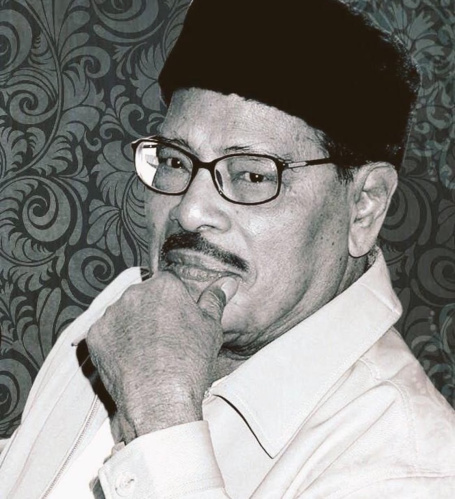
I have heard the song countless times. I knew its melancholy long before I understood it. For years, the names in it belonged to people from another generation: Nikhilesh, Moidul, Sujata, D’Souza, Roma, and Amal. They sat around a coffee house, talked about their lives, and imagined futures that were still waiting to happen. Then the years passed, and those futures took them in different directions.
Last week, sitting around that table in Delhi, I realised something rather startling. We had become them.
The genius of “Coffee House” lies in its characters. They are not simply six friends assembled for a nostalgic adda. Each one embodies a different possibility of growing up. Together, they form a small universe of youth, ambition, love, success, disappointment, distance, and memory. And the song’s narrator stands among them as both friend and witness, the person who remembers what became of everyone.
Nikhilesh is perhaps the most immediately evocative. One line changes the geography of the friendship. The boy who once sat at the same table has travelled into another life. Paris becomes a symbol of distance, possibility, and the friend who left.
Every friend group has a Nikhilesh. He is the person whose ambition seemed too large for the place where you grew up. He is the one who leaves for another city, another university, another country. At twenty, his departure feels exciting. At thirty, it becomes part of the geography of the friendship. You know where he lives. You know what he does. You occasionally know what his life looks like through photographs and messages. You simply no longer share the same everyday world.
Then there is Moidul, the reporter in Dhaka. He represents another kind of departure. His identity is tied to his profession, to the life he has chosen to build. He is not simply somewhere else; he has become someone else in the process. The boy from the coffee house has acquired a profession, a city, and a whole new identity.
That felt particularly familiar to me. Our own conversations have gradually become full of occupations. We ask each other what we are doing, where we are working, whether we are moving abroad, whether we are happy with our jobs. Careers become part of how we introduce ourselves, sometimes so thoroughly that we forget the people we were before those titles existed. The coffee house captures that moment before identity becomes fixed. Everyone is still simply a friend.
Then comes Sujata, perhaps the character whose trajectory most clearly complicates our ideas of success. Sujata marries into wealth. Her life takes a route different from the professional and artistic ambitions associated with some of the others. The song does not turn her into a moral lesson. She simply becomes another example of how differently a life can unfold from the same starting point.
That feels important. The friends who sit around a table at eighteen may share almost everything: schools, jokes, teachers, neighbourhoods, ambitions. By twenty-five, they may have completely different definitions of achievement. One measures life through career. Another through family. Another through financial security. Another through freedom. Another through experiences. There is no single destination called adulthood. The characters of the song understand that instinctively.
D’Souza brings another possibility: the artist, the musician, the person whose life remains connected to creativity. He represents the friend who carries an inner world that does not quite fit into conventional definitions of success. Every group has someone like that too. The person who is always making something. The one who treats a hobby with the seriousness of a profession. The friend who keeps talking about music, films, writing, art, or some impossible project while everyone else is busy discussing salaries and promotions.
Then there is Roma Roy. Roma feels almost dreamlike because her presence in the song is deeply connected to memory. She belongs to that strange category of people who remain vivid in our minds even as their actual lives become increasingly distant from ours.
Most of us eventually acquire our own Roma Roys. People we once knew intimately become people we remember. We know what they were like at seventeen, what they laughed at, what they wanted, who they loved. We may know almost nothing about the person they became ten years later. Memory freezes people in ways life never can.
And then there is Amal. Amal changes the emotional temperature of the entire song. His story brings mortality into the coffee house. The others have moved away, married, worked, travelled, and built lives. Amal’s absence reminds us that time does not merely separate friends geographically. Sometimes it removes them entirely.
This is where the song moves beyond nostalgia. It becomes an elegy. The coffee house begins as a place where the future feels limitless. By the end, it becomes a place where the past is being reconstructed from fragments. The same chairs, the same conversations, the same memories acquire an entirely different meaning because we now know what happened to the people who once occupied them.
And that leaves us with the narrator. Perhaps he is the most important character of all. He is the one who remembers Nikhilesh in Paris, Moidul in Dhaka, Sujata married, D’Souza gone, Roma in an asylum, and Amal, who once wrote poems. He is the person who has watched the group become a collection of separate stories.
He is also the character I suddenly recognised in myself.
Because every childhood friend eventually becomes a narrator. We become the people who remember who used to sit where. We remember the person who wanted to become a filmmaker, the one who swore they would never leave home, the one who had a ridiculous crush, the one who was convinced they would become famous, the one who always arrived late. Our friends become archives of our own past.
 For all latest news, follow The Daily Star's Google News channel.
 That evening, I kept looking around the table and thinking about how strange time is. The people sitting beside me were the same people who had once made up the entire world of my childhood. We had known one another before careers, before cities, before salaries and responsibilities, before we had learned to measure life in deadlines and departures. We had known one another when the future was still a vague, enormous thing, and the only thing that mattered was having somewhere to go after school and someone to sit beside.
Now the future had happened to us. It had taken us to different cities and given us different lives. It had changed our priorities, our ambitions, and, in many ways, our understanding of ourselves. Some dreams had survived. Others had quietly disappeared. Some people had stayed. Others had become names we mentioned while telling old stories.
And still, around that table, something remained untouched: the conversation. That familiar rhythm of teasing, remembering, arguing, interrupting, and laughing. The strange ability to make one another feel fifteen years old within fifteen minutes. The feeling that, for all the distance life had created, some invisible thread had remained tied between us.
That is when I understood why “Coffee House” has endured for so long. It is not really a song about a coffee house. It is a song about what happens to the people who once sat together there.
Nikhilesh, Moidul, Sujata, D’Souza, Roma, and Amal are remembered through the narrator because friendship has its own form of immortality. We carry people long after their lives have moved beyond ours. We remember who they were before the world changed them. Sometimes we remember them better than they remember themselves.
I think every generation eventually gets its own coffee house. The chairs change. The city changes. The price of coffee changes rather dramatically. The conversations acquire new subjects. Yet the characters remain.
There is always a Nikhilesh who leaves. A Moidul who finds his calling. A Sujata who chooses a different life. A D’Souza who keeps creating. A Roma who becomes part of the past. An Amal whose absence teaches everyone else about time. And somewhere among them, there is always a narrator, looking around the table and trying to hold all of it together through memory.
Maybe, as we grow older, we become that narrator without noticing. We begin collecting the people we have loved inside stories. And perhaps that is why this song hurts a little more with age.
When we are young, we hear an adda. When we grow older, we hear a life. And one day, sitting around a table with the people who knew us before we became ourselves, we realise that the song has been waiting all along for us to understand it.
Last week, for a brief afternoon, we were no longer people scattered across cities and separate lives. We were simply friends around a table, talking too loudly, remembering too much, laughing at things that had stopped being funny years ago. The coffee got cold. The time disappeared. Eventually, we all had somewhere else to be.
But for those few hours, the years folded in on themselves, and I could see all our younger selves sitting there with us. Maybe that is what the best songs do. They give us a place to return to after we have spent years becoming someone else. And for me, that place will always be a coffee house.
Comments